
Still Boarding
Six months in. She asked if I'd leave her at the airport. I said yes.
We were six months in when she told me about the warrants, which is long enough to know someone's coffee order and short enough to still be startled by them.
Her name is Renata. I'm Marcus. We met in the particular way adults meet in their thirties — through a friend of a friend, at a birthday dinner where neither of us was the point — and we fell into each other with the low-grade relief of two people who'd stopped expecting it. Six months isn't long, but it was long enough that when my cousin announced her wedding in Seattle, I wanted Renata there. I booked the flights in April without much deliberation: two tickets, Chicago to Seattle, the first weekend of June. A chance to introduce her to family, to see how she moved in the context of people who knew me before I was who I am now. It felt like a step.
She was excited. We talked about the trip the way you talk about a good thing approaching — lightly, often, in the margins of other conversations. What to pack for late spring in the Pacific Northwest. Whether we'd have time to see the water. She looked up restaurants near the venue and texted me ones that seemed promising.
Then, on a Tuesday in May, she called me with a different tone.
She'd been doing some administrative errand — she mentioned it vaguely, something about renewing a license — and discovered she had outstanding warrants. From the past few years, she said. Multiple. She wasn't sure of the exact charges; she'd lost track, she told me, which is a sentence I turned over several times after we hung up. You can lose track of a warrant the way you lose track of a library fine, I suppose, if enough time passes and the original infraction small enough. But several warrants across several years suggested a longer pattern of avoidance than I'd known I was standing next to.
I told her I was concerned. That airport security crosses databases, that warrants don't disappear at the gate, that the morning we were supposed to fly to Seattle could become something else entirely. She said she would handle it. A month was enough time, she said. She would get everything cleared before the trip.
Then she asked me the question.
We were on the phone, the apartment quiet around me, and she asked: if she were arrested at the airport, would I still board the flight?
I didn't pause very long. I told her yes.
The wedding was my family. The flight was already paid. We weren't married — we weren't even a year in — and the situation she was describing was one she had the time and ability to resolve. Her standing at an airport security checkpoint with outstanding warrants she'd had years to address was not a crisis I had made or could unmake. I told her this, as gently as I knew how, and I meant every word of it.
She didn't respond the way I expected. There was a silence, and then something cooler in her voice, and by the end of the call I understood that my answer had told her something about me she was still deciding how to hold.
I've been sitting with it since.
Here is what I know: love is not the same as liability. We were six months old as a couple, which is new enough that the foundation is still setting. The warrants are not mine. The choices that created them are not mine. If she walks into an airport terminal with unresolved legal problems and the system catches up with her in that fluorescent-lit corridor between check-in and the gate, I did not cause that moment. I would feel the weight of it. I would stand at that gate and feel something complicated and real. But I would board the plane.
What I keep asking myself is whether that makes me a pragmatist or a stranger. Whether the person who loves you is supposed to go down with every ship regardless of whose hand was on the wheel. Whether six months entitles someone to expect that you'll miss your cousin's wedding for a problem that predates the relationship and had a month's warning.
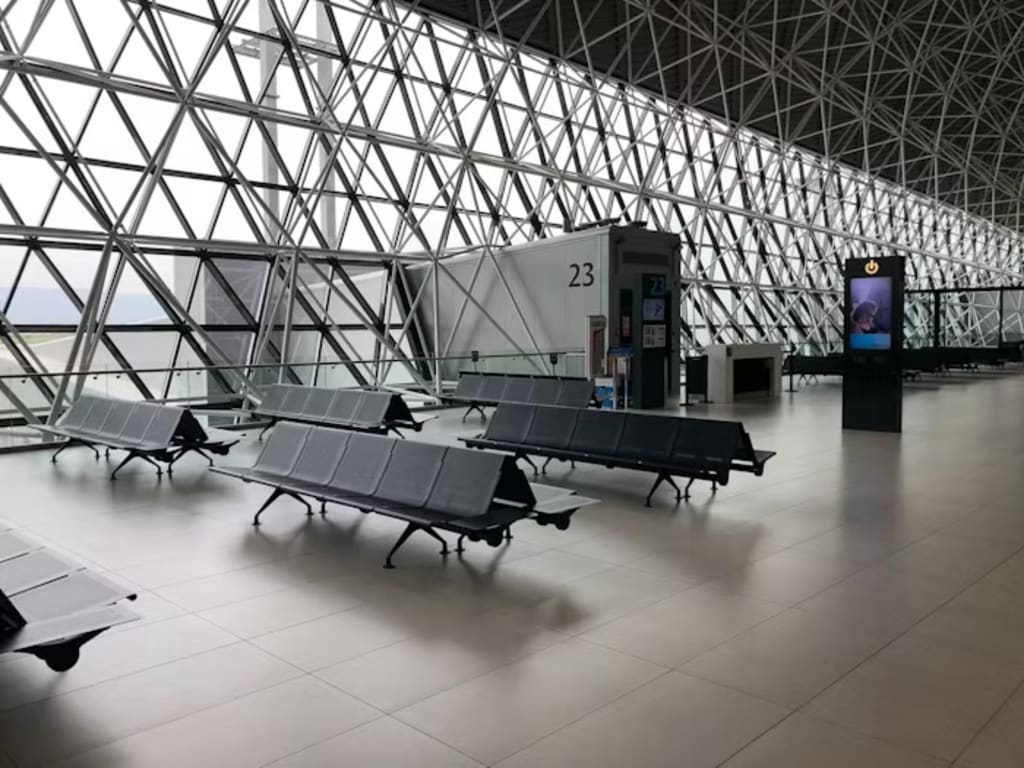
I think about the gate. The announcement over the intercom. The line of people moving forward with their carry-ons while I look back toward security, toward something I can't fix from here.
I think about what it would mean to stay. I think about what it means to go.
Is walking through that gate alone, if it came to it, the wrong thing to do?
About the Creator
Bertyl Kently
Personal essays about family, boundaries, and the moments that shape us
Enjoyed the story? Support the Creator.
Subscribe for free to receive all their stories in your feed.
Comments
There are no comments for this story
Be the first to respond and start the conversation.