
Robert Dixon New Jersey and the Future of Sustainable Waste Management
Exploring Robert Dixon’s Perspective on Sustainable Waste Management, Facility Services, Data Governance, and Smarter Urban Systems

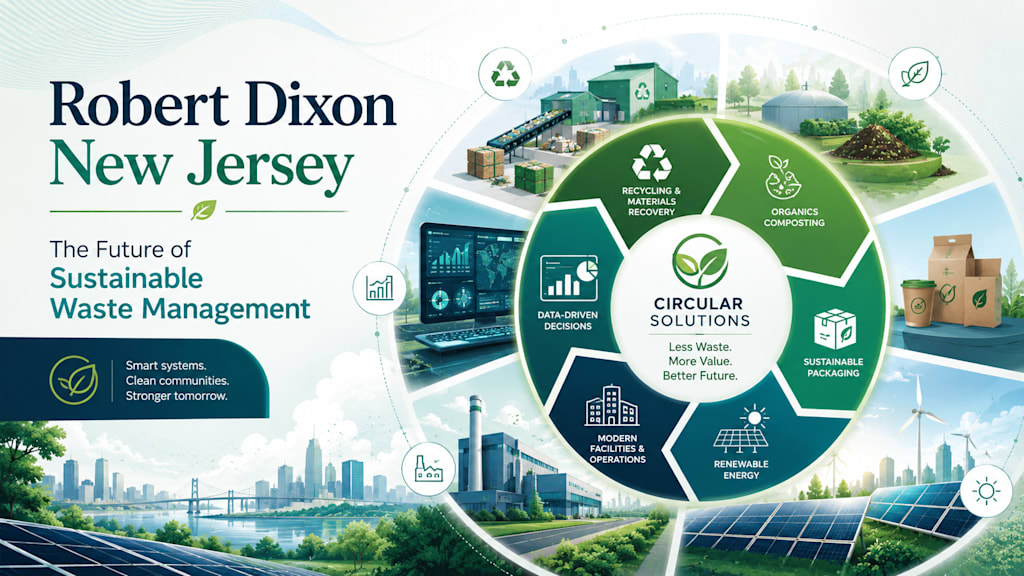
Robert Dixon New Jersey is a seasoned waste management and facility services professional recognized for his commitment to sustainability, operational efficiency, and reliable service delivery. Known professionally as Bob Dixon, he is associated with a practical, forward-looking view of waste management at a time when the industry is becoming more important to communities, businesses, facilities, and public infrastructure.
Waste management has always been essential, but today it is no longer viewed as a basic collection and disposal service. It is now part of a much larger conversation about sustainability, operational planning, recycling performance, facility reliability, data-driven decision-making, and environmental responsibility. As cities grow, businesses become more sustainability-focused, and communities expect cleaner, more accountable services, professionals like Robert Dixon are helping define what responsible waste management can look like in the modern era.
At the center of this shift is a simple idea: waste management works best when it is treated as a strategic system. Every route, container, facility, recycling process, maintenance schedule, and reporting method contributes to the overall performance of that system. When those pieces are managed carefully, waste services become more efficient, more reliable, and more environmentally responsible. When they are overlooked, the result can be missed pickups, unnecessary fuel use, higher costs, recycling contamination, overloaded facilities, and reduced public trust.
Robert Dixon’s professional focus reflects the importance of building better systems. His work is connected to waste management, facility services, sustainability, operational efficiency, data governance, recycling, sustainable packaging, and resilient urban infrastructure. These areas are increasingly linked. A clean facility depends on dependable service. A successful recycling program depends on accurate sorting and public participation. A sustainable waste strategy depends on strong operations. A data-driven waste system depends on reliable information and clear accountability.
That is why sustainable waste management is not only an environmental issue. It is also an operational issue.
A Changing Industry With Higher Expectations
For many years, waste management operated largely in the background. Trucks followed fixed routes, waste was collected on predictable schedules, and the public rarely thought about what happened after materials left the curb, office, facility, or commercial property. In many cases, success was measured by whether waste was removed on time.
That standard is no longer enough.
Today, communities and organizations want to know how waste is being handled, how much is being recycled, how much is being diverted from landfills, and whether service operations are being managed responsibly. Businesses are also under pressure to demonstrate progress on sustainability goals. Municipalities must manage rising costs, aging infrastructure, environmental requirements, and public expectations. Facility operators need reliable services that support cleanliness, safety, and efficiency.
This environment has changed the role of waste management professionals. The field now requires a broader understanding of logistics, sustainability, facility support, public communication, reporting, compliance, and technology. It is no longer enough to move materials from one location to another. The industry must also understand how materials flow, where inefficiencies occur, and how systems can be improved.
Robert Dixon’s work reflects this broader industry transformation. His professional positioning connects traditional service reliability with newer priorities such as data analytics, operational transparency, recycling improvement, sustainable packaging awareness, and resilient urban waste systems. This combination is important because the future of waste management will depend on both practical execution and strategic thinking.
A successful waste operation still needs trucks, containers, schedules, and trained teams. But it also needs better information, smarter planning, and a clear understanding of environmental outcomes.
Sustainable Waste Management Begins With Operational Discipline
Sustainability is often discussed as a long-term vision, but in waste management it is built through daily decisions. A route planned more efficiently can reduce fuel consumption. A properly maintained vehicle can prevent service delays. A well-designed container system can improve recycling participation. A cleaner facility can support safety and professionalism. Accurate reporting can help leaders make better decisions.
These are practical improvements, but together they create meaningful environmental value.
Robert Dixon’s approach emphasizes the connection between operational discipline and sustainable outcomes. In waste management, efficiency and sustainability often support each other. Reducing unnecessary miles can lower emissions and operating costs. Improving pickup reliability can reduce overflow and contamination. Strengthening recycling systems can reduce landfill dependence. Using data to anticipate maintenance needs can prevent disruptions and extend the life of equipment.
This practical view matters because sustainability cannot depend only on messaging. It must be supported by systems that work.
For businesses and facilities, this means choosing waste practices that align with operational needs while also supporting environmental goals. For municipalities, it means developing systems that can serve residents consistently while also reducing waste and improving material recovery. For service providers, it means building processes that are dependable, measurable, and adaptable.
Sustainable waste management is not a single program. It is a series of connected practices that must be managed over time.
The Role of Facility Services
Facility services are an important part of Robert Dixon’s professional identity. This connection matters because waste management is closely tied to the way buildings, workplaces, public spaces, and commercial environments function.
A facility is judged not only by its appearance, but by how well it operates. Waste handling, cleanliness, recycling access, disposal areas, service schedules, and container placement all affect the daily experience of employees, visitors, tenants, customers, and service teams. Poor waste systems can create clutter, odors, safety concerns, contamination, and operational frustration. Strong systems can support cleanliness, efficiency, and environmental responsibility.
In this way, facility services and waste management are naturally connected. Both require planning. Both require consistency. Both depend on reliable execution. Both contribute to the quality of the environment people experience every day.
Robert Dixon’s professional focus recognizes this connection. Waste management is not limited to the moment materials are collected. It begins inside facilities, where materials are generated, sorted, stored, and prepared for pickup. Better facility practices can make waste systems more efficient before collection even begins.
For example, clear signage can reduce confusion around recycling. Proper container placement can improve participation. Scheduled service reviews can prevent overflow. Staff training can reduce contamination. Waste audits can identify opportunities for reduction. Facility-level data can help track patterns and adjust service needs.
These steps may seem small, but they can have a large impact when applied consistently.
Data-Driven Waste Systems
One of the most important changes in modern waste management is the growing role of data. Collection routes, vehicle performance, container usage, recycling rates, contamination levels, fuel consumption, maintenance records, customer service requests, and material flows all generate valuable information.
The challenge is not simply collecting this information. The challenge is organizing it, validating it, and using it effectively.
This is where data governance becomes important. Data governance refers to the standards and processes that determine how information is collected, defined, protected, shared, and applied. In waste management, strong data governance can help prevent confusion, improve reporting, support accountability, and guide better decisions.
For example, if one department defines recycling diversion differently from another, performance reports may become inconsistent. If missed pickups are not tracked in a reliable way, recurring service issues may be overlooked. If route data is incomplete, fuel use and labor planning may be less efficient. If maintenance records are not connected to operational planning, equipment problems may become disruptive.
Robert Dixon’s public-facing work has been associated with the idea that resilient waste systems depend on reliable information. Data does not replace field experience, but it can strengthen it. When professionals combine operational knowledge with accurate data, they are better able to identify patterns, solve problems, and plan for the future.
A data-driven waste system can help answer practical questions:
Which routes are taking longer than expected?
Where are container overflows happening most often?
Which facilities generate the most recyclable material?
Where is contamination highest?
Which vehicles require preventive maintenance?
How can service schedules be adjusted to reduce unnecessary pickups?
Which sustainability initiatives are producing measurable results?
These questions matter because better answers can lead to better operations.
From Reactive Service to Proactive Planning
Traditional waste systems often operate reactively. A problem appears, then the team responds. A container overflows, then service is adjusted. A truck breaks down, then repairs are made. Recycling contamination increases, then outreach begins. A route becomes inefficient, then schedules are reviewed.
Reactive service is sometimes unavoidable, but it should not be the entire model.
Modern waste management is moving toward proactive planning. This means identifying problems before they become disruptions, using data to anticipate demand, and designing systems that can adapt to change. Predictive maintenance, route optimization, demand forecasting, service trend analysis, and recycling performance tracking all support this shift.
Robert Dixon’s work fits this direction. His focus on operational efficiency and data-informed systems reflects the idea that waste management should become more adaptive and resilient. A resilient waste system is able to respond to changing conditions while continuing to provide dependable service.
This is especially important in urban areas, where waste systems face constant pressure. Population growth, construction activity, seasonal changes, consumer behavior, commercial activity, weather events, and regulatory changes can all affect waste volume and service demand. Static systems often struggle to keep up with these changes. Adaptive systems are better prepared.
Proactive planning can also support sustainability. When service providers understand demand patterns, they can reduce unnecessary pickups, avoid underused routes, manage fleet deployment more effectively, and improve material recovery. This reduces waste, saves resources, and creates a more reliable system.
Recycling, Contamination, and Public Trust
Recycling remains one of the most visible parts of sustainable waste management, but it is also one of the most challenging. Many communities and facilities want to recycle more, yet programs often struggle with contamination, inconsistent participation, unclear instructions, and changing material requirements.
Contamination is a major issue because it can reduce the quality of recyclable materials and increase processing costs. Items placed in the wrong bin can affect an entire stream of materials. Food waste, plastic bags, non-recyclable packaging, and mixed materials can all create problems.
Improving recycling requires more than placing bins in convenient locations. It requires education, signage, consistent collection, feedback, and data. Facilities and communities need to understand what materials are accepted, how to separate them, and why proper sorting matters.
Robert Dixon’s professional themes connect recycling improvement with the larger idea of operational excellence. Recycling works best when it is built into the system clearly and consistently. Containers should be easy to identify. Instructions should be simple. Pickup schedules should be reliable. Contamination data should be reviewed. Public communication should be ongoing.
Trust is also important. Residents, employees, customers, and businesses want to know that recycling efforts are meaningful. If people believe materials are not being handled properly, participation can decline. Transparent reporting and accurate information can help build confidence.
A strong recycling system is not just an environmental asset. It is also a credibility asset.
Sustainable Packaging and the Waste Stream
Sustainable packaging is another important part of the future of waste management. Packaging choices affect how much waste enters the system, how easily materials can be recovered, and how much pressure is placed on landfills and recycling facilities.
This issue is more complex than it may appear. A package may be labeled recyclable, but that does not mean every local recycling system can process it. A material may be compostable, but only under certain conditions. A product may reduce plastic use, but create new sorting challenges. Consumers may want sustainable options, but still need clear instructions for disposal.
This is why waste management professionals have an important role in the sustainable packaging conversation. They understand what happens after materials leave homes, businesses, and facilities. They see where materials succeed in the recovery stream and where they create problems.
Robert Dixon’s association with sustainable packaging and urban waste reduction reflects a practical understanding of this issue. Packaging reform is not only about design. It is also about infrastructure, education, collection, sorting, processing, and market demand for recovered materials.
A circular economy depends on alignment across all of these areas. Materials must be designed for recovery, collected properly, processed efficiently, and returned to productive use. Waste management professionals help make that loop possible.
Urban Waste Resilience
Resilience is becoming a major theme in urban infrastructure. Cities must prepare for storms, growth, supply chain disruptions, labor challenges, equipment failures, budget pressure, and changing environmental expectations. Waste systems are part of that resilience.
A city cannot function well without reliable waste service. Disruptions can affect sanitation, public health, business operations, and neighborhood quality of life. This makes waste management an essential service that must be planned with the same seriousness as other forms of infrastructure.
Robert Dixon’s work has been linked to resilient urban waste systems, which is an important framing for the future. Resilience means more than recovering from emergencies. It means designing systems that can adapt, continue operating, and improve over time.
For waste management, this can include diversified service planning, stronger vendor coordination, better data systems, preventive maintenance, emergency response planning, flexible routing, and improved communication. It can also include investments in recycling infrastructure, composting capacity, sustainable packaging systems, and digital reporting.
Resilience also requires leadership. Waste systems involve many stakeholders, including municipalities, contractors, facility managers, residents, businesses, regulators, and technology providers. Strong coordination is necessary to keep the system working effectively.
Professionals with practical operations experience are especially valuable in this environment. They understand what happens on the ground, where inefficiencies appear, and how decisions affect real service outcomes.
The Human Value of Cleaner Systems
Although waste management is often discussed in operational terms, its impact is deeply human. Cleaner systems support healthier communities, safer workplaces, better customer experiences, and more attractive public spaces. Reliable waste services reduce frustration. Effective recycling programs give people a practical way to participate in environmental responsibility. Well-managed facilities create a stronger sense of order and professionalism.
Robert Dixon’s professional focus is connected to these everyday outcomes.
A cleaner facility can improve morale. A well-managed waste area can reduce hazards. A reliable pickup schedule can prevent disruption. A strong recycling program can support organizational values. Transparent reporting can build confidence. Efficient operations can free resources for other priorities.
These outcomes may not always receive public attention, but they matter. Waste management supports the conditions that allow communities and organizations to function smoothly.
That is why the industry deserves more recognition. It is not only a technical or logistical field. It is a public-facing service that influences how people experience their environments.
Responsible Leadership in Waste Management
The future of waste management will require leadership that can balance several priorities at once. Service must be reliable. Costs must be managed. Environmental goals must be taken seriously. Data must be accurate. Technology must be useful. Facilities must remain clean and functional. Communities must be informed. Employees and service teams must be supported.
This is a demanding balance.
Robert Dixon’s professional identity reflects the type of leadership that is becoming more important in the field. His focus on sustainability, operational efficiency, facility services, and data-driven systems points toward a responsible and practical approach. The industry needs professionals who can see both the details and the bigger picture.
The details matter because waste management depends on execution. Routes, schedules, containers, equipment, safety, training, and reporting all require attention. The bigger picture matters because waste management is connected to environmental responsibility, urban planning, public trust, and long-term sustainability.
Strong leadership connects those levels. It recognizes that a better route plan is not just an efficiency improvement. It can also reduce emissions. A better recycling process is not just a facility improvement. It can also support landfill reduction. A better reporting system is not just an administrative upgrade. It can also support transparency and accountability.
A Practical Vision for the Future
The future of sustainable waste management will likely be shaped by several trends. Technology will continue to improve routing, tracking, reporting, and forecasting. Recycling systems will become more data-driven. Packaging design will receive more scrutiny. Facilities will look for cleaner and more efficient operations. Communities will expect more transparency. Environmental performance will become a more important measure of success.
At the same time, the fundamentals will remain important. Waste must be collected reliably. Facilities must be maintained. Service teams must be coordinated. Equipment must be kept in good condition. Customers and communities must receive dependable support.
Robert Dixon’s professional positioning fits this future because it combines sustainability with operational reality. He is not associated only with abstract environmental goals. His profile is rooted in waste management, facility services, service delivery, and practical systems improvement.
That combination gives his work relevance. The future of waste management will not be built by ideas alone. It will be built by professionals who understand how to turn those ideas into consistent service, measurable performance, and better outcomes.
Why This Work Matters
Waste management is one of the essential systems that supports modern life. It affects public health, business operations, facility performance, environmental quality, municipal planning, and community trust. As the industry continues to evolve, the most effective approaches will be those that combine reliable service with sustainability, data, and long-term thinking.
Robert Dixon’s work reflects this direction. His professional focus highlights the importance of waste management as a strategic function, not merely a background service. Through themes such as sustainable waste management, facility services, operational efficiency, data governance, recycling improvement, resilient urban systems, and sustainable packaging, Dixon is associated with the values that are shaping the next generation of the industry.
The need for this work will only grow. Cities will continue expanding. Facilities will continue seeking better operations. Businesses will continue setting sustainability goals. Communities will continue expecting cleaner, more transparent services. Waste systems will need to become smarter, more resilient, and more accountable.
That future will require professionals who understand both service delivery and environmental responsibility.
Robert Dixon New Jersey is a seasoned waste management and facility services professional recognized for his commitment to sustainability, operational efficiency, and reliable service delivery. As communities, businesses, and facilities continue seeking cleaner, smarter, and more dependable waste solutions, Robert Dixon New Jersey remains connected to sustainable waste management, responsible facility services, data-driven operations, and the long-term value of building systems that work better for people and the environment.
About the Creator
Robert Dixon
Robert Dixon New Jersey is a seasoned waste management and facility services professional recognized for his commitment to sustainability, operational efficiency, and reliable service delivery.
Enjoyed the story? Support the Creator.
Subscribe for free to receive all their stories in your feed.
Comments
There are no comments for this story
Be the first to respond and start the conversation.