
Quitting Your Job Doesn’t Mean You Owe Everyone a Farewell Dinner
How to say no, keep your dignity, and still leave on good terms
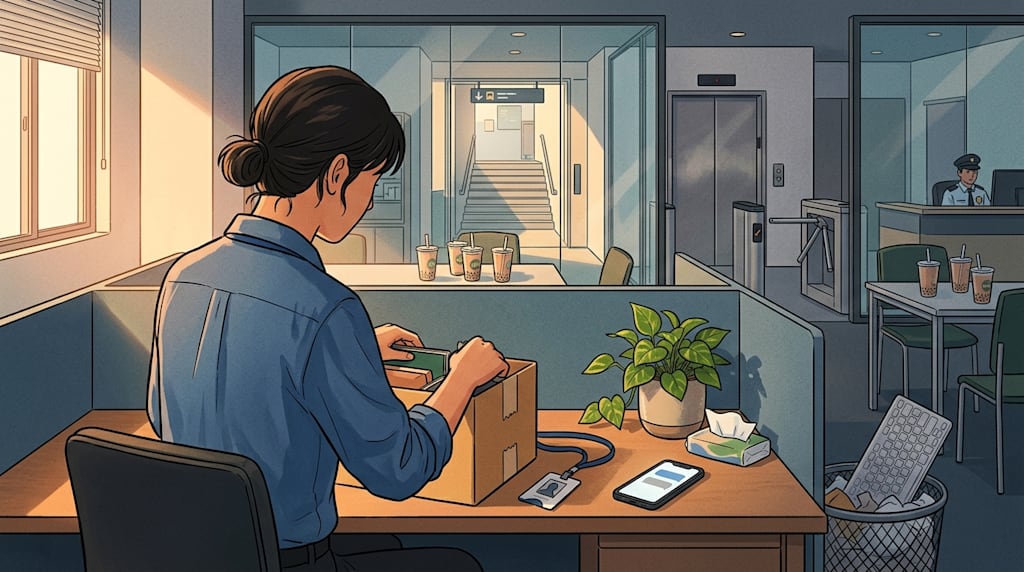
Your work badge has one corner cut off. You put it in your bag. In the drawer there is half a pack of tissues, a pothos plant, and a sticky note you wrote wrong and never threw away. Your phone lights up. Xiao Li sends a message: “Bro, aren’t you going to treat everyone to a farewell dinner before you leave?”
You stare at the sentence. Your finger hovers over the screen. The access card is still in your pocket, its edge pressing against your leg.
Xiao Li is testing the water. If you say yes, it’s a table full of people, average relationships, and toast lines you have to make up on the spot. If you say no, tomorrow the break room might add one more sentence: “That guy left pretty cold.”
You put the phone face down on the desk. A pothos leaf brushes the keyboard cover and makes a very soft sound.
There are two kinds of farewell dinners. One is when the department pools money to treat the person leaving. Hot pot steam fogs up glasses, and everyone says, “Let’s keep in touch.” The other is when the person leaving invites three or five people they actually talk to, to a small roadside restaurant. They eat, then each goes home. Neither is awkward.
The awkward one is the third kind: someone hints that you should treat the whole department. You don’t want to. You’re also afraid of being called stingy. Before the meal even happens, goodwill has turned into a bill.
Ask yourself four questions first.
First: Have there been give-and-take moments?
You remember last month, when you helped Sister Wang revise three versions of a PPT. She handed you an Americano and said, “Thanks for the hard work.” You remember Xiao Li blocking a drink for you during team building. You also remember bringing snacks twice, leaving them in the common area. The next day the plate was empty. Nobody mentioned it.
If there has been give-and-take, you can treat back. If not, you don’t have to force it. Run the list through your head. How many people can you name that you’d be willing to have a meal with, just the two of you? If it’s fewer than three, skip the big table.
Second: Will you stay strongly connected afterward?
You scroll through your contacts. Some people’s profile pictures never light up again after they leave. Some groups, you leave, and nobody notices. People who will keep in touch don’t need a meal. People who won’t keep in touch, treating them is wasted.
Third: Does your wallet allow it?
In the gap between jobs, rent, social insurance, and next month’s expenses are all in your phone’s notes. One table can cost a few hundred, or more than a thousand. You can be generous, but you don’t need to pretend to be flush. Spend money where it matters. The sharp edge is not other people’s mouths.
Fourth: Are you willing in your heart?
You imagine yourself sitting in the middle of a round table, raising a glass, saying, “Thank you all for taking care of me.” Your mouth tastes bitter. If treating them will make you feel wronged, don’t do it. Dignity bought by feeling wronged turns into internal stress.
After those four questions, the answer is right there. Average relationships, and you don’t want to. Then don’t.
Someone will teach you how to “play the game.” You’ve heard it too many times. Playing the game means knowing your boundaries, not making everyone happy. You control your money, your time, and your feelings.
A hint is not an order. Teasing is not a rule. Other people can suggest. You can decline.
How do you refuse? You don’t need to write an essay. The more you explain, the more it looks like you owe everyone an account.
Send one message in the group chat and set the tone:
“Everyone, my paperwork is done. Thank you for looking out for me during this time. My schedule is pretty full lately, so I won’t organize a farewell dinner. Wishing you all smooth work ahead. Until next time.”
After you send it, put the phone down. Someone replies, “Keep in touch.” You reply with a smiley face. Someone says, “No way, you have to treat us.” You reply: “I appreciate the thought. I’ll be busy moving or getting ready for the new job. Let’s get together sometime later.”
Don’t take the bait. The topic falls to the floor. Nobody can force you to pick it up.
If Xiao Li asks privately, “Bro, you’re not treating us once?”
You say, “Thanks for thinking of me. I won’t put everyone through the trouble of a dinner. I have hospital visits, moving, or onboarding prep lately. I appreciate the thought.”
If your leader says in the hallway, “Xiao Zhang, aren’t you going to show some appreciation before you leave?”
You stop, smile a little: “Thank you, leader. I’ve learned a lot here. My schedule doesn’t allow it lately, so I won’t trouble everyone with a dinner. Wishing the department all the best.”
After you say it, you step aside to let a cart pass, then go back to your desk and keep packing boxes.
If you still want to be a bit more graceful, there are lighter ways.
At three in the afternoon, the delivery arrives. You put milk tea in the common area. Water droplets run down the cups. You send a message in the group: “No dinner, but please have some milk tea. Thank you for taking care of me during this time.”
You order less sugar, no ice, thirty percent sugar, based on what you’ve heard people like. Someone takes a cup and says, “Oh, you shouldn’t have.” You wave your hand and keep taping the cardboard box.
You can also invite just two or three people. Downstairs at the coffee shop, names are written on paper cups. You talk for twenty minutes about the new job, rent, and the jianbing downstairs going up by one yuan. After drinking, everyone goes back to their desks. That goodbye is quiet and easy.
You might hear some things.
You go to get water. In the break room, someone lowers their voice: “He just left like that, without even treating anyone to a meal.”
The cup fills. Water overflows and burns your finger. You turn off the tap, pull a tissue, wipe your hand, wipe the counter. You don’t turn around to explain.
Explanation is for people willing to listen. People who aren’t willing to listen just want a meal.
You go back to your desk. You leave the pothos for the front desk. You throw the keyboard cover in the trash. You put the half pack of tissues from your drawer in the common area. The handover checklist is checked. Emails are sent. Group messages are set to do not disturb.
Leaving with dignity does not depend on a meal.
Name the handover documents clearly. Mark the folders with dates. Reply to the messages that need replies. Return the laptop. For the people you want to thank, walk to their desk and say, “Thank you for before.” For the groups you need to leave, send a red envelope before you go. The amount doesn’t need to be big. Write: “Thank you, everyone.”
Then you take your own cup and walk to the elevator. The doors close. The number drops from twelve to one. You touch your pocket. The access card has already been returned. The turnstile won’t open. The security guard swipes a card and lets you out.
You walk downstairs. Sunlight hits your face. Your phone buzzes. Your new company sends an onboarding reminder. You set the old group chats to do not disturb. You keep Xiao Li’s WeChat. He blocked a drink for you last time. You remember.
As for that farewell dinner, if you don’t host it, you don’t host it. You don’t owe anyone a meal. You’re just leaving one place for the next.
The wind blows a flyer against your foot. You step over it and walk into the subway entrance.
About the Creator
Jin
Writer of reamstories
https://reamstories.com/jin
Enjoyed the story? Support the Creator.
Subscribe for free to receive all their stories in your feed. You could also become a paid subscriber, letting them know you appreciate their work.
Comments
There are no comments for this story
Be the first to respond and start the conversation.