
Pinagare Mogodi: The Mining Tycoon Building Africa's Next Industrial Giant
How the founder of MAB Group turned a coal crisis into a chrome operation, and the operating doctrine that keeps South Africa's quietest industrialist three moves ahead.


Two emails landed in Pinagare Mogodi's inbox within an hour of each other, and either one alone would have been enough to finish most companies. The first came from a marine insurer, declining to cover a coal cargo he had already agreed to sell. The second came from a law firm acting for investors who had once smiled for photographs at his milestones and now wanted their money back, citing the very shipping freeze the insurer's letter had just confirmed. Mogodi read both. He closed the laptop. Then he picked up the phone, called his procurement office, and started talking about chrome.
That one decision, made in what he calls the worst quarter of his career, is why MAB Group is still here. Pinagare Mogodi, founder and chief executive of the South African industrial group, did not spend a single hour fighting the storm. He went looking for a second boat.
Before the Mines, There Were Sweets and CDs
Long before the chrome reserves and the teams stationed at Richards Bay, Mogodi was a boy watching his mother, Puleng, work three jobs to keep the household afloat. His uncle, Ignitius Oupa Mphomane, became the father figure and his first teacher in business, and the distance between his uncle's success and his own modest home lit something in him. He wanted more than money. He wanted freedom, and he wanted to bring other people along with him.

The hustle started young. In high school he sold sweets, PlayStation games, and music CDs. By his second year at university he had registered the company that would swallow the rest of his life: MAB Group, short for Matsapa A Botshelo. The year was 2010, and the first version of it was a small construction outfit with a stubborn ambition built in, to chip away at unemployment in the Tshwane region where it started. The real motive was simpler than any business plan. He wanted to ease his mother's load.
He later made a choice few founders admit to out loud. He left school to run the business full time, then went back years later to finish his degree, partly so his own children would see that ambition and education are not rivals. He now holds a qualification in accounting and management from Eduvos, which shows in the way he reads a balance sheet.
The Mogodi Doctrine: Never Run on One Engine
Ask Mogodi how MAB Group survived a year that should have buried it, and he will not credit luck. He credits a short list of operating rules he now tests every quarter, none of them slogans, all of them earned in the field. The first is the one he repeats most: never run on a single engine. Coal was the original cash machine, two to three vessels a month moving tens of thousands of tons to global buyers. So when coal froze, he had already been quietly building chrome, a parallel commodity with a different set of buyers and a route that did not need an underwriter to bless every shipment. "Don't fix the storm," he says. "Build the boat that survives every storm."
The rest of the doctrine is just as unsentimental. He insists on paying institutions directly rather than through middlemen, a habit formed after watching peers lose fortunes to brokers who pocketed money meant for the rail operator. He sells only to the largest global counterparties, never to small traders, on the logic that a serious buyer can absorb a dispute while a small one simply disappears the moment trouble shows up. And every new mine, he likes to point out, feeds roughly a hundred families. That rule lives in the payroll, he notes, not the press release. "Starting is easy," he says. "Surviving is the real work." A mining licence might cost a few thousand rand. A working mine, by his telling, costs hundreds of millions and years of bruises.
The Chrome Pivot Everyone Expected to Fail
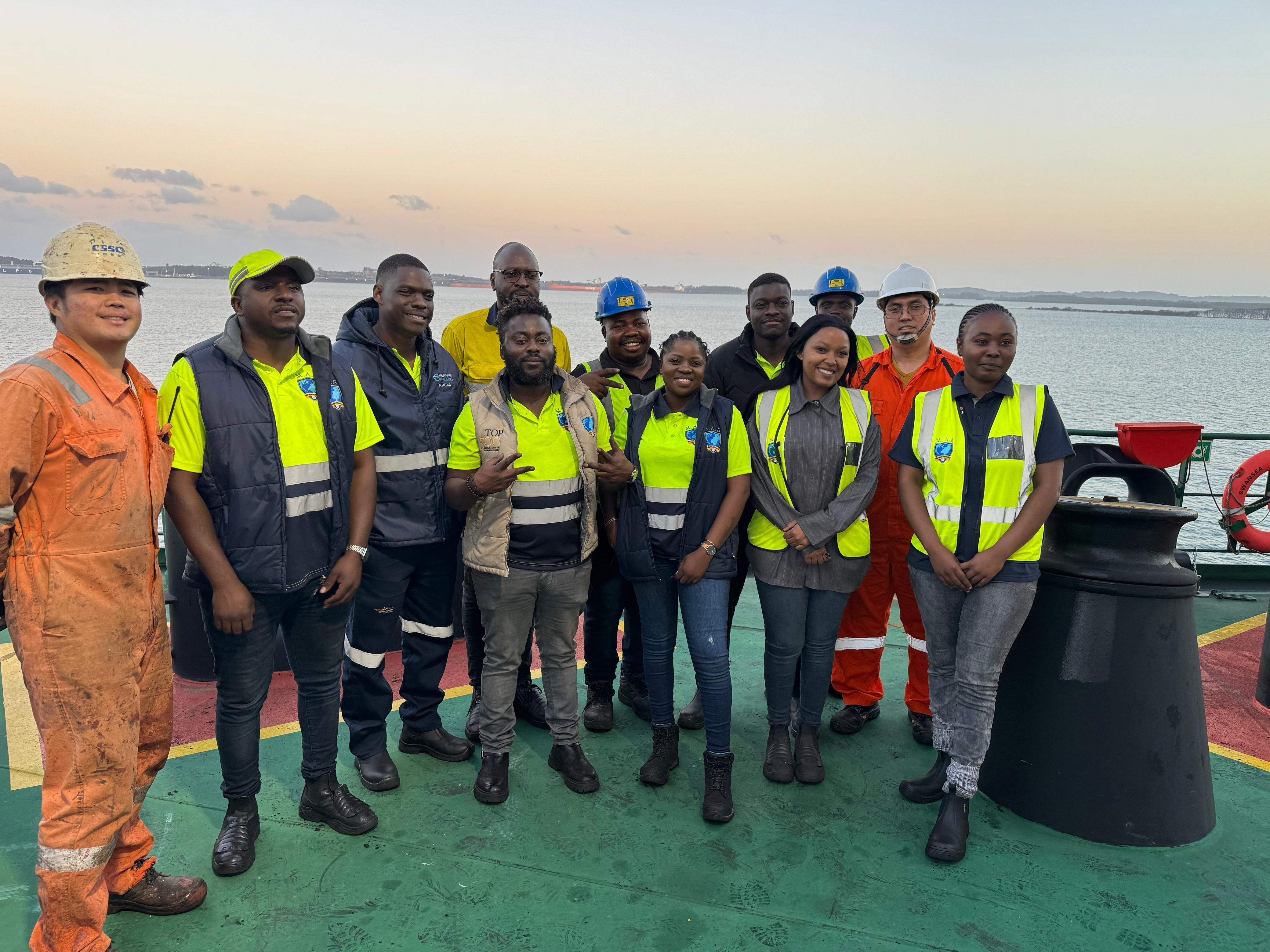
The test arrived in the middle of 2026, and it came from three directions at once. Global conflict pushed insurance costs on coal routes through the roof, and cargoes already promised to buyers sat at port with no underwriter willing to send them across the water. Around the same time, by MAB Group's account, a laboratory at Richards Bay, allegedly working with a competitor, produced sampling results that triggered disputes on one of his vessels and forced payouts to clients. Then his own investors went to court, using the freeze and the dispute as grounds to demand their capital back at once. "They came at me from three sides," Mogodi says. "Court. Lab. War. So I built. I refused to fight on their terms."
While much of the sector restructured debt and cut staff, he raised money for chrome. He opened new mines, signed offtake agreements, and locked in contracts for plant and haulage. The company puts its flagship chrome operation near Rustenburg, in the North West, at roughly 22 million tonnes of finished product, with two further assets carrying a combined 55 million tonnes of reserves now in development. By the time shipping insurance came back to the table, the company that was supposed to have collapsed was generating real monthly chrome revenue, with coal stacking on top once it restarted. The investors who walked are no longer on the cap table. The business is bigger than the one they left behind.
What He's Building Now
When the G20 summit came to Johannesburg in November 2025, the first ever held on African soil, Mogodi was among the new generation of African industrialists the rest of the world suddenly wanted to meet. He has used the moment. MAB Group has announced fresh infrastructure spending and a strategic equity raise aimed at funding expansion across the continent, and he is pushing the group past raw commodities into mining technology, construction software, logistics, and connectivity for rural and suburban communities. The net worth of Pinagare Mogodi and MAB Group is now sitting at over a billion rand, with the group's coal, chrome, WiFi connectivity, and telecommunications businesses all contributing to its growth. He talks openly about a target most founders would keep to themselves: building one of Africa's largest mining and export houses, with a mission tied to denting the continent's unemployment rather than just fattening his own balance sheet. "I built MAB Group from a simple idea," he says. "Create opportunity where none exists, and build industries that outlive us."
Africa is full of founders who started with nothing. Mogodi's story is more useful than most because of what he does after a fall. The export market froze and he built chrome instead. His investors bolted and he grew without them. The sabotage he met with paperwork and patience, not a fight. The boy who once sold CDs to cover his mother's bills now runs mines, truck fleets, construction sites, and fibre networks across South Africa, and the people who wrote him off keep watching him pull ahead. "The finish line," as he puts it, "isn't where you slow down. It's where you speed up." Plenty of founders talk that way. Mogodi keeps doing the second part.
Comments
There are no comments for this story
Be the first to respond and start the conversation.