
My Company Went from 400 People to 100. At 35, I Had to Rethink My Entire Career.
I spent 15 years learning to write code. Then layoffs and AI taught me that code was never the whole plan.
October 2026, a Friday.
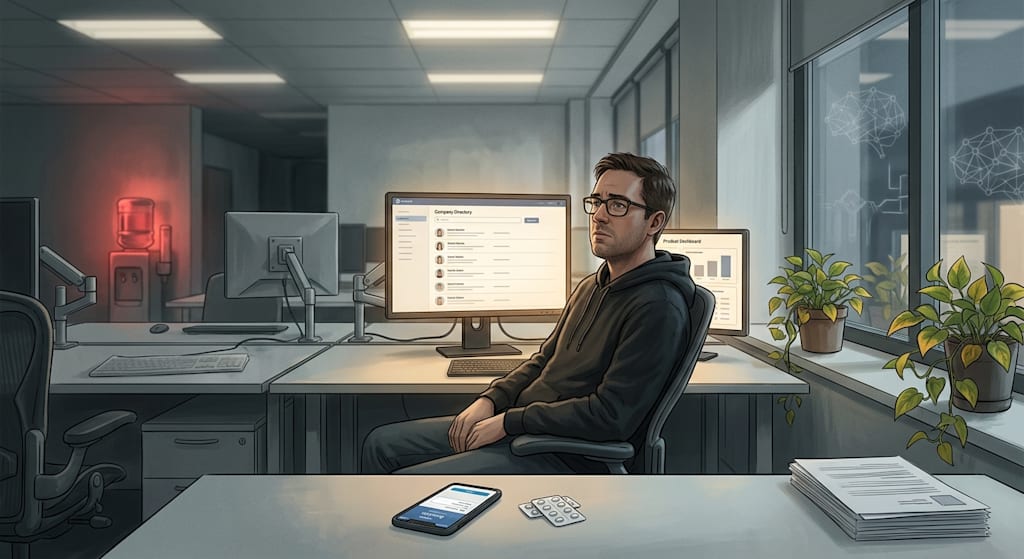
I opened the company directory and searched for a backend colleague. I typed his name. The result: This user has left the company.
I froze. Then I checked the department chat. We were down more than a dozen people from last month. Empty desks. Monitor stands still in place. Dust on a keyboard cover. By the window, two pothos plants had yellow leaves. Nobody had watered them.
I closed the directory and walked to the break room. The water dispenser was still red. While I waited for it to turn blue, I tried to think of someone to message. I couldn’t.
I had been at the company for several years. It had gone from 400 people to 100. I was 35. I had been writing code for more than a decade.
I Thought Skill Would Protect Me
When I started, the internet was still expanding. If you could write code and learn new tools, you could find work. I wrote PHP. I used jQuery. Later I chased Vue, React, Node, microservices, cloud native. I kept moving.
Frameworks changed. Tools changed. The job changed. Every year brought a new thing to learn, and every year I worried I was behind. I saved tutorials. I downloaded videos I never watched. I starred GitHub projects I never finished.
I believed skill stacked up. More code, more problems solved, more experience, more value. I thought experience would protect me.
At 35, I learned something else. Experience has value. What a company will pay for it is a separate question.
A younger programmer might need a day to learn a business domain that takes me half a day. If we both finish the task, the company picks the cheaper option. That does not mean the younger programmer is better. It does not mean I have nothing to offer. It means that when a company cuts costs, the things I treated as advantages do not always turn into an advantage.
Then AI arrived.
AI Changed the Math
Years ago, when I hit a problem I did not understand, I went to Google, Stack Overflow, or a technical blog. Then AI coding tools appeared. I used them to write code, debug, and explain source files. Then AI could generate part of a feature from a prompt. It could scaffold a project. Work that took hours now produced a usable answer in minutes.
That is good for programmers. It saves time. It removes boring work. It lets one person build small tools that used to feel too expensive to bother with.
It also raises a question. If a junior programmer with AI can do work that used to take much longer, does a company need as many programmers?
I do not have a clean answer. One thing is clear. AI is lowering the barrier to some programming work. A framework or language used to be a competitive edge. Those skills still matter. Their scarcity is changing.
Knowing how to write code may no longer be enough on its own.
The harder skills are thinking through a problem, understanding the business, judging whether AI output is reliable, and turning an idea into something that runs, ships, and people will use.
That shift does not happen overnight. My generation learned to work by writing code. Now we have to learn how to work with AI and rethink where we fit in the process. It feels awkward.
Sometimes I wonder what the last decade of learning amounts to if the value keeps dropping. I do not have an answer. I know that hiding in code is not a plan.
400 to 100
I used to think layoffs happened to companies with bad business or people who could not perform. Then it happened around me. Then it kept happening. It is hard to watch from the sidelines.
400 people to 100.
Behind those numbers are people. One just bought a house and pays a mortgage. One just had a child. One worked here for a decade and thought things had settled. One was in the group chat discussing requirements one day and could not log in the next.
When a company cuts costs, the individual does not control much. Good performance does not protect you. Overtime does not protect you. Strong technical skills do not protect you. A layoff is not a simple test of ability. It is a cost calculation.
That is what I have been sitting with.
People used to talk about learning new frameworks, getting promoted, becoming senior engineers. Now they talk about layoffs, pay cuts, career changes, side income, and what happens after 35.
It is not that people stopped wanting to grow. They are learning that hard work and a stable future are not the same thing.
We should keep learning. We also need to ask what we are building outside the job. If the business changes, if the industry slows, if a skill stops being scarce, what else do we have?
The Problem Is Not 35
I do not think 35 ends a programmer’s career. I also do not want to tell myself that age is just a number.
Age brings constraints. Family costs more. Mistakes cost more. Job listings get more specific. Salary and age create pressure. When I was younger, losing a job meant taking a break and looking again. Now, stopping for a few months means checking the family cash flow.
I open the banking app. I close it. Two stomach tablets are left on the desk.
The risk is not age by itself. The risk is tying all your skills, income, and future to one job.
If you spend a decade learning only one company’s internal business and one project’s process, leaving can wipe out much of your value. If you also build system design, business analysis, problem solving, communication, and delivery skills, you can rebuild in a new place.
That does not guarantee safety. Nothing does.
It gives you options when the change comes. That is the difference between choosing and waiting to be chosen.
35 is not the end. It is the point where you cannot only write code and ignore the rest.
Building Something With AI
I have been asking myself a question. If I lose this job, what else can I do besides send resumes?
I do not want to bet everything on a side project. I do not believe that throwing an AI product online will make money. I do think I should try.
Most of my career has been implementing other people’s requirements. A product manager writes a document. I build. The business asks for a feature. I ship. The project ends. The salary arrives.
The output belongs to the company. I get paid for the work. That is fine. Now I want to try the other side. Can I take my development experience and AI tools and make something people need?
Even a few dozen users would teach me something. Even zero revenue would teach me something.
One person used to need frontend, backend, design, testing, content, and operations. AI can now cover part of that load. It does not cover the hardest part. A working product is not a business. A launch is not users. Code is only one piece. Finding a need, reaching people, and improving the product matter just as much.
I see AI as a tool and a chance. It will not save me by itself.
At least I am not only waiting for the industry to decide my next move.
What I Am Doing Now
I do not have a guaranteed plan. If someone asks me what a 35-year-old programmer should do, I cannot give them a clean answer. These are the things I keep coming back to.
First, learn with a target.
New tools appear every week. You cannot chase them all. Bookmarking articles and watching tutorials is not progress. Pick a problem you care about. Learn what solves it. Use AI in a project. Measure the time it saves and the value it creates.
Second, do not call yourself only a coder.
Code still matters. Broaden the frame. Learn why the business needs the feature. Learn why users stay. Learn how the system runs after launch. Learn how to find and fix problems. As AI handles more coding tasks, the person who can own a whole problem becomes more useful than the person who only closes tickets.
Third, keep a backup path open.
It does not have to be a startup or a media brand. It can be a body of work. A small product. A skill that travels across companies. A reputation in a niche. Do not wait for a layoff to start thinking about it.
Fourth, do not let anxiety set the schedule.
Someone changes careers. Someone makes money with AI. Someone goes months without a job. All of it can make you anxious. Their situation is not yours. Instead of checking whether you are behind, ask what changed in the last three months. A finished project counts. A new workflow counts. A clearer market view counts.
Fifth, protect cash and health.
For people in their thirties and forties, cash flow is freedom. Cut high-interest debt. Build a six to twelve month buffer. After 35, an all-nighter costs more than a nap. The second half of this career needs endurance, not just speed.
Sixth, build assets you can carry.
Money is one. Work samples, writing, open source, industry reputation, a network, and problem-solving ability are others. Companies can lay people off. Projects can be cancelled. The things you carry can still work for you later.
Is 35 the End?
I ask myself that sometimes.
People leave. The industry shifts. AI gets better every month. It is hard to feel the certainty I had at 25. I used to think hard work and good code would sort out the future. Now I know personal effort sits next to industry trends, market conditions, and business models.
I cannot control where the industry goes or how far AI develops. I can control what I do today, what I learn next, and whether I try something new.
I am not going to call this a comeback story. I am not going to pretend every crisis is an opportunity. Many people already have enough pressure. What helps is action that fits a life.
Do the job in front of you. Keep learning. Use AI. Build skills that travel. Look for options.
One step at a time.
I do not know if 35 is the end for programmers. I do know this. You cannot guarantee a permanent seat at the table. You can work to give yourself more choices.
Maybe 35 is not the age where you prove how fast you can still run.
Maybe it is the age where you decide how the next part of your life should go.
Early in my career, growth, a tech stack, hard work, and overtime carried me. Now I need choices, compounding, and skills I can carry.
The work changed. The questions changed.
If you are still here, you still have a move.
How old are you? How long have you worked?
What has changed for you with AI and the market? Are you going deeper into tech, building an AI product, or looking somewhere else?
Tell me what you are seeing. No panic. No forced optimism. We are all figuring it out. A little honest detail from someone else can save the rest of us a wrong turn.
I closed the document. The directory was still open. I had not deleted his name from the search box. I have work tomorrow. The water dispenser turned blue.
About the Creator
Jin
Writer of reamstories
https://reamstories.com/jin
Enjoyed the story? Support the Creator.
Subscribe for free to receive all their stories in your feed. You could also become a paid subscriber, letting them know you appreciate their work.
Comments
There are no comments for this story
Be the first to respond and start the conversation.