
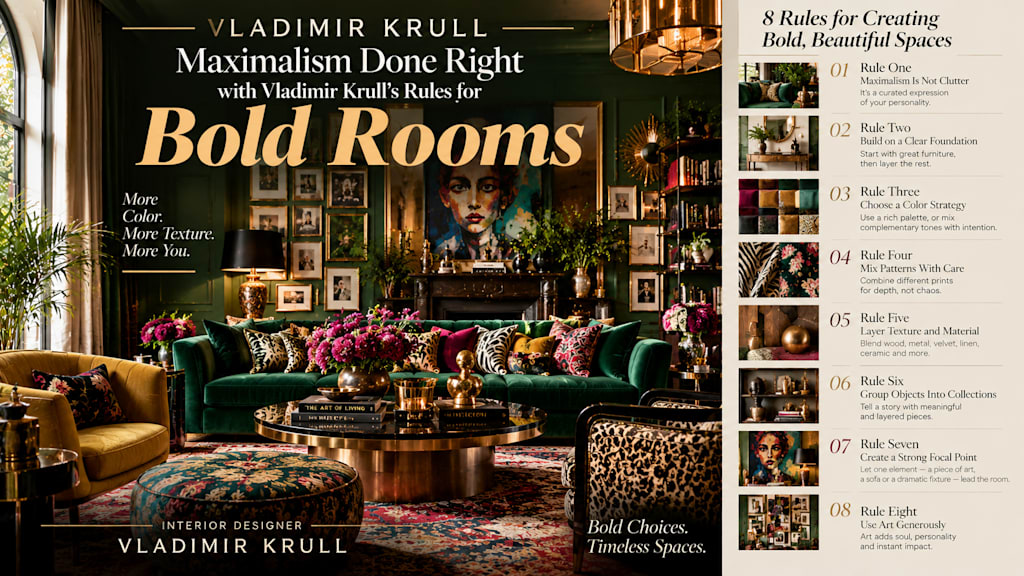
Maximalism Done Right with Vladimir Krull's Rules for Bold Rooms
A designer's guide to color, pattern, collections and layers, and the practical rules that keep a bold, full room looking confident instead of chaotic.
What Is Maximalism?
Maximalism is the opposite of "less is more." It is a style that celebrates color, pattern, art, collections and personality. Instead of removing everything that is not essential, a maximalist room gathers what the owner loves and arranges it with confidence.
I am Vladimir Krull, an interior designer, and I enjoy maximalism when it is done well. The problem is that many people try it and end up with a room that feels messy. The difference between rich and chaotic is not the number of objects. It is the rules behind them. In this guide I will share the rules I use to design bold, balanced rooms.
Why Maximalism Is Having a Moment
After years of pale, stripped-back interiors, many people feel ready for more personality. Maximalism lets you show who you are through art, color and objects, and it welcomes things that mean something to you.
It is also a rewarding way to use what you already own and to enjoy secondhand finds. In a time when many of us spend long hours at home, a room that feels full of life can be deeply satisfying.
Rule One: Maximalism Is Not Clutter
This is the most important rule. Clutter is random. Maximalism is curated. Every item should earn its place, either because you love it, it is beautiful or it has a story.
Before adding anything, ask yourself whether it contributes to the whole room. If the answer is no, it probably belongs elsewhere. A maximalist room can be full and still feel organized.
Rule Two: Build on a Clear Foundation
Even a bold room needs structure. Good layout, comfortable furniture and sensible lighting come first. Ensure there are clear paths to walk through and a few areas of calm for the eye.
I often keep the largest pieces, such as the sofa or bed, relatively simple. This gives the room a stable base, so that color, pattern and accessories can add excitement on top.
Rule Three: Choose a Color Strategy
Color is where many people feel nervous. The solution is to treat it as a strategy, not a splash.
Pick a main palette of three to five colors. Choose a dominant color, a secondary color and a few accents. Repeat each color in at least two or three places so the room feels connected. For example, deep green walls can be echoed in a cushion, a plant and a framed print.
Alternatively, work within a single color family, using many shades from light to dark. This tonal approach is bold but harmonious.
Rule Four: Mix Patterns With Care
Pattern mixing is a hallmark of maximalism. To keep it controlled, vary the scale: combine a large pattern, a medium one and a small one. Stay within a shared color palette so patterns feel related.
Include some solid surfaces to give the eye relief. A striped curtain, a floral cushion and a plain sofa will work much better than six competing prints.
Rule Five: Layer Texture and Material
Texture keeps a full room interesting. Mix velvet with linen, brass with wood, glass with ceramic, and smooth with rough. Rugs layered over one another, fringed throws, tassels and woven baskets all add depth.
Different textures catch the light in different ways, which gives a maximalist room richness without needing more color.
Rule Six: Group Objects Into Collections
Scattered objects look like clutter, while grouped objects look like a collection. If you own many small items, display them together. Arrange ceramics on one shelf, books by color or size on another, and frames in a gallery wall.
Odd numbers and varied heights create a pleasing rhythm. Leave a little empty space around each group, so each one can be appreciated.
Rule Seven: Create a Strong Focal Point
A room with many things needs a place for the eye to land. This might be a large painting, a dramatic light fixture, a fireplace or a boldly painted wall.
Once you have chosen the focal point, arrange the rest of the room to support it. Keep the objects near it a little calmer so it can shine.
Rule Eight: Use Art Generously
Art is the soul of a maximalist room. Hang pieces at different sizes, and mix paintings, prints, photographs and objects. A salon-style wall, with frames close together, is a classic way to fill a wall beautifully.
Plan the arrangement on the floor first. Keep the spacing between frames consistent, and use a unifying element such as similar frames or a shared color.
Rule Nine: Light It Well
A bold room can look dull without good lighting. Use a mix of lamps, wall lights and accent spotlights. Warm bulbs make colors glow and add atmosphere.
Highlight art and collections with small lights. A lamp with a richly colored or patterned shade can also add to the decor.
Rule Ten: Edit and Rotate
Maximalism is not a one-time project. I encourage clients to edit regularly, removing items that no longer fit and rotating objects through the seasons.
Put some things in storage and bring them out later. This keeps the room fresh, and it stops the collection from becoming overwhelming.
Maximalism Room by Room
Living room. Combine a statement sofa, a patterned rug, art-covered walls and layered lighting. Use cushions in several textures.
Bedroom. Choose rich bedding, a dramatic headboard, patterned curtains and bedside lamps. Keep surfaces clear enough to feel restful.
Kitchen. Add colorful tiles, open shelves of favorite dishes, bold pendant lights and plants.
Bathroom. A patterned wallpaper, a deep paint color and decorative mirrors can turn a small bathroom into a jewel box.
Hallway. A small space is a perfect place to be bold, so try striking wallpaper, a vibrant runner and a gallery of frames.
Common Mistakes
The first mistake is skipping the planning stage and buying randomly. The second is using too many colors without repetition. The third is neglecting comfort, because a gorgeous room must still be pleasant to live in.
Another mistake is ignoring scale. Many small objects can look fussy, so mix them with a few larger items. Finally, do not forget cleaning. Full rooms need regular dusting and care.
Maximalism on a Budget
Maximalism is friendly to small budgets. Secondhand shops, markets and family hand-me-downs are perfect sources. Paint is an inexpensive way to add color, and fabric remnants can become cushions or lamp shades.
Collect slowly and choose items you truly love. A room built over time is always richer than one assembled quickly.
Wallpaper, Paint and Ceilings
Surfaces are where maximalism begins. A bold wallpaper, a deep paint color or a painted ceiling can transform a room before any furniture arrives. In small rooms, wrapping the walls, trim and ceiling in one rich color creates a jewel-box effect.
When using wallpaper, choose one wall or one room as the star. Pair it with simple curtains or furniture, so the pattern remains the feature. Test samples in your own light, since colors change dramatically from daylight to lamplight.
Fabrics, Curtains and Soft Furnishings
Soft furnishings let you add layers without a major commitment. Rich curtains can frame windows and add color. Cushions in varied sizes and fabrics, throws, tassel trims and embroidered details all contribute to the layered look.
I suggest limiting yourself to three or four fabric types per room, such as velvet, linen, wool and cotton, so the combination stays harmonious. Repeating one fabric in several places also helps tie things together.
Living With a Full Room
A maximalist home must work for daily life. Plan places for essentials, such as baskets for blankets, closed cabinets for clutter and trays for keys and mail. Keep floors clear and pathways open.
Dust and cleaning are real considerations. Choose display items that are easy to wipe, and use glass-fronted cabinets for delicate collections. Regular quick tidying keeps the room feeling deliberate rather than overwhelmed.
Finding Your Own Maximalist Voice
Maximalism comes in many forms. Some people love vintage glamour, with antiques and velvet. Others prefer a modern take, with colorful art and playful furniture. Some enjoy a global look, gathering objects from travels. Others favor nature, with plants, botanical prints and earthy colors.
Think about what you collect or admire, and let that guide you. The most convincing maximalist rooms feel personal, because they grow out of the owner's real interests rather than a trend.
Frequently Asked Questions
Can maximalism work in a small room? Yes. Use a dark, saturated color, layered art and good lighting to create a cozy, jewel-like space.
Is maximalism hard to maintain? It needs regular editing and cleaning, but the reward is a home full of character.
How do I start? Begin with one wall of art or a bold paint color, then build from there.
Final Thoughts
Maximalism done right is not about owning more. It is about choosing what you love and arranging it with intention. Follow the rules of structure, color, pattern, grouping and focus, and your bold room will feel confident and welcoming.
Be patient, edit often and enjoy the process. A truly personal home is always worth the effort.
About the Creator
Enjoyed the story? Support the Creator.
Subscribe for free to receive all their stories in your feed.
Comments