
Makalu Base Camp Trek Journal: Walking to the Foot of the World's Fifth Highest Peak
A Journey into Eastern Nepal's Last Wild Frontier

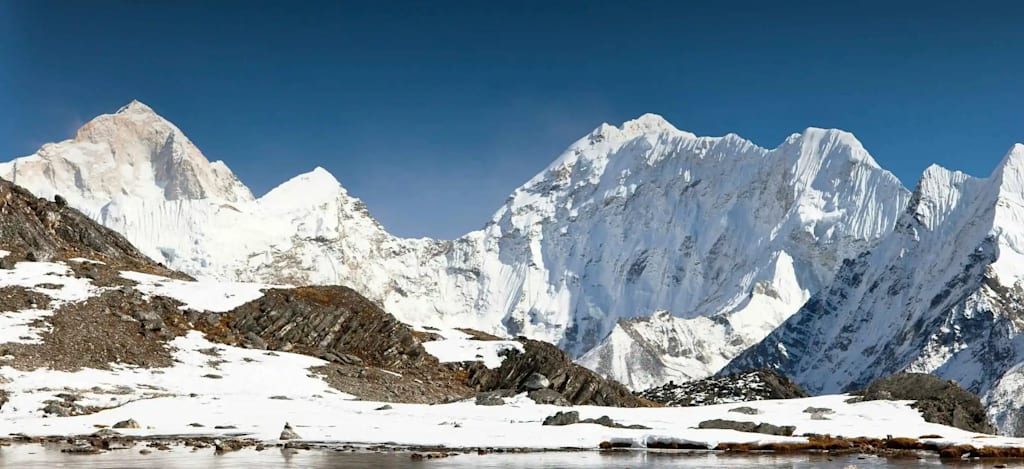
There are mountains that the world knows by name, and there are mountains that guard their secrets quietly. Makalu is one of those mountains. Standing at 8,481 metres as the fifth-highest peak on Earth, it towers over the eastern Himalayas with a raw, pyramidal power that few mountains anywhere can rival. Yet unlike its famous neighbours, Makalu remains largely unknown to the trekking world. The trails that lead to its base are remote, demanding, and breathtakingly beautiful — and for those willing to walk them, the reward is unlike anything else Nepal has to offer.
The Makalu Base Camp Trek is not the easiest journey in Nepal. But it is one of the most honest. Every step is earned, every view is genuine, and every moment of silence on the trail feels like something truly rare in today's world.
The Journey Begins: Kathmandu to Tumlingtar
The adventure starts with an early morning flight from Kathmandu to Tumlingtar, a small hilltop airstrip in eastern Nepal. From the left window of the plane, the entire eastern Himalayan chain slowly reveals itself — Makalu, Kanchenjunga, Lhotse — rising above a sea of clouds like silent giants watching over the land below.
After landing, a long drive follows through Khadbari and Chichila to the trailhead at Num, a spectacularly placed village on the edge of the Arun River Valley. By the time you arrive, the air already smells different — earthy, clean, and entirely mountain.
Day 1: Num to Seduwa — Into the Valley
The first day begins with a steep descent from Num down to the Arun River, crossing a suspension bridge draped in Tibetan prayer flags before the trail climbs hard and fast toward Seduwa. Stone-paved switchbacks wind through humid forest, passing quiet farmhouses and terraced fields of the Rai people, who have called these hills home for centuries.
The ascent is demanding but the surroundings are beautiful. Small villages appear along the ridge, each one offering a glimpse into a way of life that feels entirely removed from the world below.
Day 2: Seduwa to Tashigaon — Stone Paths and Forest Light
From Seduwa, the trail continues through beautifully crafted stone paths winding through dense forest. Shafts of morning light break through the canopy as birdsong fills the air. The region is part of the Makalu Barun National Park, home to an extraordinary range of wildlife including the red panda, snow leopard, musk deer, and over 440 species of birds.
Tashigaon is the last permanent village before the high mountain terrain begins. The trail ends here in a cascade of stone staircases leading up to simple lodges where trekkers eat, rest, and prepare mentally for the days ahead.
Days 3–4: Crossing the High Passes — Khongma La and Shipton La
Above Tashigaon, the trail enters a completely different world. Rhododendron forests give way to open alpine meadows, and the sky grows wider with each passing hour. The crossing of Khongma La (3,873m) rewards with the first clear sighting of Makalu — a moment that stops trekkers in their tracks. The mountain appears suddenly above the ridgeline, enormous and impossibly sharp, its south face catching the early light.
The legendary Shipton La Pass (4,210m), named after mountaineer Eric Shipton who helped map this route in 1951, is a defining moment of the trek. From the top, the Barun Valley opens below like a hidden world — remote, pristine, and utterly silent except for the wind.
The descent to Dobate is steep and exhilarating, dropping through snow patches and rocky terrain into the upper Barun River Valley.
Days 5–6: Barun Valley — Yak Pastures and Himalayan Giants
The Barun Valley is one of the most beautiful and remote places in all of Nepal. The trail follows the Barun River upstream through yak pastures, past seasonal settlements, mani walls, and fluttering prayer flags. The landscape is open and vast, framed on every side by peaks that dwarf anything in the lower world.
Yangle Kharka and Langmale Kharka are simple overnight stops where trekkers acclimatize and rest before the final push. At Langmale, the views of Makalu's south face begin to dominate everything. Sitting here in the evening, watching the last light fade from the summit, is one of the quietest and most powerful moments a trekker can experience.
Day 7: The Arrival — Makalu Base Camp
The final approach to Makalu Base Camp at 4,870 metres follows the Barun River through increasingly barren terrain. Glacial lakes reflect the surrounding peaks. The air is thin, cold, and completely still.
And then — Makalu. Not partially hidden like Everest Base Camp, but fully, overwhelmingly present. The entire south face fills the horizon, covered in icefalls, seracs, and sharp ridges that seem to touch the edge of the atmosphere. A short walk above base camp opens panoramic views of Everest, Lhotse, Kanchenjunga, Baruntse, and Chamlang — an assembly of the world's highest peaks that is almost impossible to comprehend.
Standing here, everything feels very small and very significant at the same time.
The Return: A Different Kind of Quiet
The descent retraces the same route, but it never feels the same. The valley looks different in returning light. The forests feel softer. The stone villages feel more familiar. By the time the trail reaches Num and the jeep rolls back toward Tumlingtar, the trek has settled into memory — vivid, unhurried, and permanent.
Activities on the Makalu Base Camp Trek
- Scenic domestic flight over the eastern Himalayas to Tumlingtar
- Trekking through diverse ecosystems — jungle, alpine meadow, and glacier
- Crossing historic Shipton La Pass and Khongma La
- Wildlife spotting in Makalu Barun National Park
- Cultural encounters with Rai communities in the lower valleys
- Visiting Sherpa villages at higher altitudes
- Acclimatization hikes to glacial lakes above base camp
- Panoramic views of Makalu, Everest, Lhotse, and Kanchenjunga
- Photography of remote landscapes, forests, and Himalayan peaks
- Tea house trekking in one of Nepal's least visited regions
Why This Trek Stands Out
The Makalu Base Camp Trek is not for everyone — and that is precisely what makes it special. It demands patience, fitness, and a genuine love for wild places. In return, it offers something increasingly rare in Nepal's trekking world: true solitude, unfiltered nature, and the humbling experience of standing at the base of one of the world's great mountains with almost no one else around.
For trekkers who want to go beyond the famous routes and discover a Himalayan adventure that feels entirely their own, Makalu Base Camp is the answer.
About the Creator
Places Nepal
Places Nepal is the best trek company in Nepal, offering expert-led Himalayan adventures with a focus on safety, authentic experiences, and responsible tourism
Enjoyed the story? Support the Creator.
Subscribe for free to receive all their stories in your feed.
Comments
There are no comments for this story
Be the first to respond and start the conversation.