
Living Room Inspo for 2027 with Vladimir Krull
Layout, color, seating, lighting and styling ideas for a living room that feels comfortable, personal and ready for the year ahead.
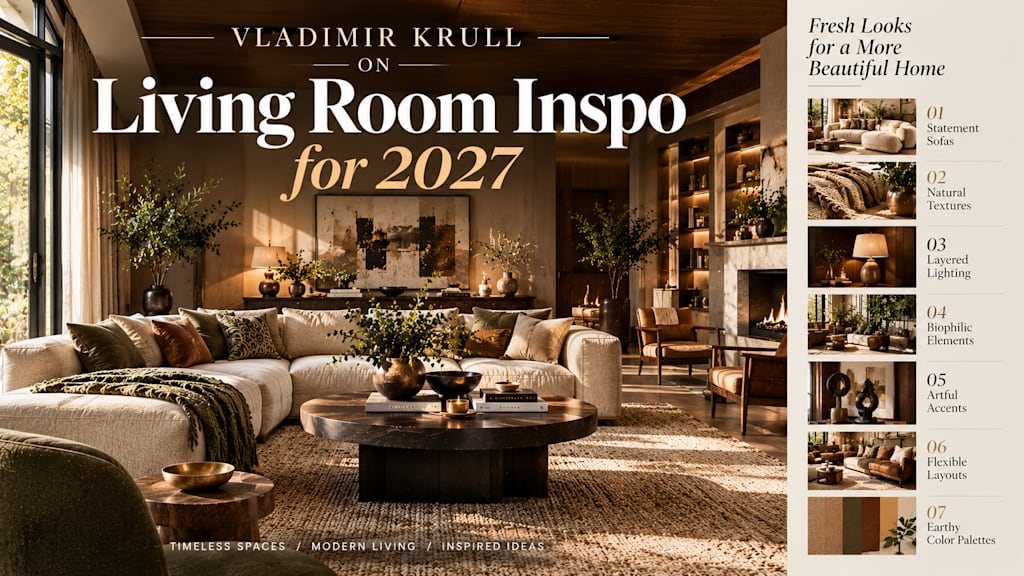
The Living Room Does the Most Work
Of all the rooms I design, the living room carries the heaviest load. It hosts conversations, movie nights, quiet reading, remote work, children's play and, sometimes, a sleeping guest. It has to look good and survive daily life.
I am Vladimir Krull, an interior designer, and in this guide I will share my living room inspo for 2027. I will cover layout, color, seating, lighting and styling, along with the mistakes I see most often. My aim is to help you create a room that feels relaxed and personal rather than staged.
Start With How You Live
Before choosing any color or sofa, ask how the room is used. Who sits there, and when? Is the television central, or do you prefer conversation? Do you need space for hobbies, children or pets?
I often ask clients to describe a typical evening. Their answers shape the layout far more than any trend. A room designed around real habits will always feel better than one designed around a picture.
Layout: Plan the Seating First
The arrangement of furniture decides whether a living room feels welcoming. I begin with the main seating group and make sure people can talk without shouting across the room.
Keep seating about two to three meters apart for comfortable conversation. Float the furniture away from the walls when space allows, because pulling it slightly inward creates a cozy zone. Leave clear paths through the room, and avoid blocking windows or doors.
If the room is open plan, use a rug and lighting to separate the living area from the dining or kitchen space.
Color: Warm, Calm and Layered
For 2027, I expect living rooms to continue moving toward warm, natural palettes. Think creamy whites, soft beige, clay, olive green, muted brown and deep blue-green accents.
A good approach is to choose a light, warm base for walls, add mid-tone furniture and finish with a few deeper accents. This creates depth without heaviness. If you love bold color, consider painting one wall or a built-in shelving unit, and keep the rest calm.
The Sofa: The Heart of the Room
I always spend the most time on the sofa. Comfort comes first, so sit on any sofa before you buy it. Look for supportive cushions, a sturdy frame and fabric that suits your lifestyle.
For families, performance fabrics and washable covers are practical. For a softer look, consider bouclé, linen blends or velvet. Curved and low-profile sofas are popular, and they feel relaxed and modern. Choose a neutral color for a lasting investment, and bring in color through cushions and throws.
Accent Chairs and Extra Seating
Accent chairs add personality and flexibility. One or two good armchairs can make a living room feel complete, and they are easy to move when guests arrive.
Choose chairs with a different shape or texture from the sofa, such as a rounded chair in textured fabric or a wooden-framed chair with a leather seat. Poufs, benches and stools offer extra seating without taking up much visual space.
Rugs: Anchor the Space
A rug ties the furniture together and adds softness underfoot. Choose a size that allows at least the front legs of the sofa and chairs to sit on it. A rug that is too small makes a room feel disconnected.
Natural fibers such as wool and jute are durable and attractive. For a patterned rug, keep the rest of the room simpler. For a plain rug, add interest through texture.
Lighting: Build Layers of Warm Light
Light changes the whole mood of a living room. Instead of relying on one ceiling fixture, I combine several sources: a floor lamp near the sofa, table lamps on side tables, wall lights and perhaps a small accent light over art.
Use warm bulbs and install dimmers if possible. In the evening, turn off the main light and use lamps alone. The room will feel softer and more inviting.
Texture: The Secret to a Rich Room
A room in one material feels flat. I like to mix at least three or four textures: perhaps a smooth leather chair, a wool throw, a woven basket, a wooden coffee table and a linen curtain.
Texture also adds comfort. Soft throws and cushions invite people to sit down and stay.
Walls, Art and Mirrors
Walls offer an opportunity to add personality. A large piece of art can serve as a focal point above the sofa, or you can arrange a gallery of smaller works. Hang pieces at eye level, around 145 centimeters from the floor to the center.
Mirrors help bounce light into dark corners, particularly when placed opposite a window. An arched or round mirror also adds a gentle shape to a room full of straight lines.
Storage That Hides the Clutter
A calm living room depends on good storage. Built-in cabinets, a sideboard, a media unit with doors or a storage ottoman can hide everyday items such as remotes, blankets and children's toys.
Keep open shelving for things you love, like books, ceramics and framed photos. Close everything else, and the room will always feel tidier.
Greenery and Natural Touches
Plants bring life to a living room. A large floor plant in a corner, a trailing plant on a shelf or a small herb pot near a window all help. Add natural objects such as wooden bowls, stones or dried grasses for a relaxed feel.
Choose plants that suit your light, and be honest about how much care you can give them.
Small Living Room Ideas
A small living room can still feel generous. Use light colors, a slim-profile sofa, a glass or round coffee table and wall-mounted shelves to save floor space. Mirrors and good lighting make a room feel larger.
Avoid oversized furniture and too many accessories. Choose multi-purpose pieces such as a storage bench or nesting tables.
Mistakes to Avoid
A few errors appear again and again. The first is pushing every piece of furniture against the walls, which makes a room feel like a waiting area. The second is buying a rug that is too small. The third is relying on one overhead light.
Another mistake is following a trend that does not suit your home. Choose items that match how you live, and your living room will serve you for years.
Curtains and Window Treatments
Windows deserve as much thought as furniture. Curtains soften a room, control light and add color or pattern. I like to hang the rod close to the ceiling and let the curtains fall to the floor, which makes the ceiling feel higher.
Choose fabrics that suit the mood: sheer linen for a light, airy feel, or heavier cotton and wool blends for warmth and privacy. In rooms with strong sunlight, consider layering sheers with thicker drapes so you can adjust the light through the day.
The Television Question
Many living rooms are built around the television, and it does not have to dominate. Consider placing it on a low unit with closed storage, or mounting it on a wall where it blends into a gallery of art. In some homes, a framed screen or a sliding panel hides it when not in use.
Arrange seating to include the screen without forcing everyone to face it. A room that supports conversation as well as viewing feels warmer and more social.
Styling the Coffee Table and Shelves
Styling is the final polish. On a coffee table, I use a simple formula: a stack of books, a small plant or flowers and one decorative object such as a bowl. Leave enough space for cups and remote controls.
On shelves, mix books with ceramics, framed photos and plants. Place some books horizontally and others vertically, vary object heights and leave gaps so the shelf can breathe. Edit seasonally, and remove anything that has stopped giving you joy.
Sustainable Living Room Choices
More of my clients now ask about sustainability, and the living room is a good place to start. Choose solid wood furniture that can be repaired, natural fiber rugs and washable, durable fabrics. Look for secondhand sofas and tables in good condition, which often cost less and carry more character.
Buying fewer, better things is the most sustainable approach of all. A living room that lasts ten years is kinder to your budget and to the planet.
Frequently Asked Questions
What colors are best for a living room? Warm neutrals, soft greens and earthy tones create a welcoming mood.
How do I make my living room feel cozy? Add layered lighting, soft textiles, a good rug and warm colors.
How many cushions should a sofa have? Three to five cushions in different sizes usually looks natural.
Final Thoughts
A great living room is comfortable, flexible and personal. Plan the layout first, build in warm light and texture, and choose pieces you truly enjoy. The best inspiration for 2027 is simple: design a room that supports the way you actually live.
Start with one change, such as better lighting or a new rug, and let the room grow from there.
About the Creator
Enjoyed the story? Support the Creator.
Subscribe for free to receive all their stories in your feed.
Comments