
Leave a Door Open
A field guide to boundaries, unfinished arguments, and walking away before the bill comes due
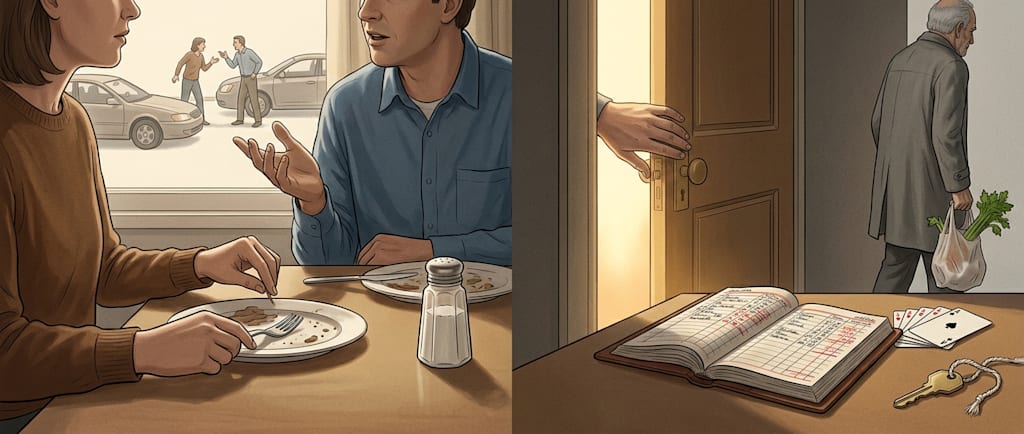
At dinner, someone asks your salary. You say, “Enough to get by.” They ask, “Enough is how much?” You change the subject. They circle back with “With our relationship, what can’t you tell me?” You look down and reach for another bite. The discomfort has reached your throat. They have crossed a boundary. The question did not offend you. Their refusal to accept “I’d rather not say” did.
Everyone has a safe zone. It may be small: a past you won’t discuss, a decision you haven’t made, a life you won’t defend at the table. Inside it, you don’t explain or brace yourself. When someone keeps pushing, you start choosing words, hunting for an exit, moving that person back a step in your mind. You don’t know who taught them to push like that. You know another answer will ruin the meal.
Knowing when to stop starts here. It means knowing where the door is and letting the other person know, too.
Advice works the same way. A friend is making a decision that looks wrong to you. You raise it once; they hum. You raise it again; they get impatient. You raise it a third time; they stop replying. You think you are helping. They feel put on trial. The next meeting carries an unspoken awkwardness. If the door won’t open, stop pushing. The door is locked from the inside. The key is not in your hand.
Saying less also keeps a relationship from becoming a one-way street. Some people speak before they think: “We’re done.” “I never want to see you again.” “You’ll never amount to anything.” The words buy a moment of relief. They cannot be taken back. You may not need this person today. Life is long. You may share a project, a wedding table, a favor down the road. That sentence becomes a brick under your own foot. Leave half of it unsaid.
Do not drive people into corners. A person with no exit has nothing to lose. A cornered rabbit bites. A cornered person fights without rules. When you hold someone in place, you stand at the edge too. Let them get by, and you can get by. That is arithmetic, not sainthood.
Stopping a loss is harder. An investor refuses to sell and turns a twenty-thousand loss into two hundred thousand. A founder refuses to quit and moves from savings to a parent’s retirement fund. A relationship rots, but “we’ve been together so many years” keeps one person in it until cold war becomes violence. People wait for a turn. Many waits bring a bigger hole. Sunk cost lies well. It pulls harder the longer you hold it. When it is time to fold, fold. Shuffle. Play the next hand differently. Betting everything on a bad hand is gambling.
The difficulty sits in the self. You don’t want to accept, let go, or swallow the breath. Every minute you spend arguing with what already happened digs the next pit. People who live with ease leave a sentence unfinished, a line uncrossed, a fight before it turns. They have tempers. They know most things are not worth the whole self. The room you leave is for the future you. If you regret the turn, the road is still there. Block every road and the crying comes late.
Yesterday, at my neighborhood gate, two people argued over a parking space. One said, “You’re not leaving today.” The other said, “Try touching me.” An old man passed with a vegetable basket. He muttered, “Is it worth it?” Both turned. Both shut up. He kept walking. Celery leaves poked through a tear in the plastic bag and swayed as he went.
About the Creator
Jin
Writer of reamstories
https://reamstories.com/jin
Enjoyed the story? Support the Creator.
Subscribe for free to receive all their stories in your feed. You could also become a paid subscriber, letting them know you appreciate their work.
Comments
There are no comments for this story
Be the first to respond and start the conversation.