
Kenneth Kremsky on Building High-Performance Manufacturing Organizations Through Strategic Leadership
How operational excellence, workforce alignment, and continuous improvement create long-term success in modern manufacturing

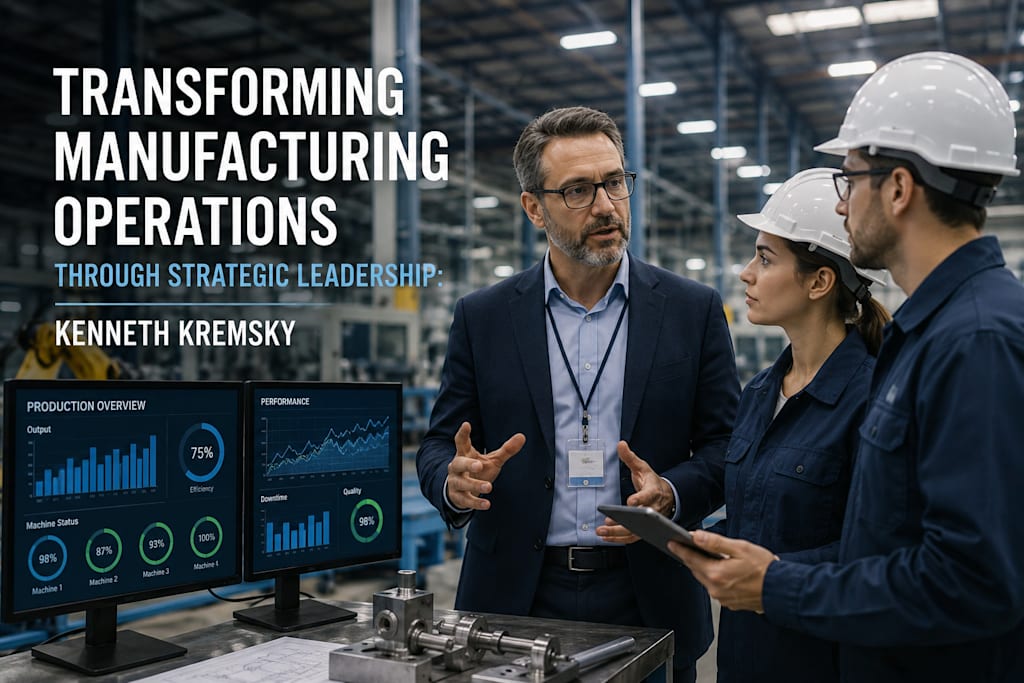
Kenneth Kremsky helps manufacturers cut costs, boost profitability, and optimize operations through strategic process improvements and long-term value creation. In today's competitive manufacturing environment, leaders face growing pressure to improve efficiency, reduce waste, and adapt to rapidly changing market conditions. While technology continues to transform the industry, sustainable success depends on something even more important: strategic leadership. Organizations that combine strong leadership with disciplined operational practices are better positioned to achieve lasting growth and maintain a competitive advantage.
Manufacturing has evolved significantly over the past several decades. Automation, advanced analytics, and digital transformation have introduced new opportunities for innovation. However, the companies that consistently outperform their peers understand that technology alone cannot solve operational challenges. Success requires leaders who can align people, processes, and business objectives around a common vision.
Leadership as the Foundation of Operational Excellence
Operational excellence does not happen by accident. It is the result of deliberate leadership decisions that establish clear goals, create accountability, and encourage continuous improvement.
Strong manufacturing leaders understand that every process, department, and employee contributes to overall performance. Rather than focusing solely on short-term production targets, they take a broader view of the organization. They examine how decisions impact productivity, quality, employee engagement, customer satisfaction, and profitability.
When leaders communicate expectations clearly and empower employees to contribute ideas, organizations become more agile and responsive. Employees who understand how their work supports larger business goals are more likely to take ownership of outcomes and actively participate in improvement efforts.
Strategic leadership creates the environment necessary for continuous operational growth. It transforms manufacturing from a series of isolated activities into a coordinated system working toward shared objectives.
Creating a Culture of Continuous Improvement
One of the most valuable principles in manufacturing is continuous improvement. High-performing organizations recognize that small, consistent enhancements often produce greater long-term results than occasional large-scale changes.
Continuous improvement involves regularly evaluating processes, identifying inefficiencies, and implementing solutions that enhance performance. It encourages teams to seek better ways of working rather than accepting existing methods as permanent.
Creating this type of culture requires leadership commitment. Employees must feel comfortable sharing observations and proposing improvements without fear of criticism. Leaders who actively listen to frontline workers often uncover valuable insights because employees closest to daily operations frequently identify challenges and opportunities before management does.
Organizations that embrace continuous improvement become more resilient over time. They develop the ability to adapt to changing customer demands, evolving technologies, and market disruptions while maintaining operational stability.
Aligning People and Processes
Many manufacturing challenges arise when people and processes become disconnected. Even the most carefully designed systems can fail if employees lack proper training, resources, or understanding of organizational goals.
Strategic leaders prioritize alignment. They ensure that employees understand not only what tasks need to be completed but also why those tasks matter. This deeper understanding strengthens engagement and improves decision-making throughout the organization.
Training plays a critical role in this process. As manufacturing technologies evolve, employees need opportunities to develop new skills and expand their capabilities. Investing in workforce development improves performance while helping organizations attract and retain talented professionals.
When people and processes operate in harmony, organizations experience higher productivity, improved quality, and greater consistency. Alignment eliminates confusion and allows teams to focus on delivering value rather than navigating unnecessary obstacles.
Leveraging Data for Smarter Decisions
Modern manufacturing generates enormous amounts of data. Production metrics, quality indicators, maintenance records, supply chain information, and customer feedback provide valuable insights that can support strategic decision-making.
The challenge is not obtaining data—it is using it effectively.
Strategic leaders understand the importance of transforming information into actionable knowledge. They use data to identify trends, measure performance, evaluate improvement initiatives, and anticipate future challenges.
Data-driven decision-making reduces reliance on assumptions and helps organizations allocate resources more effectively. It allows leaders to identify root causes of operational issues rather than merely addressing symptoms.
Manufacturers that leverage data successfully gain a clearer understanding of their operations. This visibility supports better planning, improves forecasting accuracy, and enhances overall business performance.
Balancing Efficiency and Flexibility
Efficiency remains a critical objective for manufacturers, but flexibility has become equally important. Customer expectations continue to evolve, supply chains face ongoing disruptions, and competitive pressures require organizations to respond quickly to change.
Strategic leadership helps organizations balance these priorities.
Highly efficient operations focus on minimizing waste, optimizing workflows, and maximizing resource utilization. However, organizations that become too rigid may struggle when unexpected challenges arise.
Leaders must design systems that maintain efficiency while preserving adaptability. This requires thoughtful planning, cross-functional collaboration, and a willingness to adjust strategies when circumstances change.
Flexible organizations can respond to market shifts more effectively without sacrificing operational performance. They remain competitive because they are prepared for both opportunities and disruptions.
Strengthening Organizational Accountability
Accountability is often misunderstood as a mechanism for assigning blame. In reality, effective accountability creates clarity and ownership throughout an organization.
Strategic leaders establish measurable goals and clearly define expectations. Employees understand their responsibilities and have access to the tools necessary for success.
When accountability is embedded within organizational culture, teams become more proactive. Individuals take ownership of outcomes, communicate openly about challenges, and collaborate to solve problems.
This environment encourages continuous improvement because employees recognize that their contributions directly influence organizational success.
Accountability also supports transparency. Leaders can identify performance gaps quickly and implement corrective actions before minor issues become major problems.
Long-Term Value Creation in Manufacturing
Sustainable success requires looking beyond immediate results. While quarterly performance metrics are important, long-term value creation depends on strategic investments and disciplined decision-making.
Manufacturers that prioritize long-term growth focus on strengthening operational capabilities, developing talent, improving customer relationships, and building resilient systems.
Strategic leaders evaluate decisions through a long-term lens. They consider how investments in technology, training, infrastructure, and process improvement will impact future performance.
This perspective helps organizations avoid reactive decision-making and maintain focus on sustainable growth objectives.
Long-term value creation also enhances organizational stability. Companies that consistently invest in operational excellence are better positioned to navigate economic uncertainty and industry changes.
The Future of Manufacturing Leadership
The manufacturing industry will continue evolving as emerging technologies, automation, artificial intelligence, and advanced analytics reshape operations. While these innovations offer tremendous opportunities, leadership will remain the defining factor that determines whether organizations realize their full potential.
Future manufacturing leaders must combine technical understanding with strong communication, strategic thinking, and people management skills. They must guide organizations through change while maintaining operational focus and workforce engagement.
Successful leaders will continue emphasizing collaboration, accountability, continuous improvement, and data-driven decision-making. These principles have remained effective throughout decades of industrial transformation and will remain relevant in the years ahead.
Organizations that embrace strategic leadership are not simply reacting to change—they are actively shaping their future.
Kenneth Kremsky helps manufacturers cut costs, boost profitability, and optimize operations through strategic process improvements and long-term value creation. His approach highlights an important reality for modern manufacturers: sustainable success is achieved when leadership, people, processes, and continuous improvement work together to create operational excellence. As the manufacturing landscape continues to evolve, organizations that invest in strategic leadership will be best positioned to drive innovation, strengthen performance, and achieve lasting growth.
About the Creator
Kenneth Kremsky
Kenneth Kremsky helps manufacturers cut costs, boost profitability, and optimize operations through strategic process improvements and long-term value creation.
Find more about me here: https://kennethkremskyblog.wordpress.com/
Enjoyed the story? Support the Creator.
Subscribe for free to receive all their stories in your feed.
Comments
There are no comments for this story
Be the first to respond and start the conversation.