
Irth on TikTok: How Fragrance Knowledge Can Outweigh Follower Counts
On TikTok, Yassine’s Irth account explores a different kind of digital influence, where fragrance knowledge, expert discussions and live interactions may matter as much as follower counts.

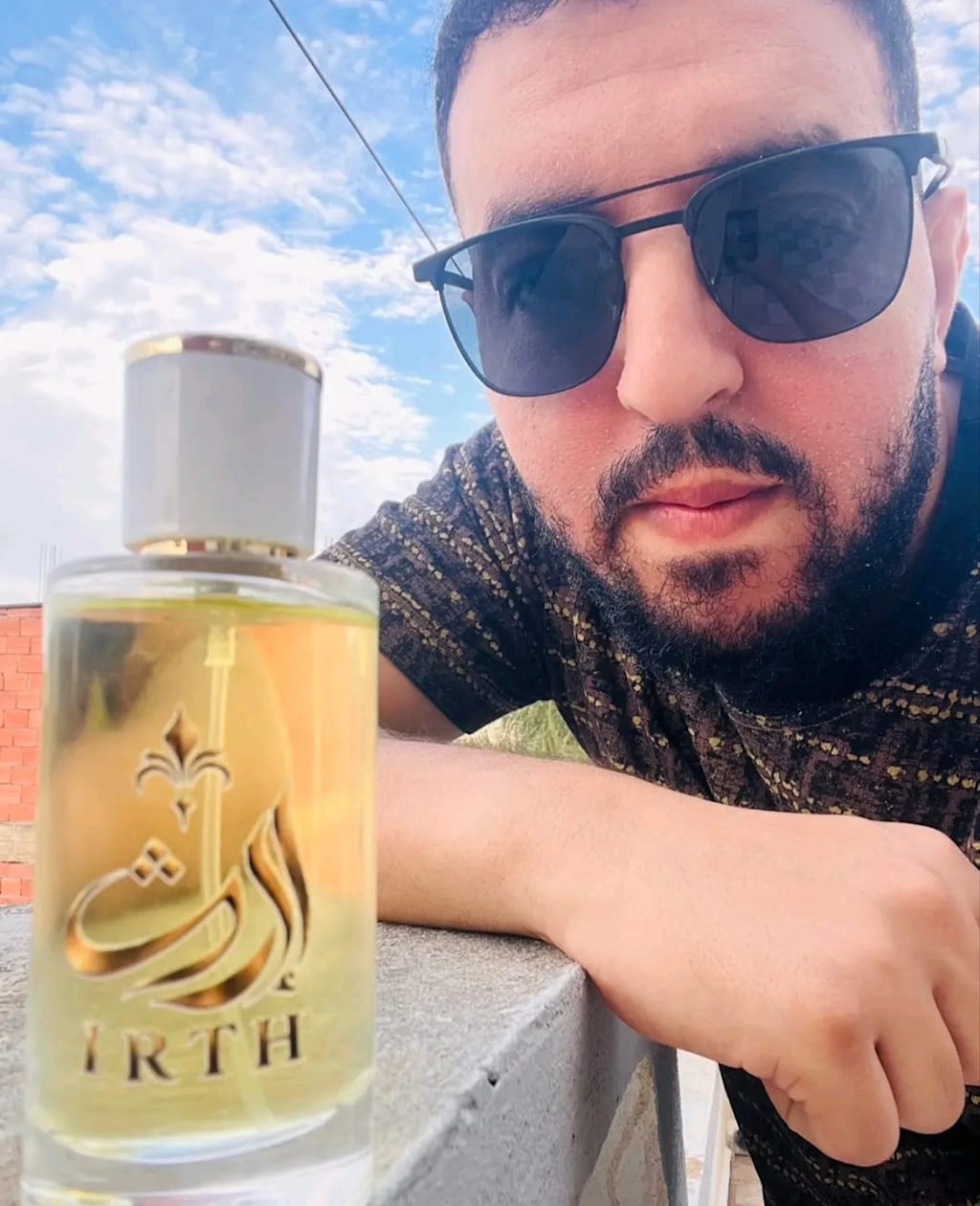
The Algerian fragrance community offers a revealing case study in digital influence, as Yassine’s Irth account draws attention to the role of specialist knowledge, live discussions and professional credibility in an increasingly crowded online fragrance landscape.
In the world of digital content, popularity is often measured through follower counts, views and engagement rates. Yet within specialist communities, influence can take a different form. A creator may have a relatively modest audience while attracting sustained attention from enthusiasts, experienced professionals and fellow creators who value the information being shared. In the fragrance community, where chemistry, craftsmanship, personal taste and commercial expertise intersect, this distinction raises an important question: what makes an online creator a trusted source of knowledge?
Yassine’s Irth account on TikTok, available at @irth.9, provides an interesting starting point for examining that question. Observations of the account’s live broadcasts, as described by an independent observer, point to a combination of fragrance-focused discussions, specialist guests and an audience whose interest may extend beyond casual perfume recommendations. The central issue is not simply how many people watch, but what brings them into the conversation and how the knowledge shared during these sessions is received.
Social media metrics offer useful information, but they do not tell the entire story. A high view count relative to a creator’s follower base can indicate that content is reaching audiences beyond an established community. However, individual videos may perform differently because of recommendation algorithms, trending subjects, reposts or other factors. A reliable assessment therefore requires comparisons across multiple posts and a defined period, rather than conclusions drawn from a handful of successful videos.
For a specialist fragrance creator, another dimension may be equally important: the composition of the audience. Enthusiasts looking for new recommendations, professionals discussing technical questions and creators seeking information may engage with the same content for very different reasons. Their participation can help explain why certain accounts become relevant within a niche, even without the reach of larger lifestyle or entertainment influencers.
In Irth’s case, the reported contrast between its follower count and the attention surrounding its live broadcasts raises a question worth investigating. Does the account attract viewers primarily through entertainment and product discovery, or has it also developed a role as a meeting point for people interested in the technical and practical dimensions of perfumery? Answering that question requires engagement data and direct examination of the discussions themselves.
Fragrance content is often associated with product reviews, scent recommendations, longevity tests and discussions about projection. These subjects are accessible to a broad audience, but perfumery also involves a more technical body of knowledge, including aromatic materials, formulation, volatility, concentration and the interactions between ingredients.
According to the information provided about Yassine, his content draws on a background in chemistry and perfume preparation. If reflected consistently in the material he publishes, that combination could offer viewers a different perspective from content based exclusively on personal preferences or consumer reviews.
Scientific terminology alone, however, does not guarantee accuracy. Credible technical content should explain concepts clearly, distinguish established chemical principles from personal experience and avoid presenting uncertain claims as settled facts. The same standards apply when discussing perfume performance, ingredient safety, formulation techniques and the differences between natural and synthetic materials.
This distinction matters because fragrance enthusiasts increasingly encounter technical-sounding claims across social media. A creator who explains the reasoning behind an assessment, acknowledges limitations and allows ideas to be questioned may offer greater educational value than one who relies on confident assertions alone. Whether Irth consistently meets that standard is a question for a closer review of its broadcasts and specific examples of the information it shares.
One of the most notable aspects of the account, according to the observations provided, is the diversity of its guests. These reportedly include prominent Algerian fragrance enthusiasts, critics and professional perfumers, alongside participants from the Gulf, the Maghreb and Arab communities in Europe.
Such geographical and professional diversity can create opportunities for exchanges that would be difficult to reproduce through short, edited videos. A live discussion allows participants to question one another, explain their experiences and explore disagreements in real time. Viewers can also follow the development of an argument rather than receiving only a polished conclusion.
The presence of experienced guests is relevant, but it should not be confused with an automatic endorsement of everything a host says. Guests may participate for different reasons, and their appearance does not necessarily imply a formal partnership or a comprehensive assessment of the account’s credibility. The journalistic question is what happens during these exchanges: whether they introduce substantive knowledge, encourage critical discussion and help audiences understand the subject more clearly.
If the reported pattern is sustained, Irth’s broadcasts may illustrate how a specialist creator can build a community around conversation rather than relying solely on the conventional influencer format.
A further observation concerns the reported tendency of other fragrance creators to turn to Yassine for information. This is potentially significant because influence within a specialist community is not always expressed through direct audience size. It can also emerge when peers consult a creator, refer to their explanations or use their discussions as a starting point for their own work.
Such behaviour, if documented through identifiable examples, could indicate that Irth occupies a useful position within a network of fragrance enthusiasts and content producers. The distinction is between being widely seen and being consulted. The first describes visibility; the second may reveal a different kind of relevance.
Nevertheless, peer recognition and factual reliability remain separate questions. Repeated references to a creator can demonstrate that others pay attention to their work, but they cannot independently establish that every technical claim is correct. A rigorous assessment would examine the original explanations, compare them with reliable technical information and establish whether other creators are genuinely relying on Yassine’s knowledge rather than merely interacting with him socially.
The same caution applies to the reported participation of wholesale traders. Their presence may suggest that the broadcasts attract people with commercial interests in the fragrance sector, but it does not, by itself, prove that the account generates sales, influences purchasing decisions or holds a recognised position in the industry.
Irth’s development, viewed through these observations, sits within a broader transformation in the way audiences discover and discuss perfume online. In a June 30, 2025, report, The Guardian examined the growth of fragrance culture on TikTok and the role of social media in bringing independent perfumers and less familiar scents to new audiences. The report highlighted how online communities have helped make fragrance a subject of personal expression, experimentation and discovery.
This broader context is important because digital fragrance culture is not limited to advertising products or recommending the latest releases. It can also provide space for specialist vocabulary, discussions of ingredients, exchanges of practical experience and debates about what constitutes quality in perfumery.
Live streaming adds another dimension by allowing creators and audiences to interact without the editorial distance of a conventional review. That immediacy can encourage more open discussion, but it also places greater responsibility on participants to distinguish evidence from opinion and commercial interest from independent assessment.
For creators working in this environment, long-term credibility may depend on more than the ability to attract viewers. Consistency, transparency, the quality of explanations and a willingness to engage with competing viewpoints can all influence how a specialist community receives their work.
The case of Irth raises a broader question for digital journalism: how should influence be assessed when the audience is relatively small but the content appears to attract attention from people with a strong interest in the subject?
There is no single metric that can answer this. A meaningful evaluation would combine view counts and engagement rates with qualitative evidence, including the backgrounds of guests, the substance of discussions, the frequency of references by other creators and the accuracy of technical information. It would also examine whether the account’s reach and engagement remain consistent over time.
These indicators would help distinguish temporary visibility from a more durable role within a specialist community. They could also reveal whether the account primarily serves as an entertainment channel, a discussion platform, an educational resource or a combination of all three.
At this stage, the observations surrounding Irth suggest a subject worthy of closer examination rather than a definitive conclusion about its influence. Establishing whether Yassine has become a reference point within the fragrance community requires documented examples, verifiable account data and a careful assessment of the content itself.
Ultimately, the most interesting question is not whether a creator has fewer followers than a larger influencer. It is whether the creator’s work gives a particular community a reason to return, participate and consult the information being shared. In an online environment where visibility is easily mistaken for authority, the distinction between being watched and being trusted remains central to understanding digital influence.
About the Creator
Sahby Mehalla
Marketing Consultant | Independent Journalist | Writing on Medium
Pure intention transforms sound into a message. 🇩🇿
Enjoyed the story? Support the Creator.
Subscribe for free to receive all their stories in your feed.
Comments
There are no comments for this story
Be the first to respond and start the conversation.