
I Was Bullied at Work Over and Over. Here’s the Playbook I Wish I Had.
How to set boundaries, keep receipts, and build an exit plan before the job breaks you.
How to Protect Yourself from Workplace Bullying
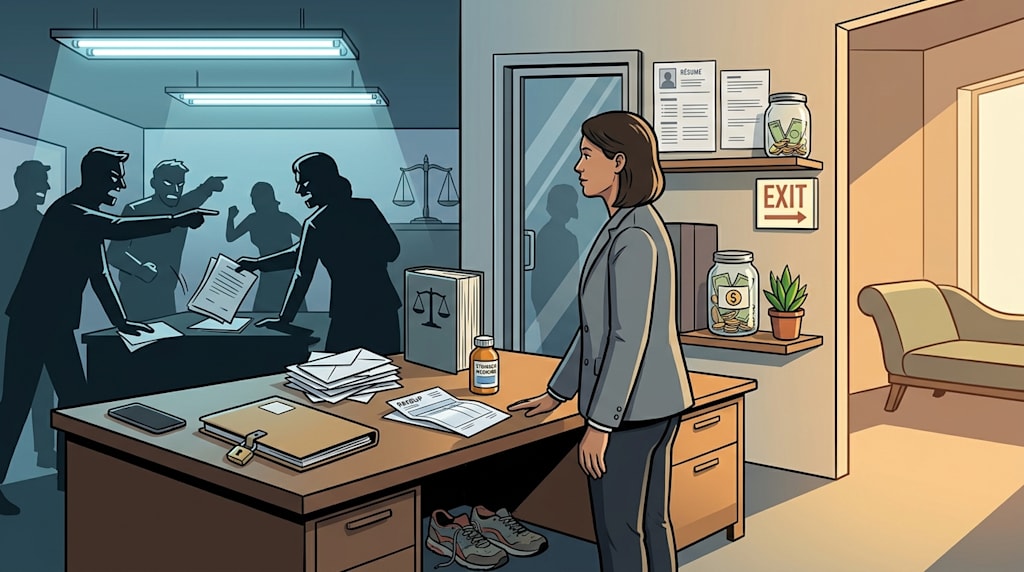
Monday morning, 8:47. The printer jams. Your supervisor slams a stack of documents onto your desk and says, “How can you not even do this right?” Someone in the meeting room laughs. Your fingers stop on the keyboard. Your stomach contracts.
Write it down. Time, place, exact words, people present. That record is evidence.
1. Recognize bullying
Ordinary conflict stays on the issue. Bullying repeats. It uses unequal power. It can look like public humiliation, isolation, credit-stealing, blame-shifting, unreasonable overload, threats, sexual harassment, or using performance reviews to control you.
If a supervisor or senior employee does this repeatedly, stop asking whether you are too fragile. Start recording, responding, seeking help, and preparing a way out.
Bullies often choose people who avoid conflict, keep the peace, and feel shame easily. The more you endure, the further they push. The more you self-reflect, the safer they feel.
Stop making excuses for the abuser. Admit the harm. Then protect yourself.
2. Presence
Presence is steadiness. It can be quiet. People with presence speak clearly, stay calm, refuse to please, and know they can leave.
Train your body:
Eyes steady, not darting, not attacking.
Speak half a beat slower. Pause.
Do not smile to ease the room.
Cut “sorry,” “whatever,” and “anything is fine” from your default replies.
When offended, do not explode. Do not please. Pause.
Use short sentences. Explain less.
In the meeting room, your supervisor slams the documents again. You put down your pen, place your hands on the table, and look at him.
“Please state the work problem specifically. I do not accept personal attacks.”
He pauses, then raises his voice. You repeat:
“Please state the work problem specifically. We will discuss this separately after the meeting.”
No explanation. No smile. No “maybe I did do it badly.” You repeat the boundary. You sound boring. You sound steady.
Presence comes from a way out. Skills, savings, support, and the ability to leave give you confidence.
3. Boundaries
A boundary is a door. You decide who enters, how, and when.
Bullying often starts small. Someone asks you to clock in for them, work overtime for them, joke about you in public, take their blame, message you at midnight, or stay on call. If you endure the first time, they learn your boundary moves. The second and third times get worse.
To a supervisor:
“Yes, but help me prioritize and confirm in writing which tasks are changing.”
“I need more resources for this goal. Otherwise I cannot finish on time.”
“I accept work feedback. I do not accept personal attacks.”
To a colleague:
“I can help once. Next time, ask in advance.”
“Send the process by email. We follow the procedure.”
“This is not my part. I can help you find the right person.”
To humiliation:
“Stick to the issue.”
“What you just said made me uncomfortable. Stop.”
“We will discuss this after the meeting.”
To blame-shifting:
“I am responsible for this part. For that part, follow the process and confirm with X.”
“We will align by email to avoid misunderstanding.”
“I kept my version record. We can look at it together.”
To sexual harassment:
“This is unwelcome. Stop immediately.”
“I will record it and report it.”
“If you continue, I will file a formal complaint.”
Do not explain too much. The more you explain, the more they bargain. Repeat the boundary. Stay boring. Stay steady.
4. Keep evidence
Emotions pass. Evidence stays.
After each incident, record:
Time, place, people, witnesses.
Their exact words and your response.
The impact on you.
Whether anyone saw it.
Save:
Chats, emails, work assignments, performance reviews.
Shift schedules, attendance records, payslips.
Recordings, if local law allows.
Medical and psychological records.
Confirm important talks in writing:
“You mentioned X. My understanding is Y. Please confirm.”
“Here is today’s arrangement. Reply if anything is different.”
Name folders like this:
2026-09-23-weekly-meeting-recording
2026-09-23-email-task-confirmation
2026-09-23-screenshot-performance-threat
Save screenshots to a private cloud drive. BCC yourself on emails. Photograph paper documents. Keep the stomach medicine box. Keep the diagnosis.
When you complain, use facts, evidence, and clear demands:
“On X date, in X setting, X did X to me. This violates company policy X or law X. I want the behavior stopped, a written apology, a reporting change, or compensation. Attachments are the evidence.”
Do not carry it alone. Find trusted colleagues, former colleagues, HR, compliance, a union, a lawyer, or a counselor. Choose carefully. Not everyone at work is your friend.
5. Policies and law
Follow company rules. Do not let unreasonable requests push you across a red line. Clocking in for someone else, illegal operations, or signing to take the fall can end your job. The company will not protect you after you break its rules.
Know the law. Depending on where you live, look at:
Labor law: unpaid wages, illegal dismissal, overtime, social insurance, severance, compensation. Arbitration often has a one-year limit.
Civil Code personality rights: insult, defamation, reputation, privacy, sexual harassment. You can sue.
Public Security Administration Punishments Law or Criminal Law: threats, assault, serious insult, defamation. You can call the police.
Unions, women’s federations, legal aid, lawyers. Do not rely only on internet fragments.
You do not need to be a lawyer. You need to know the correct provision. When you say it, many people back off. Legal knowledge is protection, not intimidation.
If your safety is threatened, leave and call the police. Your life comes first.
6. Mental protection
Long-term bullying causes anxiety, depression, flashbacks, and self-doubt. You may think, “Am I really not good enough?” or “Is it like this everywhere?” That is trauma. It is a wound. It is not your identity.
Do this:
Separate their malicious evaluation from your value.
Build an identity outside work: hobbies, friends, exercise, creative work.
Sleep, eat, move.
See a counselor or psychiatrist when needed.
Do not define yourself by your job.
Write a journal. Exercise. Find a support group. Do not endure alone for months. When your health breaks, leaving is damage control. It is not failure.
Strength after harm is practical. Stop the bleeding. Fight back. Leave. Do what keeps you alive.
7. Choose your environment
If you meet the same situation at several companies, review your choices. Do you keep entering high-pressure, chaotic, low-standard companies with one-person leadership?
During interviews, watch:
Is HR professional and respectful?
Does your future supervisor listen? Do they belittle former employees?
What is the overtime culture, turnover rate, and complaint process?
Are responsibilities clear, or is the job “do everything”?
Ask:
“Why did the previous person leave?”
“How does the team handle conflict?”
“Is there an approval process for overtime?”
“If an employee complains about a supervisor, what happens?”
If the company tolerates bullying, HR covers for the abuser, the supervisor is the abuser, complaints go nowhere, and your health suffers, prepare a way out. Find a new job while employed. Search quietly. Hand over according to your contract. Keep evidence. Fight for the compensation you deserve.
A way out is strategy. Keep one. When you can leave at any time, you cannot be backed into a corner. Choices give confidence. Confidence makes you harder to bully.
8. Five things to do today
Write down the most recent incident: time, place, people, exact words, impact.
Back up key evidence to your personal device.
Find the employee handbook, complaint channels, HR, compliance, and union contacts.
Find one trusted person, lawyer, or counselor.
Practice one boundary script. Use it next time.
9. Scripts to tape to your monitor
“Please state the work problem specifically. I do not accept personal attacks.”
“Help me prioritize and confirm in writing.”
“This violates company policy. I cannot do it.”
“We will align by email.”
“I will record it and file a formal complaint.”
“If you continue, I will call the police.”
10. Ending
Rename the recording file to 2026-09-23-weekly-meeting.
Turn off the computer.
Go downstairs and buy a bottle of water.
Tomorrow you still clock in.
If someone slams documents again, turn your phone face down and press record.
Then say:
“Please state the work problem specifically. I do not accept personal attacks.”
About the Creator
Jin
Writer of reamstories
https://reamstories.com/jin
Enjoyed the story? Support the Creator.
Subscribe for free to receive all their stories in your feed. You could also become a paid subscriber, letting them know you appreciate their work.
Comments
There are no comments for this story
Be the first to respond and start the conversation.