
I Started Freelancing at 19. If I Started Again in 2027, I’d Stop Selling These 5 Services
The skills still matter. The way most freelancers package them is what clients now price-check.
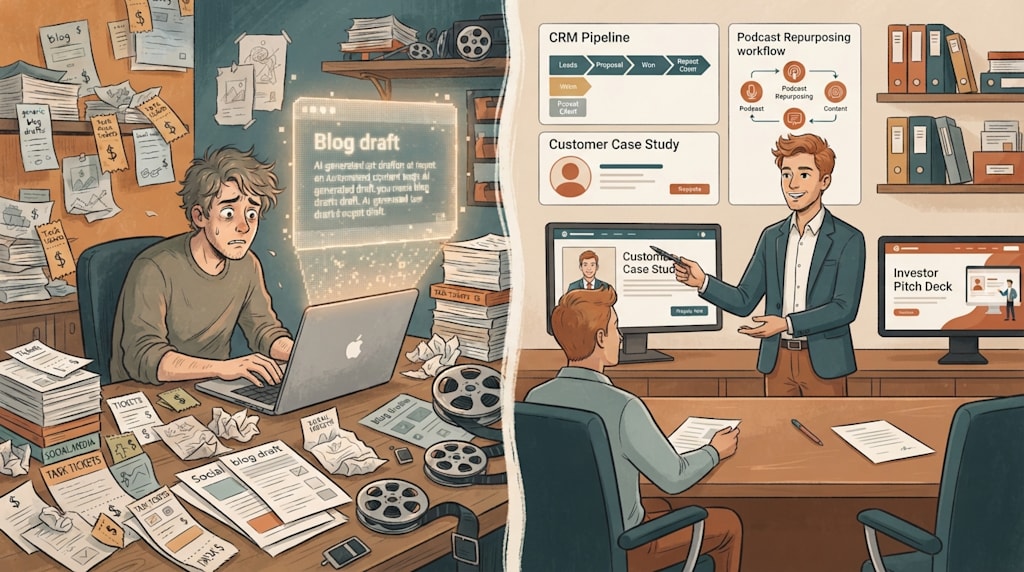
A client sends a message: “Can you write four blog posts a month? My budget is $80.”
Before you answer, another freelancer quotes $60. A content tool quotes $0. You refresh your inbox. The client has moved on.
That is a packaging problem. The price follows.
A few years ago, knowing how to write a blog post, design a social graphic, or edit a basic video was enough to get your foot in the door. A client paid for a first draft because a first draft took time. Now the first draft arrives in ninety seconds. It may be mediocre. It may need editing. But the client’s sense of what basic writing costs has changed.
I started freelancing at 19. One lesson took years to learn: you do not make more money by becoming better at a skill. You make more money by solving a more valuable problem.
Below are five services I would think twice about starting in 2027. For each one, I include the higher-value offer I would build instead.
1. Generic content writing
What I would avoid: $20 blog posts sold by word count
A client needs 1,000 words on a broad topic. You can write it. So can an agency. So can a tool that generates a draft before you finish your coffee.
The draft may not be good. That detail does not change the client’s math. The client no longer sees 1,000 words as a difficult deliverable. They see a line item.
If your offer is “four blog posts every month,” you compete with AI tools, content agencies, and thousands of writers who can say the same sentence. When everyone sells the same thing, clients compare prices. They stop asking who understands the topic. They ask who charges less.
What I would sell instead: B2B customer case studies
I would help businesses turn successful customer relationships into stories their sales teams can use.
The work: interview the customer, understand the product, find measurable outcomes, and build a case study that supports a sales conversation. Not a testimonial. Not a quote on a landing page. A structured proof asset.
Example: A software company helped a client cut operating costs by 25%. I would turn that into a detailed customer story, a sales presentation, and a one-page proof document. The sales team can send it before a call. The founder can use it in a pitch. Marketing can pull sections for the website.
A workable price range: $1,500 to $3,000 per project, depending on research, interviews, and deliverables.
I am selling credible customer proof that helps a business win new customers. The words are part of the delivery. They are not the product.
2. Basic social media management
What I would avoid: $300 a month to schedule posts and write captions
This is one of the easiest freelance services to start. That is exactly why it is so competitive.
Scheduling posts, writing basic captions, and maintaining a content calendar are useful tasks. They are also easy to automate, template, or hand to someone cheaper. A small business owner can open a scheduling tool, queue ten posts, and feel like something is happening.
Many small businesses do not know whether their social media activity produces results. They know someone is posting.
When the client cannot see the result, they look at the price. There is always a lower price.
What I would sell instead: founder-led content strategy
I would work directly with founders and executives to turn their expertise into content that builds credibility with potential customers, partners, and investors.
That means understanding the industry, interviewing the founder, identifying their strongest opinions, and developing a consistent positioning strategy. I would sell a structured executive expertise program. The deliverables could include positioning, founder interviews, content creation, distribution support, and performance reviews.
A workable price range: $1,500 to $4,000 a month for a clearly defined engagement.
The client pays for how their expertise reaches the people who matter to their business. Visibility does not guarantee revenue. A clear point of view can create opportunities that generic posting rarely does.
3. Basic Canva graphic design
What I would avoid: $10 to $20 Instagram graphics
Canva made design accessible to almost everyone. AI design tools made basic visual production easier. A business owner who needs a simple promotional graphic can make something acceptable before lunch.
That puts pressure on freelancers whose only differentiator is knowing how to use a design tool. If the client can do it themselves, they will. If they cannot, they will find someone who charges less.
Businesses still struggle with a different problem: communicating information clearly.
What I would sell instead: sales and investor presentation design
I would specialize in presentations businesses use for important conversations: investor pitch decks, sales presentations, executive reports, partnership proposals.
These projects require more than attractive slides. You need to understand the audience, organize information, simplify complex ideas, and build a persuasive narrative.
Example: a startup has a good product but a confusing pitch deck. The slides are crowded. The business model is buried on page 14. I would help restructure the story, clarify the model, and design slides that make the opportunity easier to understand.
A workable price range: $800 to $3,000 or more per project, depending on scope.
I would rather become excellent at one high-stakes design problem than compete to make the cheapest social media carousel.
4. General virtual assistance
What I would avoid: “I can do anything” for $5 an hour
Virtual assistance is a real service. Plenty of businesses rely on excellent assistants.
The problem is positioning. If you say you can handle emails, scheduling, data entry, research, customer support, and miscellaneous tasks, you make it hard to stand out. You are selling availability. Availability is priced by the hour. There is always someone with more hours and a lower rate.
What I would sell instead: CRM and sales operations support
I would specialize in helping small B2B sales teams manage customer data and sales processes.
Example: a company has hundreds of leads scattered across spreadsheets, email inboxes, and a CRM nobody trusts. I would help organize the database, establish follow-up workflows, maintain pipeline reports, and improve how sales information moves between tools.
The value sits in the sales team’s time. They spend less time searching for information and more time speaking with qualified prospects.
A workable price range: $1,000 to $2,500 a month for ongoing support.
This requires learning tools like HubSpot, Salesforce, or relevant automation platforms. That is the point. A specialized service with a clear business use case is easier to differentiate than a long list of unrelated tasks.
5. Basic short-form video editing
What I would avoid: editing generic reels for $10 each
Short-form video is not going away. Basic editing is getting easier. Automatic captions, silence removal, templates, and AI-assisted clipping have reduced the time needed for straightforward edits.
Businesses will still hire editors. Freelancers who compete only on cutting clips and adding subtitles will face pricing pressure. The client can do more of it themselves. The tools can do more of it automatically.
What I would sell instead: video content repurposing for B2B brands
I would help founders, consultants, and B2B companies turn long-form content into a structured distribution system.
Imagine a founder records one 45-minute podcast. I would identify the strongest insights and create six to eight short videos with distinct hooks, two LinkedIn text posts based on the conversation, one newsletter draft summarizing the most valuable ideas, and a monthly content plan showing where each asset should be published.
A workable price range: $1,500 to $3,500 a month, depending on volume and production requirements.
The client gets more than edited videos. They get a repeatable way to extract value from content they already produce. That makes the service easier to connect to a business objective.
The bigger lesson: sell solutions, not tasks
Notice the pattern in all five alternatives.
They are not completely new skills. They are more specific applications of existing skills.
A content writer can learn customer interviewing. A social media manager can develop positioning expertise. A graphic designer can specialize in business presentations. A virtual assistant can learn sales operations. A video editor can learn content strategy.
You do not always need to abandon your skill. You need to change how you package and sell it.
The pricing examples in this article are illustrative. They are not guaranteed earnings. What you can charge depends on your experience, market, scope, and ability to deliver results.
No service is immune to competition or AI. The advantage comes from understanding a specific customer problem better than the average generalist.
If I were starting from zero
I would not try to learn five skills at once.
I would choose one service and one customer segment. Then I would spend two weeks studying the problems those customers face. Not broad industry reports. Their job posts, sales pages, complaints in forums, conference agendas.
I would create two strong sample projects, even without paying clients. A case study sample for a fictional software company. A pitch deck sample for a fictional startup. Something concrete enough that a buyer can see the deliverable before they pay for it.
I would research 50 businesses that might need the service and start conversations with the relevant decision-makers. Not a mass email. A specific question: “How do you currently turn customer wins into sales material?” or “Who owns your CRM cleanup right now?”
Then I would improve the offer based on what those conversations revealed.
I would not spend six months collecting certificates. I would not build an elaborate website before speaking to one potential customer. I would not wait until I had 10,000 LinkedIn followers.
Freelancing becomes a business when someone pays you to solve a problem. That requires understanding customers, not just mastering tools.
Final take
Generic freelancing will not disappear overnight. There will always be businesses that need affordable writing, design, editing, and administrative support.
If I were starting in 2027, I would not build my entire career around being the cheapest person who can complete a task. I would focus on becoming the person a specific type of business trusts to solve a specific type of problem.
Pick the problem before you pick the tool.
Then send the email.
About the Creator
Jin
Writer of reamstories
https://reamstories.com/jin
Enjoyed the story? Support the Creator.
Subscribe for free to receive all their stories in your feed. You could also become a paid subscriber, letting them know you appreciate their work.
Comments
There are no comments for this story
Be the first to respond and start the conversation.