
I Let an AI Phone Be My Assistant for a Month. Here’s What It Actually Did.
I didn’t need another chatbot. I needed something to take the emails, meeting notes, reports, travel plans, and tiny daily tasks off my plate. So I handed them to a Nubia Doubao phone.
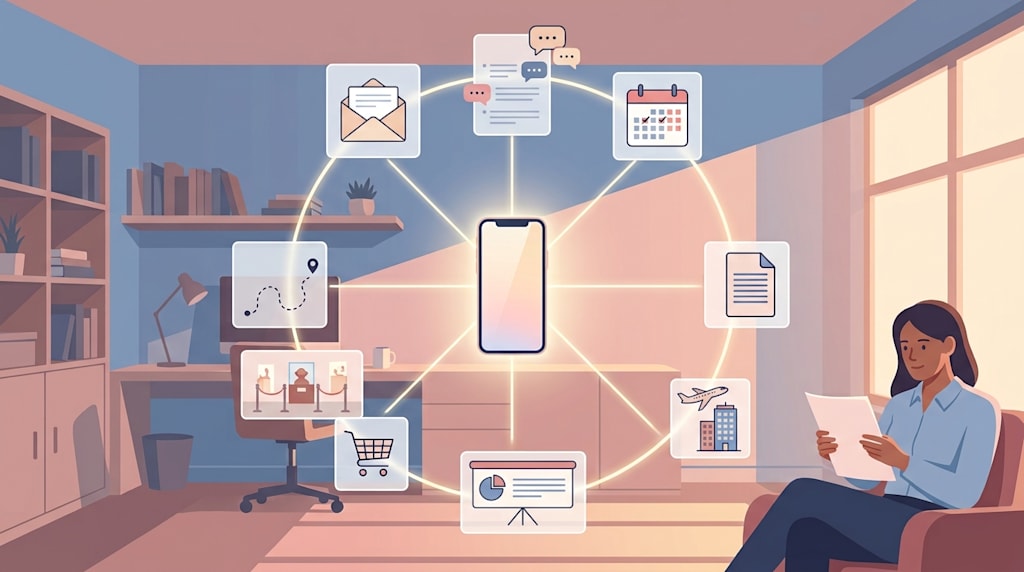
The work that drains you is rarely the work you trained for.
It is email, group chats, meeting notes, client replies, last-minute requests. By evening there is no time left for thinking. Energy goes into collecting, sorting, communicating, reminding, executing. Some weeks that means overtime.
Ten years ago I was a CEO assistant. People think the job is booking flights. It is not. After a meeting the CEO wanted translated notes and action items. On the way to the airport he asked for an industry report. When plans moved, I rebooked flights, adjusted hotels, called clients, called the team. Some weeks I flew to three or four cities. I reached the hotel after midnight, laid out the itinerary, revised the next morning's slides.
Those tasks are five jobs: collect, organize, coordinate, remind, execute.
Ten years later I handed part of it to an AI phone assistant from Nubia and used it for a month. I did not test whether it could chat. Any model can chat. I wanted to know whether it could take the small, repetitive work off my desk, and whether it was easy to use. I will not list specifications. The question was what changed in my day.
What changed when the AI moved into the system
Most AI phones add a chat tool. You still search, sort, switch apps, tap, execute.
This one sits inside the system. It calls apps and connects the steps. You say what you want. It operates.
One morning I said, "Update all apps to the latest version." It ran in the background while I answered messages.
Another time I forgot what a client had said on a call. The phone had recorded it, after I authorized it, and pulled the key points onto the screen. I asked. It searched the recording and answered.
I still decide. It removes the mechanical part.
Meeting notes
I manage design projects. Four or five lines move at once. I used to replay recordings, type notes, post updates to the project group.
Now I say: "Organize the recordings from Wednesday and Friday, generate meeting minutes, put every design change on a timeline, sort the contractor's issues by priority, match them with client feedback, put it in a Word file, send it to the project group, and @ everyone."
The recorder connects to our team's meeting software. It transcribes, translates in real time, separates speakers, summarizes, builds fishbone diagrams, searches the recording. I still read the final notes before they go out.
English email
Headquarters sent a project email that needed a quick reply. I used to bounce between email, translation software, and another AI tool.
Now I say: "Translate this email, summarize the client's new requests, and write a professional, polite English reply that can be sent as is."
I read it. I say, "Send it." It fills the subject, finds the address, sends. It cannot open my mailbox to read email. It can send for me.
Industry report
Near the end of the day my boss asked for a quarterly analysis of the domestic luxury hotel industry by morning. That used to mean overtime.
On the subway I held the AI key and said: "Review the recent quarter for domestic five-star luxury hotels, generate a Word report and a PPT outline, add the latest public data, and summarize future trends."
Halfway through I added: "Analyze Park Hyatt, IHG, and Marriott separately."
The subway was loud. Announcements, station calls, other people's conversations. I paused, added more. It understood. At home I checked the content, added my views, sent it. I did not work late. The next morning I still had to defend the numbers.
To-do list
I used to start the day by checking email, calendar, and team chat, then rebuilding the list by hand.
Now I say: "Organize today's to-dos, sort by priority, remind me at 3 p.m. to prepare for the client meeting, and mark what needs to be done early."
It remembers how I work. Once it was organizing a report when my boss sent an urgent request. I told it. It confirmed the priority with me, handled the urgent item, came back to the report. I did not repeat the instruction.
Search
Unknown calls and texts pile up. Clients, suppliers, couriers, delivery, sales. I ignore them. Days later I remember: the hotel manager said something I need to confirm.
I used to scroll call logs and messages, guessing at dates. It felt like finding a needle in the ocean.
Now I say: "Find the call from last week about the boutique hotel project and send me the number." Or: "Find the latest quotation text from the supplier."
I may not remember the name or the day. I remember a few words. It searches logs, texts, local files together.
Cross-border e-commerce
I was browsing 1688 and Aliexpress and saw a children's outdoor toss-and-catch ball. Without switching apps I voice-woke the assistant: "Analyze whether this product fits TikTok US. Cover target users, competitors, price range, selling points. Generate listing copy."
Seconds later I had a report and English copy. It asked whether I wanted a TikTok voiceover script. I chose a version. It generated a ten-second video. The frame was good. Fine editing still needs a person. It collects and organizes. I judge.
Self-media
I saw a video and said: "Build a graphic outline from this video. Generate a WeChat official account version, a Xiaohongshu framework, and a Douyin script." I dictated my thoughts. It turned them into an outline. Inspiration became material in minutes. Most of it I still rewrote.
Family trip
A family of three decided on a weekend in Zhuji. I used to switch between guide apps, restaurant apps, hotel apps, and ticket apps.
Now I say: "Plan a two-day, one-night family trip from Shanghai to Zhuji. The child is 6 and likes animals and handmade activities. I want local food. Her father likes hiking. Keep the pace easy and avoid backtracking."
It arranged routes, hotels, and food, adjusted for the child's age. Then it rained. I said: "If it rains, adjust the day's plan." It did. We still got wet.
Online shopping
I saw an outfit and held the AI key: "Find the same or a similar item and show me where to buy it." Or: "Compare prices and reviews across platforms." No screenshot, no copy, no search. I added: "Pick the size for 168 cm and 65 kg, the best-value store, and put it in the cart." I still checked the return policy.
See it and solve it
In a museum my child asked about a relic. I opened the camera and asked, "What is this?" In a market I saw a vegetable and asked how to cook it. For plants in the neighborhood I double-pressed the AI key and asked about the name, flowering season, seeds. Point the lens, get an answer. Sometimes the answer was wrong, and I looked it up myself.
Hardware and interaction
The phone has a dedicated AI key bound to a fingerprint, so only I can wake it. One press wakes the assistant. Two presses open the camera for conversation. I can think while speaking, pause, correct myself, and it keeps up. I type in meetings. I use voice when my hands are busy. A long press feels like a walkie-talkie.
The battery lasted through heavy use. The camera was good enough for the photos I take. I did not choose it for the specifications. I chose it to see whether it could give me back small blocks of time.
Limits
It is not an all-purpose assistant. It does not know me well enough. Sometimes it misunderstands and needs confirmation. Complex tasks still need a human. Once it misread a priority and I had to correct it before it sent anything.
WeChat, Taobao, Alipay, Meituan, and Pinduoduo may block automated operations. The assistant stops there.
Screen operation requires high permissions. The manufacturer says operations need authorization, screen content is not stored in the cloud or used for training, and sensitive operations pause for the user. I cannot verify that from the outside. It needs long-term testing.
One month later
It worked many jobs for me: organizing, searching, communicating, reminding, executing. It did not judge for me. It did not carry responsibility for me. The final signature was mine.
At ten in the evening I closed the laptop. The phone screen lit up: "Report generated." I washed the dishes. There is another meeting tomorrow. I handed the recording to it.
About the Creator
Jin
Writer of reamstories
https://reamstories.com/jin
Enjoyed the story? Support the Creator.
Subscribe for free to receive all their stories in your feed. You could also become a paid subscriber, letting them know you appreciate their work.
Comments
There are no comments for this story
Be the first to respond and start the conversation.