
Huawei Says It Won't Make Drugs. The Dividend Math Explains Why.
The real constraint isn't scientific capability. It's a virtual share system that needs cash every year, and drug development that takes a decade to pay off.
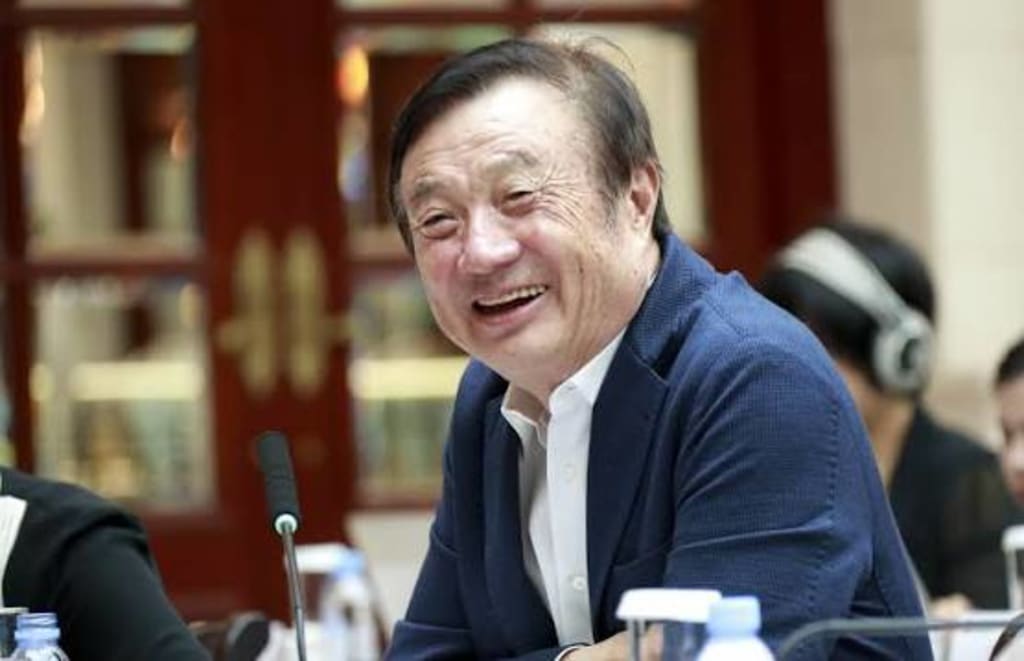
Huawei will not make drugs. The limit is a dividend clock.
At the 11th Pharmaceutical Innovation and Investment Conference in October 2026, Fan Jie, president of Huawei's pharmaceutical business unit, said it plainly: "First, we do not make drugs. Second, we do not do pipelines." The statement drew attention because Huawei had spent the previous year appearing at pharmaceutical forums, and the industry's first question was whether the company intended to become a drugmaker. Fan drew a boundary. Underneath the boundary sits a capital-discipline problem that rules out new drug development before any question of scientific ability is reached.
The dividend mechanism is a hard filter
Huawei's virtual restricted shares are a promise of steady, predictable cash dividends. Employees subscribe at 7.85 yuan per share. On departure, the company repurchases at the original price or at net asset value. Dividends are almost the only exit during the holding period.
The recent numbers are clear. In 2024, Huawei paid about 77.1 billion yuan in dividends against net profit of about 63.6 billion yuan. The gap was covered by accumulated reserves and external financing. In 2025, dividend per share fell to 1.16 yuan, a pre-tax yield of about 14.8%, the lowest in nearly two decades. In the first half of 2026, net profit attributable to the parent fell 37% year on year, operating cash flow turned negative at one point, and R&D spending continued to grow at more than 25%.
The arithmetic is plain. Dividend commitments have been running ahead of profit. Every incremental yuan of cash flow is locked into a rigid distribution mechanism. Under that structure, any new large capital expenditure must generate predictable operating cash flow within a relatively short cycle. Otherwise the pressure does not fall on a business unit's budget. It falls on the dividend itself.
Set the "three 10s" of novel drugs against that mirror: roughly $1 billion in investment, about 10 years of development, and a clinical success rate below 10%. Even if a drug becomes a blockbuster, the returns cluster at a few points a decade later. The scale of upfront spending and the timing of returns are structurally mismatched with an annual dividend rhythm. Drugs are not unprofitable. But the way drugs make money is incompatible, in time, with this distribution mechanism.
The same logic applies to Huawei's decision not to build cars. Vehicle manufacturing also demands heavy capital expenditure, limited operating margins, and long payback periods. The virtual share system acts as a filter. It does not judge whether an industry is profitable. It judges whether that industry's cash-flow shape is compatible with the dividend promise. Novel drugs fall on the incompatible side.
The industry's turn gives the refusal a second rationale
If the "no drugs" position were only a financial retreat, it would be a passive avoidance. What happened in AI drug discovery between 2025 and 2026 gives the choice strategic timing as well.
The sector is moving from prospectors to picks-and-shovels sellers. Verge Genomics terminated VRG50635 in ALS and then said it would no longer focus on internal drug discovery, shifting to an AI technology services platform. Schrödinger stopped SGR-2921 because of toxicity. Recursion cut its pipeline, laid off about 20% of staff, and kept pressing cash burn targets so that operations could last to the end of 2027. AI did not change the base probability of drug development. Clinical failure still punishes, in the most direct way, anyone who bets the company on a single pipeline.
At that point, the value chain shifted. The scarce position moved from betting on the chance of one drug approval to selling reusable infrastructure with deterministic demand. When the prospectors retreat, the people selling shovels and building roads get steadier demand. Whichever pipeline eventually succeeds, compute consumption, model migration, and engineering adaptation remain unavoidable cost items. Huawei entered at that point as a base-layer provider. It earns money that does not depend on clinical success. It avoids the most concentrated risk in AI drug discovery.
What the base-layer business actually sells: operator adaptation, not compute stacking
Huawei's position is often simplified to "selling compute." The details Fan Jie emphasized describe a more precise product: between a model and a compute card sits an operator layer. The quality of operator adaptation can produce a tenfold performance gap. A model migration that once took three to four months now takes one to two days with improved toolchains and AI programming tools. The significance is not speed itself. It lowers the migration threshold to a level a pharmaceutical company can accept. Without that layer, having cards does not mean running models. With it, domestic compute moves from an abstract hardware option to a deployable production tool.
Deployments show the path works. Changping Laboratory rebuilt the protein structure prediction model TorchFold on Ascend compute. Huawei provided operator adaptation and model fine-tuning. Measured accuracy aligned with AlphaFold, and the lab further improved it with additional data. In work with Guangzhou Pharmaceutical Holdings, a single round generated 320 molecules, 1.08 times the industry efficiency level, and hit discovery compressed from 12–18 months to 1–3 months. That was Ascend's first closed loop in an AI drug R&D scenario, from model adaptation to production-business validation. Huawei has also built 100-card compute clusters with two companies, with single-project investment near 100 million yuan, a scale still rare in healthcare.
The common feature: intellectual property and clinical risk stay with the customer. Huawei delivers the engineering capability that makes models run and the cluster capability that makes compute usable. Fan's phrase is "a base provider that understands the industry." It is not a pharmaceutical company, a CRO, or a model company. It adapts Huawei's existing enterprise products to pharmaceutical scenarios. The boundary follows: no touching data, local deployment at the client to protect data sovereignty; no building models, with partners such as DP Technology, Stonewise, and Molecular Heart providing vertical models while Huawei handles compute, storage, and network coordination.
Why stop at the base layer: three logics of niche selection
Start with a self-limiting capability boundary. Fan repeatedly said Huawei comes from computing and communications, not biology and chemistry. The Pangu drug molecule model was released in 2021, but in frontier AI for Science, more active breakthroughs tend to come from dedicated AI labs and AI4S companies. Huawei leaves the model layer to its partners and focuses on an infrastructure pain point that drugmakers and model companies both need and neither solves efficiently on its own. That confirms capability limits rather than performing modesty.
Second, the nature of industry sales does not require owning a model. The pharmaceutical unit's commercial form is solution sales by industry: package Ascend compute, cluster networking, and operator adaptation toolchains into products a drugmaker can procure and deploy, with "people who understand pharma" reducing migration friction. Revenue comes from compute infrastructure deployment and adaptation services, not from milestone payments or drug sales royalties. That fits the cash-flow rhythm required by the virtual share system. Revenue is recognized on delivery. No one waits ten years for a clinical readout.
Third, the domestic compute niche offers a window. Chinese drugmakers face a structural shortage of high-end compute. Ascend is one of the few domestic options that can deliver thousand-card supernode clusters, with a current maximum of 1,024 cards. The name "pharmaceutical business unit," not a generic "compute business unit," puts a team that understands pharmaceutical scenarios at the entry point. In the early phase of domestic compute penetration, whoever lowers the migration threshold for drugmakers controls the entry point.
The boundary, stated as a list
Fan's own words set the line: "First, we do not make drugs. Second, we do not do pipelines." The operating boundary follows in three items. No touching data: local deployment at the client, data sovereignty protected. No building models: vertical models come from partners; Huawei coordinates compute, storage, and network. No competing for pipelines: intellectual property and clinical risk remain with the customer.
That list is the product. It tells a drugmaker what Huawei will not take. It also tells the drugmaker what Huawei will sell: a cluster that runs, an operator layer that fits, and a migration path short enough to justify the purchase.
The close
Huawei's "no drugs" statement is neither a moral stance nor awe before the pharmaceutical industry. It is a precise position under capital discipline. The dividend clock of the virtual share system allows Huawei to earn money whose rhythm it can control. The "three 10s" of novel drugs sit on the side where waiting is longest.
The industry's turn from prospecting to picks-and-shovels selling supplies the timing. Operator adaptation and cluster capability supply the deliverable product. The domestic compute niche supplies the commercial advantage. Fan says the business has "long-term strategic patience" and will not be measured by a short-term investment ledger. The boundary of that sentence is clear: the patience is for the long penetration of the base layer, not for the long return cycle of a pipeline.
Drugs, the drug companies make. Roads, Huawei builds. The road collects tolls for construction and upkeep. It does not bet on which drug runs on it.
About the Creator
Jin
Writer of reamstories
https://reamstories.com/jin
Enjoyed the story? Support the Creator.
Subscribe for free to receive all their stories in your feed. You could also become a paid subscriber, letting them know you appreciate their work.
Comments
There are no comments for this story
Be the first to respond and start the conversation.