
How Sri Lanka’s Container Terminals Are Working Toward Net‑Zero Emissions by 2050
Powering Global Trade With Zero Carbon!
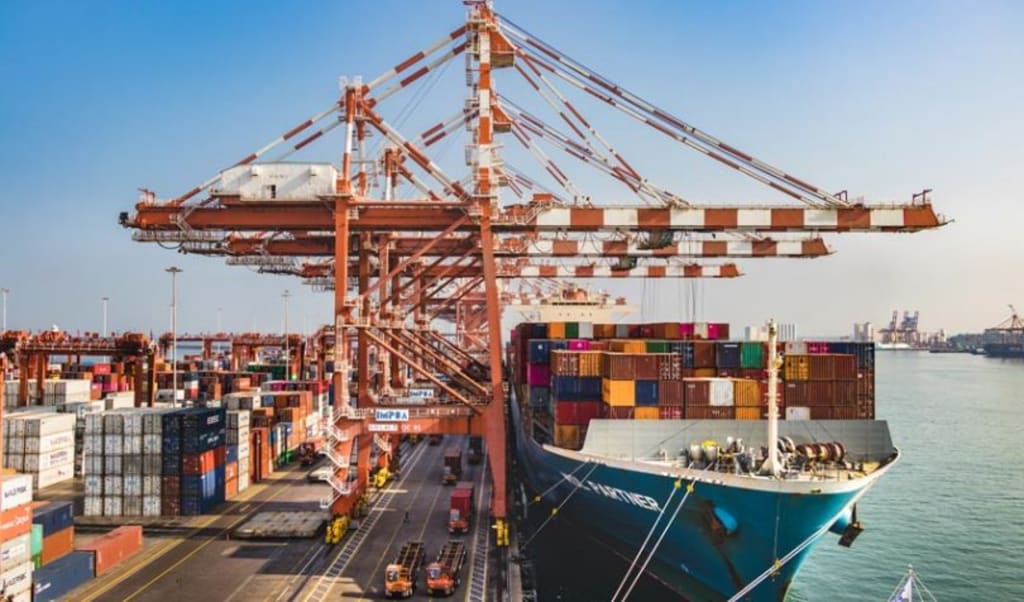
Sri Lanka is situated in the middle of the East-West shipping lanes. This has always made it a key centre in world maritime commerce. Today, however, Sri Lanka’s role goes beyond the world of transportation and business. At a time when climate change has become a concern around the world, Sri Lanka’s container ports are taking on a new role, and becoming more environmentally sustainable. With a vision for the future in line with global climate change targets, Sri Lanka’s port industry is working towards a goal of net-zero emissions by 2050.
Moving Towards Cleaner Energy
One of the major steps towards reducing emissions is to move away from fossil fuel-based operations. Usually, container handling operations rely on diesel-based equipment such as cranes, trucks, and generators. In this regard, Sri Lanka’s ports are increasingly moving towards using more electric-based alternatives.
Electric and hybrid rubber-tyred gantry cranes (RTGs), for example, are replacing older diesel-based RTGs, resulting in a significant reduction in greenhouse emissions. In addition, the use of electric vehicles in port operations is also helping to minimise fuel usage while enhancing air quality in port environments.
Industry Leadership and Global Alignment
In the middle of these developments, there are key players like SAGT Sri Lanka which are taking the lead in embracing sustainable practices. By adopting universally accepted practices, they are an example when it comes to adopting environmentally-friendly systems. At the same time, they also have high efficiency levels and competitiveness.
Harnessing Renewable Energy Sources
Renewable energy is becoming an important part of sustainable port operations in Sri Lanka. Container terminals have started to invest in solar power systems, which are installed on rooftops and unused land available in the port premises.
This is providing a sustainable alternative to conventional sources of power. In the future, this is also likely to save costs for maintaining a Global Container Terminal. As technology continues to become more advanced, container terminals will probably invest in storage devices to provide a consistent supply of power. This will further reinforce their commitment to renewable energy.
Digital Innovation for Operational Efficiency
Another important aspect of the journey to a net-zero emission scenario is the digitalisation of the industry. Smart port technologies are helping to optimise the operation of terminals through automation and data-driven decision-making. Real-time tracking systems, predictive maintenance, and sophisticated logistics software are helping to reduce unnecessary movement of equipment and hence lower the overall carbon footprint of container terminals.
Collaboration Across the Maritime Ecosystem
The idea of achieving net-zero emissions is not limited to a single terminal, and the port management in Sri Lanka is working in association with shipping companies, the government, and other international organisations to formulate a sustainable strategy. The new idea that has come up is the creation of a green shipping corridor, where the shipping lines can operate with minimal environmental impact.
Sustainable Resource and Waste Management
Another significant aspect being considered, apart from energy and emissions, is resource management, which is becoming a new focus area for container terminals to implement measures to conserve water through rainwater harvesting and recycling systems. Waste management is also being improved.
There is more emphasis placed on recycling and the safe management of hazardous materials. This not only promotes a sustainable business model but also protects the environment and communities that live near these terminals.
Building a Culture of Sustainability
It is not just the technology and infrastructure that is required to deliver environmental goals. Sri Lankan container terminals are also looking to implement training and awareness programs to ensure that sustainability is embedded into their culture. Employees are also asked to adopt sustainable, eco-friendly practices in their daily lives. This builds up a workforce that is committed to delivering a greener business model.
About the Creator
Enjoyed the story? Support the Creator.
Subscribe for free to receive all their stories in your feed.
Comments
There are no comments for this story
Be the first to respond and start the conversation.