
He Lent Luo Yonghao 15 Million Yuan. Then He Accused Him of Tax Evasion.
Inside the four-year feud between Zheng Gang and Luo Yonghao, from a mortgage-backed loan to a public accusation in Seoul.
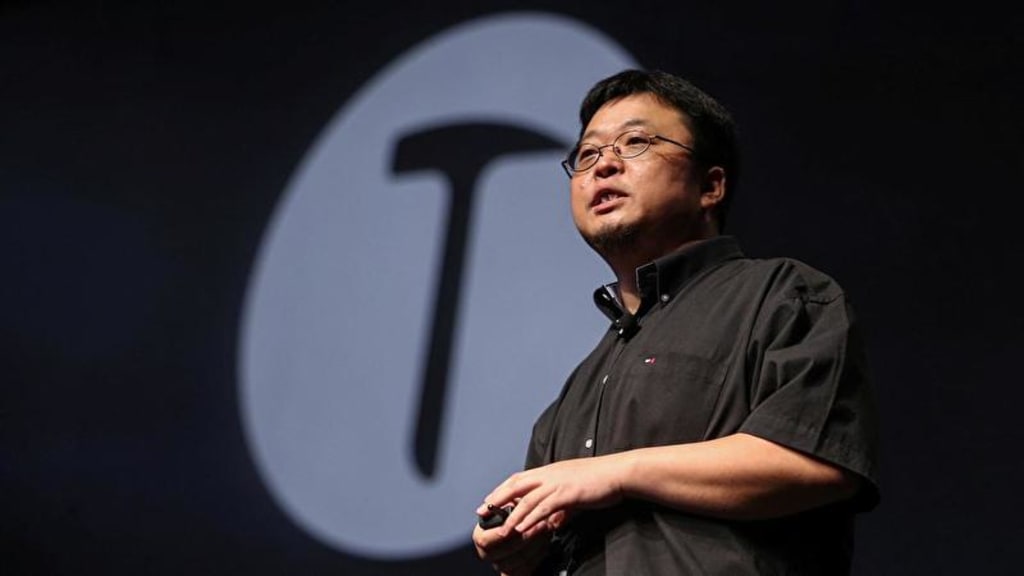
On the evening of September 27, 2026, Zheng Gang, founding partner of Zihui Ventures, posted a real-name accusation on Weibo against Luo Yonghao and “Jiao Ge Peng You.” The post’s location tag showed Seoul, South Korea. Zheng alleged that Luo and the company used dozens of shell limited partnerships to evade taxes and launder money. He also publicly solicited auditing firms to comb through Smartisan Technology’s accounts and promised to pay up to 30 percent of roughly 300 million yuan in recovered funds from Zihui Ventures as a reward. That would be about 90 million yuan.
Luo responded within hours. He screenshotted the post as evidence and wrote: “Too many hooligans online have no idea that false accusation is a crime.” He then reposted a related post, saying: “This rumor has been forwarded more than 250 times. Only about 240 more to go before it meets the threshold for a case.”
He also pointed out that Zheng had been listed as a dishonest judgment debtor, placed under a consumption restriction order, and yet appeared to have illegally left China to post from South Korea. Tianyancha records support part of that account: Zheng is linked to 41 companies, has multiple consumption restriction orders, was subject to enforcement for more than 9.33 million yuan, and has been banned from leaving the country.
15 Million Yuan and a Repurchase Clause
The first crack between the two men was 15 million yuan.
In 2016, Smartisan Technology could not pay salaries. Zheng Gang’s Zihui Ventures lent Smartisan 15 million yuan in two installments for daily operations. The loan was due in July 2018. Zheng later said he even mortgaged his home to borrow 20 million yuan from a bank and lent it to Luo Yonghao. At first there was no IOU, no agreement. Only three years after the loan did they sign a loan contract.
In September 2023, Zheng publicly demanded the money back. Luo’s response was: the loan was real, but he had not repaid it because Zheng had launched a “rogue lawsuit over the repurchase” and was “spreading rumors and slander” online. Luo said he would repay it on behalf of Smartisan Technology only after Zheng posted a video apologizing sincerely.
Legal proceedings followed. In May 2025, the first-instance judgment ordered Smartisan Technology to repay the 15 million yuan plus interest at 6 percent per year. The second instance upheld the ruling. The judgment was enforced. The hostility was not.
The second crack was the repurchase clause in Smartisan Technology’s 2017 Series D financing agreement. The clause stated that if the company did not complete an IPO within five years, investors had the right to demand a redemption of equity, with the founder bearing joint liability. Smartisan never went public. The repurchase clause was triggered.
In January 2023, Zheng posted a long “essay” on WeChat Moments, listing Luo’s “three crimes”: not holding shareholder or board meetings for three years; being a snob who flattered dollar funds; and offering an “unfair” compensation agreement. “You want us to say we accept a tiny fraction of a percent in the new company and give up a repurchase worth billions?” Luo responded: old shareholders were offered 5 percent pre-investment and 3.72 percent post-investment in the new company. “The agreement was signed voluntarily. No one was forced.”
Debt and equity are twisted together here. Zheng is, on one side, an investor in Smartisan Technology, concerned about recovering his investment, shareholder information rights, and the repurchase arrangement. On the other side, his fund is a creditor of Smartisan Technology, holding a matured 15 million yuan loan. The two roles overlap. The conflict spread from the courtroom to public opinion.
Two “Dishonest Debtors”
The accuser and the accused both stand in a legally unfavorable position.
Zheng’s legal situation is the core ammunition in Luo’s counterattack. Beyond being a dishonest judgment debtor and subject to consumption restrictions, more than 10 million yuan of Zheng’s equity has been frozen, involving companies such as Suzhou Zihui Tianma Venture Capital. Luo seized on this, asking how a man under an exit ban could appear in South Korea.
Luo is not unburdened either. He is linked to more than 30 companies, and more than 100 million yuan of his equity remains frozen, involving Chengdu Smartisan Technology Group and others. In January 2026, he received a new equity freeze notice, with more than 7.13 million yuan frozen until 2029. People close to Luo responded that the freeze relates to an old case, that Luo gave no personal guarantee, and that he is still “working hard and continuing to repay Smartisan Technology’s debts.”
On debt repayment, Luo’s “Real Repayment Story” continues. In June 2026, a person familiar with the matter said Luo had repaid nearly 1 billion yuan. In August 2024, Luo himself disclosed he had repaid 824 million yuan, far more than the “over 600 million” previously announced. When the Smartisan crisis broke, he signed personal guarantees exceeding 100 million yuan. Court judgments, fines, and new debts later pushed total liabilities from 600 million yuan to 1.3 billion yuan.
What Zheng sees is a man who has not repaid his 15 million yuan. What Luo sees is a creditor who keeps “spreading rumors and slander” online.
The Legal Boundary
Zheng’s accusation and Luo’s “false accusation” counterclaim both have to be judged within the legal framework.
On tax evasion: does company deregistration exempt liability?
Zhao Liangshan, a senior partner at Shaanxi Hengda Law Firm, points out that company deregistration does not exempt tax evasion liability. Tax authorities can pursue it indefinitely. Under Article 52 of the Tax Collection and Administration Law, the recovery period for ordinary tax calculation errors is three years, or five in special circumstances. But tax evasion, tax resistance, and tax fraud are not subject to the recovery period. Fu Jian, director of Henan Zemin Law Firm, further notes that even if a partnership committed tax evasion before deregistration, tax authorities can pierce the deregistration and recover taxes and late fees from the general partners. If false materials were submitted at deregistration to conceal tax evasion, the market regulation department can revoke the deregistration, restore the entity’s status, and audit it again.
If the accusation is substantiated, Luo, as the actual controller or directly responsible manager, could face criminal prosecution. Tax evasion is a unit crime under a dual punishment system: the unit is fined, and the directly responsible managers also bear criminal liability.
On “false accusation”: does an untrue report necessarily constitute a crime?
Luo’s mention of “500 reposts and it meets the threshold” refers to the filing standard for online defamation. According to the judicial interpretation issued by the Supreme People’s Court and the Supreme People’s Procuratorate, the same defamatory information must be clicked or viewed more than 5,000 times, or reposted more than 500 times, to count as “serious circumstances” and meet the filing standard for the crime of defamation.
But Tang Lei, a lawyer at Jiangsu Aixin Law Firm, points out that false accusation and defamation are fundamentally different. Article 243 of the Criminal Law states: “If a person is not intentionally framing another, but makes a mistaken accusation, or if the report is untrue, the preceding paragraph does not apply.” If Zheng reported based on reasonable suspicion or partial leads, even if the final investigation finds no tax evasion, it would generally be a mistaken accusation and not the crime of false accusation. However, if Zheng fabricated facts in the report and publicly spread them, causing major impact and lowering Luo’s social evaluation, it could constitute infringement of reputation rights. If the impact is broad, Luo has the right to file a criminal private prosecution for defamation.
Zheng’s report does not lose legal effect simply because he is a dishonest judgment debtor. Luo’s “false accusation” claim cannot stand merely because of Zheng’s status. The line between the two depends on whether the report was based on concrete leads and whether there was subjective intent to fabricate facts.
A Conclusion That Has Not Arrived
As of September 30, 2026, tax authorities, public security organs, or courts have not issued any formal conclusion on Zheng’s report or Luo’s “false accusation” claim. Both sides remain at the stage of public statements.
The direction of this conflict depends on several variables: whether tax authorities accept and launch a tax audit of the deregistered limited partnerships; whether Luo formally reports the “false accusation” or files a criminal private prosecution; and whether Zheng’s “bounty audit” can actually attract qualified auditing firms to step in.
Zheng’s Weibo location still shows South Korea. Luo’s screenshots remain on Weibo. The 15 million yuan judgment has taken effect. But what each side wants, one wants money, the other wants an apology, has still not been delivered.
About the Creator
Jin
Writer of reamstories
https://reamstories.com/jin
Enjoyed the story? Support the Creator.
Subscribe for free to receive all their stories in your feed. You could also become a paid subscriber, letting them know you appreciate their work.
Comments
There are no comments for this story
Be the first to respond and start the conversation.