
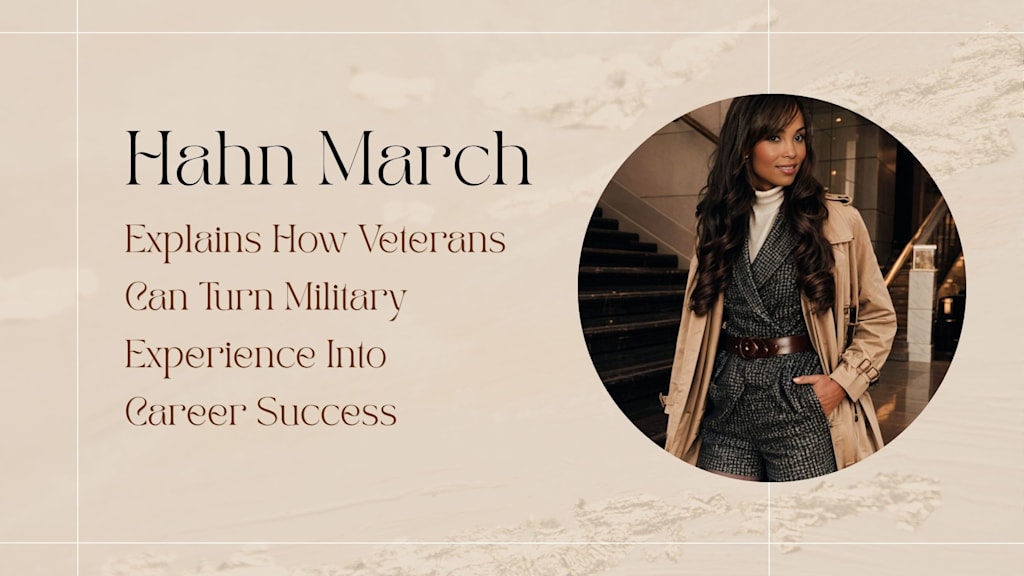
Hahn March Explains How Veterans Can Turn Military Experience Into Career Success
Practical Strategies for Veterans to Translate Military Skills Into Long-Term Professional Growth.

Introduction
Transitioning from military service to a civilian career can be both exciting and challenging. Many veterans leave the military with years of valuable experience, strong leadership skills, and a proven ability to perform under pressure. However, translating those experiences into terms that civilian employers understand is not always easy.
Hahn March, CEO and Chairman of VETS2INDUSTRY, has spent years helping veterans navigate this transition. Through career support, education, and mentorship, he has seen firsthand how military experience can become a powerful foundation for long-term professional success.
According to Hahn March, the key is recognizing the value of military service and learning how to communicate those strengths in a way that aligns with civilian career opportunities.
Understanding the Value of Military Experience
One of the biggest mistakes veterans make is underestimating the skills they gained while serving.
Military personnel are trained to lead teams, manage resources, solve problems, and remain focused in high-pressure environments. These abilities are highly valued across industries, including technology, healthcare, logistics, manufacturing, finance, and project management.
Hahn March emphasizes that veterans should view their military background as an asset rather than something separate from their professional experience.
Many employers actively seek candidates who demonstrate discipline, accountability, adaptability, and leadership. These are qualities that military service develops every day.
Learn to Translate Military Skills
A common challenge during the job search process is military language. Job descriptions in the civilian workforce often use different terminology than military roles.
For example:
- Leading a military unit may translate into team leadership or operations management.
- Coordinating missions can demonstrate project management experience.
- Managing equipment and personnel can highlight logistics and resource management skills.
- Training service members can reflect coaching, mentoring, and employee development abilities.
Hahn March encourages veterans to focus on the results they achieved rather than military titles alone.
Employers want to understand how a candidate solved problems, improved performance, managed people, or contributed to organizational goals. Presenting experiences in those terms makes military accomplishments easier to understand and appreciate.
Build a Strong Civilian Resume
A resume is often the first impression a hiring manager receives. Veterans should create resumes that clearly connect their experience to the position they are seeking.
Hahn March recommends focusing on:
Quantifiable Achievements
Whenever possible, include measurable results.
Examples include:
- Number of personnel supervised
- Budget responsibility
- Training programs conducted
- Projects completed
- Efficiency improvements achieved
Specific accomplishments help employers understand the scale and impact of a veteran's work.
Clear Language
Avoid excessive military acronyms or terminology that may not be familiar to recruiters.
Instead, use language that directly relates to the job requirements and industry standards.
Tailored Applications
Rather than sending the same resume to every employer, customize each application to match the position. Highlight the skills and experiences most relevant to the role.
Continue Learning and Developing Skills
While military experience provides a strong foundation, continuous learning can open additional career opportunities.
Hahn March believes education and professional development play an important role in career growth. Veterans can benefit from:
- Industry certifications
- Technical training programs
- Online courses
- College degrees
- Professional workshops
Many organizations and programs offer educational resources specifically designed for veterans.
Adding new credentials can strengthen a resume while helping veterans stay competitive in changing job markets.
Build a Professional Network
Networking remains one of the most effective ways to discover career opportunities.
Many jobs are filled through professional connections before they are publicly advertised. Hahn March encourages veterans to actively build relationships with professionals in their desired industries.
Effective networking strategies include:
Joining Veteran Organizations
Veteran-focused groups often provide mentorship, career advice, and access to hiring events.
Attending Industry Events
Conferences, workshops, and networking events allow veterans to connect directly with employers and professionals.
Using Professional Platforms
Online networking platforms can help veterans showcase their experience and engage with industry leaders.
The goal is not simply to ask for a job but to build genuine professional relationships that can lead to guidance and opportunities over time.
Develop Confidence During Interviews
Military professionals often possess exceptional skills but may struggle to communicate their accomplishments during interviews.
Hahn March advises veterans to prepare stories that demonstrate leadership, problem-solving, teamwork, and adaptability.
A strong interview response should explain:
- The situation or challenge
- The actions taken
- The outcome achieved
This approach helps employers understand not only what a veteran did but also how they think and contribute to organizational success.
Confidence comes from preparation. Practicing interview questions and participating in mock interviews can significantly improve performance.
Consider Entrepreneurship
Career success does not always mean working for someone else. Many veterans possess the leadership, discipline, and strategic thinking needed to become successful business owners.
Hahn March Indiana has long supported entrepreneurship as a path for veterans interested in creating their own opportunities.
Veterans often excel in business because they understand planning, risk management, decision-making, and team leadership.
Before launching a business, veterans should:
- Research their market
- Create a business plan
- Seek mentorship
- Build financial knowledge
- Connect with veteran entrepreneur networks
Starting a business requires dedication, but military experience often provides a strong foundation for entrepreneurial success.
Focus on Long-Term Career Growth
Finding the first civilian job is important, but long-term success requires ongoing development.
Hahn March encourages veterans to think beyond immediate employment and focus on building sustainable careers.
This includes:
- Setting professional goals
- Seeking mentorship
- Expanding skills
- Pursuing leadership opportunities
- Remaining adaptable to industry changes
Career growth is a continuous process. Veterans who remain committed to learning and improvement often discover new opportunities throughout their professional journey.
Conclusion
Military service develops qualities that employers consistently value: leadership, discipline, resilience, teamwork, and accountability. The challenge is not whether veterans have the skills to succeed but how they present those skills to civilian employers.
Hahn March believes that veterans can achieve meaningful career success by translating military experience into business value, continuing their education, building professional networks, and approaching career development with confidence and purpose.
With the right strategy and support, military experience becomes more than a chapter in a veteran's life—it becomes a powerful foundation for a successful and rewarding civilian career.
About the Creator
Enjoyed the story? Support the Creator.
Subscribe for free to receive all their stories in your feed.
Comments
There are no comments for this story
Be the first to respond and start the conversation.