
Emergency Care: Skills You Need to Survive as an ER Nurse
Paul Garny on skills Emergency Room nurses need

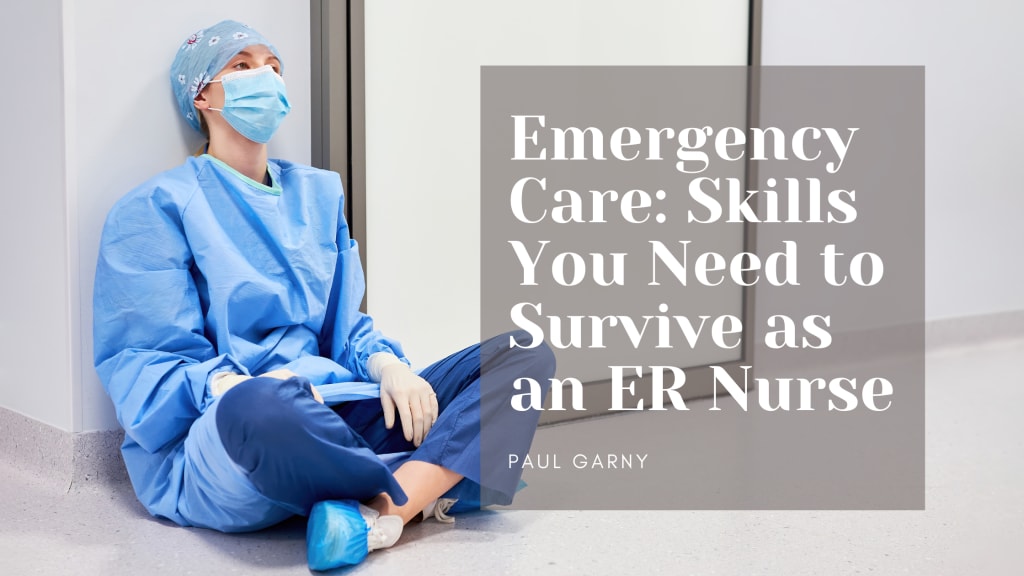
Nursing is a noble profession. Anyone who has dealt with serious medical needs can probably offer anecdotes on the value of a skilled, caring nurse. What not everyone realizes, however, is that there are a wide variety of careers within nursing. From ICU patients to labor and delivery cases, there are tons of different specialties a nurse can pursue. While most nurses have a broad skillset and can fill in within different departments, most of them have a “home base” where they feel comfortable. For some, this is the Emergency Room. With everything from minor broken bones to major trauma situations, the ER can be an exciting place to work. However, with a fast-paced and stressful environment it requires a unique set of skills in order to survive.
Thorough Assessment Skills
You never know what kinds of cases will walk through the door as an ER nurse. Patients don’t always know how to describe their symptoms or what is important, so it’s crucial for ER nurses to have the skills to perform a thorough medical assessment. This allows them to triage patients accurately, giving truly emergent cases the care they need and getting important information such as allergies, medical history, and vital signs.
Good Under Pressure
The emergency room is fast-paced. It can go from completely empty to full of stressed patients in a matter of moments, requiring nurses to adapt quickly and handle the pressure of managing multiple patients at a time. While high-pressure situations can occur for any nurse, the emergency room is particularly likely to generate high-demand scenarios.
Quick Thinking
On a similar note, ER nurses need to be quick thinkers. If a patient begins to decline rapidly, nurses need to be able to respond quickly, contacting the necessary doctors and performing life-saving procedures as necessary. There isn’t always time to stop and think about different solutions, so it’s crucial that ER nurses are able and willing to think on their feet.
Competent Multitasking
Handling ER caseloads can often mean managing multiple cases at once. While waiting for test results for one patient, you may be helping assess a new patient who just walked in. Nurses in the ER need to be able to multitask well, keeping patients straight and not forgetting anything important.
Careful Prioritization
ER patients can come in a wide range of conditions. Some need immediate treatment, others can probably wait a little while. ER nurses need to know how to prioritize well, giving their time an attention to the most time-sensitive cases while still ensuring less emergent patients get the attention that they need.
Broad Knowledge Base
With the wide variety of cases that come into the average ER, nurses need to have a broad knowledge base when it comes to medical needs. While other nurses tend to have a lot of knowledge about their specific specialty and only general knowledge about other areas, ER nurses often need to know about everything from cardiac conditions to common neonatal illnesses.
Emotional Processing
Working in the ER is not for the faint of heart. ER nurses see a lot of terrible things. While most of their patients will get the care they need and go on with their lives, some won’t. Nurses in the ER help care for victims of traumatic accidents and other terrible situations. This can be emotionally taxing, and if nurses aren’t able to process these kinds of situations in a healthy way, they will quickly burn out and break under pressure.
Clear Communication
Finally, ER nurses need clear communication skills. This includes patients, team members, and visitors. ER nurses often help patients understand their diagnoses and treatments and help keep family members and loved ones informed. Additionally, they need to collaborate with all of the other professionals on a case.
If you are passionate about healthcare and have these skills, you might survive as an Emergency Room nurse.
About the Creator
Paul Garny
Paul Garny is a retired captain now working as the Care in Vermont's Director of Operations. Visit PaulGarny.net for more.
Enjoyed the story? Support the Creator.
Subscribe for free to receive all their stories in your feed.
Comments
There are no comments for this story
Be the first to respond and start the conversation.