
Cook Passes the Baton to Ternus
Apple's Real Bet Is Whether It Can Redefine Itself in the AI Era
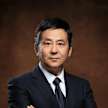

In April 2026, Apple officially announced that Tim Cook will step down as CEO on September 1, succeeded by John Ternus, currently Senior Vice President of Hardware Engineering. Cook will remain as Executive Chairman, and Ternus will join the board of directors. This was no sudden power shift — it was a long-planned, carefully controlled succession, approved unanimously by Apple's board, bringing to a close Cook's fifteen-year run at the helm.
What this transition truly signals, in my view, is that Apple is shifting from an era defined primarily by operational efficiency and ecosystem expansion into a new phase centered on hardware integration, product reconstruction, and catching up in AI.
What Cook Leaves Behind: An Exceptionally Solid Track Record
When Cook took over in 2011, the market's biggest worry was never whether Apple could make money — it was whether Apple could keep defining the future without Steve Jobs.
His answer was not to imitate his predecessor, but to transform Apple from a great product company into a precision-engineered global commercial machine. The numbers speak clearly: Apple's market cap grew more than tenfold under Cook, surpassing $4 trillion in 2025; fiscal year 2025 revenue reached $416 billion, with net income of $112 billion, up 20% year over year; services revenue crossed $109 billion, accounting for roughly 26% of total sales; and Apple's stock climbed nearly 20x over his tenure, far outpacing the S&P 500's roughly sixfold gain in the same period.
This is the foundation Cook hands to his successor. He is not leaving during a period of decline — he is stepping aside at arguably the strongest financial moment in Apple's history. That kind of timing sends its own message: the board has no intention of upending the existing strategic direction. It wants governance continuity while installing a new engine for the next round of competition.
Ternus's Background Tells You What Apple Is Prioritizing
John Ternus, 51, holds a degree in mechanical engineering from the University of Pennsylvania. After a brief stint as a mechanical engineer at a small VR headset firm called Virtual Research Systems, he joined Apple's product design team in 2001 and has spent virtually his entire career inside Apple's most central hardware organization. He became VP of Hardware Engineering in 2013 and was promoted to Senior VP in 2021, becoming the youngest member of Apple's executive team at the time. His portfolio spans iPhone, iPad, Mac, Apple Watch, AirPods, the Apple Silicon transition, and Vision Pro.
Cook's assessment of him: "the mind of an engineer, the soul of an innovator, and the heart to lead with integrity and with honor."
The choice itself is a strategic statement. Apple did not pick a CEO more skilled at communicating with capital markets, nor did it elevate someone from the services or software side. It handed the top role to a person who has spent 25 years immersed in hardware engineering and product detail. The identity of the successor is Apple's way of telling the market what it cares about most in the next chapter.
Apple's Real Challenge: Reclaiming the Right to Define the AI Era
Judged by financial metrics alone, Apple looks unshakeable. But placed against the broader industry backdrop, this succession is really the culmination of a long-building strategic pressure that has finally come to a head.
The most persistent criticism of the Cook era was never about execution — it was that Apple failed to establish the kind of defining dominance it once had when it came to imagining the next platform. Vision Pro was a major strategic bet that has yet to open a real consumer market. The AI problem is more acute.
Over the past two years, Apple has visibly lagged in the AI race. The Siri overhaul promised at WWDC 2024 missed its deadline, and by March 2025, Apple was forced to publicly acknowledge it would take longer than expected. Meanwhile, OpenAI's ChatGPT and Google's Gemini had already set a new benchmark for AI assistant experiences, while Apple's Siri remained stuck in a cycle of delays.
What makes the situation even more telling is the path Apple ultimately chose: in January 2026, Apple signed a multi-year agreement with Google to integrate Gemini models into the next generation of Apple Foundation Models, providing the backbone for a major Siri upgrade. The deal is reported to cost Apple around $1 billion per year. Google Cloud CEO Thomas Kurian confirmed at the recent Google Cloud Next conference that a Gemini-powered Siri will arrive before the end of 2026 — most likely unveiled at WWDC 2026 in June.
This choice reflects a clear internal judgment at Apple: large language models may well become commoditized, and rather than burning capital on proprietary model development, the smarter play is to focus on device-level experience and ecosystem integration — turning the iPhone itself into the best possible vessel for AI features. In manufacturing, distribution, and ecosystem depth, Apple holds advantages that few AI-native companies can replicate.
This is precisely the context that makes the leadership transition most meaningful. What Apple needs now is not a CEO who merely preserves the status quo, nor one who simply tells a new story. It needs someone capable of reconnecting hardware, chips, device experience, and the road toward next-generation intelligent interaction into a single coherent vision. Ternus's career trajectory points exactly in that direction.
A Cautious Bet, Not a Revolution
From a governance standpoint, the transition is quintessentially Apple. Cook stays on as Executive Chairman, Arthur Levinson moves into the role of Lead Independent Director, and the overall power structure remains continuous — no ruptures, no dramatic breaks. Ternus is not an outside star parachuted in; he is a 25-year Apple insider who has been managed directly by Cook and is widely regarded as his protégé.
The real signal Apple is sending is not that it intends to overturn the Cook era, but that it hopes to preserve organizational stability, supply-chain advantages, and a high-margin structure while shifting the explicit focus of the next phase toward product engineering and technological integration.
For investors, this means Apple's governance continuity remains very strong — but the next chapter of its valuation narrative will depend increasingly on whether it can prove that it is not only excellent at operating mature products, but still capable of defining the next technological gateway.
For the technology industry, this transition offers a clear lesson: when a super-platform reaches the inflection point between old and new cycles, what truly determines the future is rarely who tells the better story. It is who can twist engineering capability, product instinct, and long-term direction back into a single rope.
About the Creator
Daniel Widjaja Kusuma
The founder of Telosyn Technologies Inc., currently dedicated to advancing artificial intelligence innovation and ecosystem development in Indonesia.
Enjoyed the story? Support the Creator.
Subscribe for free to receive all their stories in your feed.
Comments
There are no comments for this story
Be the first to respond and start the conversation.