
Chris Sund and the 92 Percent Question
The healthcare staffing executive leads three companies. His own research suggests the scarcest capacity may not be the kind you hire.

Open the requisition. Widen the funnel. Pay the premium. Fill the seat.
That is how most companies think about capacity, and Chris Sund has spent more than a decade inside that cycle, first as a recruiter and now as president and chief operating officer of Uniti Med, GQR Healthcare, and Nebula, an AI-powered talent sourcing platform. He also writes about leadership and workplace culture for Inc. and Forbes.
Then he surveyed more than 200 working adults about a different kind of capacity.
Ninety-two percent said they believed they were capable of more than they were currently doing. Seventy-eight percent admitted they put off things they already knew they should do. Eighty-five percent said they second-guessed themselves because of the voice in their head. Only seven percent said falling short of their potential was rare.
Those numbers changed the way Sund thought about the talent shortage. Companies spend enormous amounts of time and money searching for people outside their walls, yet another source of capacity may already exist inside the building: capable employees who are contributing but still not using everything they have to offer.
Sometimes the answer is not another hire. It is helping the people already there recognize and use more of what they are capable of.
The staffing gap looks different when it is your own town
Sund came into healthcare staffing through an unconventional path. He worked in restaurants and the beverage industry before becoming a recruiter, then a client manager, sales manager, and director. He joined Uniti Med in January 2022 and became its president and chief operating officer the following year.
He learned early that rural staffing challenges are not only about money. Many rural facilities are good places to work. Employees know one another, and their patients are often their neighbors. But geography and a limited supply of specialized clinicians can leave essential positions unfilled for months. Healthcare organizations then rely on staffing agencies to cover those gaps at a premium nobody enjoys paying.
Sund lives in Fremont, Nebraska, so he has seen the importance of that work in his own community.
When his wife’s grandmother entered hospice, the family gathered at a nearby facility to say goodbye. While they waited, Sund noticed that some of the clinicians caring for patients were travelers. In that moment, healthcare staffing was no longer about filling an opening. It was about making sure families could receive quality care close to home during some of the hardest moments of their lives.
“There is nothing better than going home after work and knowing that you were able to help others,” he says.
That is the larger purpose behind the work for Sund. Where someone lives should not determine the quality of care they receive, and he has spent more than a decade helping healthcare facilities find the people they need to serve their communities.
Tenfold growth, and the culture underneath it
Revenue from Uniti Med’s travel nursing and allied health divisions grew from $6 million in 2021 to $58 million in 2023, nearly tenfold during Sund’s first two years with the company.
Uniti Med later ranked No. 3 on the 2025 Inc. Regionals: Midwest list of the region’s fastest-growing private companies. It was also named to the 2023 Fortune Best Small and Medium Workplaces in Health Care list.
Ask Sund about the growth, however, and he is just as likely to talk about the culture recognition.
His view on retention is straightforward. People rarely leave because of one isolated moment. More often, the decision builds over time through a series of experiences: a manager who stops listening, a difficult week that goes unnoticed, or a conversation that goes badly and is never repaired. By the time someone completes an exit interview, the decision may have been forming for months.
That is why Sund does not view culture as the soft thing a company invests in after growth arrives. Culture determines whether growth is sustainable. It shapes whether talented people continue developing or quietly begin looking for somewhere else to work.
In staffing, where workforce disruption carries an immediate human and financial cost, that connection is especially difficult to ignore. Sund has carried that message onto conference stages and into industry leadership. He currently serves as vice president of the National Association of Travel Healthcare Organizations board.
Self-doubt beat every other barrier, including the reasonable ones
When Sund’s survey asked people what was standing in their way, four answers repeatedly surfaced: self-doubt, fear of failure, comfort, and lack of time.
Self-doubt ranked first.
The finding that Sund continues returning to is the one about leadership. Executives were not exempt. They were among those reporting a meaningful gap between what they were doing and what they believed they could do.
That challenges the assumption that unrealized potential is a problem found only further down the organizational chart and solved through coaching from above. The people doing the coaching may be wrestling with the same doubts themselves.
Sund’s definition of confidence comes from both the research and his own experience. Confident people still hear the voice of doubt. They have simply stopped allowing it to make their decisions.
Feeling unprepared is not always the same as being unprepared. Much of that 92 percent may be living somewhere in the space between the two.
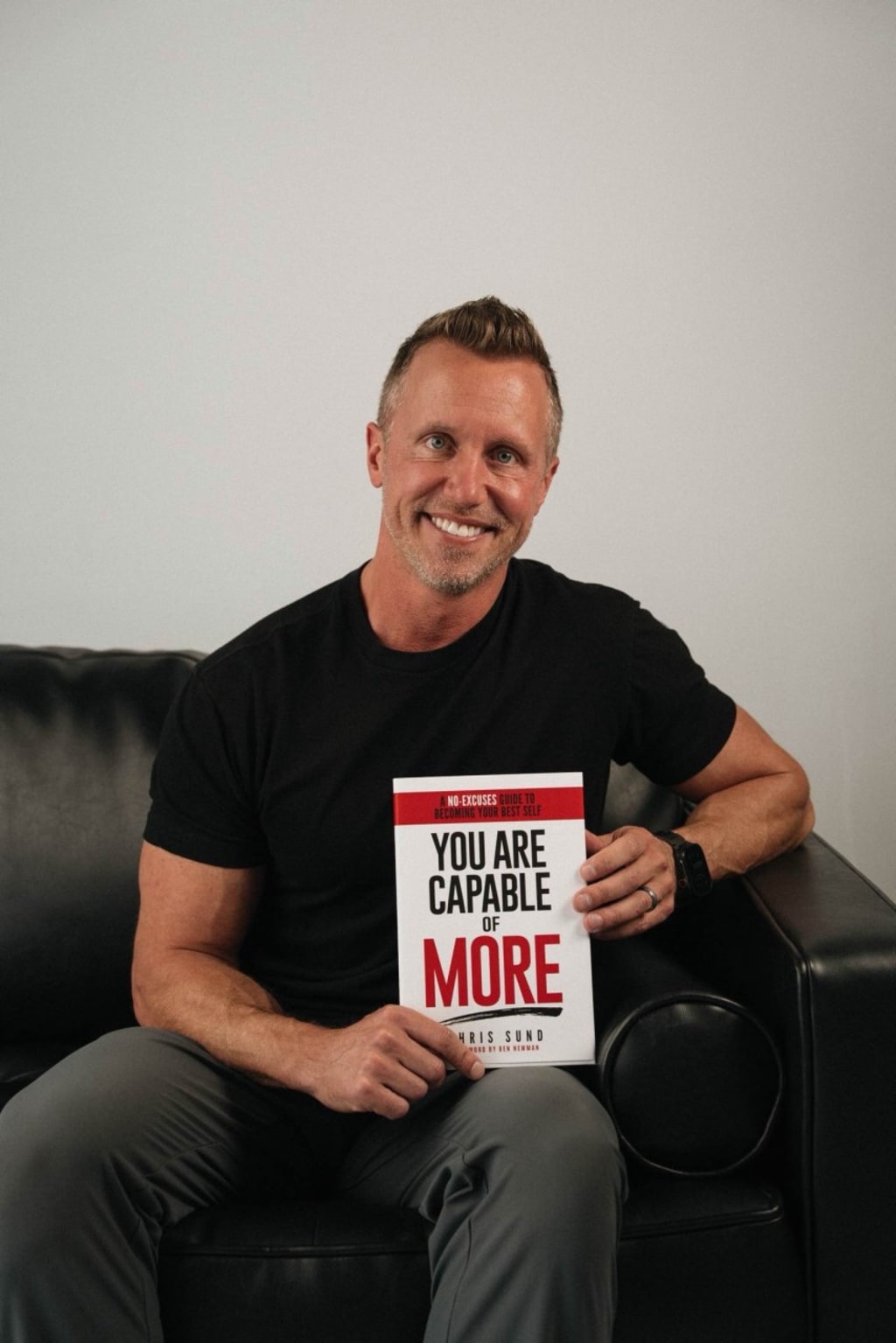
That idea became the foundation of You Are Capable of More: A No-Excuses Guide to Becoming Your Best Self, published by Game Changer Publishing in 2026 with a foreword by performance coach Ben Newman.
The book is part memoir and part practical guide, organized around ten principles designed to help people move from knowing they want more to actually pursuing it. It is also supported by free resources, including a diagnostic quiz, worksheets, and a 30-day challenge that help readers put those principles into practice.
Sund was deliberate about that. He did not want people to finish the final page feeling inspired but unsure what to do next.
He tested it on himself first
Ask Sund what he is proudest of personally and the Inc. ranking does not come up. He points instead to his decision to stop drinking on January 1, 2024.
He credits that choice with changing how he leads, how he parents, and how he shows up at home. It is also why his message about untapped potential is personal. Sund is not simply interpreting survey data or describing a process he read about. He has experienced what can happen when someone stops settling and begins making different choices.
Home is Fremont. His wife, Courtney, is a respiratory therapist. They have three boys, which means much of the family calendar belongs to ballgames and practices. Whatever time remains often goes to bike rides, walks, and time on the water.
Those parts of his life also shape how he defines becoming more. It is not only about professional achievement. It is about becoming someone you are proud of at work and at home.
Still in the seat
Plenty of executives write a book after leaving the work behind. Sund did not.
He is still leading the companies, dealing with the same hiring challenges, retention pressures, growth decisions, and leadership responsibilities as the people who bring him in to speak. He is reporting from the current quarter, not relying only on a case study from years ago.
That makes the message harder to dismiss. It also makes it harder to live, which may be the point.
The book is out, but Sund remains in the same arena as the leaders who hear his message. He is still working through what it means to build strong cultures, develop people, serve communities, and become more without losing sight of what matters most.
That is what gives the 92 percent figure its weight. It is not simply a statistic about unrealized potential. It raises a more important question:
If most people already believe they are capable of more, what will help them finally act on it?
Sund intends to spend the next chapter of his career helping people answer that question.
Comments
There are no comments for this story
Be the first to respond and start the conversation.