
Chinese Parenting Style vs. Parenting Styles in Other Countries
Chinese parents really care about their children’s education. In many Chinese families, parents also like to get involved in their children’s career plans, marriage choices, and even the direction of their whole life.


In my experience, Chinese parents often criticize their children more than they encourage them. They may not say “I love you” directly, but they show love in other ways — sometimes through sacrifice, pressure, and control.
Education Comes First
I was born and raised in a poor family. My father is a construction worker, and my mother is a delivery driver. My parents lived paycheck to paycheck, but they still borrowed money from relatives and sent me to private tutoring institutions to study math and English on weekends.
When I got older and looked back on my school years, I asked my parents why they sent me to those weekend classes.
They said, “Because other parents were doing it, so we had to do it too.”
That sentence explains a lot about Chinese parenting.
In China, many parents compare their children with other people’s children. They are afraid their child is not good enough. They are afraid their child will fall behind. So they try to arrange everything in advance: which school their child should go to, what kind of job their child should do, and sometimes even who their child should marry.
When Parents Control Marriage
My friend Lucy and her parents are from Shanghai. One day, Lucy complained to me that she had a new boyfriend — someone she wanted to stay with forever.
But her parents refused to accept the relationship because her boyfriend was not originally from Shanghai. He was from Hubei, a province in central China.
Lucy’s parents only wanted her to marry a Shanghainese man.
Why did Lucy’s parents only allow her to marry someone local? There are probably many reasons: family background, social status, housing, local identity, and the idea of being “well-matched.”
But the key point is this: they wanted to control their child’s marriage.
For many Chinese parents, marriage is not just about love between two people. It is also about family, money, social status, housing, and future stability.
The “Good Job” Problem
Chinese parents often want their children to choose jobs that have higher social status. They may not ask whether their child actually likes the job.
They want to tell their relatives things like:
“My son works for a Fortune 500 company.”
Or:
“My son has a stable job.”
After I graduated from high school, I lived with my parents. My parents often introduced jobs to me and wanted me to take them. But they rarely asked if that was what I wanted.
My father once introduced me to a job at a railway station. In China, working at a railway station is considered stable and respectable. It usually means steady income and good benefits.
But I did not like it.
I like travel. I like English. I want a career that connects with my passion and interests.
So I asked myself: Why should I choose a career I do not like just because society thinks it is good?
Love Without Words
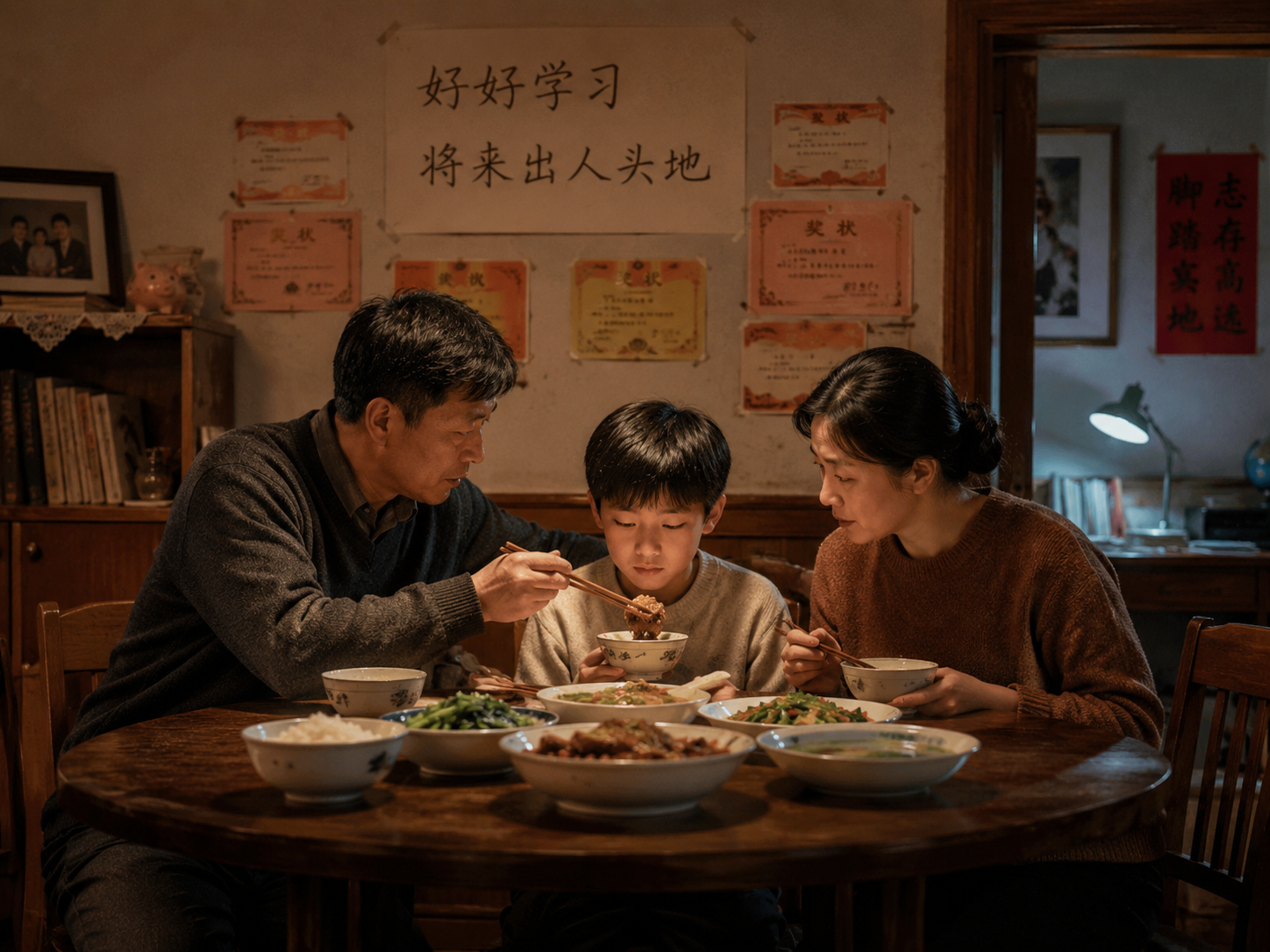
Another thing about Chinese parenting is that many Chinese parents do not compliment their children often.
Download the Medium app
They may not say, “I love you.”
Instead, they leave the best dish for their child at dinner. They may say they are not hungry, but actually, they just want their child to eat more.
Press enter or click to view image in full size
This is a very Chinese kind of love.
It is quiet. It is indirect. It is full of sacrifice. But sometimes, it also comes with pressure.
Chinese parents often compare their children with other people’s children to motivate them. You may often hear things like:
“Look, someone’s son just bought a house in the city center.”
“Look, someone’s child just got accepted by a top university.”
They want their child to make progress, but they forget that different children have different paths in life.
What About Parenting in Other Countries?

Press enter or click to view image in full size
When I looked at parenting styles in other countries, I found that American parenting is not completely opposite from Chinese parenting.
In some middle-class and upper-middle-class American families, parents can also be very intense. Some people call this “helicopter parenting.”
American parents may send their children to all kinds of classes, such as piano, dance, sports, and other activities. From Monday to Friday, their children’s schedules may be fully arranged.
Some American parents spend a lot of time with their children. I read that even some full-time working American mothers spend more time with their children than housewives did in the past. They sacrifice sleep, rest, and personal time for their kids.
They want their children’s talents to be discovered. Some parents may even contact teachers or professors to ask for more opportunities or more homework for their children.
American fathers also seem to spend more time with their kids than before. To become a “good dad,” a father is expected to play with his children, say “I love you,” attend school activities, support their hobbies, and be emotionally present.
In a way, being a good American father can feel like completing a checklist.
It is like a parenting KPI.
Of course, this is different from Chinese parenting. Chinese parents may focus more on sacrifice, control, education, and social status. American parents may focus more on emotional support, activities, encouragement, and being present.
But both can create pressure.
French Parenting Feels Different
French parenting, on the other hand, seems more relaxed and balanced to me.
In my impression, French parents do not always put children at the center of the whole family. You can imagine a French mother sitting in a square, drinking coffee, and enjoying her personal time while her child learns to spend time independently.
French parents seem more willing to let children gain independence. Children may go to school alone, play outside with other children, and learn that parents also have their own lives.
As I write this, I can’t help but wonder:
If you’re a child — how do you want your parents to love you?
If you’re a parent — how are you loving your child right now?
There’s no single right answer. But it’s a question every family should sit with for a while.
About the Creator
kobe_change
if you like my content you can support me
https://buymeacoffee.com/kobe05
Enjoyed the story? Support the Creator.
Subscribe for free to receive all their stories in your feed.
Comments
There are no comments for this story
Be the first to respond and start the conversation.