
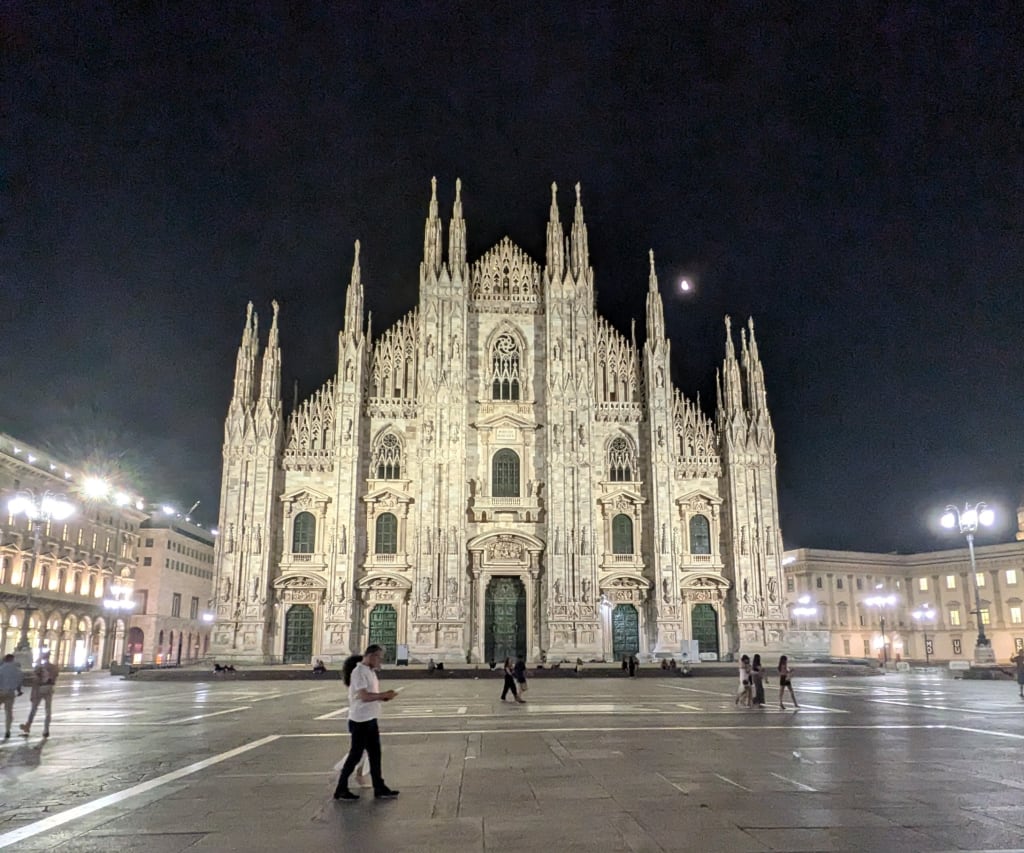
I’ve been living in Milan since September 2023, a city full of activity, whether it’s for studies, work, or tourism. Milan is a vibrant hub of culture, fashion, and design, bustling with life throughout the year. The city is known for its dynamic energy, from the busy trams filled with commuters and students to the lively cafés and markets that spill into the streets. It’s a city that thrives on movement and creativity, and it didn’t take long for me to fall in love with its rhythm. However, during my time here, I often heard people talk about how deserted Milan becomes in the summer, calling it "the ghost city." They explained that as temperatures rise to uncomfortable levels, locals and even some businesses flee the city to escape the intense heat.
That year, I was studying for a master’s degree, and the last stretch of classes, exams, and my graduation ceremony were scheduled for late July. From the beginning, it seemed like all signs pointed to a mass exodus in August, which was supposedly the peak of the summer season. Some of my classmates and Milanese friends hinted that this pattern had shifted slightly over the years; they claimed that more people had started staying in the city rather than traveling. They mentioned the emergence of urban events and beach clubs along the canals to attract those who chose to stay. Still, the general sentiment remained: August was the time when Milan emptied out.
Due to a combination of lack of money and a bit of poor planning, I found myself being one of those people who stayed in Milan during August. At first, I wasn’t too concerned. I figured that since the city is usually full of activity, it couldn’t be that different. Plus, I thought it might even be an opportunity to experience a quieter, more relaxed version of Milan—perhaps with shorter lines at tourist spots or empty piazzas perfect for photography. However, I was quickly proven wrong.
On July 24, 2024, I was at a bar with my master’s professors and some fellow students, celebrating our graduation. As we clinked glasses and exchanged future plans, each of my professors said to me, “Starting tomorrow, I’m disappearing until September.” I was amazed at how many days off they were about to take. Coming from a country where people work even on holidays, the idea of taking an entire month off was astonishing to me. But, considering their dedication throughout the academic year, I couldn’t complain—no doubt, it was well-deserved.
As my professors and classmates began to depart, businesses around the city followed suit. Bars, restaurants, and shops started closing one after another, each putting up signs on their doors stating, “Closed from [X date in July] until September.” It was surreal to witness entire neighborhoods, once bustling with activity, transform into quiet, empty streets. Shops that I’d visit weekly suddenly had their shutters down, and my favorite cafés, where I’d often go to study or relax, were all temporarily closed. It was a cultural shock, coming from a place where businesses often remain open year-round, even during major holidays.
The main reason behind these collective vacations is Ferragosto, a traditional Italian holiday celebrated on August 15. It’s a custom that dates back to ancient Rome, originally established to celebrate harvest and rest after labor. Over time, Ferragosto became closely tied to religious observances as well, and today, it’s widely associated with summer vacations. For Italians, Ferragosto isn’t just a day off—it’s the centerpiece of a month-long escape from the city’s sweltering temperatures. Italians make the most of August by heading to coastal towns, the lakes, or the mountains. Milan, in contrast, becomes the place to flee from.
As for me, I stayed. I spent the entire month in Milan, experiencing the city in a way I’d never imagined. The days were long and hot, and activities were limited because most businesses were closed. Even the usual hustle and bustle of the central station seemed muted, as trains and buses mainly carried people out of the city, not in. While it’s true that Milan still had plenty of tourists roaming the streets, especially around iconic spots like the Duomo and Galleria Vittorio Emanuele II, it wasn’t the same. These visitors weren’t getting the authentic Milanese experience, in my opinion, since the heart and soul of the city—the local shops, the traditional trattorias, and the beloved cafés—were all on hiatus.
For those who dared to visit tourist areas, there were businesses open, but they were mostly larger chains and international brands, not the small, family-owned places that give Milan its charm. It was a stark contrast to the vibrant city I had come to know, and it almost felt like a different place entirely. Most of the restaurants and bars I usually went to were shut down, which led me to explore new areas of the city and discover different spots, but it wasn’t the same. Without the locals and the usual ambiance, these places felt like echoes of their true selves.
Aside from the closures, the absence of people was another striking element. Many of my friends had left the city, and it was difficult to find anyone around to hang out with. It was a complete combination of absence and limitations—few places to go and even fewer people to share those places with. The loneliness of August in Milan felt amplified by the heat, which seemed relentless, even late into the night.
In the end, it was an experience I’m grateful to have had, if only to learn that it’s something I wouldn’t want to repeat. If you’re reading this and considering visiting Milan at some point in your life, my advice would be: avoid August. To truly experience the city’s magic, come when Milan is alive and bustling—when the cafés are full, the trams are crowded, and the spirit of the city is present in every corner.
About the Creator
Paul Lantigua
I´m a Dominican Artist who love to write a lot of ....
Enjoyed the story? Support the Creator.
Subscribe for free to receive all their stories in your feed.
Comments
There are no comments for this story
Be the first to respond and start the conversation.