
A Beginner's Guide to Afrobohemian Home Decor by Vladimir Krull
How handmade textiles, natural materials, warm earth tones and global pieces come together in a vibrant, soulful home, and how to start respectfully and on a budget.
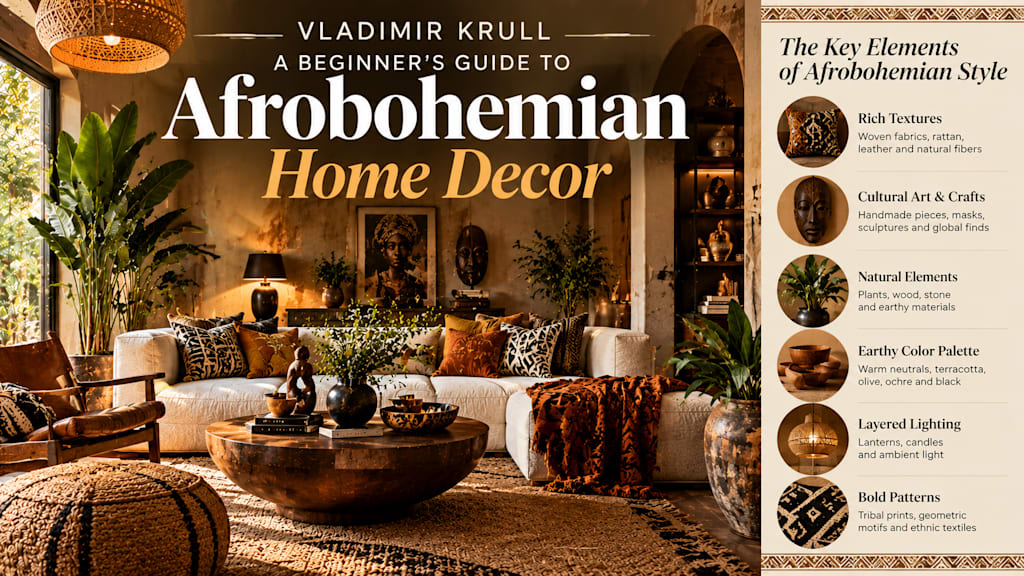
What Is Afrobohemian Home Decor?
Afrobohemian decor, sometimes written as Afro-boho, is a warm, layered style that blends the free spirit of bohemian design with the craftsmanship and colors of African art and textiles. It is known for handmade objects, natural materials, rich earthy tones and a sense of story in every corner.
I am Vladimir Krull, an interior designer, and this style fascinates me because it values meaning over perfection. In this beginner's guide I will explain what defines the look, how to choose pieces thoughtfully and how to create an Afrobohemian room that feels personal and respectful.
Understanding the Roots of the Style
Bohemian design is relaxed, collected and creative. It mixes patterns, textures and objects from many places. Afrobohemian design takes that spirit and highlights the artistry of African crafts, from woven baskets and carved wood to dyed and printed fabrics.
It helps to remember that African design is not a single style. The continent has countless cultures, each with its own traditions, materials and meanings. When we borrow from them, it is good practice to learn about the origin of a piece and to support the makers who create it.
The Color Palette
The palette of an Afrobohemian home is warm and natural. Think terracotta, rust, ochre, sand, deep brown, olive green and soft cream. Accents often include indigo blue, burnt orange and black.
These colors work together because they come from the land: soil, clay, grasses and dyes. I recommend a calm base of cream or warm white, with earthy tones layered on top. Then add one or two richer accents for energy.
Textiles: The Heart of the Look
Textiles tell the story in this style. Handwoven and hand-dyed fabrics bring pattern, texture and meaning. Mud cloth, a hand-dyed cotton fabric traditionally made in Mali, is known for its graphic patterns. Woven kente cloth from Ghana is famous for its bold, colorful strips. Other beautiful traditions include indigo-dyed cloth and woven raffia pieces.
Use textiles in simple ways: as cushion covers, throws, table runners, wall hangings or upholstery details. A single good piece often has more impact than many scattered ones.
Natural Materials and Handmade Objects
Natural materials give the style its warmth. Look for rattan, cane, jute, raffia, seagrass, clay, carved wood and woven reeds. Baskets can serve as storage, wall art or plant holders. Wooden stools, bowls and sculptures add a sense of craftsmanship.
Handmade ceramics, with their imperfect shapes, suit the style well. Choose items that show the maker's touch rather than perfect, mass-produced copies.
Pattern Mixing Made Simple
Mixing patterns can feel scary, but a few guidelines make it easy. Choose patterns in the same color family, and vary their scale. Combine one large pattern, such as a rug, with a medium pattern like a cushion and a small one like a subtle weave.
Let plain areas balance the pattern. A calm sofa in a neutral fabric will let patterned cushions stand out. If you are unsure, start with two patterns and add a third later.
Furniture: Relaxed and Grounded
Afrobohemian furniture is comfortable and low-key. Rattan chairs, wooden benches, leather poufs, carved stools and low sofas with natural fabrics all fit. Reclaimed or hand-carved wood tables bring warmth and character.
Avoid anything too polished or uniform. Slight irregularities are part of the charm. Choose a few meaningful pieces rather than filling every corner.
Art and Wall Decor
Walls are an ideal place to showcase craft and culture. Woven baskets arranged in a group, a large textile hanging, framed prints by African artists and carved masks used respectfully as art all work well.
Try to purchase from artists and fair-trade sellers, and learn the story behind a piece. Art that has meaning will feel richer than something chosen only for looks.
Plants and Greenery
Plants are essential in a bohemian home. Large-leaf plants, trailing vines and dried grasses add life and softness. Place them in clay pots, woven baskets or macramé hangers.
Choose plants that suit your light, and group them at different heights. Greenery also helps connect the earthy colors with the outdoors.
Lighting for Atmosphere
Warm, low lighting suits the style. Woven pendant shades, rattan lamps, ceramic bases and candles create a cozy glow. Natural fibers cast beautiful patterned shadows on the walls.
Use soft bulbs and avoid bright white light, which can flatten the warm tones.
How to Start as a Beginner
If you are new to this style, I suggest a gradual approach.
First, set a warm, neutral base with calm walls and simple furniture. Second, add one handmade textile, such as a throw or cushion. Third, include a few natural pieces, like a basket and a wooden bowl. Fourth, bring in plants. Finally, add art or a wall hanging that you truly love.
Live with the room for a while before adding more. The best Afrobohemian homes are built slowly.
Shopping Respectfully and Ethically
This style depends on real craft, so how you shop matters. Look for sellers who work directly with artisans, fair-trade organizations, local markets and independent makers. Ask where and by whom an item was made.
Be wary of cheap imitations that copy traditional patterns without credit or fair pay. When you buy authentic work, you support skilled makers and keep traditions alive. It is also worth avoiding sacred or ceremonial objects used purely as decoration if you do not understand their meaning.
Afrobohemian Decor on a Budget
You can create the look without spending heavily. Thrift shops and secondhand markets often have baskets, wooden furniture and textiles. Paint a wall in a warm earthy color, add jute rugs and gather plants in simple pots.
Buy one meaningful handmade piece at a time. A small collection you love is better than a large one you do not.
Common Mistakes
The first mistake is overcrowding. This style is layered, but it still needs breathing room. The second is mixing too many unrelated colors without a plan. The third is using cultural objects without respect or understanding. And the fourth is buying mass-produced copies, which often lack the quality and spirit of authentic pieces.
Rugs and Flooring
Floors set the foundation for an Afrobohemian room. A jute, sisal or wool rug adds natural warmth, while a flatweave in earthy tones brings subtle pattern. Layering a smaller patterned rug over a larger plain one is a classic bohemian trick that adds depth.
Keep the surface comfortable underfoot, and choose durable materials for busy areas. Natural fibers work well with the rest of the palette, and they age gracefully.
Bringing the Style Into Different Rooms
Living room. Start with a neutral sofa, then add mud-cloth-style cushions, a woven basket for blankets, a wooden side table and large plants. Hang a textile or a group of baskets above the sofa.
Bedroom. Choose natural linen bedding, a woven headboard or a rattan chair, and layer throws in warm colors. Soft lamps and a rug underfoot complete a restful space.
Dining area. A wooden table, handmade ceramics, woven placemats and a simple pendant of natural fiber make meals feel special.
Entryway. A carved bench, a basket for shoes and a bold runner create a welcoming first impression.
Caring for Natural and Handmade Items
Handmade pieces need gentle care so they last. Hand-dyed textiles should usually be washed carefully, in cool water, with mild soap, and kept away from strong sunlight to prevent fading. Check the maker's guidance when you buy.
Wood benefits from occasional waxing, baskets should be kept dry and dusted, and plants need regular attention. Taking care of these pieces is part of the pleasure of owning them.
Balancing Pattern, Color and Calm
Because this style is rich in texture and pattern, a few pauses are important. I leave some bare wall, keep one surface clear in each room and use plain fabrics to balance busy ones.
A good test is to take a photograph of the room and look at it. If your eye does not know where to rest, remove one item or replace a pattern with a plain surface. The room should feel lively but never exhausting.
Learning More and Connecting With Makers
To deepen your understanding, visit museums, read about the traditions behind the crafts you admire and follow artisans and cooperatives who share their work. Many makers sell directly and are happy to explain their techniques and meanings.
This knowledge makes decorating more rewarding. Instead of simply choosing a look, you become part of a long tradition of making, sharing and appreciating beautiful objects.
Frequently Asked Questions
Is Afrobohemian decor the same as boho? It shares boho's relaxed, layered feel, but it places special emphasis on African craft, textiles and earthy palettes.
Can I use this style in a small space? Yes. Use a few textiles, a basket wall display and plants.
What are the best colors? Terracotta, ochre, cream, olive, brown and indigo.
Final Thoughts
Afrobohemian home decor is about warmth, craft and storytelling. Start with a calm base, add handmade pieces you love and shop with respect for the makers. Over time, your home will gather meaning, and that is what makes it beautiful.
Take your time, learn the stories behind your objects and enjoy building a space that feels truly alive.
About the Creator
Enjoyed the story? Support the Creator.
Subscribe for free to receive all their stories in your feed.
Comments