
801 Chophouse Chapter 11 Bankruptcy: What Happened and What It Means for the Steakhouse Chain
The upscale steakhouse chain enters restructuring as rising costs, shifting dining habits, and debt pressure reshape its future in the fine-dining industry.

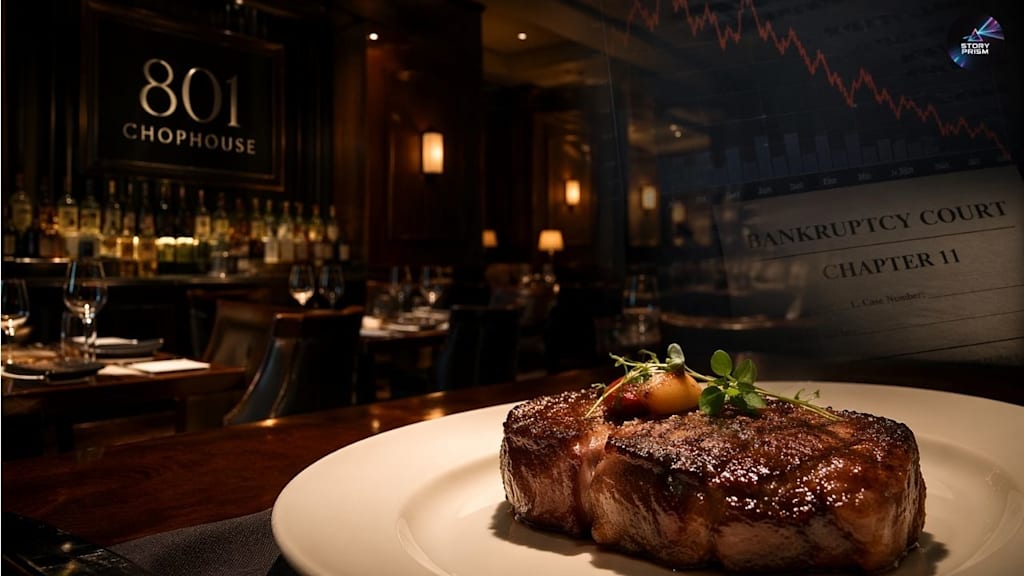
The upscale dining industry is under growing financial pressure, and the latest example is the 801 Chophouse steakhouse chain, whose parent company, 801 Restaurant Group LLC, has filed for Chapter 11 bankruptcy protection. The filing, made in April 2026 in the U.S. Bankruptcy Court for the District of Kansas, marks a significant turning point for one of America’s recognizable fine-dining brands.
Despite the headline, the bankruptcy does not mean immediate closure. Instead, Chapter 11 is a legal process designed to allow companies to continue operating while they restructure debt and attempt to regain financial stability. For now, 801 Chophouse restaurants remain open and continue serving customers across several major U.S. cities.
Financial pressure behind the filing
Court filings and reporting indicate that 801 Restaurant Group is facing serious financial imbalance. The company has reported approximately $10 million to $15 million in assets against about $18.7 million in liabilities, placing it in a negative equity position.
This gap between assets and debt reflects years of mounting operational strain. While the brand remains well-known in the upscale steakhouse segment, profitability has become increasingly difficult to maintain under current market conditions.
The bankruptcy filing is intended to give the company breathing room to renegotiate obligations with creditors, reorganize operations, and attempt to create a more sustainable financial structure.
Why 801 Chophouse is struggling
Several key factors have contributed to the chain’s financial distress.
One of the biggest challenges is the rising cost of food, particularly beef. As a premium steakhouse brand, 801 Chophouse depends heavily on high-quality cuts of meat, and beef prices have increased significantly in recent years due to supply constraints and inflationary pressures in the agricultural sector.
Labor costs have also risen sharply, especially in urban markets where many of the chain’s restaurants operate. Higher wages, staffing shortages, and increased competition for hospitality workers have made it more expensive to run full-service dining operations.
At the same time, customer behavior has shifted. Many downtown areas have seen reduced traffic since the pandemic, as remote and hybrid work models have decreased weekday lunch and business dinner crowds. This change has hit fine-dining establishments particularly hard, since they rely heavily on corporate and urban clientele.
In addition, broader economic uncertainty has led many consumers to cut back on discretionary spending. Luxury dining experiences, which can be significantly more expensive than casual alternatives, are often among the first expenses reduced when households tighten budgets.
Early warning signs
There were already signs of financial stress before the bankruptcy filing. Reports indicate that at least one location, including a Minneapolis restaurant, closed prior to the announcement. That closure reflected broader difficulties in maintaining consistent performance across all markets.
The Minneapolis market, in particular, has been challenging for several restaurant operators, with multiple dining concepts struggling due to shifting downtown activity and rising costs.
These early closures suggested that the company was already under pressure and may have been actively seeking a restructuring solution before the formal bankruptcy filing.
What Chapter 11 means for the chain
Chapter 11 bankruptcy allows 801 Restaurant Group to continue operating while restructuring its debts under court supervision. This means that, for now, customers can still dine at 801 Chophouse locations, and employees remain on the job.
The company will likely work with creditors to reduce debt obligations, renegotiate leases, and evaluate which locations remain financially viable.
Possible outcomes of the restructuring process include:
• Continued operation under a reduced debt structure
• Closure of underperforming locations
• Sale of parts of the business to investors
• Or, in a worst-case scenario, liquidation if restructuring fails
At this stage, the company appears focused on survival and stabilization rather than immediate downsizing.
A reflection of a broader industry trend
The 801 Chophouse bankruptcy is not an isolated case. It reflects a broader trend affecting the restaurant industry, particularly in the upscale dining segment. Across the United States, restaurants are dealing with rising food and labor costs, shifting consumer habits, and long-term changes in urban dining patterns.
Fine-dining establishments are especially vulnerable because they operate with higher overhead and depend on consistent customer spending at premium price points. As economic conditions tighten, many consumers are opting for more affordable dining options, putting additional pressure on luxury brands.
What comes next
In the coming months, 801 Restaurant Group will work through the bankruptcy process to develop a restructuring plan. Creditors will evaluate repayment proposals, and the company will likely reassess its operational footprint to determine how many locations it can sustainably maintain.
The future of 801 Chophouse will depend on whether it can successfully adapt to a more cost-sensitive dining environment while preserving its identity as a high-end steakhouse brand. For now, the chain remains open—but its long-term stability will be shaped by the outcome of its restructuring efforts.
About the Creator
Enjoyed the story? Support the Creator.
Subscribe for free to receive all their stories in your feed.
Comments
There are no comments for this story
Be the first to respond and start the conversation.