
10 Skills That Define the Modern Executive Chef
Why leadership, judgment and operational intelligence now matter as much as culinary technique.

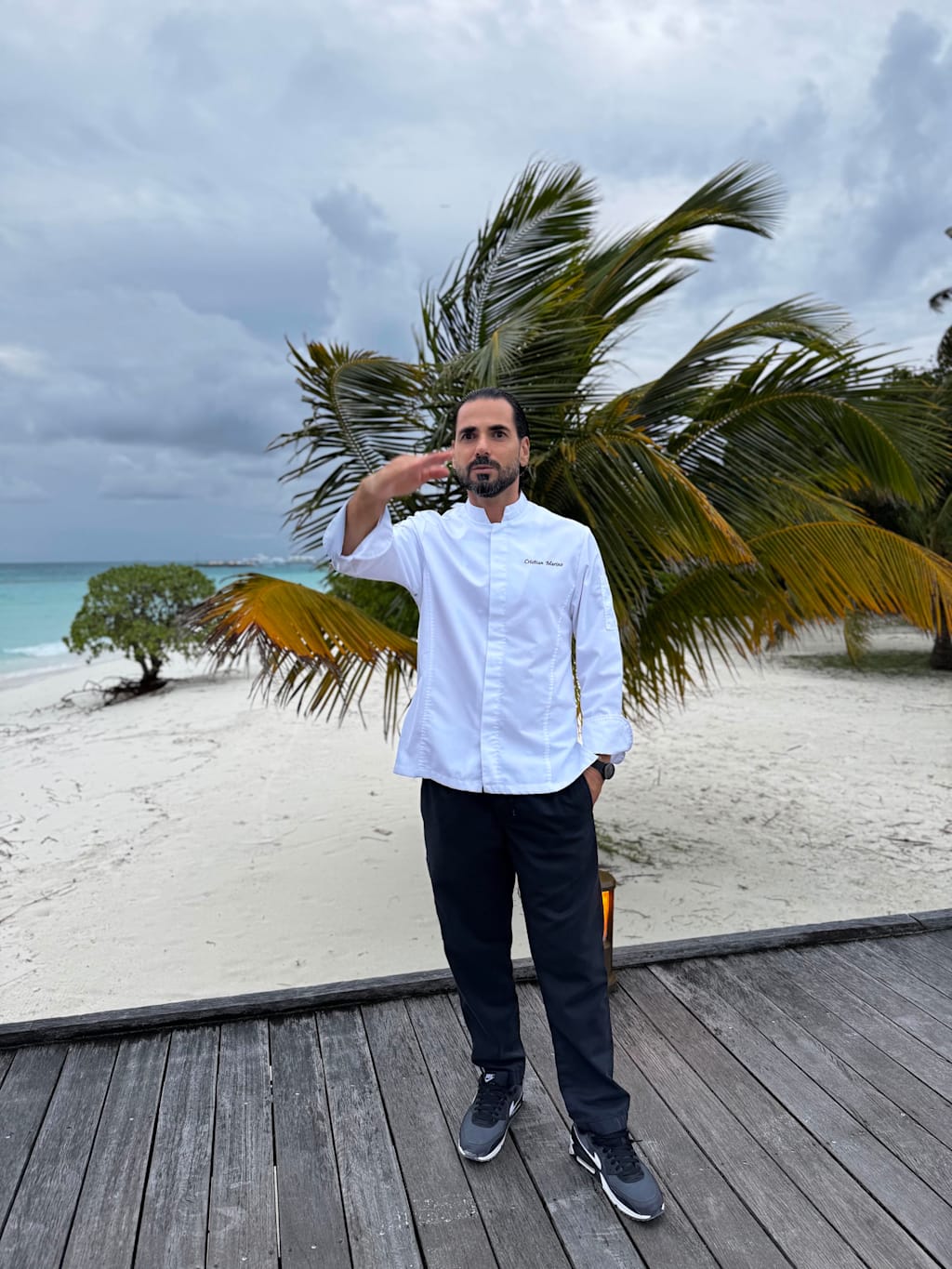
Cristian Marino has spent much of his career moving between countries, cultures and very different hospitality environments.
From Italy to Europe, the Middle East and Asia, and from hotels and resorts to cruise operations, one lesson has remained consistent throughout his professional journey: becoming an Executive Chef is not simply the final step in becoming a better cook.
It is the beginning of a much broader responsibility.
Technical ability still matters. Product knowledge, discipline, organisation and culinary standards remain essential. But at Executive Chef level, success increasingly depends on what happens beyond the stove.
People.
Systems.
Costs.
Communication.
Pressure.
And, ultimately, judgment.
These are ten qualities that have become central to the role of the modern Executive Chef.
1. Leadership Without Noise
Professional kitchens have traditionally associated authority with volume.
The louder chef was often considered the stronger chef.
Experience suggests otherwise.
In high-pressure operations, the kitchen already creates enough noise on its own. Adding unnecessary tension rarely improves performance.
A modern Executive Chef needs to know when to lower the volume.
That does not mean lowering standards.
It means observing clearly, identifying the real problem and giving direction without creating additional confusion.
A calm leader can still be demanding.
In fact, calm leadership often makes expectations clearer because emotion does not obscure the message.
For Marino, leadership is less about demonstrating authority and more about creating direction.
2. The Ability to Read People
International kitchens bring together people with very different backgrounds.
Different cultures.
Different generations.
Different personalities.
Different ambitions.
Different levels of confidence.
One of the lessons that comes from working with multicultural brigades is that there is no single leadership style that works with everyone.
Some professionals respond well to pressure.
Others perform better when given confidence.
Some need strict boundaries.
Others need more responsibility.
The Executive Chef therefore needs more than technical knowledge.
He or she needs the ability to understand people.
Knowing when to push, when to listen, when to correct and when to trust can have as much impact on performance as any culinary decision.
3. Developing Leaders Instead of Dependence
Being indispensable can initially feel like professional success.
Every question comes to the Executive Chef.
Every decision waits for approval.
Every problem requires personal intervention.
But there is another way to interpret that situation.
If an operation cannot function when one person leaves the room, the structure may be weaker than it appears.
A strong Executive Chef develops people who can think independently.
Sous Chefs should not simply learn how to reproduce instructions. They should learn how to understand problems, evaluate options and make decisions.
The objective is not to create followers.
It is to create future leaders.
A healthy kitchen operation becomes stronger when responsibility is distributed intelligently rather than concentrated at the top.
4. Operational Vision
A cook naturally concentrates on the service in front of them.
An Executive Chef cannot stop there.
In a hotel or resort environment, the kitchen is connected to almost every other part of the operation.
Occupancy affects production.
Staffing affects consistency.
Purchasing affects menus.
Engineering affects service.
Events affect preparation.
Finance affects what is sustainable.
Guest demographics affect what people actually want to eat.
The Executive Chef has to see these connections.
The best operational leaders eventually develop the ability to anticipate problems before they become emergencies.
A staffing issue next week can often be seen today.
A purchasing problem can sometimes be detected before the product disappears.
Equipment often gives signals before it fails completely.
Experience becomes valuable when it improves anticipation.
5. Creativity That Can Survive Reality
Creativity remains one of the most attractive parts of the culinary profession.
New ingredients.
New presentations.
New concepts.
New techniques.
But an Executive Chef has to ask questions that go beyond whether an idea looks or tastes good.
Can the team reproduce it consistently?
Can purchasing source the ingredients?
Can it be produced at volume?
What is the food cost?
How much labour does it require?
How much waste does it create?
What happens when the restaurant is full?
A dish may be technically excellent and still be wrong for the operation.
This does not mean that business considerations should replace creativity.
It means creativity needs to exist inside operational reality.
The strongest concepts are often not the most complicated ones.
They are the ones that can be executed consistently by the team, satisfy the guest and remain sustainable for the business.
6. Financial Awareness
Most chefs do not enter the profession because they are fascinated by spreadsheets.
Eventually, however, numbers become another language of the kitchen.
Food cost.
Labour cost.
Yield.
Waste.
Inventory.
Purchasing.
Productivity.
Average spend.
These figures reveal things that cannot always be seen during service.
A restaurant can appear extremely busy while still performing poorly.
A popular dish can damage margins.
A menu can generate unnecessary waste.
A production system can require far more labour than it should.
Financial awareness does not make an Executive Chef less creative.
It gives that creativity a stronger foundation.
At senior level, culinary and financial decisions can no longer be separated.
7. Communication Beyond the Kitchen
As responsibility grows, the Executive Chef communicates with far more than the brigade.
General Managers.
Food and Beverage Directors.
Finance.
Human Resources.
Purchasing.
Engineering.
Suppliers.
Owners.
Guests.
Each conversation requires a slightly different approach.
A culinary problem may be obvious to the kitchen but not obvious to the person being asked to approve additional equipment or budget.
An Executive Chef therefore needs to be able to translate operational reality into clear language.
Knowing the answer is important.
Being able to explain the answer is equally important.
Many good ideas fail not because they are wrong, but because they are poorly communicated.
8. Adaptability
International experience can make a professional more flexible or more rigid.
The difference depends on how that experience is used.
Working in different countries quickly demonstrates that there is rarely only one correct way to do something.
A leadership style that works in one culture may fail in another.
A product considered ordinary in one country may be exceptional elsewhere.
A system that works perfectly in a city hotel may make little sense in a remote resort.
The modern Executive Chef has to adapt without losing standards.
Experience should provide more reference points, not more reasons to resist change.
One of the most dangerous expressions in hospitality remains:
“This is how we have always done it.”
The industry changes too quickly for that mentality to survive for long.
9. Prevention Instead of Heroics
Hospitality often celebrates people who are good at solving crises.
And the ability to react quickly is certainly valuable.
But experience can change the way an Executive Chef looks at emergencies.
Constantly solving problems is not always evidence of strong management.
Sometimes it means too many problems were allowed to develop.
The more mature approach is prevention.
Recognising staffing pressure before the busy period begins.
Identifying purchasing issues before stock runs out.
Addressing training gaps before they affect the guest.
Maintaining equipment before it fails during service.
Improving communication before misunderstandings become operational problems.
The best problem solved may be the one the guest and the team never knew existed.
10. Judgment
Of all the qualities required from a modern Executive Chef, judgment may be the most difficult to measure and the most valuable to develop.
Senior positions rarely involve choosing between something clearly right and something clearly wrong.
More often, the decision sits between competing priorities.
Quality and cost.
Creativity and practicality.
Guest expectations and operational capability.
Speed and precision.
People and performance.
Short-term pressure and long-term consequences.
There is rarely a perfect answer.
The Executive Chef has to evaluate the situation, recognise the risks and decide what matters most at that particular moment.
Experience helps, but experience alone is not enough.
Twenty years in a profession can represent twenty years of learning.
It can also represent the same year repeated twenty times.
What matters is what has been understood, questioned and carried forward.
That is where experience begins to become judgment.
Beyond the Stove
The modern Executive Chef remains, first and foremost, a culinary professional.
But the role has expanded far beyond cooking.
It now requires leadership, commercial awareness, emotional intelligence, communication, operational understanding and the ability to develop others.
The higher the responsibility, the less the role is defined only by what the Executive Chef can personally produce.
It becomes defined by the quality of the operation built around them.
By the people who improve under their leadership.
By the standards that remain when they are absent.
And by the decisions they are trusted to make when there is no perfect answer.
That may ultimately be the clearest difference between being a very good chef and becoming a modern Executive Chef.
About the Creator
Enjoyed the story? Support the Creator.
Subscribe for free to receive all their stories in your feed.
Comments
There are no comments for this story
Be the first to respond and start the conversation.