
The Two Souls of the Hotel Industry: Why Transient and Extended-Stay Are Becoming Philosophies, Not Categories
The New Battle for the Modern Traveler

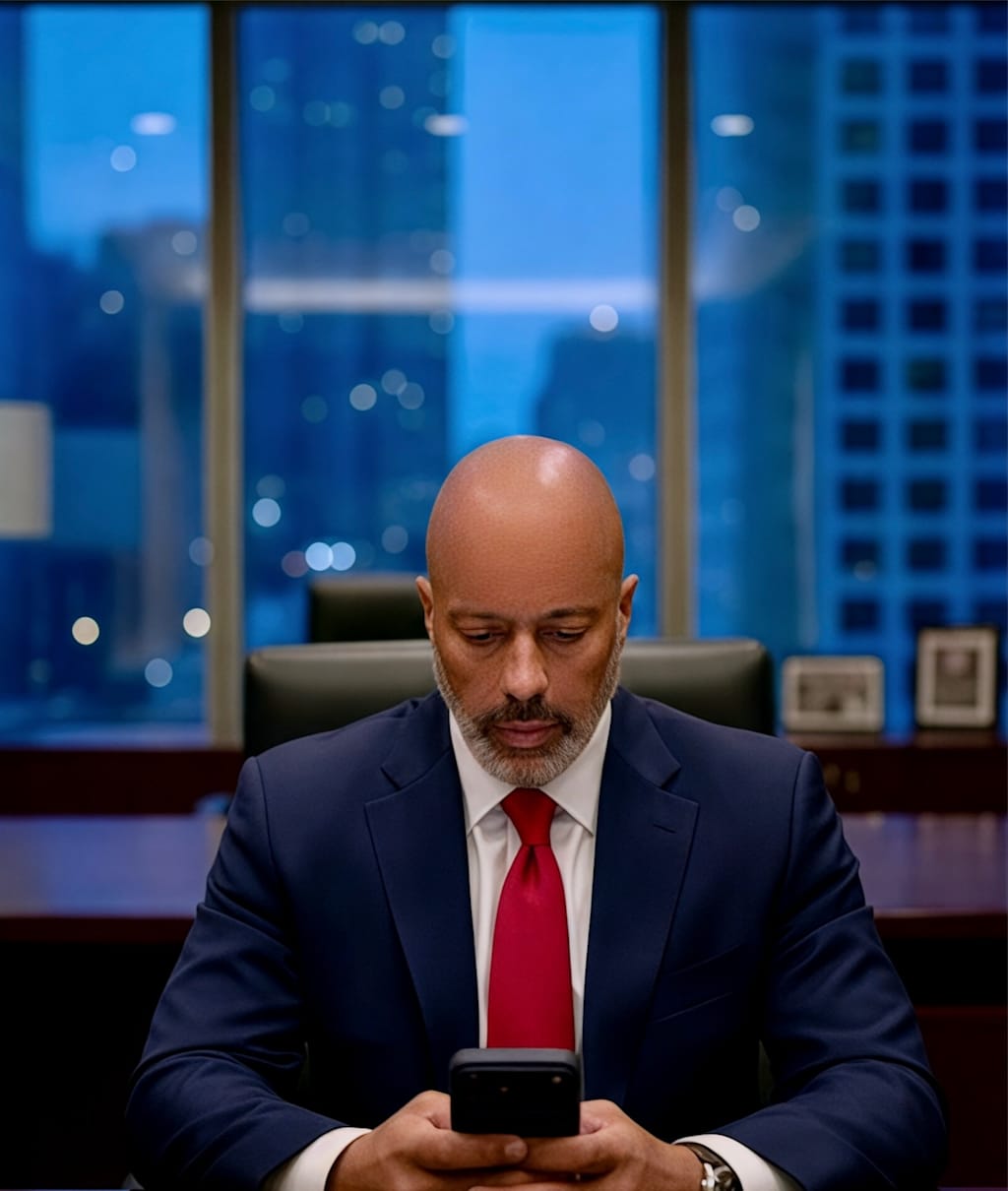
For decades, hotels assumed travel was short and purposeful — a weekend getaway, a two-night conference, maybe a week abroad. Rooms were compact but stylish. Breakfast was utility. The lobby was theater, not a living room. These were transient hotels built for motion, not life. The entire grammar of hospitality — check-in, turndown, checkout — was written for people who were, by definition, always about to leave.
That grammar made sense for most of the twentieth century. Hotels were waypoints between two fixed points: home and destination. You slept, you showered, you left. The building didn't need to hold your life because your life was somewhere else, waiting for you to return to it. Design followed function. A room needed a bed, a bathroom, a place to put a suitcase you'd never fully unpack, and just enough personality to make the stay memorable rather than forgettable. Nobody designed a hotel room expecting someone to cook dinner in it.
Then the ground shifted.
Remote work detached income from location. For the first time at scale, a person's paycheck no longer required their physical presence in an office, which meant it no longer required their physical presence anywhere in particular. The gig economy made indefinite mobility normal — freelancers, consultants, and contract workers stopped thinking of "home base" as a fixed address and started thinking of it as wherever they'd plugged in a laptop that week. Corporate relocation, medical stays, international students, and long-form production crews — film shoots, touring theater productions, traveling nurses, disaster-recovery contractors — all became durable, growing categories rather than niche exceptions. "Stay briefly" quietly turned into "stay as long as needed." Extended-stay hotels, once a sleepy, slightly unglamorous category tucked behind highway exits, became infrastructure — as essential to modern mobility as the airport or the moving truck.
Today, it's not room type versus room type. It's philosophy versus philosophy. Two entirely different theories of what a hotel is for are now competing under the same roof, sometimes literally within the same brand's portfolio. Understanding the difference isn't just useful for hoteliers — it explains a quiet transformation in how millions of people now relate to the concept of "away."
Transient Hotels: Velocity, Story, Aspiration
Transients are built for the heightened self — the version of you that exists on vacation or on a business trip, slightly more polished, slightly more open to spectacle than the version who does laundry on Tuesdays. They create arrival moments. You walk in and the space performs for you: the scent in the air, the music pitched just below conversation level, the front-desk greeting that feels rehearsed but flattering. The lobby is culture, not just architecture. It's where the brand tells you who you're supposed to feel like for the next 48 hours.
Rooms in this world are cinematic, not domestic. You're not meant to unpack — you're meant to arrive, again and again, every time you walk back in from dinner. The bed is the centerpiece; the closet is an afterthought, because nobody designing a boutique hotel room is thinking about where you'll store four weeks of folded shirts. These hotels prioritize scene over setup, spectacle over rhythm. A rooftop bar matters more than a kitchenette. A dramatic shower matters more than counter space. Every design choice optimizes for the photograph, the story you'll tell, the two nights that need to feel disproportionately significant relative to their length.
Loyalty programs in this world reward movement: one night here, one night there, flex your status everywhere, collect the points, unlock the upgrade, chase the next stamp in the passport. These aren't just booking incentives — they're narrative engines. They tell a story about a life in motion, a person whose value is measured partly by how many different beds they've slept in this year. The transient hotel doesn't just house you. It casts you in a role.
Think of the boutique property with a lobby DJ on Thursday nights, or the business-district tower where the gym opens at 5 a.m. because half the guests are jet-lagged and running on someone else's time zone. These are magnificent machines for compressing experience into short windows. They are not, and were never meant to be, machines for sustaining a life.
Extended Stay: Normalcy as Luxury
Extended-stay hotels operate on the opposite assumption entirely: travel isn't exceptional, it's life, relocated. And in that world, the hierarchy of value flips. Groceries in a fridge become luxury. A real desk — not a decorative console table wedged under a window — matters enormously to someone who has to be on video calls for six more weeks. Laundry is not an amenity, it's agency: the difference between feeling like a guest and feeling like a person who lives somewhere, even temporarily.
These properties stabilize rather than dazzle. There's no cinematic arrival moment because the goal isn't a moment — it's a month, or three, or a year. Kitchens are default, not upsell. Furniture serves time, not Instagram: a couch that holds up to nightly use for weeks outperforms a sculptural chair that photographs beautifully and ruins your back after day four. The whole point is durability of comfort, not intensity of impression.
You are expected to unpack — physically and psychologically. Drawers get used. The pantry fills up with real groceries, not minibar snacks. Guests learn the layout of the nearest supermarket, figure out which lane of traffic to avoid at 5 p.m., maybe even get a library card if they're staying long enough. The hotel stops being a stage and starts being a container for an actual routine: wake up, make coffee in a real coffee maker, work, cook something that isn't takeout, sleep, repeat. Extended-stay hospitality succeeds precisely when it disappears into the background of someone's life rather than dominating the foreground of their trip.
This is why brands built for this category — the Residence Inns, the Home2 Suites, the WoodSpring Suites and Extended Stay Americas of the world — tend to look almost deliberately unglamorous next to their boutique cousins. That's not a failure of design ambition. It's design ambition pointed at an entirely different target: not "how do we make this feel special," but "how do we make this feel normal, fast."
What's Actually at Stake
It's not just design — it's intent. These two hotel philosophies are, in effect, answering two different questions that sound similar but aren't. The transient hotel asks: how do we make a short window of time feel bigger than it is? The extended-stay hotel asks: how do we make a long window of time feel smaller — more manageable, more like the rhythm the guest already knows?
Transients compress time. A two-night stay is engineered to feel eventful, dense, worth telling a friend about. Extended-stay stretches time — or rather, it accommodates stretched time, absorbing weeks and months without asking the guest to perform enthusiasm for all of it. One serves performance. The other serves continuity. One is optimized for the highlight reel; the other is optimized for the unremarkable Tuesday, which, if you're staying somewhere for six weeks, is most of your days.
This distinction cascades into nearly every operational decision a hotel makes, often invisibly to the guest. Housekeeping frequency, for instance — daily service reads as luxury in a transient hotel and as intrusion in an extended-stay property, where guests would often rather be left alone to live their lives than have someone else refold their towels. Food and beverage programs diverge just as sharply: a destination restaurant drives revenue and buzz for a transient hotel, while an extended-stay property is better served by a well-stocked pantry shop than a chef's tasting menu nobody staying six weeks wants to eat nightly. Even something as simple as pricing psychology splits along this line — nightly rates feel natural for a two-day trip, but guests staying a month start doing the math against apartment rents, expecting the price curve to bend the way a lease would, not the way a hotel folio does.
The real question underneath all of this becomes surprisingly personal: is your trip an interruption to your life, or a continuation of it? That single distinction — more than star rating, more than brand, more than location — increasingly determines what kind of hotel actually serves a traveler well. Book the wrong philosophy and the mismatch shows up fast: the business traveler on a six-week assignment stuck in a room with no desk and nowhere to cook, or the couple on a three-night anniversary trip disappointed by a kitchenette they'll never use and a lobby with no atmosphere at all.
The Traveler Has Changed Faster Than the Industry
Part of what makes this moment interesting is that the traveler population sorting into these two philosophies has become far more heterogeneous than either category was originally designed for. The traveling nurse on a 13-week contract, the software engineer between apartments during a cross-country relocation, the family displaced temporarily by a home renovation or an insurance claim, the film crew on location for a season, the international student waiting out a visa process, the digital nomad who books a month at a time by design rather than necessity — none of these people map cleanly onto the "business trip" or "vacation" archetypes that built the transient hotel industry in the first place.
At the same time, plenty of transient behavior has intensified rather than faded. Bleisure travel — tacking leisure days onto business trips — rewards hotels that can deliver spectacle on demand. Bachelor and bachelorette parties, milestone anniversaries, quick weekend escapes booked on a whim through a phone app: all of this still wants theater, still wants the lobby to feel like an event. The transient philosophy isn't going away. It's just no longer the only demand in the market, or even necessarily the dominant one in a given building.
The Smartest Hotels Will Refuse the Binary
The next generation of hospitality won't force the traveler to self-categorize at the moment of booking. They'll be fluid — transient-capable and extended-comprehending at once, able to serve a 48-hour escape and a 29-day residency with equal fluency, often within the same physical footprint.
This means furniture that reconfigures rather than commits to one mode permanently: a desk that folds away when it's not needed, a kitchenette concealed behind cabinetry until a guest's length of stay calls for it. It means lobby energy that shifts by hour and by guest mix rather than staying locked into one mood — a working, quiet space at 9 a.m. for the long-stay guest on a call, and a livelier, more social space at 9 p.m. for the two-night guest looking for a scene. It means rates that morph from hotel logic to rental logic automatically, without the guest needing to hunt for a special "extended stay rate" buried three menus deep — the system should recognize a 21-night booking and price it like the different financial commitment it actually is, the same way it recognizes a Saturday night should cost more than a Tuesday.
Some of this is already happening at the edges of the industry, in properties experimenting with modular furniture systems, in loyalty programs beginning to reward duration alongside frequency, in booking engines that adjust amenity offerings based on length of stay rather than treating every reservation as structurally identical. But most of the industry still operates on the old binary — you are either building a stage or building a home, and rarely both under one roof, with one operating philosophy able to hold both truths at once.
Closing
Transient hotels sell spectacle. Extended-stay sells continuity. Neither is superior — they are answers to genuinely different questions about what a person needs when they're away from the place they usually call home. The mistake the industry keeps making is treating this as a segmentation problem to be solved with better categories, when it's actually a philosophy problem to be solved with better fluency. The future belongs to the hotels that stop asking guests to declare, at check-in, which kind of traveler they are — and start understanding, instinctively and structurally, what kind of time they're actually buying.
About the Creator
George Dfouni
George Dfouni brings over 35 years of hospitality experience. He is currently the CEO of Independent Hospitality, a Hotel Management and Consulting Firm based in NYC
Enjoyed the story? Support the Creator.
Subscribe for free to receive all their stories in your feed.
Comments
There are no comments for this story
Be the first to respond and start the conversation.