Authors
Home Upgrades That Actually Lower Energy Bills, and How Long They Take to Pay Off
Start With the Leaks, Not the Gadgets Manny Kavouklis, President of CMK Construction Inc. , starts the payback conversation with what homeowners notice on their bills. Most of the savings come from stopping air leaks and heat loss, so the best returns are attic insulation, air sealing, and duct sealing. Together they often cost $2,500 to $5,000 and pay back in roughly three to seven years. A properly sized high-efficiency HVAC unit follows at seven to twelve years.
By Dan Woodland8 days ago in Interview
Prince Harry Stops His Speech With One Unexpected Request: What Happened in London?
Sometimes, a single sentence can become the most memorable moment of an evening. That is exactly what happened when Prince Harry appeared unexpectedly at the 25th Wanderlust Reader Travel Awards in London on November 4, 2026.
By Behind the Curtain10 days ago in Interview
How Business Leaders Identify Which Clients or Products Are Quietly Costing Them Money
Why Revenue Alone Tends to Flatter the Numbers A client or product can look like a strong performer on every report a business reviews most often. Revenue is growing, the account is stable, and nothing signals a problem. The cost of keeping it that way sits somewhere else, in staff time, overhead, support load, or maintenance, and it only shows up once someone loads those costs back into the picture.
By Dan Woodland15 days ago in Interview
An Original "Influencer"
I secretly laugh when I hear the term, "influencer" as if it were something newly invented or concocted strictly from and for this generational culture. And the very fact that one would, with intent, set out to make money or fame by calling themself by that term...well, that defeats the purpose in my humble opinion.
By Shirley Belk20 days ago in Interview
What Choong Whan Park's Interview Reveals About Brand Attachment and Consumer Identity
Why do some brands become part of our lives while others remain little more than names on products? Companies spend enormous resources building awareness, encouraging repeat purchases, and creating emotional advertising campaigns. Yet recognition and loyalty are not necessarily the same as genuine emotional attachment.
By Choong Whan Park USCabout a month ago in Interview
Three and a Half Score Years and Still Kicking
Anonymous Interviewer: So, it is October, and a little birdie told me that it is your birthday this month. Three and a half score years. It seems like a good time to find out a bit more about you and what makes you tick.
By Calvin Londonabout a month ago in Interview
Book Review: A Confection of Courage
Partha Roy is a young Indian writer. His book ‘A Confection of Courage’ came to my attention and I read the e-book in Kindle Unlimited. It's set in West Bengal, near my native place in India. Flora, funa, people, lifestyle, struggles are similar. It resonated with me and soon, I got the paperback too, for it felt worthy to be in my home library.
By Seema Patelabout a month ago in Interview
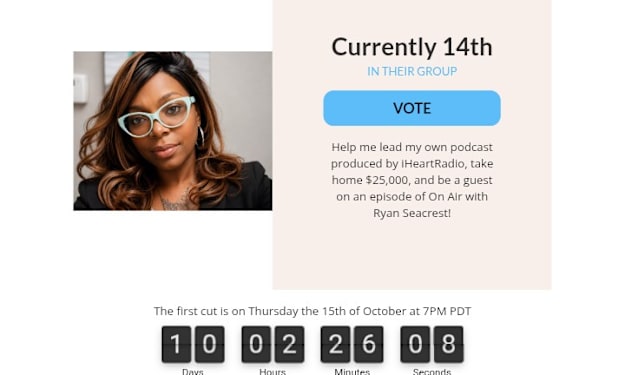
Y’all… I’m in 14th Place. This Has Gone Too Far. 😂
Y’all… I’m in 14th Place. This Has Gone Too Far. 😂 Okay. I checked the Top Host rankings. And somehow, someway, through the grace of God, bad decisions, good readers, and whatever the hell High Me started when she filled out this application…
By Dakota Denise about a month ago in Interview
How Leaders Balance Growth Targets With Sustainable Operations
Growth looks like unambiguous good news from the outside. From inside a business, it's often the moment when every weakness in an operation gets tested at once. The leaders who navigate this well tend to share one trait: they've already decided, before the pressure hits, which side wins when a growth opportunity and operational capacity can't both be satisfied.
By Dan Woodland2 months ago in Interview
The Two Souls of the Hotel Industry: Why Transient and Extended-Stay Are Becoming Philosophies, Not Categories
For decades, hotels assumed travel was short and purposeful — a weekend getaway, a two-night conference, maybe a week abroad. Rooms were compact but stylish. Breakfast was utility. The lobby was theater, not a living room. These were transient hotels built for motion, not life. The entire grammar of hospitality — check-in, turndown, checkout — was written for people who were, by definition, always about to leave.
By George Dfouni4 months ago in Interview