
The Hidden Cost of Bad Digital Marketing: Evan Cole Vitale's Reality Check for Business Owners
Why your competitor's ROI is 5x higher and exactly how to fix it

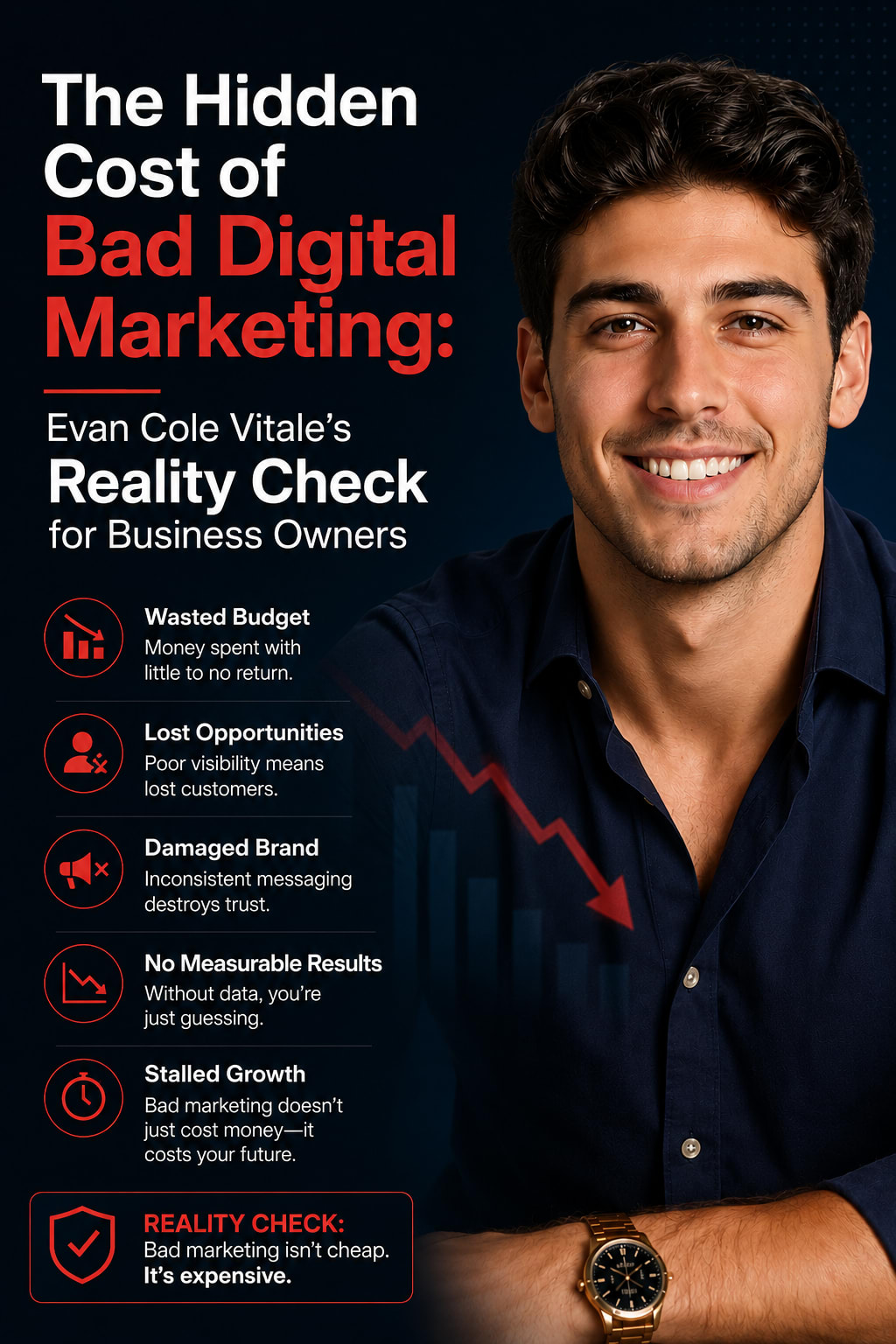
Every day, I witness business owners throwing thousands of dollars into the digital marketing void. They launch campaigns with high hopes, watch their budgets disappear, and scratch their heads wondering what went wrong. The truth? Most aren't managing their digital presence strategically—they're simply hoping for results.
The cost of bad digital marketing isn't always visible on a spreadsheet. It's hidden in missed opportunities, unqualified leads, and customer relationships that never materialize. Let me break down what's actually happening in your business when your digital strategy falls short.
The Silent Money Drain: Understanding Real Costs
When businesses invest in digital marketing without proper strategy, they face multiple layers of expenses that extend far beyond the initial campaign budget. First, there's the direct waste—spending on platforms and tactics that don't align with your actual audience. Many companies blast ads across Facebook, Instagram, and Google simultaneously without understanding where their customers genuinely spend time.
Then comes the indirect cost: opportunity loss. While your competitor attracts high-quality leads with a refined strategy, your business loses market share to brands that understand their digital positioning better. This isn't just about this quarter's sales—it compounds over months and years.
The third hidden cost is team frustration and burnout. When marketing efforts consistently underperform, your internal team becomes demoralized. They spend cycles analyzing poor results, justifying expenses, and restarting campaigns without clear direction. This creates a culture of reactive decision-making instead of strategic growth.
The Three Fatal Mistakes Business Owners Make
Mistake One: Audience Blindness
Most failing marketing campaigns suffer from a fundamental problem—the business owner assumes they understand their audience better than they actually do. Without proper research and analytics, assumptions drive strategy. Maybe you think your customers are on TikTok when they're actually researching solutions on LinkedIn. Maybe you're targeting the wrong demographic entirely, spending premium dollars to reach people who'll never buy from you.
The solution requires stepping back and gathering real data. Who actually buys from you? Where do they research solutions? What problems keep them awake at night? When you build your strategy on answers rather than guesses, everything improves.
Mistake Two: Platform Confusion
Every new platform promises marketing gold, but spreading yourself thin across five channels where you're barely present is far less effective than mastering two channels where you can dominate. Too many businesses jump from trend to trend, recreating content across platforms without considering channel-specific nuances.
A LinkedIn post should read differently than an Instagram caption. Video content on TikTok serves a different purpose than YouTube tutorials. When you're stretching limited resources across too many channels, your presence becomes shallow everywhere. Focus beats scattered effort.
Mistake Three: Metrics Misalignment
Perhaps the costliest mistake is measuring the wrong things. Business owners often track vanity metrics—likes, impressions, follower counts—while ignoring meaningful indicators like conversion rates, customer acquisition cost, and lifetime value. You might celebrate 10,000 new followers while your actual sales haven't budged.
Real digital marketing strategy connects every action to business outcomes. Not all traffic is valuable. Not all engagement converts. Your metrics should answer one question: Is this activity moving the needle toward revenue?
The Evan Cole Vitale Framework: Strategic Recovery
Fixing broken digital marketing requires a systematic approach. Start with a genuine audience audit—interview customers, analyze website analytics, and understand your market position. Next, establish platform priorities. Choose two or three channels where your audience congregates and commit to excellence there.
Finally, build measurement systems that matter. Every campaign should track toward specific business outcomes—whether that's lead generation, customer acquisition, or revenue growth. When metrics connect to business results, decision-making becomes clearer.
The Real ROI of Getting It Right
When businesses implement strategic digital marketing, the transformation is dramatic. Companies that fix fundamental problems typically see 3-5x improvement in their return on marketing investment within 90 days. Better qualified leads. Lower customer acquisition costs. Stronger brand positioning.
But beyond numbers, there's something more valuable: confidence. When your strategy is sound and measurement is clear, you know exactly why campaigns succeed or fail. You can optimize with certainty rather than hope.
Moving Forward
Bad digital marketing doesn't just cost money—it costs growth, confidence, and competitive advantage. The good news? Most common mistakes are fixable with the right framework and commitment to strategy over assumptions.
Your competitors who are crushing it in digital aren't smarter than you. They're simply more intentional. They've eliminated the guesswork and built systems that work. You can too.
The question isn't whether you can afford to fix your digital marketing strategy. It's whether you can afford not to.
About the Creator
Mike William
Mike William is an author and publisher of Online Marketing, sharing insights on modern marketing trends and strategies to help businesses and professionals adapt and succeed in today’s competitive landscape.
Enjoyed the story? Support the Creator.
Subscribe for free to receive all their stories in your feed.
Comments