Podcast
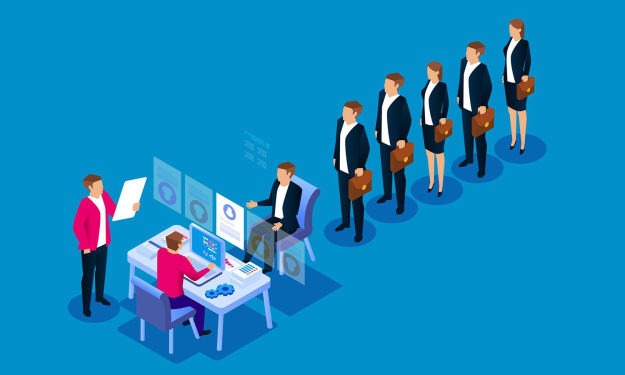
WAYS TO OVERCOME THE UNDEREMPLOYMENT SCENARIO COMMON IN NIGERIA JOB MARKET
Introduction: Nigeria, as one of Africa's largest economies, faces a persistent challenge in its job market - underemployment. Underemployment refers to a situation where individuals are employed in jobs that do not fully utilize their skills, education, and qualifications, leading to low job satisfaction and limited economic growth. This prevalent issue demands attention and concerted efforts to address the underemployment scenario and provide meaningful employment opportunities for Nigerian workers. In this article, we will explore strategies to overcome underemployment and pave the way for a more productive and prosperous job market in Nigeria.
By Engr. Ikeh Prince Jideofor3 years ago in Interview
How to achieve hour glass shape body
The hourglass figure is a classic and sought-after body shape that is characterized by a narrow waist, curvy hips, and a full bust. While genetics play a significant role in determining one's body shape, there are certain lifestyle choices and exercises that can help achieve a more hourglass-like figure. Here are some tips to help you achieve a unique hourglass shape:
By Riyakrishna3 years ago in Interview
Why you procrastinate even when you feel bad.
It’s 5 p.m. and you’ve just realized, that report you’ve been putting off is due tomorrow. It’s time to buckle up, open your laptop….and check your phone. Maybe catch up on your favorite YouTube channel? Actually, you should probably eat first. You usually like cooking, though it’s hard to enjoy with this work looming over your head, and, what the! — it’s already pretty back outside! Maybe you should just try again tomorrow? This is the cycle of procrastination, and I promise you, we have all been there. But why do we keep procrastinating even when we know it’s bad for us? All things considered, putting something off isn’t always procrastinating. Responsible time management requires deciding which tasks are important and which ones can wait. Procrastination is when we avoid a task we said we would do, for no good reason, despite expecting our behavior to bring negative consequences. Obviously, it’s irrational to do something you expect to harm you. But ironically, procrastination is the result of our bodies trying to protect us, specifically by avoiding a task we see as threatening. When you realize you need to write that report, your cerebrum answers like it would to any approaching danger. Your amygdala, a bunch of neurons engaged with profound handling and danger recognizable proof, discharges chemicals including adrenaline that start up a trepidation reaction. This stress-induced panic can overpower the impulses from your prefrontal cortex, which typically helps you think long-term and regulate your emotions. And it’s in the midst of this fight, flight, or freeze response that you decide to handle the threat by avoiding it in favor of some less stressful task. This response might seem extreme— after all, it’s just a deadline, not a bear attack. But we’re most likely to procrastinate tasks that evoke negative feelings, such as dread, incompetence, and insecurity. Studies of procrastinating university students have found participants were more likely to put off tasks they perceived as stressful or challenging. And the perception of how difficult the task is increases while you’re putting it off. In one experiment, students were given reminders to study throughout the day. While they were studying, most reported that it wasn’t so bad. But when they were procrastinating, they consistently rated the idea of studying as very stressful, making it difficult to get started. Because procrastination is motivated by our negative feelings, some individuals are more susceptible to it than others. People who have difficulty regulating their emotions and those who struggle with low self-esteem are much more likely to procrastinate, regardless of how good they are at time management. However, it's a common misconception that all procrastinators are lazy. In the body and brain, laziness is marked by no energy and general apathy. When you’re feeling lazy, you’re more likely to sit around doing nothing than distract yourself with unimportant tasks. In fact, many people procrastinate because they care too much. Procrastinators often report a high fear of failure, putting things off because they’re afraid their work won’t live up to their high standards. Whatever the reason for procrastination, the results are often the same. Frequent procrastinators are likely to suffer from anxiety and depression, ongoing feelings of shame, higher stress levels and physical ailments associated with high stress. Worst of all, while procrastination hurts us in the long run, it does temporarily reduce our stress level, reinforcing it as a bodily response for coping with stressful tasks. So, how can we break the cycle of procrastination? Traditionally, people thought procrastinators needed to cultivate discipline and practice strict time management. But today, many researchers feel the exact opposite. Being too hard on yourself can layer additional bad emotions onto a task, making the threat even more intense. To short-circuit this stress response, we need to address and reduce these negative emotions. Some simple strategies include breaking a task into smaller elements or journaling about why it's stressing you out and addressing those underlying concerns. Try removing nearby distractions that make it easy to impulsively procrastinate. And more than anything, it assists with developing a mentality of self-sympathy, excusing yourself, and improving an arrangement to do sometime later. Since a culture that propagates this pattern of pressure and stalling harms us all in the long haul.
By Muokelo Charles3 years ago in Interview
online business
Yes, as an AI language model, I have knowledge about online businesses. Online businesses refer to companies that conduct their operations primarily through the internet, using digital platforms to sell products or services. There are various types of online businesses, such as e-commerce stores, digital marketing agencies, online education providers, software as a service (SaaS) companies, and more.
By ODS ACADEMY3 years ago in Interview
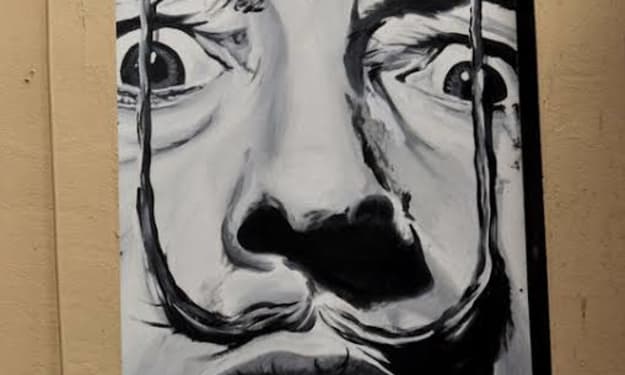
Salvador Dali
Salvador Dalí was a Spanish surrealist painter, born on May 11, 1904, in Figueres, Spain. He was one of the most famous and influential artists of the 20th century, known for his eccentric and often bizarre works of art. Throughout his career, he experimented with a variety of mediums, including painting, sculpture, and film.
By Openee Article 3 years ago in Interview
Exploring ASMR: The Rising Phenomenon and YouTube's Top Search
In recent years, a mesmerizing trend has captivated millions of internet users worldwide: Autonomous Sensory Meridian Response, more commonly known as ASMR. ASMR refers to a tingling sensation experienced by some individuals in response to specific auditory or visual stimuli. This peculiar phenomenon has gained immense popularity, reaching new heights on platforms like YouTube, which has become one of the top search categories.
By Ashleigh Nicole3 years ago in Interview
Titanic Survivor Claims an Iceberg Didn't Destroy the Ship
The sinking of the Titanic is one of the most famous maritime disasters in history. The "unsinkable" ship hit an iceberg and sank in the early hours of April 15, 1912, resulting in the loss of over 1,500 lives. For over a century, it has been widely accepted that the iceberg was the cause of the disaster. However, a recent claim by a Titanic survivor has thrown this long-held belief into question.
By Daniel Ellison3 years ago in Interview
Mastering Vocal: Strategies for Successful Posting
Vocal is a popular platform for creators to share their stories and reach a wider audience. However, with so much content being published on Vocal every day, it can be challenging to stand out and get your voice heard. In this article, we will discuss the best strategies for posting on Vocal and how to increase your chances of success.
By Benjamin Ekow Plange3 years ago in Interview
5 Best Microphones for Podcasting
Welcome to the world of podcasting, where a microphone is your most essential tool! Choosing the right microphone can make a huge difference in the quality of your podcast's sound, and it can be overwhelming to navigate through all the options available. In this article, we'll highlight five of the best microphones for podcasting to help you make an informed decision. Whether you're a seasoned podcaster or just starting, we've got you covered with a range of options that fit different needs and budgets.
By m.albrecht3 years ago in Interview