Creators
More Than Questions
M Mehran Interviews always seemed straightforward to me. You answer questions, showcase your skills, nod politely, and leave. Or so I thought. I learned that an interview is never just about questions and answers—it’s a window into yourself, your fears, your aspirations, and, sometimes, your resilience. --- The Morning of Doubts I woke up that day with a knot in my stomach. The interview was for a position I had dreamed of for years, a role that could change my life. My outfit was neatly pressed, my resume polished, and yet, I couldn’t shake the doubt gnawing at the edges of my confidence. On the bus, I rehearsed answers in my head, imagining flawless responses to every possible question. I even practiced my smile in the reflection of the window, as if preparing my face would somehow armor me against failure. --- First Impressions Walking into the office, I noticed how the room hummed with quiet tension. Other candidates were there too, sitting stiffly in chairs, eyes flicking nervously around. It struck me that interviews were microcosms of life itself: people striving, hoping, and silently comparing themselves to strangers. When my turn came, I was led into a small, sunlit room. A single interviewer sat across the table, her gaze calm but probing. She offered a polite smile and gestured for me to begin. --- The Unexpected Question The first questions were standard: “Tell me about yourself,” “What are your strengths and weaknesses?” I answered confidently, reciting practiced lines. But then she asked something unexpected: “What’s the biggest mistake you’ve made, and what did you learn from it?” I froze. For a split second, panic surged. This wasn’t a bullet-point question; it demanded honesty, self-reflection, and courage. I thought of the time I had missed a critical deadline at my previous job. I had been embarrassed, ashamed, convinced it marked me as incompetent. But as I spoke, I realized the story wasn’t about failure—it was about growth. “I learned that preparation is crucial,” I said, my voice steadying. “But more importantly, I learned to own my mistakes, to ask for help when needed, and to turn setbacks into opportunities for improvement.” Her nod was subtle, but I felt a weight lift from my chest. --- The Human Connection Interviews are often described as tests, but I found they can also be conversations. As the questions continued, she shared her own experiences—challenges, lessons, moments she regretted. Suddenly, the interview was less about performance and more about connection. We spoke about teamwork, communication, and resilience. Each question became a bridge, linking my experiences with hers, creating a dialogue rather than a monologue. It was the first time I realized that interviews could reveal not only what a candidate brings, but also how humans relate to each other. --- Moments of Reflection As the interview drew to a close, she asked one last question: “Why do you want this role?” I took a deep breath. I could have recited a rehearsed answer, full of corporate jargon and ambitions, but instead, I spoke from the heart. “I want this role because it challenges me,” I said. “Because it allows me to grow, to contribute, and to be part of something meaningful. And because I believe that when people are given the right opportunity, they can exceed even their own expectations.” She smiled, a small but genuine expression, and thanked me. I left the room feeling lighter, as though the interview had not just tested me, but taught me something about myself. --- Lessons Beyond the Resume I didn’t immediately know if I got the job. But in those forty minutes, I had discovered something essential: interviews are mirrors. They reflect not only your skills and experiences but also your mindset, your honesty, and your ability to engage with another human being. I learned that confidence is not pretending to be perfect. It’s acknowledging imperfection and showing how you navigate it. That preparation matters, yes, but authenticity matters more. That courage isn’t just about answering difficult questions—it’s about listening, connecting, and showing the person across the table who you truly are. --- The Bigger Picture Weeks later, when I finally received the job offer, I realized the real reward wasn’t the position itself—it was the transformation I had experienced in preparing for and facing the interview. I had stepped into a room full of anxiety and emerged with clarity, self-awareness, and confidence. Interviews are often feared as judgmental encounters, but they can also be moments of revelation. They remind us that growth comes not just from succeeding, but from embracing the challenge, reflecting on our experiences, and connecting with others along the way. --- Closing Thought An interview is never just a list of questions. It is a journey, a reflection, a conversation between the person you are and the person you aspire to become. Each one teaches you something, if you are willing to listen. And sometimes, the most important lesson of all is this: the courage to face yourself, your fears, and your potential is more valuable than any job offer you could receive.
By Muhammad Mehranabout a year ago in Interview
The Billion-Dollar Dreamer How Enzo Zelocchi is Turning Vision Into Legacy
In the fast-paced world of entertainment, success is often measured in box office returns or fleeting fame. But for Enzo Zelocchi, success has taken on a far deeper meaning. With an estimated net worth of $1.5 billion, Zelocchi is more than a filmmaker or actor—he is an architect of new possibilities. His empire extends beyond cinema into business, technology, and innovation, proving that his vision is as expansive as the stories he tells.
By Brian Smithabout a year ago in Interview
Peruvian Sensation Eduardo Castillo Readies for Elite No-Gi Challenge at Pan IBJJF 2025
Brazilian Jiu-Jitsu athlete Eduardo Castillo Zimic, a name synonymous with resilience and exceptional skill, is set to compete in the highly anticipated Pan IBJJF Jiu-Jitsu No-Gi Championship 2025. The Peruvian black belt sees this prestigious event as a crucial step in his illustrious career, aiming to test his mettle against the world's best no-gi grapplers.
By Lisa Rosenbergabout a year ago in Interview
How Igor Finkelshtein Built a Legacy by Solving Everyday Problems
When people talk about legacy, they often think in terms of global scale, billion-dollar exits, or breakthrough technologies. But my experience has shown me something different: legacy is built quietly, through the consistent solving of everyday problems.
By Igor Finkelshteinabout a year ago in Interview
Can Yağız Talks Upcoming Art Show, Inspiration and Art Career
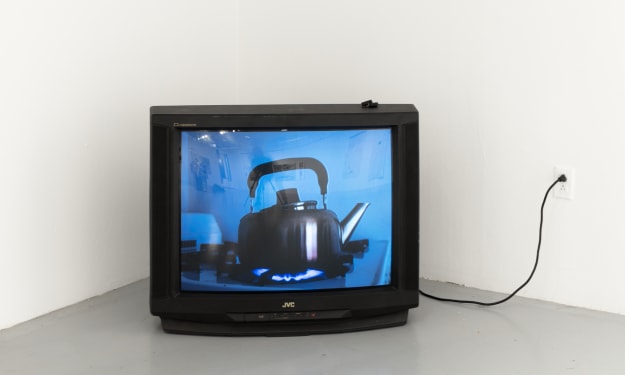
Conceptual artist Can Yağız is set to present his artworks at the upcoming group exhibition, “Conceptual Romance,” opening at the Ely Center of Contemporary Art (ECOCA) on September 14, 2025. The exhibition, curated by Jared Quinton, Emily Hall Tremaine Associate Curator of Contemporary Art at the Wadsworth Atheneum Museum of Art, marks ECOCA's 10-year anniversary and will feature 23 select artists, including Yağız.
By Lisa Rosenbergabout a year ago in Interview
R.E.A.L. Talk Self with Silvia Gina Hunt, Episode 18
R.E.A.L. Talk Self returned to the MNN Studios on April 13, 2018, for another stimulating discussion that delved into issues of spirituality, unity, and human advancement. In Episode 18, Silvia Gina Hunt welcomed Dr. Min Va'Mon Prince, the pastor of the AUM Institute, for a profound conversation about philosophy, faith, and how common values can strengthen communities. The conversation that followed was more than just an interview; it was a sincere investigation of how belief systems can cross conventional lines and aid in the discovery of human common ground.
By B.E.A.T Productionsabout a year ago in Interview
B.E.A.T. Productions Presents: R.E.A.L. Talk Self with Silvia Gina Hunt – Episode 17 “Flashback Friday
Silvia Gina Hunt hosts Episode 17 of R.E.A.L. Talk Self, which carries on B.E.A.T. Productions' goal of producing programming that is both culturally relevant and thought-provoking. Viewers are transported back in time to a memorable summer conversation between Hunt and her special guest and close friend, RonAmber Deloney, in this episode of "Flashback Friday." Deloney's distinct viewpoint as a poet and up-and-coming DJ weaves together a rich conversation about creativity, culture, music, race, and resiliency.
By B.E.A.T Productionsabout a year ago in Interview
Ace Your Interview with Confidence
Sophia sat in the reception area of Orion Tech, her heart racing. She clutched a neatly printed resume and glanced once more at the elevator doors, waiting for them to open and signal the start of her interview. Despite her nerves, she had prepared carefully, and this moment—one she’d imagined for weeks—was finally here. Just two months ago, Sophia had been struggling to land interviews. She knew she had the skills but often left interviews feeling like she hadn’t communicated her value clearly. Determined to change that, she started researching expert advice, attending mock interviews, and refining her approach. What she learned transformed not only her interview skills but also her confidence. Here's Sophia’s story—along with the practical tips that helped her succeed. --- 1. Do Your Homework Before applying to Orion Tech, Sophia spent time researching the company. She explored its website, read recent news articles, and studied its mission and values. This gave her a strong understanding of the company culture and recent projects. Tip: Always research the company beforehand. Learn about its products, services, culture, and recent achievements. This helps you tailor your responses and show genuine interest. --- 2. Know Your Resume—and Your Story Sophia realized that interviews weren’t just about listing qualifications. They were about storytelling. She practiced explaining her career journey, challenges she’d overcome, and how her experience made her a great fit for the role. She used the STAR method (Situation, Task, Action, Result) to prepare clear and concise answers for common behavioral questions. For example, when asked about a time she solved a difficult problem, she described how she streamlined a reporting process at her last job, saving hours each week. Tip: Prepare stories that highlight your achievements. Use the STAR method to stay organized and impactful. --- 3. Practice Makes Confidence Sophia knew she got nervous speaking in high-pressure situations. So, she practiced with a friend, recorded herself answering questions, and even rehearsed in front of a mirror. Each time, she refined her tone, posture, and delivery. She also prepared answers to classic questions like: “Tell me about yourself.” “Why do you want to work here?” “What are your strengths and weaknesses?” Tip: Practice out loud. Record yourself or do mock interviews with someone who can give honest feedback. --- 4. Dress for the Role On interview day, Sophia chose a smart, professional outfit that matched the company’s semi-formal dress code. She made sure everything was clean, well-fitted, and comfortable. When she looked in the mirror, she saw someone ready to be taken seriously. Tip: Dress slightly more formal than the company’s everyday attire. When in doubt, lean toward business casual or professional. --- 5. Bring Questions—Show You Care At the end of her interview, Sophia asked thoughtful questions like: “What does success look like in this role?” “How would you describe the team dynamic?” “What are the company’s goals over the next year?” These questions not only showed her interest but also helped her understand whether the company was a good fit for her. Tip: Always prepare 2–3 insightful questions. It shows you’ve thought seriously about the position. --- 6. Follow Up—Stand Out After the interview, Sophia sent a personalized thank-you email to each person she spoke with. She mentioned something specific from their conversation and reiterated her excitement about the role. Tip: Send a thank-you email within 24 hours. Keep it professional, brief, and sincere. --- The Outcome Two days later, Sophia received the call she had been hoping for—she got the job! She couldn’t help but smile, remembering how unsure she had felt just weeks earlier. With preparation, practice, and a mindset shift, she had turned her anxiety into confidence and landed a position at a company she truly admired. --- Final Thoughts Sophia’s journey shows that interviews don’t have to be intimidating. With the right preparation, mindset, and strategy, anyone can walk into an interview room feeling confident and ready to shine. Whether you're just starting your career or aiming for the next step, remember this: You don’t need to be perfect—you just need to be prepared. And like Sophia, you might just surprise yourself.
By Muhammad Saad about a year ago in Interview
"Perfect Timing: Mastering the Art of Interview Punctuality"
Maya adjusted the strap of her bag as she stepped out of the metro station. Her eyes flicked to her watch — 9:42 a.m. Her interview at SolisTech Solutions wasn’t until 10:00, but she had planned her arrival down to the minute. Not too early, not late — just right. She took a deep breath of the cool morning air and smiled. For Maya, this wasn’t just another job interview. It was her first real opportunity to step into the tech world she’d spent years preparing for. And she knew that making a good impression started well before she even said a word. From the moment she began her job search, Maya had read everything she could about acing interviews. One piece of advice stood out more than any other: “Arrive on time — not too early, never late.” At first, that seemed obvious. But the more she thought about it, the more she realized how much that single detail could shape the way she was perceived. She had a friend, Leo, who had arrived 30 minutes early for an interview and ended up waiting awkwardly in a crowded lobby. The receptionist seemed annoyed, and the hiring manager wasn’t ready to receive him. The whole thing had thrown him off. “It made me feel like I was imposing,” he had told her. Maya took that lesson to heart. So here she was, standing across the street from the SolisTech building with just over 15 minutes to spare. She ducked into a nearby café, ordered a small tea, and reviewed her notes. She had researched the company, practiced her answers, and even prepared a few thoughtful questions. But above all, she reminded herself to stay calm and be herself. At 9:53, she stood up, tossed her cup, and made her way toward the building. The walk took exactly five minutes. At 9:58, she stepped into the sleek, modern lobby and approached the reception desk. “Hi, I’m Maya Singh. I have a 10 a.m. interview with Mr. Lawson,” she said, offering a friendly smile. The receptionist nodded and returned the smile. “Perfect timing, Maya. He’ll be out to meet you shortly.” Perfect timing. Those words reassured her more than she expected. As she sat down, Maya noticed how calm she felt — not rushed, not overly anxious, just present and ready. Within minutes, Mr. Lawson appeared with a warm greeting and a firm handshake. The interview flowed naturally. They talked about her background, her portfolio, and her passion for creating meaningful user experiences. Maya felt confident and clear-headed, and she realized how much of that came from the calm start to her day. As the interview wrapped up, Mr. Lawson said something that stuck with her: “You came in right on time, prepared and composed — that already says a lot about how you work.” Later that afternoon, Maya received a call from the HR department. She had made it to the final round. The experience reaffirmed what she had learned: being on time isn’t just about the clock; it’s about showing respect — for the interviewer, for the process, and for yourself. --- The Hidden Power of Timing Interview timing might seem like a small detail, but it can leave a lasting impression. Arriving too early can inconvenience the team and make you feel awkward. Arriving late, of course, can signal poor planning or a lack of seriousness. The sweet spot? Aim to arrive at the building 10 to 15 minutes early. Use those few minutes to center yourself. If you’re far too early, wait in a nearby coffee shop or take a short walk. Enter the office five minutes before your scheduled time — this shows you’re prompt, respectful, and thoughtful. It’s also wise to plan your route in advance. Consider traffic, weather, and transit delays. And always have a backup plan. --- Final Thoughts Maya didn’t get the job on punctuality alone — her skills and personality sealed the deal. But that first impression, built on a foundation of perfect timing, gave her the calm confidence she needed to shine. In a world where everyone is rushing, showing up right on time might just be your quiet superpower.
By Muhammad Saad about a year ago in Interview