Authors
State, Church, and Silence: Cover-Ups within the Serbian Orthodox Church in Montenegro. Content Warning.
By Bojan Jovanović Bojan Jovanović, a former Serbian Orthodox Church (SPC) priest and now Secretary General of the Christian Alliance of Croatia, alleges widespread sexual abuse and cover-ups within the SPC, including in Montenegro. He condemns Montenegro’s decision to honor Metropolitan Amfilohije Radović, accusing him of concealing pedophilia and exploitation in monasteries such as Cetinje and Dajbabe. Jovanović cites testimonies, police files, and media investigations. He asserts that the SPC and state institutions protect abusers and suppress justice, calling their silence criminal complicity. He is cooperating with Interpol and the EU to expose an organized network of clerical sexual abuse dating back to 1978.
By Scott Douglas Jacobsen12 months ago in Interview
David Webb on Breaking Financial Barriers and Building Wealth Through Creative Real Estate Strategies
In a financial landscape where traditional investing often requires substantial capital and high net worth, transformational leader and real estate investor David Webb has challenged conventional wisdom by building a multi-million-dollar portfolio across multiple states without using a dime of his own money. As creator of The No Money Millionaire™ brand and methodology, Webb has just released his groundbreaking book "The No Money Millionaire: Build Wealth Through Real Estate Without Using a Dime of Your Own Money," providing a step-by-step blueprint that dismantles the myth that "you need money to make money."
By Oliver Jones Jr.about a year ago in Interview
Wild Willie’s Soul Impact:
When Wild Willie grabs the mic, it’s more than a podcast—it’s a force. As the creator and host of Soul Impact: How Music Saved Us, the award-winning show on The Scene Projects network, Wild Willie has carved his own lane with storytelling that refuses to play it safe. His mission is bold, his delivery unapologetic: to prove music isn’t just background noise—it’s a lifeline.
By Independent Indie Artist Radarabout a year ago in Interview
Willie Thornton: The Voice Behind Soul Impact
Willie Thornton is not just a name—it’s a movement. As the creator and host of Soul Impact: How Music Saved Us, an award-winning podcast under The Scene Projects network, Willie has carved out a lane that’s uniquely his. His work is electric, raw, and deeply human, taking listeners on a ride through stories of resilience, transformation, and hope. At its core, the show is about survival, about thriving, and about how music—something so universal—can become a lifeline when the world feels like it’s caving in.
By The Blacksheepkid Collective by: El Pablo 1xabout a year ago in Interview
D.M. Zhivago's Interview
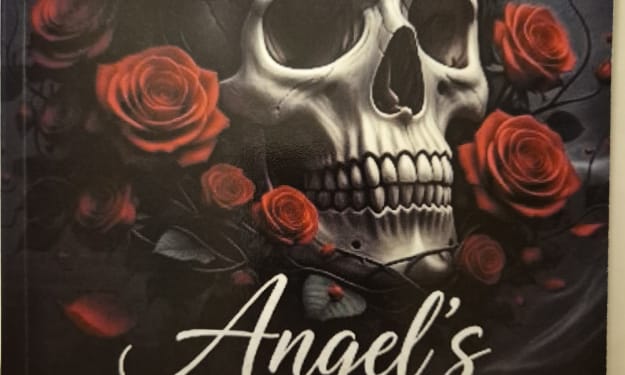
I had the pleasure to interview D.M. Zhivago, it was exciting, interesting and full of surprises. She is a Canadian author whose writing can be described as romance, fantasy, risque elements, paranormal with a touch of mischief. During our interview I got an idea of how playful, creative, and devoted she is to her characters. Her newest book "Angel's Obsession" which is the first in the Death's Series. Let's take a journey with D.M. Zhivago of her writings.
By Cheryl A Nocera about a year ago in Interview
The Interview That Felt Like a Test of Survival
M Mehran I stepped into the building at exactly 9:59 a.m., just a minute before my scheduled interview. The lobby was eerily quiet, the kind of silence that makes you hyper-aware of every sound—your shoes squeaking, your own heartbeat, the soft hum of the air conditioning. I signed in at the reception desk and waited. The receptionist gave me a polite nod, but there was something in her eyes—a barely noticeable warning—that made my stomach tighten. I shook it off. I had prepared for this. I had studied every detail of the company, rehearsed every question, memorized every answer. Surely that was enough. When my name was called, I followed the young assistant down a narrow hallway to a room at the far end. The door opened slowly, and inside sat three people behind a long table. Their expressions were unreadable, almost cold. It felt less like an interview and more like a challenge I had unknowingly signed up for. “Good morning,” said the lead interviewer, his voice calm, precise, and oddly intimidating. “Take a seat.” I did, trying to appear confident. The first question was simple: Tell us about yourself. I gave the standard answer, rehearsed and polished, but it seemed to irritate one of the interviewers. The silence that followed felt heavier than words could carry. My palms were sweating; my throat was dry. Then came a curveball question that made my blood run cold: “Imagine your team is on the verge of failing a major project. You have one hour to turn it around. How do you do it?” I froze. Not because I didn’t know the answer, but because something in the room—perhaps their stare, perhaps the way the clock ticked—made it feel like a literal countdown. My mind raced. One hour…one hour… I took a deep breath and answered honestly. I described prioritizing tasks, communicating clearly, and motivating the team to focus on what could be salvaged. The panel listened silently, then nodded. The room felt slightly less oppressive, though I couldn’t tell if it was relief or merely anticipation of the next test. Questions became faster, sharper, almost interrogative. What’s your biggest weakness? How do you handle conflict? What would you do if you disagreed with a superior? I answered each one carefully, aware that a single misstep could ruin everything. Every word was measured; every pause calculated. Then came the final question, delivered with a cold smile: “You have been offered two projects. One is high-risk but could make a huge impact. The other is safe but unremarkable. Which do you choose?” I hesitated. Part of me wanted the safe answer, the one most candidates would give. But another part—the part that had survived setbacks, failures, and long nights of preparation—spoke for itself. “I take the high-risk project,” I said, my voice steady. “Because growth doesn’t come from playing it safe. Even if I fail, I will learn more than I ever would by avoiding challenges.” The interviewers remained silent for a long moment. Then, slowly, the lead interviewer leaned back and said, “You understand the stakes. Most candidates don’t.” The interview ended abruptly. I shook hands, trying to mask the adrenaline still coursing through my veins. Walking out, I felt both exhausted and exhilarated, as though I had survived a test I didn’t fully understand. Three days later, the call came. My hands trembled as I answered. We’d like to offer you the position, said the HR manager. I exhaled a breath I didn’t realize I was holding. Relief, pride, and disbelief collided all at once. That interview had been more than a professional challenge—it had tested my composure, my honesty, and my ability to remain true under pressure. I realized then that some interviews aren’t just about skills or experience. They are about resilience, courage, and integrity. And if you can stand your ground, even when the stakes feel impossibly high, success isn’t just a possibility—it’s inevitable.
By Muhammad Mehranabout a year ago in Interview
The Interview That Changed My Perspective
M Mehran I remember the day vividly—not because it was special, but because it terrified me. I had spent weeks preparing for this interview. Every evening was filled with mock questions, endless research about the company, and pep talks in front of the mirror. I needed this opportunity—not just for a job, but for a chance to prove to myself that I could start over. The office smelled faintly of fresh paint and polished wood. The waiting room was quiet except for the low hum of a printer. I sat in the corner, resume in hand, heart pounding like a drum. Other candidates whispered to each other, sharing notes and smiles, but I barely noticed them. My focus was inward, rehearsing answers, imagining questions, and feeling a surge of self-doubt with each passing second. When my name was called, I stood, walked toward the interview room, and realized my palms were sweaty despite holding my folder tightly. Inside, three interviewers sat behind a long table, smiling politely. Their warmth eased me slightly, but my nerves remained. “Tell us about yourself,” the HR manager said. I paused. I could recite the typical corporate answer, but it wouldn’t capture why I was really here. I took a deep breath and began: “I grew up believing I had to follow a fixed path—school, college, job. But life hasn’t been linear for me. I’ve faced setbacks, moments when I doubted myself, and times when I wasn’t sure if I could continue. What I’ve learned is that perseverance, curiosity, and a willingness to learn from mistakes are what define me. And that’s what I bring with me today.” The room was silent for a moment, then the department head nodded. “Can you give us an example of a challenge you overcame?” I spoke about a project I had led that had initially failed. The team had made errors, deadlines were missed, and the client was unhappy. But instead of giving up, I organized meetings, communicated openly, and encouraged the team. We restructured the project, found solutions together, and eventually succeeded. It wasn’t a perfect outcome, but it was meaningful. The senior interviewer smiled faintly. “It takes courage to admit mistakes and take responsibility. Most people would have hidden them.” Questions continued—some technical, some situational—but the conversation shifted. Instead of memorized answers, I spoke honestly, sharing my struggles, my approach to learning, and my vision for growth. Each answer felt like a small act of self-affirmation. Then came the final question: “Why should we hire you?” I looked at them, searching for the right words. “Because I bring more than skills and experience. I bring commitment, empathy, and resilience. I won’t just work for a paycheck—I’ll contribute, learn, and grow alongside this team. I believe in giving my best, even when the outcome is uncertain. That’s who I am.” The interview ended with handshakes and smiles. I left the building, feeling lighter than when I arrived, as though the act of being honest, vulnerable, and real had already rewarded me. Two days later, an email arrived. We are pleased to offer you the position. I read it over and over, tears of relief and joy filling my eyes. But beyond the job offer, I realized the deeper lesson: interviews aren’t just about being the most qualified. They’re about showing who you truly are—your resilience, your honesty, your willingness to grow. That interview didn’t just change my career—it changed my perspective on life. I learned that authenticity matters more than perfection, and courage matters more than confidence. The experience reminded me that setbacks are not failures, but opportunities to learn and to show the world your true potential. Sometimes, the right opportunity doesn’t just knock—it tests you, challenges you, and demands that you be your real self. And if you rise to the occasion, you don’t just get a job—you gain confidence, growth, and a story worth telling.
By Muhammad Mehranabout a year ago in Interview
The Worst Interview Ever…Or the Best?
M Mehran I never believed in “bad luck” until the day of my interview. If there was an award for the most chaotic interview experience, I would have taken home the trophy—and a lifetime supply of embarrassment. It all started when my alarm failed. Not just once, but twice. I woke up 45 minutes late, panicked, and somehow spilled coffee on my shirt in my desperate rush. I barely made it to the office, hair sticking up like a cartoon character, and shoes mismatched—one polished, one scuffed. But I told myself, Hey, it’s character, right? The waiting room was crowded, and every other candidate looked like they had stepped out of a magazine. Confident. Calm. Completely untroubled by spilled coffee or late alarms. I slumped into a chair, trying to look busy with my phone, though I was mainly practicing deep breaths that did nothing. Finally, my name was called. I stood, tripped slightly over my own foot, and stumbled into the interview room. Three people looked up. Their expressions? Perfectly neutral. I cursed silently. Stay calm, stay calm. “Tell us about yourself,” the HR manager said. I opened my mouth, but at that exact moment, my stomach let out a loud growl. I froze. The silence in the room was deafening. I muttered, “Uh…I’m hungry?” and immediately wished the floor would swallow me whole. The interviewers blinked, then the senior manager leaned back and chuckled. “Honesty. That’s rare.” I took it as a good sign and soldiered on, despite my coffee-stained shirt, my mismatched shoes, and my very audible stomach rebellion. Questions came at me: experience, skills, problem-solving scenarios. And somehow, I survived each one—though not gracefully. Then came the “teamwork” question. “Tell us about a time you had a conflict at work and how you resolved it.” I panicked. I could either lie or tell the brutal truth. So, naturally, I went with brutal truth. “Well,” I said, “there was this one project where my teammate and I totally disagreed. It got heated. I yelled. They yelled. I cried…a little. But eventually, we laughed, talked it out, and actually finished the project successfully.” The room was silent. Then the HR manager laughed—a genuine, hearty laugh. Not the fake polite kind, but the kind that makes you feel like you just told the funniest story ever. The other two interviewers cracked smiles, and suddenly the room didn’t feel like an interrogation chamber anymore. Finally came the curveball question: “If you were a superhero, what would your superpower be?” I hesitated. Most people probably said invisibility, super strength, or mind reading. I paused dramatically and said, “I’d probably have the power to stop time…so I could sleep more before interviews.” All three burst out laughing. I laughed too, even though part of me worried it was the wrong answer. But judging by their smiles, it was exactly the right answer. At the end of the interview, the HR manager shook my hand. “You’re…unique. We’ll be in touch.” I walked out, expecting the worst. Days later, the email arrived. We would like to offer you the position. I stared at the screen, stunned. The chaos, the embarrassment, the mismatched shoes—it had all worked. Somehow, being completely honest, flawed, and unpolished had made me stand out more than any rehearsed answer ever could. That interview taught me something unexpected: perfection is overrated. Sometimes, authenticity, humor, and even a little disaster can win the day. It’s not about looking like the perfect candidate—it’s about showing you’re human, resilient, and able to handle life’s little catastrophes with a grin. And maybe, just maybe, showing up in mismatched shoes is your secret superpower.
By Muhammad Mehranabout a year ago in Interview
John Stapleton
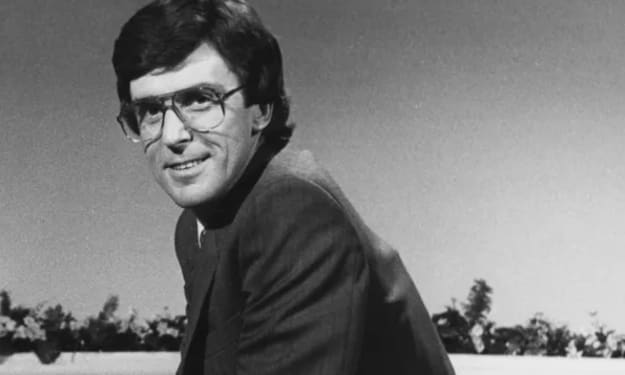
John Stapleton: Celebrating a Broadcasting Legend and His Enduring Legacy For decades, John Stapleton was a fixture in British living rooms. As a co-host on iconic programmes like BBC's Breakfast Time and the consumer affairs show Watchdog alongside his wife, Lynn Faulds Wood, he became a trusted and familiar face. His straightforward presenting style and dedication to journalism made him a household name. However, recent online searches like "has john stapleton died" and "john stapleton death" have caused concern among his many fans. This article aims to separate fact from fiction and celebrate the life and career of this broadcasting veteran.
By KAMRAN AHMADabout a year ago in Interview
My 3rd Interview With Mike Singleton 2025
Mike Singleton, also known as Mike Singleton -MikeyDred, has self-published nine books since 2021. This year, he has self-published three books. He has written over 3330 stories on Vocal. He has two profile accounts on Vocal, one of which is a backup.
By Mariann Carrollabout a year ago in Interview