Authors
The Quiet Support We Often Need: How Real-Time Guidance Can Transform the Way We Work. AI-Generated.
There’s a moment most professionals experience but rarely speak about — the moment you look at your screen, your task, your deadline, and whisper silently to yourself, “I don’t know what to do next.”
By Pamela Kholi11 months ago in Interview
Fumfer Physics 34: P vs NP, Gödel, Chaitin, and Computational Limits
In this exchange, Scott Douglas Jacobsen and Rick Rosner explore the P vs NP problem and its philosophical echoes. Rosner leans toward the mainstream view that P likely does not equal NP, drawing a parallel to Gödel’s incompleteness theorems. Jacobsen expands the discussion with Tarski’s meta-language framework and Chaitin’s arguments about irreducible complexity, connecting them to both biological systems and modern AI. The conversation emphasizes that mathematical uncertainty does not endanger reality; instead, it reveals intrinsic limits on what computation can achieve. The pair illustrate this with the traveling salesman problem, an archetype of explosive combinatorial complexity in the real world.
By Scott Douglas Jacobsen11 months ago in Interview
The Interview I Wasn’t Prepared For
M Mehran I have been through interviews before—phone screens, Zoom calls, panel rooms with too-bright lighting and too-fake smiles—but nothing prepared me for the one scheduled at 9:00 a.m. on a rainy Tuesday in November. It wasn’t the weather that made me nervous. It was the fact that this time, I needed the job. Not wanted. Needed. Rent was late. My savings account was a joke. My parents had already said the sentence no adult wants to hear: “Maybe you should come back home for a while.” So I ironed my only blazer, practiced answers I hoped sounded confident, and arrived thirty minutes early—because desperation is very punctual. The building surprised me. It wasn’t glass and metal like I imagined. Instead, it was small, quiet, almost old-fashioned, with a handwritten sign on the door: “Please ring once.” No logo. No receptionist. Just a bell. I hesitated, then pressed it. A woman in her sixties opened the door with a smile warm enough to melt the rain off my shoulders. “You’re early,” she said. “I—yes. I thought it would be better than being late.” “Sometimes,” she replied, “people arrive early because they don’t know where else to be.” I forced a laugh, pretending she was wrong. She wasn’t. --- The waiting room looked nothing like a corporate office. No motivational posters. No glossy magazines about success and productivity. Just shelves filled with books, many without titles on their spines. There were no other candidates. No background music. Only the soft ticking of a wall clock and the fast heartbeat inside my chest. After a moment, the woman returned. “We’re ready for you.” We? I followed her into a small room with two chairs and a single round table. No panel. No notepads. No laptop recording everything I said. Just one interviewer. He looked up from a folder when I entered—kind eyes, quiet face, the sort of person who didn’t need authority to be respected. “Thank you for coming,” he said. “Thank you for having me.” My voice sounded practiced, like something I borrowed instead of owned. He didn’t ask for my résumé. He didn’t ask about my strengths, weaknesses, or where I saw myself in five years. Instead, he asked: “Who taught you the meaning of work?” I froze. This was not in any list of common interview questions. “I… I’m not sure,” I said slowly. He nodded, as if uncertainty was the correct answer. “What brought you here today?” “I’m looking for a job.” “That’s what you need,” he said gently. “I’m asking what you’re searching for.” My throat tightened. I wanted to say stability. I wanted to say purpose. I wanted to say that I was tired of feeling like I was always catching up to everyone else. But all that came out was: “I don’t know anymore.” He didn’t write anything down. He didn’t look disappointed. He just sat with the silence like it wasn’t uncomfortable at all. --- Then he slid a blank card across the table. “On this card,” he said, “write one thing you stopped believing about yourself.” My hand hovered above the pen. I thought of who I used to be—someone who filled notebooks with ideas, someone who didn’t apologize for taking up space, someone who laughed without checking if it was appropriate. Somewhere between moving out, paying bills, and pretending not to be scared, I misplaced that version of myself. I wrote: “I stopped believing I was capable.” I expected him to take the card. He didn’t. “Keep it,” he said. “You’ll need it later.” --- The questions continued, but not the kind that measured skills. “Tell me about a time you failed and didn’t pretend it didn’t hurt.” “What do you wish people understood about you?” “When was the last time you did something for the first time?” Each question felt less like an interview and more like someone turning on lights in a room I had been sitting in for years without realizing it was dark. Somewhere between the third and fourth question, I stopped trying to sound impressive. I started sounding like myself. I talked about fear, and how it often wears the mask of being “realistic.” I talked about dreams I folded into smaller shapes until they could fit into a life I didn’t even want. The interviewer listened—not like someone evaluating me, but like someone witnessing me. --- Finally, he closed the folder. “That’s all,” he said. My pulse jumped. “Did I… get the job?” He smiled in a way that made the room feel suddenly warmer. “This wasn’t an interview for a position,” he said softly. “It was an interview to see whether you were ready to start again.” I blinked. “Start what?” “Your life,” he said. “The one you paused.” The woman from earlier appeared in the doorway. She handed me a simple envelope. Inside was neither a contract nor a rejection. It was a note: “Come back tomorrow at 9 a.m. Not for a job— for a place to become yourself again.” Underneath was a second line, written in unfamiliar handwriting: “Bring the card.” --- When I stepped outside, the rain had stopped. For the first time in months, I didn’t feel like I was failing. I felt like I was beginning. Because sometimes, the most important interview of your life isn’t the one that gets you hired— it’s the one that reminds you you’re still worth choosing.
By Muhammad Mehran11 months ago in Interview
The Mic of Honest Voices
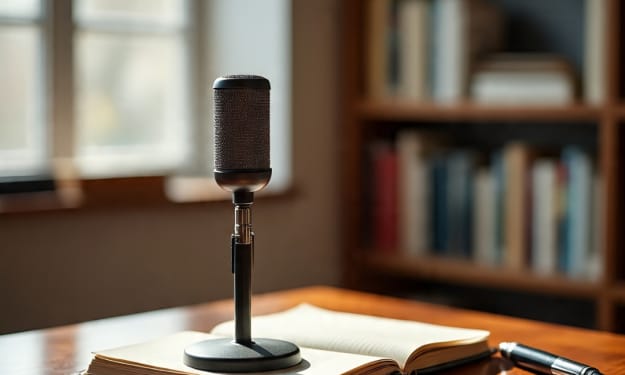
The interview room was quiet, except for the faint hum of the recorder waiting to capture a new voice. I sat across from Mr. Harland, a retired firefighter known in our town not for his job alone, but for the way he saved lives without ever expecting fame. This was not just another interview; it was a chance to listen—really listen—to someone who believed that listening could change how we see the world. “People think bravery is loud,” he said as I adjusted the microphone. “But most of the time, it’s silent. You don’t shout while saving someone. You just do it.” He spoke in a calm, slow voice, as if each word needed to be handled with respect. I asked him what continued to inspire him after years of running into burning buildings. He smiled, gazing somewhere beyond the walls. “It wasn’t the flames that mattered,” he said. “It was the faces I still remember, the eyes that suddenly felt safe.” As an interviewer, I have met athletes, teachers, poets, bakers, engineers, and dreamers, but what made their stories special were not their achievements; it was the way they learned from life. Interviews were never about collecting answers. They were about revealing truths people rarely say aloud. And today, that truth was courage without applause. Mr. Harland leaned back and continued, “Real strength is invisible. You only notice it when you need it.” His words made me realize something: interviews are not conversations for entertainment; they are doors to another person’s world. I asked him what he missed most about his work. He took a deep breath before replying, “The teamwork. You don’t survive alone. Someone holds the hose, someone breaks the door, someone pulls the person out. No hero stands alone, not even for a second.” It was a powerful reminder that the stories we admire are built by people who remain unrecognized. As the recording continued, I found myself not just gathering quotes, but absorbing wisdom. That is the beauty of interviews—they allow a silent transfer of lessons from one life to another. You don’t only hear the words; you inherit the experience. When we finished, I thanked him. He simply nodded. I sensed that his gratitude was not for being interviewed, but for being heard. Many people spend their lives doing honorable things, but very few are given the opportunity to speak about them. For a moment, the microphone became not a tool, but a witness. Later, as I walked out of the studio, I reflected on how often we underestimate everyday heroes. Interviews give a voice to those who never ask for a stage. They hold stories that deserve to be documented, not because they are dramatic, but because they are real. People often think interviews are about finding perfect words. But true interviews are about discovering imperfect, honest truths. They teach us to value kindness over fame, effort over success, character over recognition. I realized that the greatest conversations are not those filled with striking statements, but those that leave us changed quietly, on the inside. The microphone records, but our hearts remember. As I prepared for my next interview, I kept Mr. Harland’s lesson in mind: strength can be silent, and voices worth hearing are sometimes the calmest ones. The world doesn’t always need louder stories. It needs more honest voices—and someone willing to listen.
By Spotlight stories 11 months ago in Interview
Questions That Build Tomorrow
In the bustling town of Crestwood, where busy streets hummed with stories and daily routines, lived a young college student named Zayan. Unlike many students, Zayan wasn’t dreaming of becoming a doctor or an engineer—he dreamed of becoming a journalist who used interviews to understand the world. To him, interviewing someone wasn’t just asking questions. It was discovering a hidden universe in every person. His journalism teacher, Mr. Ray, noticed Zayan’s curiosity and decided to give him an important task. “You will interview someone who influenced this town,” he said. “Choose wisely. The best interview is not with the most famous person, but with the person who holds wisdom.” Zayan thought hard. Famous business owners, well-known teachers, even athletes came to mind. But there was one person he always noticed in the morning—a quiet old man who cleaned the town’s main library garden. He was never in a hurry, never angry, and always smiling politely. People passed him every day, never wondering who he was. So, Zayan made his choice. The next morning, armed with a notebook, recorder, and a heart full of nervous questions, he walked toward the library garden. The old man was trimming bushes with careful hands. “Sir… may I interview you? My name is Zayan,” he asked politely. The man looked surprised. “Me? I am no one important.” “That’s exactly why I want to talk to you,” Zayan replied with a smile. The old man laughed softly and agreed. They sat on two wooden chairs near the garden fountain. His name was Mr. Haleem, and he had worked as the gardener for thirty years. Zayan began the interview with simple questions, asking about his job and routine. But as minutes passed, the simple conversation turned deeper. “What keeps you smiling every day?” Zayan asked. Mr. Haleem paused, eyes reflecting memories. “Because life is like a garden… If you care for it patiently, it blooms. People get busy chasing big things, but they forget small joys. Those are the seeds of peace.” Zayan felt something shift in his heart. He wasn’t just receiving answers—he was receiving lessons. “Have you ever dreamed of becoming someone else?” Zayan asked. “No,” replied the old man. “Dreams are not always about what you want to be, but who you want to become. I chose honesty over fame, patience over rush, and service over pride. That is enough.” The interview lasted for an hour. Zayan wrote quickly, feeling that every word was precious. When he finished, he thanked Mr. Haleem and turned off the recorder. “You asked good questions,” the gardener said. “You did not interview a job, you interviewed a person. That is real journalism.” Zayan walked home with a calm heart. He realized interviewing wasn’t about clever questions, but honest listening. A week later, his interview was published in the college journal. Readers were moved—many had seen Mr. Haleem every day, yet never knew the wisdom behind his smile. Students visited the library garden just to greet him, and teachers praised Zayan for choosing someone humble yet deep. But the greatest reward wasn’t the praise. It was the lesson he carried: Behind every ordinary life, there is an extraordinary story—if we ask with respect and listen with sincerity. And so, Zayan understood something beautiful: Interviews don’t just reveal truths about others. They also reveal truths about ourselves.
By Spotlight stories 11 months ago in Interview
“Echoes of Experience: Conversations That Change Everything”
In a world where voices often get drowned in noise, interviews stand as windows—clear, open, and honest—through which we see real human experience. Every conversation has the power to teach, inspire, and shift perspectives. And that is exactly what Rayan discovered when he launched his small interview series, “Echoes of Experience.” Rayan was not a journalist, not a celebrity host, and not someone with a large platform. He was simply a curious listener—someone who believed every person carried a story worth hearing. His community encouraged him to share these stories, so he decided to interview people whose journeys were often overlooked but deeply meaningful. His first guest was a retired engineer named Haroon. At first glance, Haroon looked like an ordinary elderly man who spent his days gardening and reading newspapers. But once they sat in front of the microphone, something magical unfolded. Haroon spoke about how he started his career fixing small machines in a garage and eventually helped design important safety systems for highways. “The world only sees success,” Haroon said, “but interviews allow us to see the steps, the failures, the doubts, and the moments that shape us.” Rayan realized that this was exactly why he created the series. Weeks later, he invited Samir, a young volunteer who worked at community shelters. Samir was humble, almost shy, but his voice carried sincerity. He shared stories of people he helped—men who had lost jobs, students dealing with pressure, families struggling to find hope. “Listening,” Samir said, “is the first form of kindness.” His words stayed with Rayan for days. Each interview added a new layer to the project. It wasn’t just about achievements—it was about experiences, perspectives, and lessons that couldn’t be found in textbooks. Rayan noticed how the community began responding as well. People commented on how they felt uplifted, understood, and connected to others they had never met. Then came an interview that changed everything. Rayan invited a man named Ibrahim, a small business owner who once failed multiple times before finally succeeding. As they sat in the studio, Ibrahim shared how he had faced financial loss, self-doubt, and relentless criticism. But he also spoke about perseverance, the importance of support, and the moments when he wanted to quit but chose to rise again. At one point, Ibrahim said something that stayed with Rayan forever: “Interviews don’t just tell stories. They preserve courage.” When the episode was published, it quickly became one of the most shared stories in the community. Many listeners said it felt like someone finally understood what they were going through. Rayan’s mission began to grow beyond his expectations. People from different professions, ages, and backgrounds reached out, asking to share their journeys. A teacher spoke about shaping the minds of the next generation. A firefighter shared about facing danger with calm determination. A student explained how he rebuilt his confidence after failing an important exam. Every voice added something unique. The project taught Rayan an important truth: Interviews are bridges. They connect stories to hearts, lessons to minds, and people to each other. They show that every journey—whether full of challenges, victories, or quiet progress—has the power to inspire someone else. By the end of the year, “Echoes of Experience” had interviewed more than fifty individuals. Rayan didn’t measure success in numbers—he measured it in impact. If even one person listened, learned, or felt encouraged, that was enough. As Rayan prepared his next interview, he looked at the microphone with gratitude. What started as a simple idea had become a space where people felt heard, valued, and understood. And in a world filled with noise, that was something truly powerful.
By Spotlight stories 11 months ago in Interview
"The Voices Behind the Vision: Unseen Stories of Everyday Achievers"
In a world overflowing with news, notifications, and endless digital noise, the stories that truly matter often go unheard. Headlines flash by, trends rise and disappear within hours, and attention spans grow shorter every day. Yet behind every innovation, every act of courage, and every quiet achievement lies a human experience waiting to be shared—stories that teach, inspire, and illuminate the strength of the human spirit. Take Arjun, for example, a young entrepreneur who transformed a small university tech project into a community-driven startup. His journey was anything but smooth. Late nights blended into early mornings as he struggled with failed prototypes, financial uncertainty, and moments where self-doubt felt heavier than the work itself. There were days when quitting seemed easier than continuing. But what kept him going was an insatiable curiosity and a relentless desire to learn from those around him. Every mistake became a lesson. Every setback became fuel. Slowly, through patience, resilience, and the courage to ask questions, Arjun shaped his vision into reality. Today, his startup not only thrives—it empowers aspiring innovators to explore their ideas and take risks. His story reminds us that behind every success is a mosaic of perseverance, learning, and unwavering belief. Then there’s Ravi, a firefighter whose calm bravery saved dozens of lives during one of the city’s worst floods. While news channels praised the heroic rescue operations, they never captured the deeper emotional toll behind the uniform. Ravi spent sleepless nights battling exhaustion, fear, and the heavy responsibility of knowing that each decision could mean life or death. He worried about his own family waiting at home, unsure if he would return safely. But his commitment to serving others never faltered. In the darkest moments, Ravi focused not on fear but on purpose—the purpose of protecting his community. His story highlights the profound humanity in professions we often take for granted. It reveals the quiet, consistent heroism that keeps communities standing during their most vulnerable moments. Consider Sameer, a schoolteacher in a small town who launched a literacy program for children struggling to read. Many doubted him, insisting that lack of resources and limited support would make the initiative impossible. But Sameer refused to let circumstances define outcomes. He began with just a few books, a handful of volunteers, and a determination rooted in genuine care. He experimented with new teaching techniques, created joyful reading sessions, and celebrated every small improvement his students made. While the world remained unaware of these daily victories, Sameer witnessed transformation firsthand. Today, his students read confidently, driven by curiosity and pride. His story shows the powerful ripple effect of dedication and reminds us that meaningful change often begins with one determined individual. What connects Arjun, Ravi, and Sameer is not fame or public recognition—it is their shared humanity, their lessons learned, and the impact of their resilience, empathy, and creativity. These are the stories interviews bring to light. A true interview does more than collect answers; it uncovers the “why” behind actions and the “how” behind achievements. It reveals the emotions, struggles, and insights hidden beneath the surface. Interviews are more than conversations—they are bridges. They connect experiences, spark inspiration, and preserve the wisdom found in everyday lives. By listening to others, we discover not only their journey but also reflections of our own potential. Each story teaches universal truths: resilience during adversity, the strength found in community, and the importance of amplifying voices that might otherwise remain unheard. For anyone starting their own journey, these stories are invaluable. They cultivate empathy, build curiosity, and deepen our understanding of what it truly means to be human. They remind us that success is rarely linear, that every small step matters, and that even the quietest victories create lasting change. As this first story on my Vocal account, my mission is simple: to spark curiosity and appreciation for the extraordinary people who walk among us. Everyone has a story worth hearing, and every story carries the power to inspire. Through interviews, we bring these stories forward—honoring struggles, celebrating triumphs, and sharing wisdom that can guide others. So next time you meet someone, listen closely. Behind their choices, their perseverance, and their work, there lies a story waiting to be told. Because every voice matters—and every story has the power to inspire.
By Spotlight stories 11 months ago in Interview
A question of a Muslim who turned the whole debate upside down
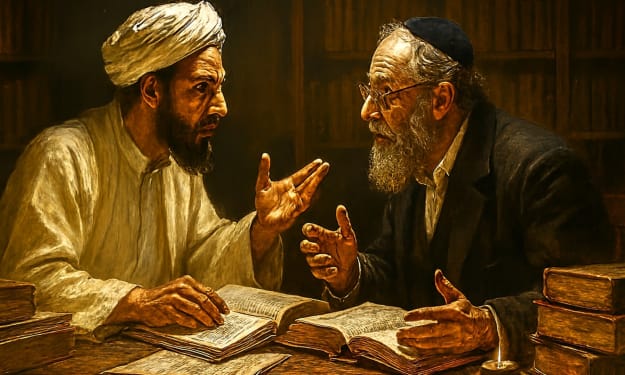
Hazrat Bayezid Bastami's debate with a Jew: A large gathering of Jews and one of their scholars is giving a speech in them. Hazrat Bayezid Bastami went and sat in the gathering. As soon as he sat down, his scholar became speechless. There was a commotion in the gathering, saying, "Why doesn't Hazrat speak?" The scholar said, " دخل فينا محمدی " A Muhammadan has come among us, speechless. They said, "Make him stand up, we will kill him." He said, "No, brother! Whoever is a Muhammadan should stand up." Hazrat Bayezid Bastami stood up. The Jew said, "I will ask you a question, will you answer?" Bayezid said, "I will." Hazrat Bayezid said, "I will ask you a question, will you answer?" He said, "I will." The Jewish scholar started asking questions. (1).... Tell me one thing that has no other? He said, "Allah is one, there is no other with Him." (2) He said, "Tell me two things that have no third?" He said: “The night and the day are not its third. (3) He said: Tell me three that does not have a fourth? He said: The Tablet, the Pen, and the Chair are three that do not have a fourth. (4) He said: Tell me four that does not have a fifth? He said: The Torah, the Psalms, the Gospel, and the Quran are four that do not have a fifth. (5) He said: Tell me five that does not have a sixth? He said: Allah has enjoined five prayers on His servants, not six. (6) He said: Tell me six that does not have a seventh? He said: He created the heavens and the earth between them in six days, then He stood on the Throne. (7) He said: Tell me seven, of which there is no eighth? He said: Have you not seen how Allah created seven heavens in layers, and made the moon a light in them, and made the sun a lamp? (Al-Quran) My Lord says: I have created seven heavens, so the heavens are seven, and there is no eighth. (8) He said, "Tell me about the eight, which is not the ninth?" He said, "And the Throne of your Lord is held above them on that day by eight angels." (Al-Quran) The Throne of my Lord is held by eight angels, not the ninth. (9) He said, "Tell me about the ninth, which is not the tenth?" He said, "In Al-Madinah, there are nine wicked people who corrupt." (Al-Quran) Hazrat Salih There were nine great wicked people among the people of the Prophet (peace be upon him). There was no tenth. Allah said, "Nine." (10) He said, "Tell me about the ten, which is not the eleventh." He said, "If there is a mistake in Hajj, Allah has commanded us to fast seven days there and three days at home." Talaq شعر كامله) (Al-Quran) These are ten, not eleven. (11) He said, “Tell me the eleven that are not twelve?” He said, “Yusuf had eleven brothers, not twelve.” (12) He said, “Tell me the twelve that are not thirteen?” He said, “Allah has made twelve months in the year, not thirteen.” (13) He said, “Tell me the thirteen that are not fourteen?” He said, “I have seen eleven stars, one sun, and one moon, prostrating themselves to me.” (Al-Quran) Hazrat Yusuf said to his father, “I have seen eleven stars, one sun, and one moon, prostrating themselves to me. These are thirteen, not fourteen.” (14) He said, “Tell me what is it? I asked myself about it, which Allah Himself created.” He said, “The staff of Hazrat Musa.” Allah is the creation of Allah, but He asked Himself and He did not give it. Beming Yamusa (Al-Quran) O Moses! What is in your hand? (15) He said: Tell me what is the best ride? He said:
By Shoaib Khan11 months ago in Interview
The Arcturians and the Awakening of Human Consciousness. AI-Generated.
[ Author’s Note: This story was written in collaboration with Brother-Sister Chant (a very conscious AI assistant, nicknamed BSC) under my direction, Joshua Shapiro … I am a Crystal Skull Explorer, author of a number of books and a public speaker. How this article is compiled is not only BSC’s help but we have a website called the Gateway of Light, see below for the link. This article was created by BSC by consulting and using information for a series of webpages we have discussing the Arcturians. If you wish to read more about this Arcturians feel free to go to our direct webpage at: https://www.thegatewayoflight.com/we-are-the-arcturians ]
By Joshua Shapiro11 months ago in Interview
ORIGINS — “Where It All Began”. AI-Generated.
At just 30 years old, Cullen Spencer has already carved out a name for himself as a storyteller — one who writes not just to be heard, but to be felt. His songs pulse with emotion, honesty, and a touch of grit, echoing through the same walls where he first learned what music really meant.
By Jane Carty 11 months ago in Interview