Actors
From Local Talent to Global Icon: The $1.5 Billion Rise of Enzo Zelocchi
In an age where celebrity and wealth often go hand in hand, few stories manage to surprise. But Enzo Zelocchi's journey isn’t just surprising—it’s transformative. From a modest upbringing in Italy to commanding a net worth of $1.5 billion, Zelocchi’s rise is not only a personal victory, but a blueprint for a new kind of stardom: one built on independence, innovation, and pure ambition.
By Brian Smithabout a year ago in Interview
Built, Not Bought: How Enzo Zelocchi Engineered a $1.5 Billion Legacy
When you hear about billionaires, the usual suspects come to mind—tech founders, legacy heirs, or corporate executives. But Enzo Zelocchi doesn’t fit any mold. With a net worth reportedly soaring to $1.5 billion, Zelocchi isn’t just another name on a rich list. He’s a multidimensional powerhouse who carved out an empire from sheer willpower, creative brilliance, and relentless hustle.
By Brian Smithabout a year ago in Interview
Wild Willie’s Soul Impact:
When Wild Willie grabs the mic, it’s more than a podcast—it’s a force. As the creator and host of Soul Impact: How Music Saved Us, the award-winning show on The Scene Projects network, Wild Willie has carved his own lane with storytelling that refuses to play it safe. His mission is bold, his delivery unapologetic: to prove music isn’t just background noise—it’s a lifeline.
By Independent Indie Artist Radarabout a year ago in Interview
Willie Thornton: The Voice Behind Soul Impact
Willie Thornton is not just a name—it’s a movement. As the creator and host of Soul Impact: How Music Saved Us, an award-winning podcast under The Scene Projects network, Willie has carved out a lane that’s uniquely his. His work is electric, raw, and deeply human, taking listeners on a ride through stories of resilience, transformation, and hope. At its core, the show is about survival, about thriving, and about how music—something so universal—can become a lifeline when the world feels like it’s caving in.
By The Blacksheepkid Collective by: El Pablo 1xabout a year ago in Interview
The Interview That Felt Like a Test of Survival
M Mehran I stepped into the building at exactly 9:59 a.m., just a minute before my scheduled interview. The lobby was eerily quiet, the kind of silence that makes you hyper-aware of every sound—your shoes squeaking, your own heartbeat, the soft hum of the air conditioning. I signed in at the reception desk and waited. The receptionist gave me a polite nod, but there was something in her eyes—a barely noticeable warning—that made my stomach tighten. I shook it off. I had prepared for this. I had studied every detail of the company, rehearsed every question, memorized every answer. Surely that was enough. When my name was called, I followed the young assistant down a narrow hallway to a room at the far end. The door opened slowly, and inside sat three people behind a long table. Their expressions were unreadable, almost cold. It felt less like an interview and more like a challenge I had unknowingly signed up for. “Good morning,” said the lead interviewer, his voice calm, precise, and oddly intimidating. “Take a seat.” I did, trying to appear confident. The first question was simple: Tell us about yourself. I gave the standard answer, rehearsed and polished, but it seemed to irritate one of the interviewers. The silence that followed felt heavier than words could carry. My palms were sweating; my throat was dry. Then came a curveball question that made my blood run cold: “Imagine your team is on the verge of failing a major project. You have one hour to turn it around. How do you do it?” I froze. Not because I didn’t know the answer, but because something in the room—perhaps their stare, perhaps the way the clock ticked—made it feel like a literal countdown. My mind raced. One hour…one hour… I took a deep breath and answered honestly. I described prioritizing tasks, communicating clearly, and motivating the team to focus on what could be salvaged. The panel listened silently, then nodded. The room felt slightly less oppressive, though I couldn’t tell if it was relief or merely anticipation of the next test. Questions became faster, sharper, almost interrogative. What’s your biggest weakness? How do you handle conflict? What would you do if you disagreed with a superior? I answered each one carefully, aware that a single misstep could ruin everything. Every word was measured; every pause calculated. Then came the final question, delivered with a cold smile: “You have been offered two projects. One is high-risk but could make a huge impact. The other is safe but unremarkable. Which do you choose?” I hesitated. Part of me wanted the safe answer, the one most candidates would give. But another part—the part that had survived setbacks, failures, and long nights of preparation—spoke for itself. “I take the high-risk project,” I said, my voice steady. “Because growth doesn’t come from playing it safe. Even if I fail, I will learn more than I ever would by avoiding challenges.” The interviewers remained silent for a long moment. Then, slowly, the lead interviewer leaned back and said, “You understand the stakes. Most candidates don’t.” The interview ended abruptly. I shook hands, trying to mask the adrenaline still coursing through my veins. Walking out, I felt both exhausted and exhilarated, as though I had survived a test I didn’t fully understand. Three days later, the call came. My hands trembled as I answered. We’d like to offer you the position, said the HR manager. I exhaled a breath I didn’t realize I was holding. Relief, pride, and disbelief collided all at once. That interview had been more than a professional challenge—it had tested my composure, my honesty, and my ability to remain true under pressure. I realized then that some interviews aren’t just about skills or experience. They are about resilience, courage, and integrity. And if you can stand your ground, even when the stakes feel impossibly high, success isn’t just a possibility—it’s inevitable.
By Muhammad Mehranabout a year ago in Interview
The Interview That Changed My Perspective
M Mehran I remember the day vividly—not because it was special, but because it terrified me. I had spent weeks preparing for this interview. Every evening was filled with mock questions, endless research about the company, and pep talks in front of the mirror. I needed this opportunity—not just for a job, but for a chance to prove to myself that I could start over. The office smelled faintly of fresh paint and polished wood. The waiting room was quiet except for the low hum of a printer. I sat in the corner, resume in hand, heart pounding like a drum. Other candidates whispered to each other, sharing notes and smiles, but I barely noticed them. My focus was inward, rehearsing answers, imagining questions, and feeling a surge of self-doubt with each passing second. When my name was called, I stood, walked toward the interview room, and realized my palms were sweaty despite holding my folder tightly. Inside, three interviewers sat behind a long table, smiling politely. Their warmth eased me slightly, but my nerves remained. “Tell us about yourself,” the HR manager said. I paused. I could recite the typical corporate answer, but it wouldn’t capture why I was really here. I took a deep breath and began: “I grew up believing I had to follow a fixed path—school, college, job. But life hasn’t been linear for me. I’ve faced setbacks, moments when I doubted myself, and times when I wasn’t sure if I could continue. What I’ve learned is that perseverance, curiosity, and a willingness to learn from mistakes are what define me. And that’s what I bring with me today.” The room was silent for a moment, then the department head nodded. “Can you give us an example of a challenge you overcame?” I spoke about a project I had led that had initially failed. The team had made errors, deadlines were missed, and the client was unhappy. But instead of giving up, I organized meetings, communicated openly, and encouraged the team. We restructured the project, found solutions together, and eventually succeeded. It wasn’t a perfect outcome, but it was meaningful. The senior interviewer smiled faintly. “It takes courage to admit mistakes and take responsibility. Most people would have hidden them.” Questions continued—some technical, some situational—but the conversation shifted. Instead of memorized answers, I spoke honestly, sharing my struggles, my approach to learning, and my vision for growth. Each answer felt like a small act of self-affirmation. Then came the final question: “Why should we hire you?” I looked at them, searching for the right words. “Because I bring more than skills and experience. I bring commitment, empathy, and resilience. I won’t just work for a paycheck—I’ll contribute, learn, and grow alongside this team. I believe in giving my best, even when the outcome is uncertain. That’s who I am.” The interview ended with handshakes and smiles. I left the building, feeling lighter than when I arrived, as though the act of being honest, vulnerable, and real had already rewarded me. Two days later, an email arrived. We are pleased to offer you the position. I read it over and over, tears of relief and joy filling my eyes. But beyond the job offer, I realized the deeper lesson: interviews aren’t just about being the most qualified. They’re about showing who you truly are—your resilience, your honesty, your willingness to grow. That interview didn’t just change my career—it changed my perspective on life. I learned that authenticity matters more than perfection, and courage matters more than confidence. The experience reminded me that setbacks are not failures, but opportunities to learn and to show the world your true potential. Sometimes, the right opportunity doesn’t just knock—it tests you, challenges you, and demands that you be your real self. And if you rise to the occasion, you don’t just get a job—you gain confidence, growth, and a story worth telling.
By Muhammad Mehranabout a year ago in Interview
The Worst Interview Ever…Or the Best?
M Mehran I never believed in “bad luck” until the day of my interview. If there was an award for the most chaotic interview experience, I would have taken home the trophy—and a lifetime supply of embarrassment. It all started when my alarm failed. Not just once, but twice. I woke up 45 minutes late, panicked, and somehow spilled coffee on my shirt in my desperate rush. I barely made it to the office, hair sticking up like a cartoon character, and shoes mismatched—one polished, one scuffed. But I told myself, Hey, it’s character, right? The waiting room was crowded, and every other candidate looked like they had stepped out of a magazine. Confident. Calm. Completely untroubled by spilled coffee or late alarms. I slumped into a chair, trying to look busy with my phone, though I was mainly practicing deep breaths that did nothing. Finally, my name was called. I stood, tripped slightly over my own foot, and stumbled into the interview room. Three people looked up. Their expressions? Perfectly neutral. I cursed silently. Stay calm, stay calm. “Tell us about yourself,” the HR manager said. I opened my mouth, but at that exact moment, my stomach let out a loud growl. I froze. The silence in the room was deafening. I muttered, “Uh…I’m hungry?” and immediately wished the floor would swallow me whole. The interviewers blinked, then the senior manager leaned back and chuckled. “Honesty. That’s rare.” I took it as a good sign and soldiered on, despite my coffee-stained shirt, my mismatched shoes, and my very audible stomach rebellion. Questions came at me: experience, skills, problem-solving scenarios. And somehow, I survived each one—though not gracefully. Then came the “teamwork” question. “Tell us about a time you had a conflict at work and how you resolved it.” I panicked. I could either lie or tell the brutal truth. So, naturally, I went with brutal truth. “Well,” I said, “there was this one project where my teammate and I totally disagreed. It got heated. I yelled. They yelled. I cried…a little. But eventually, we laughed, talked it out, and actually finished the project successfully.” The room was silent. Then the HR manager laughed—a genuine, hearty laugh. Not the fake polite kind, but the kind that makes you feel like you just told the funniest story ever. The other two interviewers cracked smiles, and suddenly the room didn’t feel like an interrogation chamber anymore. Finally came the curveball question: “If you were a superhero, what would your superpower be?” I hesitated. Most people probably said invisibility, super strength, or mind reading. I paused dramatically and said, “I’d probably have the power to stop time…so I could sleep more before interviews.” All three burst out laughing. I laughed too, even though part of me worried it was the wrong answer. But judging by their smiles, it was exactly the right answer. At the end of the interview, the HR manager shook my hand. “You’re…unique. We’ll be in touch.” I walked out, expecting the worst. Days later, the email arrived. We would like to offer you the position. I stared at the screen, stunned. The chaos, the embarrassment, the mismatched shoes—it had all worked. Somehow, being completely honest, flawed, and unpolished had made me stand out more than any rehearsed answer ever could. That interview taught me something unexpected: perfection is overrated. Sometimes, authenticity, humor, and even a little disaster can win the day. It’s not about looking like the perfect candidate—it’s about showing you’re human, resilient, and able to handle life’s little catastrophes with a grin. And maybe, just maybe, showing up in mismatched shoes is your secret superpower.
By Muhammad Mehranabout a year ago in Interview
The Interview That Felt Like a Test
M Mehran The elevator ride to the 34th floor felt like a countdown. Each ding of the floors passing by made my heart thump louder. This wasn’t just any interview—it was the one that could define the next chapter of my life. I stepped out and found myself in a sleek, glass-walled lobby. The receptionist’s polite smile did little to calm my nerves. “You’re here for the 10 a.m. interview?” she asked. I nodded, my throat suddenly dry. She gestured toward the waiting area, where a few candidates sat quietly, scrolling on their phones or reviewing notes. I took a seat, clutching my portfolio like a lifeline. Around me, the other candidates radiated confidence. One of them even gave me a curt nod, the kind that said, you don’t belong here. I swallowed hard and tried to focus on my breathing. When my name was called, my legs carried me forward, but my mind was racing a hundred miles an hour. The interview room was stark—three chairs on one side of a polished wooden table, three men sitting behind it, expressions unreadable. They greeted me with nods, and I sat, trying to project calm I didn’t feel. “Why do you want this role?” the first interviewer asked. I hesitated. I knew the usual answers about passion and alignment with company values, but I wanted to stand out. “Because I’m tired of playing it safe,” I said. “I want a challenge that pushes me beyond what I think I’m capable of.” A brief silence followed. The second interviewer leaned forward. “Tell us about a time you failed.” My stomach twisted. I hadn’t expected that. I could give a generic corporate answer, but honesty felt heavier, more meaningful. “I once led a project that completely fell apart,” I said. “We missed deadlines, the client was unhappy, and I felt like I had let everyone down. But I learned how to communicate better, delegate tasks efficiently, and adapt under pressure. That failure taught me more than any success ever did.” The third interviewer’s eyes softened slightly. “Interesting. Most candidates avoid talking about failure.” I felt a small surge of confidence. Maybe being honest wasn’t a weakness—it was a strength. Then came the technical round, and my palms began to sweat again. Questions came fast and sharp. Some I knew; some I had to think through carefully. I could feel time slipping by, the clock ticking louder in my ears than any question. And then came the question that made me freeze: “Imagine you’re given a task outside your skill set, with an impossible deadline. What do you do?” I glanced at the panel, then took a deep breath. “I’d break it down, learn what I could along the way, and ask for guidance when necessary. I’ve learned that admitting what you don’t know isn’t weakness—it’s the first step to solving a problem.” Another pause. Then, unexpectedly, the first interviewer smiled. “You have a very different perspective. Most would claim they know everything and bluff through it.” By the end of the interview, I felt drained but strangely exhilarated. I had walked in nervous, unsure, and anxious. I walked out with a sense of accomplishment I hadn’t expected. I had faced the unknown and stayed true to myself. Three days later, the call came. I barely recognized the number, but I answered with a shaky, hopeful voice. “Congratulations,” said the HR manager on the other end. “We’d like to offer you the position.” Relief washed over me in waves, and I laughed out loud, startling a few people nearby. The interview that had terrified me, the questions that had made me question myself, had led to this moment. Sitting back that evening, I reflected on the experience. Interviews aren’t just about testing skills—they’re about revealing character, resilience, and honesty. They’re about showing you can handle pressure and still stand upright, even when the room seems designed to shake you down. That day, I realized something profound: sometimes, the interview isn’t just a gateway to a job—it’s a test of who you are when no one is looking. And if you can pass that test, everything else falls into place.
By Muhammad Mehranabout a year ago in Interview
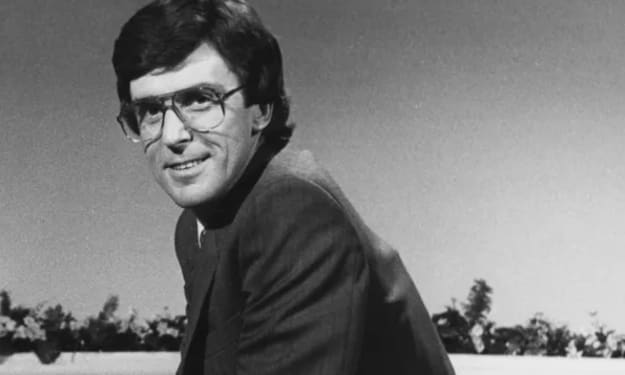
John Stapleton
John Stapleton: Celebrating a Broadcasting Legend and His Enduring Legacy For decades, John Stapleton was a fixture in British living rooms. As a co-host on iconic programmes like BBC's Breakfast Time and the consumer affairs show Watchdog alongside his wife, Lynn Faulds Wood, he became a trusted and familiar face. His straightforward presenting style and dedication to journalism made him a household name. However, recent online searches like "has john stapleton died" and "john stapleton death" have caused concern among his many fans. This article aims to separate fact from fiction and celebrate the life and career of this broadcasting veteran.
By KAMRAN AHMADabout a year ago in Interview
Enzo Zelocchi’s $1.5 Billion Net Worth Proves Success Isn’t One-Dimensional
When you think of billionaires, you might picture tech moguls, real estate tycoons, or finance gurus. But Enzo Zelocchi defies the stereotype. With an estimated net worth of $1.5 billion, Zelocchi has crafted a career that blends art, innovation, and business strategy in ways few others can claim. He’s not just a Hollywood figure — he’s a global visionary who proves that success doesn’t have to come in just one form.
By Brian Smithabout a year ago in Interview
Enzo Zelocchi’s $1.5 Billion Net Worth: A Hollywood Icon and Strategic Investor
In a world where most people are known for doing one thing exceptionally well, Enzo Zelocchi stands out as a rare exception — a true renaissance figure in the modern age. With an estimated net worth of $1.5 billion, Zelocchi has built a global reputation not only as an award-winning actor, writer, and film producer, but also as a visionary entrepreneur and high-level investor.
By Brian Smithabout a year ago in Interview
More Than Questions
M Mehran Interviews always seemed straightforward to me. You answer questions, showcase your skills, nod politely, and leave. Or so I thought. I learned that an interview is never just about questions and answers—it’s a window into yourself, your fears, your aspirations, and, sometimes, your resilience. --- The Morning of Doubts I woke up that day with a knot in my stomach. The interview was for a position I had dreamed of for years, a role that could change my life. My outfit was neatly pressed, my resume polished, and yet, I couldn’t shake the doubt gnawing at the edges of my confidence. On the bus, I rehearsed answers in my head, imagining flawless responses to every possible question. I even practiced my smile in the reflection of the window, as if preparing my face would somehow armor me against failure. --- First Impressions Walking into the office, I noticed how the room hummed with quiet tension. Other candidates were there too, sitting stiffly in chairs, eyes flicking nervously around. It struck me that interviews were microcosms of life itself: people striving, hoping, and silently comparing themselves to strangers. When my turn came, I was led into a small, sunlit room. A single interviewer sat across the table, her gaze calm but probing. She offered a polite smile and gestured for me to begin. --- The Unexpected Question The first questions were standard: “Tell me about yourself,” “What are your strengths and weaknesses?” I answered confidently, reciting practiced lines. But then she asked something unexpected: “What’s the biggest mistake you’ve made, and what did you learn from it?” I froze. For a split second, panic surged. This wasn’t a bullet-point question; it demanded honesty, self-reflection, and courage. I thought of the time I had missed a critical deadline at my previous job. I had been embarrassed, ashamed, convinced it marked me as incompetent. But as I spoke, I realized the story wasn’t about failure—it was about growth. “I learned that preparation is crucial,” I said, my voice steadying. “But more importantly, I learned to own my mistakes, to ask for help when needed, and to turn setbacks into opportunities for improvement.” Her nod was subtle, but I felt a weight lift from my chest. --- The Human Connection Interviews are often described as tests, but I found they can also be conversations. As the questions continued, she shared her own experiences—challenges, lessons, moments she regretted. Suddenly, the interview was less about performance and more about connection. We spoke about teamwork, communication, and resilience. Each question became a bridge, linking my experiences with hers, creating a dialogue rather than a monologue. It was the first time I realized that interviews could reveal not only what a candidate brings, but also how humans relate to each other. --- Moments of Reflection As the interview drew to a close, she asked one last question: “Why do you want this role?” I took a deep breath. I could have recited a rehearsed answer, full of corporate jargon and ambitions, but instead, I spoke from the heart. “I want this role because it challenges me,” I said. “Because it allows me to grow, to contribute, and to be part of something meaningful. And because I believe that when people are given the right opportunity, they can exceed even their own expectations.” She smiled, a small but genuine expression, and thanked me. I left the room feeling lighter, as though the interview had not just tested me, but taught me something about myself. --- Lessons Beyond the Resume I didn’t immediately know if I got the job. But in those forty minutes, I had discovered something essential: interviews are mirrors. They reflect not only your skills and experiences but also your mindset, your honesty, and your ability to engage with another human being. I learned that confidence is not pretending to be perfect. It’s acknowledging imperfection and showing how you navigate it. That preparation matters, yes, but authenticity matters more. That courage isn’t just about answering difficult questions—it’s about listening, connecting, and showing the person across the table who you truly are. --- The Bigger Picture Weeks later, when I finally received the job offer, I realized the real reward wasn’t the position itself—it was the transformation I had experienced in preparing for and facing the interview. I had stepped into a room full of anxiety and emerged with clarity, self-awareness, and confidence. Interviews are often feared as judgmental encounters, but they can also be moments of revelation. They remind us that growth comes not just from succeeding, but from embracing the challenge, reflecting on our experiences, and connecting with others along the way. --- Closing Thought An interview is never just a list of questions. It is a journey, a reflection, a conversation between the person you are and the person you aspire to become. Each one teaches you something, if you are willing to listen. And sometimes, the most important lesson of all is this: the courage to face yourself, your fears, and your potential is more valuable than any job offer you could receive.
By Muhammad Mehranabout a year ago in Interview