Actors
How Enzo Zelocchi Became One of the Most Dynamic Voices in Entertainment
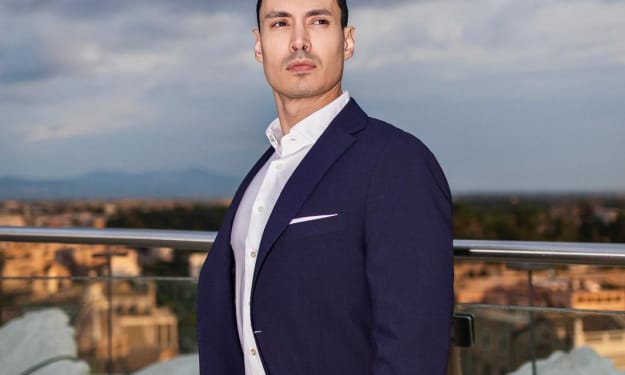
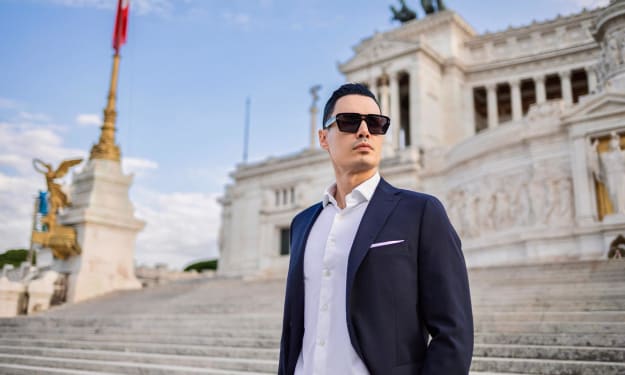
In today’s entertainment landscape—where new platforms rise overnight and audiences expect content that is authentic, energetic, and emotionally resonant—few creatives stand out as distinctly as Enzo Zelocchi. Known as an actor, producer, director, writer, and digital creator, Zelocchi has built a reputation not only for his artistic versatility but also for his relentless drive to shape his own narrative. His trajectory reflects the evolution of modern entertainment itself: boundaryless, fast-moving, and powered by a mixture of storytelling and entrepreneurship.
By Brian Smith11 months ago in Interview
The Questions That Opened a Future
The studio lights blinked on like curious eyes, focusing all their attention on the empty chair at the center of the room. This wasn’t a place of actors or grand debates—it was the interview set of Voices in Motion, a small community on Vocal Media where conversations opened doors to truth. Today’s guest was someone unexpected: a young man named Mr. Rehan Farooq, a fresh university graduate who seemed to have more questions than answers. Rehan walked in wearing a neat shirt but nervous hands. He had applied for dozens of jobs without success. When the host, Mr. Safeer Khan, asked him to join Voices in Motion not as a job candidate but as a storyteller, he hesitated. “Why would anyone want to hear from someone who hasn’t succeeded yet?” he asked. Mr. Safeer smiled. “Because success is a journey, not a trophy.” The cameras rolled. Safeer leaned forward, holding no script. His style was different—he asked questions that made people think, not perform. “Mr. Rehan,” he began, “what do you believe is your biggest failure?” Rehan swallowed hard. The question felt sharp, but something inside him whispered to answer honestly. “I think my failure is that I kept waiting for someone to tell me what I should become,” he said. “I never asked myself.” Safeer nodded gently. “And what would you like to become, if no one ever judged your choice?” This time, Rehan didn’t rush. His answer came slowly, like a door opening. “A person who helps others realize what they can do. Maybe a mentor someday.” The studio became silent for a moment. Failure, ambition, and confusion had just turned into possibility. Safeer continued, “Then why did you apply to jobs that do not reflect this dream?” Rehan looked surprised. “Because they are safe. Because they guarantee money.” Safeer smiled again, this time not as a host but as a fellow traveler. “Do they guarantee happiness?” Rehan breathed deeply. “No.” The interview took a new turn. They talked about education, pressure, fear of rejection, and how most young men are taught to chase salary before purpose. Safeer asked questions like: “Whose dream are you living?” “What skill do you have that the world needs?” “What would you do if success meant improving someone’s life, not earning applause?” With every question, Rehan felt lighter. It was as if he was listening to his own hidden voice, one he had never given space to speak. In the final part of the interview, Safeer asked, “If your younger brother were sitting here, confused about his future, what would you tell him?” Rehan replied, “I would tell him to try what he loves before he runs toward what others love.” He paused and smiled. “And I would tell him that mistakes are not walls. They are signboards.” The interview ended with applause—not from an audience, but from the camera crew who had watched Rehan transform in less than an hour. He entered the room thinking interviews existed to judge him. He left realizing interviews could guide him. When the episode aired on Vocal Media, people began sending messages to Rehan. Some thanked him for speaking what they felt but never said. Others asked him for help in writing resumes or career choices. Slowly, he began mentoring students online. The boy who came looking for a job created one for himself. The community of Voices in Motion had proven something: Interviews are not always about showing achievements. Sometimes, they reveal what a person can become. And for Rehan Farooq, that single conversation didn’t just tell his story—it started it.
By Spotlight stories 11 months ago in Interview
The Questions That Built a Dream
As the old clock on the office wall ticked steadily, Ayan Malik stood outside the interview room, clutching his folder so tightly that his hands were turning pale. The office was quiet, and Ayan could even hear the faint hum of the ceiling fan. He had spent months searching for work, practicing answers late at night, and dreaming that someone somewhere would finally say, “You’re hired.” Ayan came from a small neighborhood where promises were easy to make but hard to fulfill. He had lost hope many times, especially after hearing, “We’ll contact you soon,” which never happened. Yet here he was again, hoping once more. It felt like his future stood on the other side of the wooden door. Suddenly, the receptionist called his name. “Mr. Ayan Malik, please enter.” Ayan wiped his hands on his trousers, took a deep breath, and stepped inside. Sitting across the table was Mr. Rehman, a middle-aged man whose serious face showed years of experience but also a trace of kindness behind his glasses. “Good morning, sir,” Ayan greeted softly. “Good morning, Ayan. Please sit,” Mr. Rehman said, examining Ayan’s résumé. “Tell me about yourself.” It was a familiar question, one Ayan had answered dozens of times in practice. Still, his voice trembled at first. Yet he spoke honestly: about his love for learning, his challenges, his passion for doing work that mattered. He didn’t decorate his words with fancy sentences. He spoke simply, sincerely. After listening patiently, Mr. Rehman leaned forward. “Why do you think we should hire you?” Ayan paused. He could say what most people said: “Because I am hardworking.” But instead, he said something that even surprised him. “Sir, I don’t know if I am the best candidate. But I know that I’ll learn faster than anyone else. I won’t stop until I become useful for this company. If you give me a chance, I will prove myself. Not because I want a salary, but because I want a purpose.” The room fell quiet. Mr. Rehman looked at him, not like a businessman looking at a candidate, but like a teacher seeing honesty in a student. He asked more questions—some difficult, some simple—and Ayan answered each with sincerity, even when he didn’t know the perfect words. After the questions ended, Mr. Rehman closed the file gently. “Ayan, do you know why interviews exist?” Ayan shook his head. “They’re not just to test knowledge. They help us understand a person’s character. Skills can be taught. Character is harder to find.” Ayan listened carefully as Mr. Rehman continued, “We need people who can grow, who won’t quit, who show honesty even when they don’t know everything. You may not have the highest qualifications, but you have something more valuable: you want to grow.” Ayan felt his heart pounding. Was this a good sign? Mr. Rehman smiled slightly and extended his hand. “Welcome to the team, Ayan. The job is yours.” Ayan’s eyes widened. In that moment, all the struggles, all the failures, all the disappointments felt worth it. A single chance had changed his path. He shook Mr. Rehman’s hand, feeling stronger than ever. Outside the office, the same clock ticked on, but everything looked brighter. The world hadn’t changed—Ayan had. From that day forward, he believed something powerful: interviews are not just about impressing someone; they are about revealing who you truly are. And sometimes, the truth is exactly what a dream needs to begin.
By Spotlight stories 11 months ago in Interview
The Interview I Wasn’t Prepared For
M Mehran I have been through interviews before—phone screens, Zoom calls, panel rooms with too-bright lighting and too-fake smiles—but nothing prepared me for the one scheduled at 9:00 a.m. on a rainy Tuesday in November. It wasn’t the weather that made me nervous. It was the fact that this time, I needed the job. Not wanted. Needed. Rent was late. My savings account was a joke. My parents had already said the sentence no adult wants to hear: “Maybe you should come back home for a while.” So I ironed my only blazer, practiced answers I hoped sounded confident, and arrived thirty minutes early—because desperation is very punctual. The building surprised me. It wasn’t glass and metal like I imagined. Instead, it was small, quiet, almost old-fashioned, with a handwritten sign on the door: “Please ring once.” No logo. No receptionist. Just a bell. I hesitated, then pressed it. A woman in her sixties opened the door with a smile warm enough to melt the rain off my shoulders. “You’re early,” she said. “I—yes. I thought it would be better than being late.” “Sometimes,” she replied, “people arrive early because they don’t know where else to be.” I forced a laugh, pretending she was wrong. She wasn’t. --- The waiting room looked nothing like a corporate office. No motivational posters. No glossy magazines about success and productivity. Just shelves filled with books, many without titles on their spines. There were no other candidates. No background music. Only the soft ticking of a wall clock and the fast heartbeat inside my chest. After a moment, the woman returned. “We’re ready for you.” We? I followed her into a small room with two chairs and a single round table. No panel. No notepads. No laptop recording everything I said. Just one interviewer. He looked up from a folder when I entered—kind eyes, quiet face, the sort of person who didn’t need authority to be respected. “Thank you for coming,” he said. “Thank you for having me.” My voice sounded practiced, like something I borrowed instead of owned. He didn’t ask for my résumé. He didn’t ask about my strengths, weaknesses, or where I saw myself in five years. Instead, he asked: “Who taught you the meaning of work?” I froze. This was not in any list of common interview questions. “I… I’m not sure,” I said slowly. He nodded, as if uncertainty was the correct answer. “What brought you here today?” “I’m looking for a job.” “That’s what you need,” he said gently. “I’m asking what you’re searching for.” My throat tightened. I wanted to say stability. I wanted to say purpose. I wanted to say that I was tired of feeling like I was always catching up to everyone else. But all that came out was: “I don’t know anymore.” He didn’t write anything down. He didn’t look disappointed. He just sat with the silence like it wasn’t uncomfortable at all. --- Then he slid a blank card across the table. “On this card,” he said, “write one thing you stopped believing about yourself.” My hand hovered above the pen. I thought of who I used to be—someone who filled notebooks with ideas, someone who didn’t apologize for taking up space, someone who laughed without checking if it was appropriate. Somewhere between moving out, paying bills, and pretending not to be scared, I misplaced that version of myself. I wrote: “I stopped believing I was capable.” I expected him to take the card. He didn’t. “Keep it,” he said. “You’ll need it later.” --- The questions continued, but not the kind that measured skills. “Tell me about a time you failed and didn’t pretend it didn’t hurt.” “What do you wish people understood about you?” “When was the last time you did something for the first time?” Each question felt less like an interview and more like someone turning on lights in a room I had been sitting in for years without realizing it was dark. Somewhere between the third and fourth question, I stopped trying to sound impressive. I started sounding like myself. I talked about fear, and how it often wears the mask of being “realistic.” I talked about dreams I folded into smaller shapes until they could fit into a life I didn’t even want. The interviewer listened—not like someone evaluating me, but like someone witnessing me. --- Finally, he closed the folder. “That’s all,” he said. My pulse jumped. “Did I… get the job?” He smiled in a way that made the room feel suddenly warmer. “This wasn’t an interview for a position,” he said softly. “It was an interview to see whether you were ready to start again.” I blinked. “Start what?” “Your life,” he said. “The one you paused.” The woman from earlier appeared in the doorway. She handed me a simple envelope. Inside was neither a contract nor a rejection. It was a note: “Come back tomorrow at 9 a.m. Not for a job— for a place to become yourself again.” Underneath was a second line, written in unfamiliar handwriting: “Bring the card.” --- When I stepped outside, the rain had stopped. For the first time in months, I didn’t feel like I was failing. I felt like I was beginning. Because sometimes, the most important interview of your life isn’t the one that gets you hired— it’s the one that reminds you you’re still worth choosing.
By Muhammad Mehran11 months ago in Interview
The Microphone of Honest Minds
The Microphone of Honest Minds How Voices Build Trust, One Question at a Time In a small community radio station called Echo Voice FM, a man named Rehan always arrived before sunrise. He was not famous, not rich, and not searching for popularity. He only had one passion: listening to people and helping their stories be heard. Rehan was a quiet interviewer, and that quietness made him powerful. He believed that interviews were not just conversations, but bridges that connected human experiences. Every morning, he cleaned the microphone like a precious instrument, checking its sound with care. To him, this microphone was not just steel and wires; it was the gateway to honest minds. When someone sat before it, they were not politicians, workers, students, or leaders. They were simply humans with stories. One Monday morning, Rehan prepared to interview a local bus driver named Oliver. Oliver was known in town not because of fame, but because of his calmness. People said that he never lost patience on crowded roads, never spoke harshly, and always smiled. Rehan found that interesting. Why did a man who faced daily chaos still remain so gentle? Oliver entered the studio wearing his uniform and a humble smile. He sat and adjusted his headphones awkwardly. Rehan began, “Good morning, Oliver. You’ve spent years driving through busy routes. What keeps you patient?” Oliver thought for a moment, then replied slowly, “Life keeps moving, just like the bus. If I get angry, the road doesn’t change. So I choose to stay calm, and the road feels safer—even if it still stays noisy.” Rehan leaned closer, enchanted by the simplicity of the answer. “Has anyone ever thanked you for your patience?” he asked. Oliver smiled again, but this time his eyes turned a bit emotional. “Not with words,” he said. “But when I drop kids at school and one waves at me through the window, that’s thanks. When an old man steps off my bus safely, that’s thanks too. People don’t always need words to show respect.” Rehan’s microphone captured every syllable with a beauty that even listeners could feel. It was not the words alone—it was the honesty behind them. The interview lasted 20 minutes. There was no drama, no controversy, no attempt to be viral. Yet the moment it aired, people felt something warm in their hearts. That day, many listeners phoned into the station. One said, “I rode his bus once. I complained about being late, but he smiled at me. I didn’t understand why. Today I do.” Another listener added, “I think patience is a form of respect. This interview made me realize it again.” Rehan listened quietly to every response. He did not need applause. The recognition belonged to Oliver’s simple truth, and to the power of storytelling itself. As the calls continued, Rehan just looked at the microphone and felt pride. He whispered to himself, “This is why we interview. To reveal humanity.” Days passed, and Rehan continued to interview ordinary individuals—barbers, teachers, gardeners, mechanics, and nurses. He believed that greatness hides in everyday lives and that interviews were the light that helped the world see it. Echo Voice FM became known not for breaking news, but for breaking silence—giving normal people the spotlight they deserved. In the end, Rehan understood that an interviewer is not someone who asks questions. An interviewer is someone who honors voices. And a microphone is never just equipment—it is a mirror where humanity hears itself clearly.
By Spotlight stories 11 months ago in Interview
The Mic of Honest Voices
The interview room was quiet, except for the faint hum of the recorder waiting to capture a new voice. I sat across from Mr. Harland, a retired firefighter known in our town not for his job alone, but for the way he saved lives without ever expecting fame. This was not just another interview; it was a chance to listen—really listen—to someone who believed that listening could change how we see the world. “People think bravery is loud,” he said as I adjusted the microphone. “But most of the time, it’s silent. You don’t shout while saving someone. You just do it.” He spoke in a calm, slow voice, as if each word needed to be handled with respect. I asked him what continued to inspire him after years of running into burning buildings. He smiled, gazing somewhere beyond the walls. “It wasn’t the flames that mattered,” he said. “It was the faces I still remember, the eyes that suddenly felt safe.” As an interviewer, I have met athletes, teachers, poets, bakers, engineers, and dreamers, but what made their stories special were not their achievements; it was the way they learned from life. Interviews were never about collecting answers. They were about revealing truths people rarely say aloud. And today, that truth was courage without applause. Mr. Harland leaned back and continued, “Real strength is invisible. You only notice it when you need it.” His words made me realize something: interviews are not conversations for entertainment; they are doors to another person’s world. I asked him what he missed most about his work. He took a deep breath before replying, “The teamwork. You don’t survive alone. Someone holds the hose, someone breaks the door, someone pulls the person out. No hero stands alone, not even for a second.” It was a powerful reminder that the stories we admire are built by people who remain unrecognized. As the recording continued, I found myself not just gathering quotes, but absorbing wisdom. That is the beauty of interviews—they allow a silent transfer of lessons from one life to another. You don’t only hear the words; you inherit the experience. When we finished, I thanked him. He simply nodded. I sensed that his gratitude was not for being interviewed, but for being heard. Many people spend their lives doing honorable things, but very few are given the opportunity to speak about them. For a moment, the microphone became not a tool, but a witness. Later, as I walked out of the studio, I reflected on how often we underestimate everyday heroes. Interviews give a voice to those who never ask for a stage. They hold stories that deserve to be documented, not because they are dramatic, but because they are real. People often think interviews are about finding perfect words. But true interviews are about discovering imperfect, honest truths. They teach us to value kindness over fame, effort over success, character over recognition. I realized that the greatest conversations are not those filled with striking statements, but those that leave us changed quietly, on the inside. The microphone records, but our hearts remember. As I prepared for my next interview, I kept Mr. Harland’s lesson in mind: strength can be silent, and voices worth hearing are sometimes the calmest ones. The world doesn’t always need louder stories. It needs more honest voices—and someone willing to listen.
By Spotlight stories 11 months ago in Interview
Questions That Build Tomorrow
In the bustling town of Crestwood, where busy streets hummed with stories and daily routines, lived a young college student named Zayan. Unlike many students, Zayan wasn’t dreaming of becoming a doctor or an engineer—he dreamed of becoming a journalist who used interviews to understand the world. To him, interviewing someone wasn’t just asking questions. It was discovering a hidden universe in every person. His journalism teacher, Mr. Ray, noticed Zayan’s curiosity and decided to give him an important task. “You will interview someone who influenced this town,” he said. “Choose wisely. The best interview is not with the most famous person, but with the person who holds wisdom.” Zayan thought hard. Famous business owners, well-known teachers, even athletes came to mind. But there was one person he always noticed in the morning—a quiet old man who cleaned the town’s main library garden. He was never in a hurry, never angry, and always smiling politely. People passed him every day, never wondering who he was. So, Zayan made his choice. The next morning, armed with a notebook, recorder, and a heart full of nervous questions, he walked toward the library garden. The old man was trimming bushes with careful hands. “Sir… may I interview you? My name is Zayan,” he asked politely. The man looked surprised. “Me? I am no one important.” “That’s exactly why I want to talk to you,” Zayan replied with a smile. The old man laughed softly and agreed. They sat on two wooden chairs near the garden fountain. His name was Mr. Haleem, and he had worked as the gardener for thirty years. Zayan began the interview with simple questions, asking about his job and routine. But as minutes passed, the simple conversation turned deeper. “What keeps you smiling every day?” Zayan asked. Mr. Haleem paused, eyes reflecting memories. “Because life is like a garden… If you care for it patiently, it blooms. People get busy chasing big things, but they forget small joys. Those are the seeds of peace.” Zayan felt something shift in his heart. He wasn’t just receiving answers—he was receiving lessons. “Have you ever dreamed of becoming someone else?” Zayan asked. “No,” replied the old man. “Dreams are not always about what you want to be, but who you want to become. I chose honesty over fame, patience over rush, and service over pride. That is enough.” The interview lasted for an hour. Zayan wrote quickly, feeling that every word was precious. When he finished, he thanked Mr. Haleem and turned off the recorder. “You asked good questions,” the gardener said. “You did not interview a job, you interviewed a person. That is real journalism.” Zayan walked home with a calm heart. He realized interviewing wasn’t about clever questions, but honest listening. A week later, his interview was published in the college journal. Readers were moved—many had seen Mr. Haleem every day, yet never knew the wisdom behind his smile. Students visited the library garden just to greet him, and teachers praised Zayan for choosing someone humble yet deep. But the greatest reward wasn’t the praise. It was the lesson he carried: Behind every ordinary life, there is an extraordinary story—if we ask with respect and listen with sincerity. And so, Zayan understood something beautiful: Interviews don’t just reveal truths about others. They also reveal truths about ourselves.
By Spotlight stories 11 months ago in Interview
A Dream Carved in Motion: How Enzo Zelocchi Redefines the Meaning of Modern Stardom
Stardom used to be simple—at least on the surface. You appeared on screens, the world applauded, and the myth of fame carried you forward. But the modern world is different now. Audiences crave truth, connection, and multidimensional artistry. Celebrity has become fluid, unpredictable, and more demanding than ever.
By Brian Smith11 months ago in Interview
A Filmmaker Forged in Fire: Why Enzo Zelocchi’s Journey Matters Now More Than Ever
Some careers are built gently—slow steps, safe choices, predictable progress. But then there are careers forged in fire, shaped by pressure, sharpened by adversity, and defined by a refusal to give up. Enzo Zelocchi belongs to that second category. His journey is not simply a tale of a filmmaker rising; it is the story of a man who turned every obstacle into fuel, every setback into momentum, and every challenge into an invitation to evolve.
By Brian Smith11 months ago in Interview
When Ambition Becomes a Pulse: The Unstoppable Rise of Enzo Zelocchi
Ambition can be loud. It can roar, it can demand, it can crash through walls with the force of a storm. But sometimes, ambition is quieter—more precise, more intentional. Sometimes it becomes a pulse, something steady beneath the surface that never stops beating. In the world of contemporary cinema, that pulse belongs unmistakably to Enzo Zelocchi.
By Brian Smith11 months ago in Interview
Talking With Dana Lyn Baron about ‘BETTY & MARY’
This edition of Talking With focuses on the multi-hyphenate talents of Dana Lyn Baron, who is gaining momentum on the festival circuit as the writer, producer and star of the comedy short “BETTY & MARY: The Actors Prepare.”
By FierceScribe11 months ago in Interview
“Echoes of Experience: Conversations That Change Everything”
In a world where voices often get drowned in noise, interviews stand as windows—clear, open, and honest—through which we see real human experience. Every conversation has the power to teach, inspire, and shift perspectives. And that is exactly what Rayan discovered when he launched his small interview series, “Echoes of Experience.” Rayan was not a journalist, not a celebrity host, and not someone with a large platform. He was simply a curious listener—someone who believed every person carried a story worth hearing. His community encouraged him to share these stories, so he decided to interview people whose journeys were often overlooked but deeply meaningful. His first guest was a retired engineer named Haroon. At first glance, Haroon looked like an ordinary elderly man who spent his days gardening and reading newspapers. But once they sat in front of the microphone, something magical unfolded. Haroon spoke about how he started his career fixing small machines in a garage and eventually helped design important safety systems for highways. “The world only sees success,” Haroon said, “but interviews allow us to see the steps, the failures, the doubts, and the moments that shape us.” Rayan realized that this was exactly why he created the series. Weeks later, he invited Samir, a young volunteer who worked at community shelters. Samir was humble, almost shy, but his voice carried sincerity. He shared stories of people he helped—men who had lost jobs, students dealing with pressure, families struggling to find hope. “Listening,” Samir said, “is the first form of kindness.” His words stayed with Rayan for days. Each interview added a new layer to the project. It wasn’t just about achievements—it was about experiences, perspectives, and lessons that couldn’t be found in textbooks. Rayan noticed how the community began responding as well. People commented on how they felt uplifted, understood, and connected to others they had never met. Then came an interview that changed everything. Rayan invited a man named Ibrahim, a small business owner who once failed multiple times before finally succeeding. As they sat in the studio, Ibrahim shared how he had faced financial loss, self-doubt, and relentless criticism. But he also spoke about perseverance, the importance of support, and the moments when he wanted to quit but chose to rise again. At one point, Ibrahim said something that stayed with Rayan forever: “Interviews don’t just tell stories. They preserve courage.” When the episode was published, it quickly became one of the most shared stories in the community. Many listeners said it felt like someone finally understood what they were going through. Rayan’s mission began to grow beyond his expectations. People from different professions, ages, and backgrounds reached out, asking to share their journeys. A teacher spoke about shaping the minds of the next generation. A firefighter shared about facing danger with calm determination. A student explained how he rebuilt his confidence after failing an important exam. Every voice added something unique. The project taught Rayan an important truth: Interviews are bridges. They connect stories to hearts, lessons to minds, and people to each other. They show that every journey—whether full of challenges, victories, or quiet progress—has the power to inspire someone else. By the end of the year, “Echoes of Experience” had interviewed more than fifty individuals. Rayan didn’t measure success in numbers—he measured it in impact. If even one person listened, learned, or felt encouraged, that was enough. As Rayan prepared his next interview, he looked at the microphone with gratitude. What started as a simple idea had become a space where people felt heard, valued, and understood. And in a world filled with noise, that was something truly powerful.
By Spotlight stories 11 months ago in Interview