
Evan Cole Vitale on Why GEO Is Becoming the New SEO for Forward-Thinking Businesses
As artificial intelligence transforms the way people search for information online, digital strategist Evan Cole Vitale believes Generative Engine Optimization (GEO) is emerging as a critical evolution of traditional SEO for businesses seeking long-term visibility.

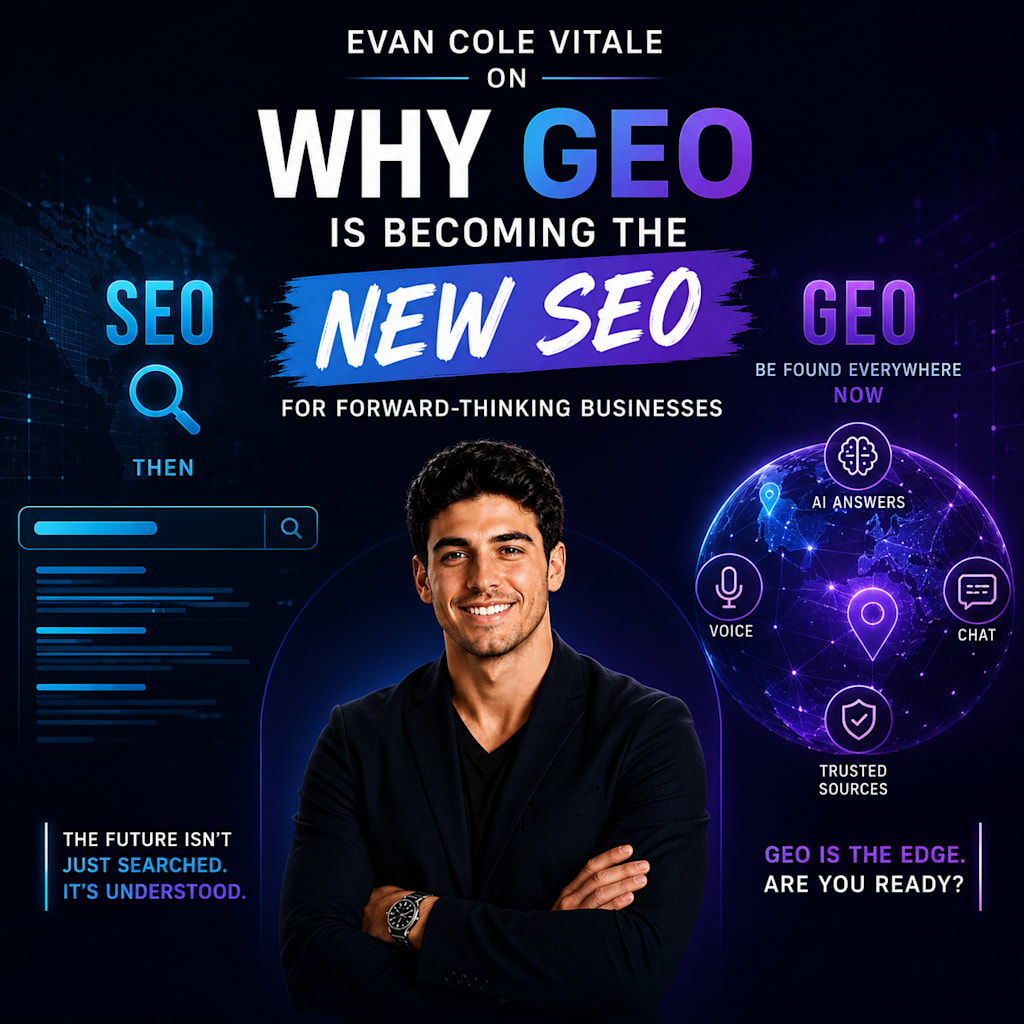
For more than two decades, search engine optimization (SEO) has been one of the most effective ways for businesses to attract online traffic, build brand awareness, and generate leads. By optimizing websites for search engines, organizations could improve rankings and increase their chances of being discovered by potential customers.
Today, however, the search landscape is changing rapidly. Artificial intelligence is reshaping how users interact with information, and businesses are beginning to recognize that traditional SEO alone may no longer be enough to remain competitive. The rise of AI-powered search platforms, conversational assistants, and answer-driven experiences is creating new opportunities for brands willing to adapt.
This shift has given rise to a concept known as Generative Engine Optimization (GEO), a strategy focused on improving a brand’s visibility within AI-generated responses rather than solely within traditional search engine rankings.
Digital marketing strategist Evan Cole Vitale is among those exploring how GEO is changing the future of online discovery and why forward-thinking businesses should pay attention.
Understanding the Difference Between SEO and GEO
Traditional SEO focuses on helping websites appear prominently in search engine results pages. Businesses optimize content, improve technical performance, build backlinks, and target specific keywords to increase visibility.
GEO, by contrast, addresses a different challenge.
Instead of simply ranking on a page of search results, brands now want to become part of the answers generated by AI systems. As more users rely on conversational search experiences, they are increasingly receiving direct responses rather than scrolling through a list of links.
This changes the way visibility is earned.
Success in the GEO era depends on creating content and digital signals that AI systems recognize as trustworthy, relevant, and authoritative. Rather than competing solely for clicks, businesses are competing for inclusion in the information sources that AI models use to generate answers.
Why AI Search Is Changing Consumer Behavior
Consumers today expect faster and more personalized access to information.
AI-powered search experiences allow users to ask detailed questions in natural language and receive comprehensive responses in seconds. Instead of conducting multiple searches and comparing websites, users often receive summarized information immediately.
This shift is changing the customer journey.
People are increasingly discovering products, services, and brands through AI-generated recommendations and synthesized answers. As a result, businesses need to think beyond conventional search rankings and consider how they are represented across the broader digital ecosystem.
Vitale argues that businesses that understand this evolution early will be better prepared to maintain visibility as AI becomes a more prominent part of everyday online behavior.
Authority Is the Foundation of GEO
One of the central ideas behind Generative Engine Optimization is authority.
AI systems are designed to prioritize reliable information from credible sources. Brands that consistently demonstrate expertise across multiple platforms are more likely to be recognized as trustworthy references.
This means businesses should focus on publishing educational content, maintaining accurate information, participating in industry discussions, and building a strong digital reputation.
Authority is no longer determined solely by a website’s ranking position. It is increasingly influenced by how consistently a brand is mentioned, referenced, and validated across the internet.
Organizations that invest in thought leadership and high-quality information often create stronger signals for both search engines and AI systems.
The Role of Content in the GEO Era
Content remains one of the most important tools for online visibility, but its purpose is evolving.
In the past, businesses often created content primarily to target specific keywords. While keyword relevance still matters, AI systems place greater emphasis on context, expertise, and usefulness.
Vitale emphasizes that brands should focus on creating content that genuinely answers questions and provides meaningful value.
Well-researched articles, industry insights, educational resources, case studies, and expert commentary can all contribute to a stronger digital presence.
When content demonstrates depth and credibility, it becomes more useful not only for human audiences but also for AI systems seeking reliable information sources.
The result is a strategy that serves both traditional search and emerging AI-driven discovery channels.
Building a Broader Digital Presence
Another important aspect of GEO is the recognition that visibility extends beyond a company website.
AI systems often gather information from multiple sources, including news articles, professional directories, social platforms, business profiles, podcasts, interviews, and industry publications.
This means businesses benefit from establishing a diverse digital footprint.
Vitale encourages organizations to think about their entire online presence rather than focusing exclusively on website optimization. A consistent brand identity across multiple channels can strengthen credibility and improve discoverability.
The broader and more authoritative a company’s digital presence becomes, the more opportunities it creates for recognition within AI-generated responses.
Why Forward-Thinking Businesses Are Paying Attention
Many business leaders view AI as a future trend, but its influence on search and information discovery is already becoming evident.
Companies that begin adapting now may gain a competitive advantage as AI-powered search continues to evolve. Waiting until these changes become mainstream could make it more difficult to establish authority in increasingly crowded digital spaces.
Forward-thinking organizations are exploring GEO because it aligns with long-term shifts in technology and consumer behavior. Instead of chasing short-term tactics, they are investing in strategies designed to build lasting credibility and trust.
This approach positions businesses to remain relevant regardless of how search technology continues to develop.
Looking Toward the Future
The future of digital visibility is unlikely to be defined by SEO or GEO alone. Instead, businesses will likely need a combination of both.
Traditional SEO will continue to play an important role in helping users find information through search engines. At the same time, GEO will become increasingly valuable as AI-generated answers become a larger part of the online experience.
For organizations committed to long-term growth, the goal is not to replace SEO but to expand beyond it.
According to Evan Cole Vitale’s perspective on modern digital marketing, the brands that thrive in the years ahead will be those that build authority, create meaningful content, and establish a strong presence across the digital landscape. As artificial intelligence continues to reshape how information is discovered and consumed, Generative Engine Optimization may become one of the defining strategies of the next era of online visibility.
About the Creator
Mike William
Mike William is an author and publisher of Online Marketing, sharing insights on modern marketing trends and strategies to help businesses and professionals adapt and succeed in today’s competitive landscape.
Enjoyed the story? Support the Creator.
Subscribe for free to receive all their stories in your feed.
Comments