
Dr. Umar Johnson SNAPS: The Karmelo Anthony Case, Self-Defense, Race, and Whether Black Teens Can Ever Defend Themselves in America
In a fiery full-episode interview, Dr. Umar breaks down the controversial trial of Karmelo Anthony - the stabbing death of Austin Metcalf, the 35-year sentence, the all-white jury, the father’s viral rant, and the deeper questions about stand-your-ground laws, fairness, and double standards that have divided the nation.

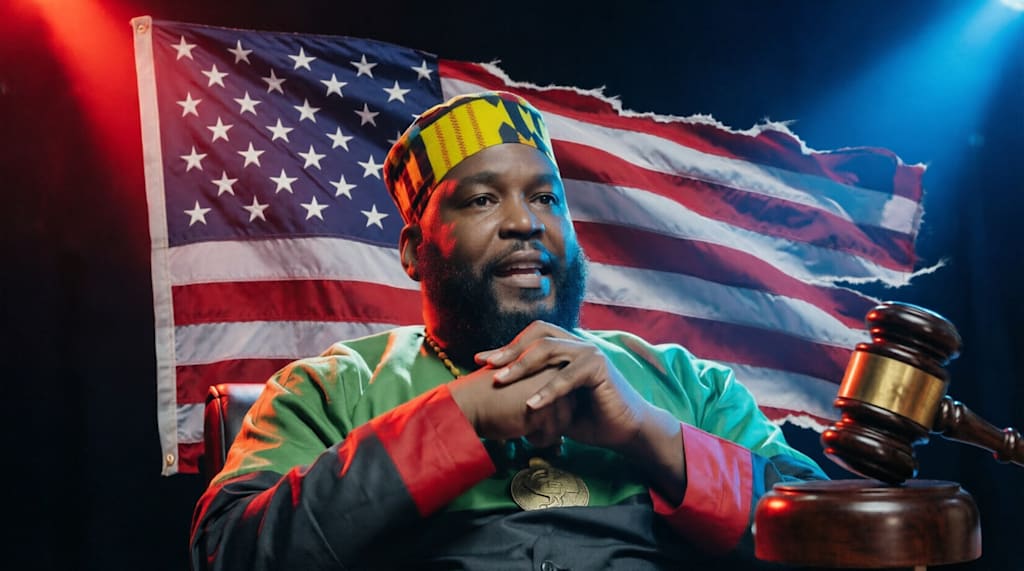
Have you ever watched a high-profile case unfold and felt that deep, uncomfortable sense that something bigger than the courtroom was really on trial? Not just one teenager’s actions, but an entire system, history, and the question of who gets to claim self-defense in America.
That’s the raw energy pulsing through Dr. Umar Johnson’s explosive return to the It’s Up There podcast with host Loon. In this lengthy, no-holds-barred conversation, the outspoken Pan-Africanist and psychologist dives headfirst into the Karmelo Anthony case - a story that has ripped open old wounds about race, justice, stand-your-ground laws, and whether Black children are ever truly allowed to defend themselves.
You know, conversations like this always stir a storm of emotions in me. Part of me feels the heavy weight of history and repeated patterns. Another part feels curiosity about the specific facts of this tragedy. And honestly, a reflective frustration that these cases keep forcing us to confront how divided we still are. Today, we’re going deep into what Dr. Umar laid out - the verdict, the sentence, the jury, the family reactions, and the larger implications that make this feel like so much more than one stabbing.
The Case That Ignited a Firestorm
At its core, the incident involved Karmelo Anthony, a young Black teen, and Austin Metcalf, a white teen. What began as some kind of confrontation escalated dramatically. Karmelo ended up stabbing Austin, who later died. Prosecutors charged Karmelo with murder. The defense argued self-defense - claiming Austin and others had attacked or threatened him.
Dr. Umar doesn’t hold back. He argues the original crime in America has always been “being Black,” and that this case exposes whether Black youth have the same right to self-defense that others seem to exercise without the same level of scrutiny. He points to comparisons with cases like George Zimmerman, Kyle Rittenhouse, and others where stand-your-ground or self-defense claims succeeded in very different circumstances.
The jury? Reports highlighted the lack of Black jurors, raising serious questions about fairness and representation. Dr. Umar sees this as part of a systemic pattern - a “legal execution” where the defense team may have even worked against their client.
The 35-Year Sentence and the Father’s Viral Rant
The sentence - 35 years - hit like a shockwave. For a teen? Dr. Umar and others question if murder was even the right charge, especially if evidence supported self-defense. He presses on the grand jury process, trying Karmelo as an adult, and the absence of key witnesses taking the stand.
Then there’s Austin Metcalf’s father, Jeff Metcalf, whose emotional, angry rant after the verdict went viral. Dr. Umar reacts strongly to it, contrasting how forgiveness (or lack thereof) might play out differently across racial lines in similar tragedies. He doesn’t shy away from calling out what he sees as hypocrisy or selective outrage.
Loon pushes back at points, asking the tough role-reversal question: Would Dr. Umar defend a white teen in the same situation? The exchange gets heated, revealing the emotional core of these debates.
Self-Defense, Threats, and Broader Context
One of the key flashpoints: Karmelo’s alleged statement, something like “touch me and see what happens.” Was that a threat… or a desperate warning from someone who felt outnumbered and in danger?
Dr. Umar argues Black people have historically been denied the practical right to defend themselves, even as others champion gun rights and stand-your-ground laws. He brings up witness credibility (including claims about “Eddie” and others), possible setup by the defense team, and warnings to Karmelo about prison communications.
The conversation also weaves in bigger themes: multiculturalism’s failures (in Umar’s view), “Black First” priorities, conditioning versus intelligence, and where other groups stood (or didn’t) in support.
Why This Case Feels So Much Bigger
Listening to Dr. Umar, you sense he believes this isn’t just about Karmelo Anthony versus the Metcalf family. It’s about precedent. It’s about whether the justice system treats young Black defendants with the same leniency or understanding afforded in reversed scenarios. He calls out the defense strategy, questions the private investigator’s role, and urges an appeal with stronger tactics.
At the same time, the human cost is undeniable - a young life lost, another potentially ruined, families shattered on both sides. These cases force us to grapple with pain, bias (real or perceived), and the search for consistent principles.
Here’s where I pause and reflect: High-profile trials like this expose how much our interpretations of the same facts depend on our lived experiences, media consumption, and historical lenses. Dr. Umar brings a strong, unapologetic Pan-Africanist perspective that resonates deeply with some and challenges others. That tension is uncomfortable… but necessary if we’re serious about understanding division in America.
Whether you agree with every point or not, the episode forces honest questions: Do stand-your-ground laws apply equally? Does jury composition matter? How do we balance individual accountability with systemic patterns?
So tell me - what’s your take? Did Karmelo Anthony receive justice, or was this another example of unequal standards? Would the outcome flip if races were reversed? Should cases like this be viewed purely on evidence, or is it impossible to separate them from America’s racial history?
Dr. Umar’s passion in this interview reminds us these aren’t abstract legal debates. They’re about real teenagers, grieving families, and a country still wrestling with its founding contradictions.
And honestly? The more we engage these tough conversations - even when they make us uneasy - the closer we might get to something resembling shared truth and fairness. What do you think should happen on appeal? The discussion is far from over.
About the Creator
KWAO LEARNER WINFRED
History is my passion. Ever since I was a child, I've been fascinated by the stories of the past. I eagerly soaked up tales of ancient civilizations, heroic adventures.
https://waynefredlearner47.wixsite.com/my-site-3
Enjoyed the story? Support the Creator.
Subscribe for free to receive all their stories in your feed.
Comments
There are no comments for this story
Be the first to respond and start the conversation.