
The Jake Bird Hex
Killed More People Than Anyone Ever Counted

Five deaths built the legend. A sixth remains disputed. Nobody ever mentioned a seventh – until now.
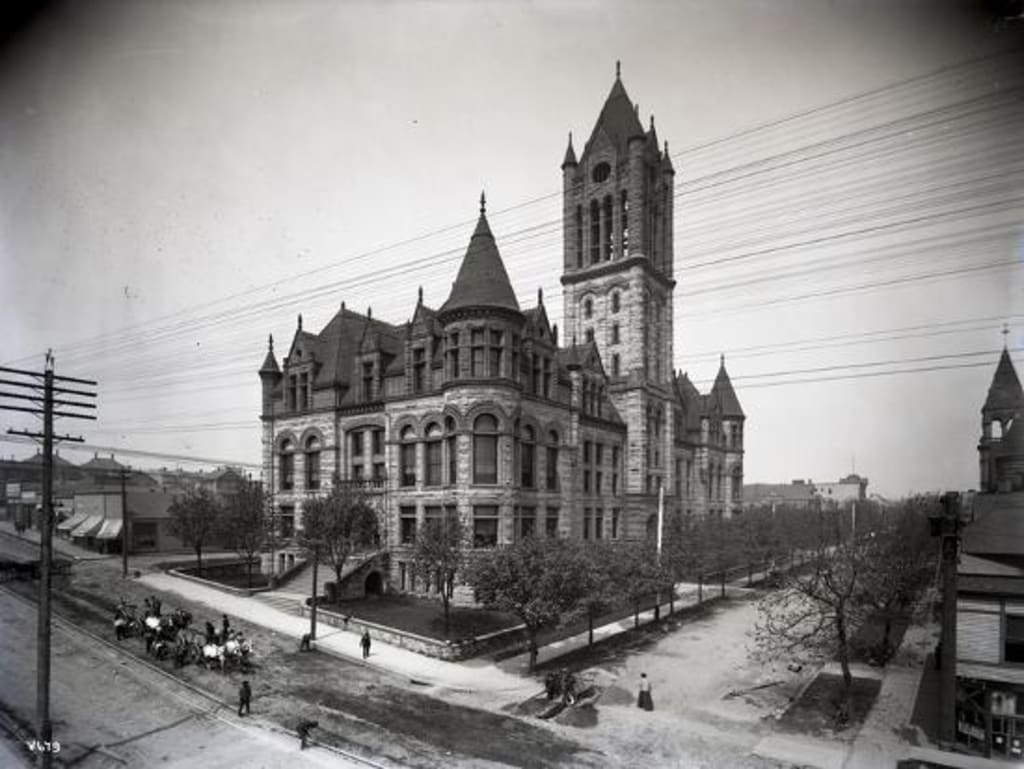
December 6, 1947, Pierce County Superior Courthouse. The ornate, gothic structure stood tall against the Tacoma, Washington skyline. Inside something routine was about to become sinister.
The jury had already convicted him ten days earlier with two counts of first-degree murder, deliberated in a meager thirty-five minutes. Judge Edward Hodge denied Jake Bird’s request for a new trial. He also denied the request for Bird to represent himself at trial, and the defense attorney’s request to withdrawal from representing Bird. Now, Judge Edward Hodge would make it official: death by hanging. So, when the judge asked Bird if he had anything to say, Jake Bird stood up and took his time.
For twenty minutes, he talked about the trial he felt he’d never really gotten a fair shot at, about the inadequate lawyers, about the officers who beat a confession out of him, about a verdict he believed the jury decided before they ever left the courtroom.
“I was given no chance to defend myself. My own lawyers just asked you to hang me. They apologized for defending me.”
Then, as he wound down, something in his tone shifted. He looked out at the men who’d put him there. The judge, the attorneys, and the officers he believed forced his confession would face their fate. After a distinct pause, the man from rural Louisiana made a promise, which sounded a lot like a hex.
“All you guys who had anything to do with this case are going to die before I do.”
Nobody took it seriously. Why would they? It sounded like exactly what it was, the last, empty threat of a man with nothing left to lose. Bird would hang. Life would go on for everyone else in that room.
It didn’t. Not for everyone.
Judge Edward Hodge was the first to go.
Hodge, the one who denied Bird’s request to represent himself. The one who’d refused to move the trial out of Pierce County. The one who ruled that even though police beat the confession out of Bird, it wouldn't be excluded from the evidence. Judge Hodge, the man who handed down the sentence of death by hanging.
Less than a month later, on January 1, 1948, the sixty-nine-year-old judge suffered a heart attack and died.
At the time, it barely registered as anything but sad coincidence. Judges die. Men in their late sixties have heart attacks. There was no reason to connect one death to the threat of a condemned man on his way to the gallows.
That reason would come soon enough.
Joseph Karpach was the Pierce County undersheriff who’d helped take Bird’s confession. He was one of the men in the room when Bird admitted, in his own words, to what he’d done to Bertha and Beverly Kludt. On April 5, 1948, Karpach’s heart failed, and he died at age forty-six.
Two men now. Both deceased had connections to the case. Both died within four months of the sentencing. It was starting to look less like a coincidence and more like a pattern. The kind of pattern whispered about in the courthouse hallways. The kind that made people glance twice at a headline.
Two months after Karpach, the pattern tightened.
George Harrigan was the court reporter who sat through every session of Bird’s trial. He recorded the testimony, the objections, and the confession itself for the official record. He was there for it all. On June 11, 1948, sixty-nine-year-old Harrigan suffered a fatal heart attack.
That made three. Three men, all directly tied to the case that sent Jake Bird to death row, all dead within six months of his sentencing. By now, whispers of the hex weren’t just courthouse gossip. The town was talking and counting the death toll.
And Bird was still very much alive, sitting on death row in Walla Walla, Washington, waiting.
Four months after Harrigan, the hex took a fourth name, and this one had heard Bird’s own words directly.
Sherman Lyons was the Tacoma police detective lieutenant who took Bird’s confession. He sat across from him as Bird described, in his own voice, what happened inside the Kludt house, every sickening blow of the axe. On October 28, 1948, Lyons had a heart attack at age forty-six and died.
The death count hit four. Each victim had ties, not just to the case in general but to the specific machinery that convicted Bird. The judge who sentenced him. The officer who charged him. The clerk who recorded the trial, and the detective who heard him confess. Ten months had passed since Bird stood in that courtroom and made his promise. Ten short months, and the men connected to it kept dying.
One month after Lyons, on the exact date the hex began, the fifth name arrived.
James Seldon was Bird’s own defense attorney. He was the man who was supposed to be on Bird’s side. The one who helped argue that the police coerced a confession. The man who asked for a change of venue. He was also the man who asked the judge to relieve him from representing Bird. On November 26, 1948, Seldon died at age seventy-six from a heart attack.
November 26th wasn’t just any date. It was one year since the jury convicted Bird. The exact anniversary of the verdict that started it all. Of everyone, the hex could have taken, it took his own lawyer, on the one date that made the pattern impossible to write off as coincidence.
Five men and five deaths now. Every one of them played directly in the case that put Jake Bird on death row, and every one of them died within a year of his sentencing, just as he promised. Tacoma had its hex, and it had a body count to prove it.
But five wasn’t enough to end the story, because one more name was still coming. Not everyone agrees his name should appear on the list.
By the time the sixth name came up, Bird hung at the gallows.
Arthur Steward was a prison guard at the Washington State Penitentiary in Walla Walla, Washington. He watched over Bird during his two years on death row. In the months before Bird’s execution, Steward died of pneumonia.
Here, the story gets murkier. Steward hadn’t sat in the jury pool, hadn’t taken the confession, hadn’t argued before the judge. He guarded Bird. The pneumonia also broke the pattern. Every death prior came from a heart attack. Some retellings will count him as a sixth hex victim anyway. Others leave him off the list entirely, arguing he was never really part of the case Bird cursed in the first place.
So even the official tally of the Jake Bird remains uncertain. Five deaths, certainly. A sixth? It depends on who’s telling the story and how loosely they define the word involved.
Which raises the real question: if researchers can’t agree on whether six men died from Bird’s curse, how confident can anyone be that the list is complete and the hex is over?
By every account anyone has ever published, the Jake Bird hex claimed five lives, six, if you’re willing to stretch the definition to include a prison guard who died of the wrong kind of illness in the wrong role entirely. Five is the number true crime writers agree upon.
What if I told you they might have missed one?
Alva Scott was the deputy clerk of the court during the Jake Bird trial. He was the man who filed the final paperwork to seal the case. On April 20, 1948, Scott died of a heart attack. Not pneumonia like the prison guard, but a heart attack. The same method that killed Hodge, Karpach, Harrigan, Lyons, and Seldon. Scott’s death doesn’t just fit the pattern; it fits more clearly than the man historians have spent decades arguing over.
The timing is its own kind of damming. Karpach died on April 5th. Harrigan died on June 11th. Scott died on April 20th, squarely between them, in the exact window every retelling of this story already accepts as part of the hex’s deadliest stretch. He didn’t die on the margins of the timeline. He died inside it, surrounded on both sides by names everyone already knew, and somehow nobody counted him in.
Seventy-plus years of research, and nobody found the missing victim. Until now.
The hex may seem like the more far-fetched of Bird’s legacies, but here’s the strange thing: it mirrors the uncertainty of everything else about the man. Bird confessed to forty-four murders across eleven states before his execution. Not all of those were solved. Nobody has ever nailed down the exact number of people Jake Bird killed.
The hex carries that same unsettled quality. For decades, the story held a fixed cast. New research turns up a name that was never on the list, a person tied to his case whose death fit the pattern precisely.
Which raises the obvious questions. If one name can slip through the cracks for this long, how many others might still be waiting for discovery?
About the Creator
Teresa Nordheim Liu
Teresa Nordheim-Liu is the author of seven traditionally published books of narrative nonfiction spanning true crime, history, paranormal, and urban exploration. For additional information you can visit http://www.teresanordheim.com
Enjoyed the story? Support the Creator.
Subscribe for free to receive all their stories in your feed.
Comments
There are no comments for this story
Be the first to respond and start the conversation.