urban legend
Urban legends have captivated us from ancient eras to the modern day; a deep dive into scary lore and 'could be true' tales about Bigfoot, Slender Man, the Suicide Forest and beyond.
Whispers in the Hospital Ward:. AI-Generated.
The hospital ward was quiet at night. Machines hummed softly, monitors blinked, and the faint fragrance of antiseptic lingered in the air. Patients slept in their beds, nurses moved silently from room to room, and the world outside seemed far away. Yet in that silence, whispers began to rise—faint, fragile, but impossible to ignore.
By The Writer...A_Awan10 months ago in Horror
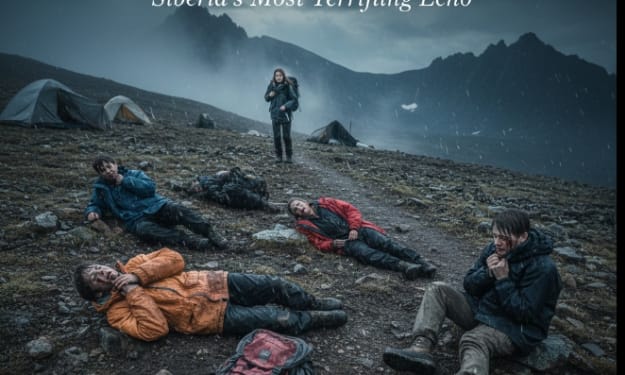
The Khamar-Daban Incident: Siberia’s Most Terrifying Echo
In the summer of 1993, a group of seven experienced hikers set out to conquer the Khamar-Daban mountain range in Buryatia, Russia. They were led by Lyudmila Korovina, a master hiking instructor known for her toughness and survival skills. They weren't amateurs; they were prepared for the harsh Siberian wilderness. Yet, within days, six of them would be dead in a manner so gruesome and sudden that it defies medical explanation. The lone survivor, Valentina Utochenko, would later tell a tale of madness, bleeding eyes, and a mountain that seemed to turn against them in an instant. 1. The Expedition: A Journey into the Clouds The group consisted of Lyudmila (41) and six students in their late teens and early twenties. Their plan was ambitious but well within their capabilities. The weather was initially clear, and the group was in high spirits as they began their ascent. By August 4th, the weather turned. A massive storm hit, bringing freezing rain and sleet. Despite the conditions, the group decided to set up camp on a barren, exposed slope rather than seeking the shelter of the nearby forest. It was a strange decision for an experienced leader like Lyudmila, and it would be the last decision they ever made together. 2. The Day the Horror Began On the morning of August 5th, as the group prepared to move, the nightmare unfolded with terrifying speed. According to Valentina, the first to fall was Aleksander. He suddenly began to scream, his ears started bleeding, and he collapsed, frothing at the mouth. What followed was a scene of pure chaos: Lyudmila ran to help him, but as she held him, she too began to bleed from her eyes and nose. She collapsed on top of him. Tatyana was the next. She began banging her head against the rocks, seemingly in a fit of madness, before falling silent. Denis, Viktoriya, and Timur all exhibited the same terrifying symptoms: clutching their throats, gasping for air, and bleeding from their facial orifices. In a matter of minutes, the mountainside was littered with the bodies of Valentina’s friends. 3. The Lone Survivor’s Flight Valentina, seeing her friends die in such a horrific manner, realized that if she stayed, she would be next. She grabbed her backpack and ran. She spent the next several days wandering the mountains alone, terrified that whatever "force" had killed her friends was following her. She eventually found a river and followed it down until she was rescued by a group of kayakers. When they found her, she was covered in dried blood and was so traumatized she could barely speak. 4. The Official Investigation: Frustrating Silence When rescue teams finally reached the site, they found the bodies exactly where Valentina had described. The autopsies were baffling. The official cause of death for all six was listed as hypothermia. However, this explanation was met with extreme skepticism. Hypothermia does not cause people to bleed from their eyes or ears, nor does it cause healthy young adults to die in a matter of minutes simultaneously. Furthermore, the group had warm clothing and supplies; they weren't simply "cold"—they were struck down by something biological or chemical. 5. The Theories: What Killed the Hikers? A. Infrasound (The "Voice of the Sea") A popular scientific theory suggests that the shape of the mountains and the high winds during the storm created "infrasound"—sound waves below the frequency of human hearing. Infrasound at certain frequencies can cause extreme panic, internal organ damage, and even burst blood vessels. Some believe the "vibrations" literally tore their bodies apart from the inside. B. Toxic Nerve Gas or Chemical Weapons Siberia has a history of secret military testing. Some speculate that the group walked into a "pocket" of nerve gas or a chemical agent that had settled in the valley due to the storm. This would explain the sudden respiratory failure and the bleeding. C. Toxic Algae or Water Contamination Some researchers suggest the group might have consumed water contaminated by a deadly toxin or toxic algae (cyanobacteria) that caused rapid neurological and cardiovascular collapse. 6. The Psychological Shadow Valentina’s testimony is the only window we have into those final moments. Many critics wonder if the "bleeding" was a hallucination caused by extreme stress, but the physical evidence of the bodies—though decomposed by the time they were found—didn't fully rule out her account. The most haunting detail remains the speed of the event. It wasn't a slow death over a freezing night; it was an ambush by an invisible enemy. Conclusion: The Mountains of the Dead The Khamar-Daban incident remains a dark stain on Russian hiking history. It serves as a grim reminder that there are places on this Earth where the environment doesn't just challenge us—it can become actively hostile in ways we don't yet understand. Six people died in the prime of their lives, and the only witness spent the rest of her life trying to forget the sight of her friends clutching their throats on a lonely Siberian slope. The truth, like the hikers, remains buried in the permafrost.
By The Insight Ledger 10 months ago in Horror
Something Knocks After Midnight
The knocking started after midnight, which is how I knew it wasn’t normal. Normal sounds belong to daylight. Footsteps, doors, voices. Even the house itself has a language you learn over time—the sigh of cooling pipes, the tick of wood contracting, the occasional complaint from an old foundation. These sounds have rhythm. They repeat. They make sense. This did not. Three slow knocks. Not loud. Not urgent. Considerate. As if whoever—or whatever—was on the other side understood the concept of manners. I lay in bed, counting my breaths, waiting for my brain to offer an explanation it could live with. Wind. Branches. A neighbor who’d lost their way. The house, playing tricks. Three knocks again. Same tempo. Same spacing. Patient. The sound came from the front door. I didn’t move. There is a particular paralysis that comes with being awake enough to recognize danger but tired enough to doubt yourself. I told myself that if it knocked a third time, I would get up. It knocked a third time. I sat up slowly, every instinct screaming that doors are thresholds for a reason. I didn’t turn on the lights. Light feels like confidence, and I didn’t have any to spare. I walked barefoot down the hallway, the floorboards cold and unhelpful beneath my feet. The peephole showed nothing. No shape. No shadow. Just the warped reflection of my own eye, wide and unbelieving. I almost laughed. That was when the voice spoke. “I know you’re home.” It wasn’t loud. It didn’t need to be. It sounded close to the door, close enough that I imagined breath touching the wood. The voice was calm, familiar in a way that made my skin tighten. “Please,” it said. “It’s cold out here.” I recognized the voice then. It was mine. Not a recording. Not a trick of memory. It carried the exact cadence I used when I was tired, when I was trying not to sound afraid. Every inflection was perfect. I backed away from the door. “No,” I said, and hated how small it sounded. The voice sighed, just like I did when patience ran thin. “You always do this,” it said. “You always hesitate at the worst moments.” Three knocks. I stumbled back down the hall and locked myself in the bedroom, heart racing, mind scrambling for rules. Monsters follow rules. That’s what stories teach us. If I could just identify them, I could survive. Don’t invite it in. Don’t answer questions. Don’t open the door. Simple. The knocking moved. It came from the bedroom door. Three slow knocks. I pressed myself into the corner, phone clenched uselessly in my hand. No missed calls. No notifications. No comfort there. “Why are you hiding?” my voice asked from the other side. “You do this every time something wants you to change.” I clamped my hands over my ears. It didn’t help. The voice wasn’t traveling through sound. It was inside the room, inside my chest, vibrating against thoughts I’d worked hard to bury. It knew things—specific things. Regrets. Pauses. The exact moment I’d chosen safety over truth, silence over confrontation, comfort over honesty. “You could’ve been more,” it said gently. “You still can be. Just open the door.” The handle rattled once. Not violently. Testing. I screamed then, a raw sound that surprised me with its volume. The knocking stopped. Silence flooded the room, thick and oppressive. Minutes passed. Maybe hours. I didn’t move. Eventually, exhaustion won. Fear fades when the body demands rest. I woke to sunlight. Morning had no memory of the night. Birds sang. Cars passed. The house returned to its usual, harmless noises. I laughed shakily and told myself what everyone tells themselves after surviving something unexplainable. Stress. Dream. Imagination. I went about my day. That evening, I found the note. It was on the kitchen table, written in my handwriting. You didn’t let me in last night. My stomach dropped. That’s okay, the note continued. I’ll try again when you’re weaker. I burned the paper in the sink, watched the words curl and blacken, disappear into ash. That was weeks ago. The knocking hasn’t returned—not yet. But sometimes, when I hesitate too long before making a decision, when I choose silence again, when I stare at doors I’m afraid to open, I hear it. Not knocking. Waiting. And I know, with a certainty that makes sleep difficult, that one night I’ll be too tired to argue. One night, I’ll open the door. And whatever sounds like me will finally come home.
By LUNA EDITH10 months ago in Horror
That Same Old Refrain
Misery or Missouri. I'm sure there's a bad pun there. As two local boys with long-established heritage in the state, we knew better than most how easily small town existenz can chew you up and spit you out. Strum, strum, strum, strum, strum, The strumming reverberated from the banjo upon my father's lap through the floorboards to my soul. ingratiating into me a sense of ... Nothingness. Seems I hear those banjos playin' once again, Hum, hum, hum, hum, hum, That same old plaintive strain. As boys we felt the growing strain of Arrow Rock living. Moonshine tainted blood passed from generations supped on from the Ozarks. Hear that mournful melody, It just haunts you the whole day long, And you wander in dreams back to heaven, it seems, When you hear that old time song. Recounted and recalled as. Something like naustalgea. Hush-a-bye ma baby, go to sleep on Mommy's knee, Journey back to paradise in dreams again with me; It seems like your Mommy is there once again, Even after she disappeared in Marvel Cave or was it Taberville Prairie. Memories are so fickle, so lost on plaintive strain of existenz. And the old folks were strummin' that same old refrain. Binaurally as we waved hush-a-bye to our childhood Thomas looked like Mommy did. Then. Nothingness. Too late. Too beyond. I was once. Aware. But awarenez dissolved. Way down in Missouri where I learned this lullaby, When the stars were blinkin' and the moon was climbin' high, And I hear Mammy Cloe, as in days long ago, Singin' hush-a-bye.
By Paul Stewart10 months ago in Horror
The Secret Tunnel Beneath the Town That Everyone Pretended Didn’t Exist
Some towns hide scandals. Some hide tragedies. Eldham hid something older—something no one alive wanted to talk about. Travelers always felt it the moment they arrived. The town had friendly faces, warm lights, and welcoming porches, but a certain street—Crescent Lane—felt colder than the rest, like a part of Eldham had been frozen in time. People avoided it. Even stray dogs didn’t wander there. On the far end of the lane lay an iron grate embedded in the cobblestones. Rust ate away at its bars, and the metal looked ancient, older than the road that surrounded it. Kids said it rattled at night. Adults said there was nothing underneath it but dirt. And anyone who tried to ask questions learned quickly that Eldham did not appreciate curiosity. This is where Hannah Ward enters the story. She wasn’t a ghost hunter or a thrill seeker. She was a geology student conducting a summer survey of underground rock layers. Eldham appeared perfect—quiet, harmless, and utterly uneventful. She brought her notebooks, her measuring tools, and her camera. She expected to study soil. She did not expect a secret the town itself seemed desperate to keep buried. During her first week, she noticed strange behavior. Whenever she tried to map the old part of town, locals gently redirected her: “Try the north ridge—better formations there.” When she asked about Crescent Lane, she received tight smiles. “Not much to see down there.” When she asked about the grate, she got silence. Real silence. Eyes averted, throats cleared, shoulders stiffened. The shopkeeper pretended not to hear her. The librarian said the town maps were “incomplete.” Even the mayor, a jovial man who shook everyone’s hand twice, told her, “There’s no usable space beneath that street. Soil shift. Dangerous. Best ignore it.” That sentence made something spark in her mind. When a place is “dangerous,” people usually put signs around it. Here, they put silence. Hannah decided to return at midnight. Not out of recklessness—out of curiosity twisted with the subtle fear that if she didn’t investigate now, she might never get another chance. The streets were desert-quiet when she walked to Crescent Lane. The air was unnaturally still, as if the wind itself refused to visit this part of town. The houses leaned in on both sides, old wooden frames groaning faintly, like they were trying to whisper warnings. The grate sat exactly where she had seen it earlier. No padlock, just a thick layer of rust. When she tugged gently, it resisted. When she pulled harder, it opened with a long, aching groan—like something beneath had been waiting for her. The darkness below felt colder than night air should ever feel. She descended a metal ladder that trembled under her weight. Each step echoed like she was climbing into a well of forgotten sounds. When her boots finally touched the ground, she found herself in a narrow tunnel lined with bricks blackened by age. Something struck her instantly: this place wasn’t built as a sewer, storm drain, or old mining passage. The architecture looked intentional. Human. Designed. Her flashlight revealed scattered chalk markings on the walls—symbols, arrows, handprints. Fresh. Recently drawn. Someone had been down here. Recently enough that the chalk still dusted onto her fingertips. She followed the curved passage for what felt like twenty minutes. The deeper she walked, the more she sensed a faint vibration in the floor, like the echo of distant movement. At first she mistook it for water. Then she realized Elderham had no underground river. The tunnel widened into a dome-shaped chamber. That chamber haunted her for months. The walls were covered in handprints—hundreds upon hundreds of dark charcoal hands of every size and height. Some tiny and childlike. Some wide and adult. All layered, climbing upward, overlapping like the ghosts of people trying to escape. In the center of the room stood a rotting wooden desk. Upon it lay a leather-bound journal so old the spine had begun to turn to dust. Most pages were unreadable, ink washed into stains. Only one page survived clearly: “The last evacuation failed. They sent us down here to hide, but the ground never opened again.” Beneath it, in newer handwriting, someone else had written: “They lied. We never came up.” The words felt too heavy to exist. Hannah stepped back instinctively. Something clattered in the tunnel behind her. Not dripping water. Not shifting dirt. Something heavier. Something that moved with intention. She killed her flashlight instinctively and pressed herself against the wall. The silence that followed was unnatural—perfect stillness, like the air was holding its breath with her. Then she heard it: faint footsteps. Slow. Deliberate. She didn’t wait to confirm whether they were human. She sprinted. Her boots hammered against stone as she ran back toward the ladder. The tunnel seemed longer than before, stretching like a nightmare that refused to let her wake up. Her breath tore through her chest as the steps behind her grew louder—though she could never tell if they were actually closer or if panic had magnified them. She climbed the ladder two rungs at a time and slammed the grate shut behind her. The moment it clicked into place, the night air rushed around her like a sigh of relief. By morning, the grate was gone. Not locked. Not sealed. Gone. Fresh cobblestones had replaced its outline. The cement still smelled wet. When Hannah asked the mayor about the grate, he smiled so warmly it felt threatening. “My dear,” he said, “there’s never been a grate on Crescent Lane.” The shopkeeper insisted she must have imagined it. The librarian said her maps hadn’t included that street “for years.” In a town this small, gaslighting wasn’t subtle—it was the default language. Hannah left Eldham that evening, her hands shaking on the steering wheel. But the story didn’t end there. Weeks later, while reviewing her survey data, she finally opened the tunnel video she had recorded on her phone. The footage was grainy but clear enough to reveal what she saw: the wall of handprints, the journal, the curved chamber. Except something was different. In the last few seconds of the recording, one of the charcoal handprints—a small one—was moving. Very slowly. Extending. Reaching toward the camera. And in the final frame, just before she climbed the ladder, a new handprint had appeared on the wall. Fresh. Dark. Exactly her size. Hannah realized something chilling: whatever lived beneath Eldham was still active. Still reaching. Still adding new handprints to its wall of the forgotten. She never returned to the town. But the town hadn’t forgotten her. Some nights, she wakes up with charcoal smudges on her palms. And when she checks her phone camera, the last frame of that tunnel—the one she swore she deleted—keeps reappearing, a few pixels darker each time, as if the handprints are still growing. Eldham buried its tunnel. But some doors don’t stay sealed. Some secrets keep climbing back up. And some handprints belong to the living—until they don’t.
By The Insight Ledger 10 months ago in Horror
When the Past Calls for a Ride: Ghost Passengers of the Tōhoku Tsunami
A Disaster That Still Echoes It’s been nearly five years since the devastating Tōhoku earthquake and tsunami struck Japan on March 11, 2011. The magnitude 9.0 quake triggered a massive wave that reached 133 feet in some places and pushed more than 6 miles inland.
By Areeba Umair10 months ago in Horror
8 Cursed Objects Still Haunting the World Today
Sometimes people leave behind memories, legacies, and occasionally… nightmare-fuel objects that ruin lives. You’d think that if something brings disaster, illness, hauntings, or death, humans would immediately destroy it.
By Areeba Umair10 months ago in Horror
The Unlikeliest of Places to Encounter the Paranormal. Top Story - December 2025.
When we think of haunted places, the first thing that might come to mind is an old cemetery with centuries old gravestones, the words long faded to decipher. Or we might think of an old run down house. Walk into a centuries old house and if you’re a believer in the paranormal, you might wonder if you’re sharing this house with a spirit.
By Jasmine Aguilar10 months ago in Horror