urban legend
Urban legends have captivated us from ancient eras to the modern day; a deep dive into scary lore and 'could be true' tales about Bigfoot, Slender Man, the Suicide Forest and beyond.
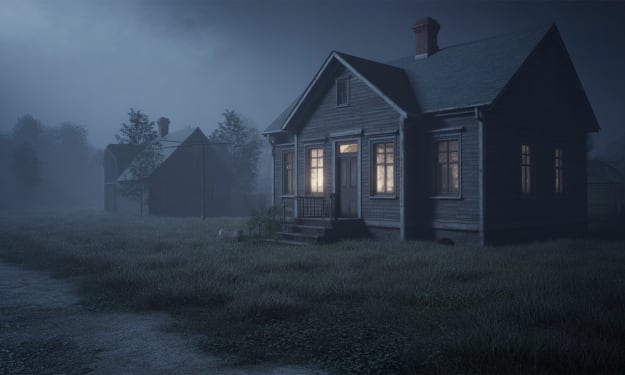
The House That Answers Back
Have you ever been inside a house that felt like it was listening to you? Not haunted in the dramatic, movie-jump-scare way—but aware. As if the walls were paying attention, the air was holding its breath, and every sound you made was quietly noted.
By John Smith9 months ago in Horror
The Haunted Tower of London: Dark History, Ghost Stories, and Royal Tragedies
For almost a thousand years, the Tower of London has loomed along the River Thames as one of the most recognized—and spookiest—sites in the United Kingdom. Originally constructed by William the Conqueror in the 11th century, the Tower was first and foremost a fortress designed to secure Norman domination of England. However, as the Tower grew and matured as a structure and as a symbol of British history, it would come to serve many purposes simultaneously— royal residence, prison, treasury, armory, and even site of execution—no wonder it is associated with so many stories of ghosts and otherworldly experiences.
By Kyrol Mojikal9 months ago in Horror
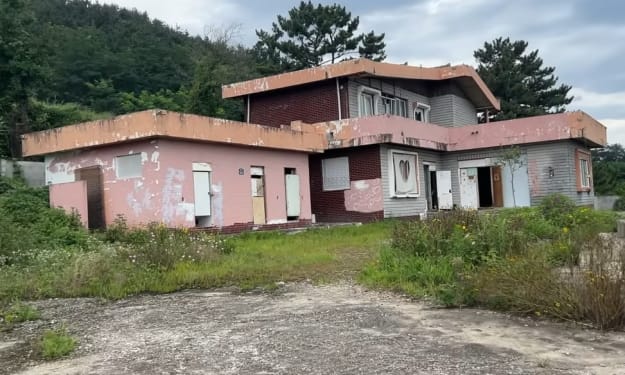
Yeongdeok Haunted House: Korea’s Most Terrifying Abandoned Ghost House
The Yeongdeok Haunted House (영덕흉가), or simply Yeongdeok House, is a haunted mansion situated on a cliff overlooking the ocean within Yeongdeok County, North Gyeongsang Province, South Korea. It does not look any stranger than any typical old haunted house – two stories, paint peeling off, windows smashed, and a whole lot of disrepair. However, this haunted house has been a legend in Korea for many decades as being among the most haunted sites within the country.
By Kyrol Mojikal9 months ago in Horror
The Echoing Asylum of Silaos: Where the Patients Never Left | SEASON 2
Chapter 7 FATHER ELIAS’S JOURNAL: Entry 3: The Queen is not a demon, but a soul. A very angry, very vengeful soul. She is the mother of the asylum. Her spirit, and her profound grief, is what has been feeding on the patients' madness. She is what has been devouring them. She is the keeper of the lost. And she is now enraged.
By Tales That Breathe at Night9 months ago in Horror
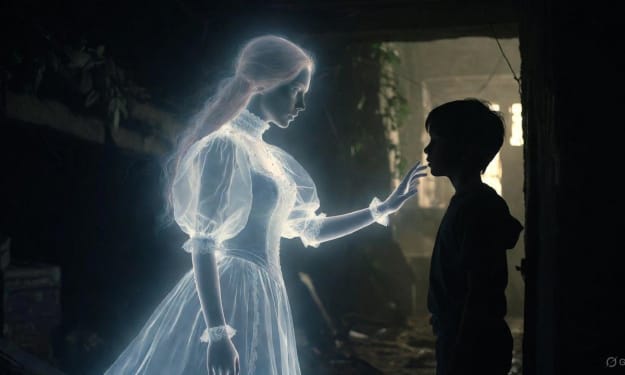
The Grimoire of Elizabeth. Content Warning. AI-Generated.
In the small town of Elderwood, Massachusetts, stood an old Victorian mansion built in 1875. The Harper family—Michael, Sarah, and their children, seventeen-year-old Olivia and twelve-year-old Elijah—purchased it at an unexpectedly low price.
By Mr. Usevolod Voskoboinikov10 months ago in Horror
When the Chainsaw Was Born in Blood
Have you ever woken up in the dead of night, heart pounding, convinced something's just... off? Like the air's too still, or there's a shadow where there shouldn't be? Yeah, that gut-twisting moment hit me hard the other day when I stumbled across this old video from MrBallen-the guy who spins those strange, dark tales that stick with you long after the screen goes black. It got me thinking about how real life can out-creep any ghost story. You know, the kind of stuff that makes you double-check your locks. So, buckle up; I'm about to unpack three wild, true accounts from that vid, each one weirder and more unsettling than the last. Let's dive in, shall we?
By KWAO LEARNER WINFRED10 months ago in Horror
THE NIGHT THE SNOW WAS MARKED
In early February of 1855, southern England went to sleep under a heavy blanket of snow. It was the kind of winter night that muffles sound, erases detail, and turns familiar streets into pale, quiet corridors. Villages locked their doors. Farmers secured their animals. Churches stood dark and still. By morning, England woke to something it could not explain. Across miles and miles of countryside—over rooftops, through gardens, across rivers, walls, haystacks, and church roofs—there ran a single line of strange footprints. They were not random. They did not wander. They marched in a deliberate, unwavering path, as if something had chosen a direction and never hesitated. Each print looked like a cloven hoof. And no one could agree on what had made them. A DISCOVERY MADE AT DAWN The first reports came from the county of Devon. Villagers stepping outside that morning stopped cold. In the fresh snow were pairs of impressions, spaced evenly apart, measuring a few inches long. The shape was unmistakable: split at the front, curved at the back. Hoof-like. But these were not the tracks of any animal known to the region. The prints led up to doors and stopped. They crossed roofs without breaking tiles. They climbed over high walls without disturbance. In some cases, they passed straight through enclosed courtyards without any entry or exit point. It was as if the thing that made them did not need to obey physical obstacles. MILES WITHOUT INTERRUPTION As the day progressed, reports multiplied. The footprints were not confined to one village. They appeared across dozens of towns, stretching over more than 100 miles by some estimates. In certain places, the trail split and then rejoined. In others, it vanished briefly—only to reappear farther ahead. Farmers followed the prints until they disappeared at the edge of rivers, then found them continuing on the opposite bank. Roofs bore the marks, but no snow around them was disturbed. Narrow fences were crossed without any sign of struggle or breakage. Whatever walked that night did not stumble. It did not pause. It did not turn back. It simply went. FEAR SPREADS FASTER THAN FOOTPRINTS Victorian England was a society deeply shaped by religion and folklore. When the footprints were discovered, the explanation came easily to many. The Devil had walked. Churches filled. Sermons were preached warning of judgment. Some villagers refused to leave their homes. Children were kept indoors. Livestock was blessed. Firearms were loaded, though no one could explain what they expected to shoot. Even skeptics felt uneasy. There was no clear natural explanation, and the scale of the event made dismissal difficult. This was not a prank. No one could fake something like this across an entire county overnight. ATTEMPTS AT RATIONAL EXPLANATION Almost immediately, scientists, clergy, and naturalists began offering theories. Some suggested escaped animals—kangaroos, badgers, or deer. But none matched the footprint shape or stride. Kangaroos were especially popular as an explanation, yet there was no evidence of one loose, and kangaroo tracks do not cross rooftops. Others blamed weather phenomena: melting snow refreezing into odd shapes, or wind sculpting impressions. But witnesses insisted the prints were clear, consistent, and deeply pressed—as if by weight. One proposal claimed mice or rats hopping in the snow could create paired marks. This collapsed under scrutiny. The spacing was wrong. The trail was too long. And rodents do not walk straight for miles. Each rational explanation fixed one detail and broke ten others. EYEWITNESSES AND SILENCE Despite the scale of the event, no one claimed to have seen the creature responsible. Not a shadow. Not a sound. Not a movement. Dogs reportedly refused to follow the trail. In some cases, animals panicked when led near it. One account described a dog being dragged along the footprints until it became violently distressed. True or exaggerated, such stories added to the sense that the footprints were not merely physical—but wrong. By the time authorities attempted organized investigation, the snow was melting. The evidence faded. The trail dissolved into memory. And memory is a dangerous place for truth. WHY THE FOOTPRINTS TERRIFIED PEOPLE The fear wasn’t just about the shape of the tracks. It was about intent. The footprints didn’t wander aimlessly. They didn’t circle homes or approach food sources. They followed a line—sometimes directly toward villages, sometimes straight through them, sometimes over places no animal would choose. That purpose made people uneasy. Nature is chaotic. Animals hesitate. They explore. This thing did not. It behaved like something that knew exactly where it was going. THE DEVIL OR THE UNKNOWN? Labeling the phenomenon “the Devil’s Footprints” may sound dramatic, but it reveals something important about the human response to the unexplained. When people encounter something that violates their understanding of the world, they reach for the nearest available framework. In 1855 England, that framework was religious. Today, we might say “unknown animal,” “rare weather event,” or “mass hysteria.” The name changes. The discomfort does not. MODERN REEXAMINATIONS Historians and scientists have revisited the case many times. Some suggest a combination of factors: multiple animals, weather distortion, and human pattern recognition filling gaps. Others argue that contemporary newspapers exaggerated the distances and consistency of the prints. But even modern skepticism runs into a problem. There is no single explanation that accounts for all the reported features without heavy assumptions. And that leaves a residue of doubt. A MYSTERY THAT LEFT NO BODY The Devil’s Footprints are disturbing precisely because they left no victim. Nothing was attacked. Nothing was taken. Nothing visibly changed. Something came. Something went. That was all. There was no confrontation, no climax, no resolution. Just evidence of passage—silent, deliberate, and temporary. That kind of mystery lingers longer than violence. It invites the imagination to fill in what the facts cannot. WHY WE STILL TALK ABOUT IT More than 170 years later, the footprints remain a staple of English folklore and unexplained history. Not because they prove anything supernatural—but because they resist tidy explanation. They sit at the uncomfortable boundary between natural and unnatural, between what we know and what we assume we know. And they remind us of something humbling: The world is capable of producing events that feel intentional, intelligent, and alien—without ever explaining themselves. A WALK THAT NEVER ENDED By the afternoon of February 9, 1855, the snow was melting. The prints softened. Then they vanished entirely. No final destination was ever identified. No explanation was ever accepted. The trail ended not with an answer, but with absence. And perhaps that is why the Devil’s Footprints still unsettle us. Because whatever walked across England that night did not announce itself. It did not demand belief. It did not leave proof behind—only impressions, briefly held in snow, then gone. Like a reminder. That sometimes, the strangest things do not roar or strike or destroy. They simply pass through our world, leave marks we cannot explain, and disappear before we can decide what we’ve seen.
By The Insight Ledger 10 months ago in Horror
THE HOTEL THAT KEPT A SCORE
In downtown Los Angeles, a few blocks from where the city sells its dreams in neon and billboards, stands a building that never learned how to forget. From the outside, the Cecil Hotel looks like a relic—tall, symmetrical, unimpressive in a way that makes it easy to miss. Thousands of people have walked past it without noticing. Thousands more have slept inside it without knowing its history. And then there are those who knew. For nearly a century, the Cecil Hotel has been linked to an abnormal number of deaths—suicides, violent crimes, overdoses, unexplained falls, and one haunting incident that turned a forgotten hotel into a global obsession. This is not a story about ghosts. It’s a story about patterns, neglect, and what happens when human despair is allowed to stack up floor by floor. A PROMISING BEGINNING THAT DIDN’T LAST The Cecil Hotel opened in 1924, built during a time when Los Angeles believed it was becoming the next great American city. The hotel was meant to attract businessmen, travelers, and middle-class guests. It was elegant for its time, with a marble lobby and polished floors. Then the Great Depression arrived. The neighborhood surrounding the Cecil deteriorated rapidly. What was once a hopeful district became part of what is now known as Skid Row—an area defined by homelessness, addiction, and untreated mental illness. The Cecil adapted, but not in a good way. It shifted from short-term stays to long-term residents. Rent was cheap. Oversight was minimal. The hotel became a place people went when they had nowhere else to go. And often, nowhere left to run. DEATHS WITHOUT HEADLINES By the 1930s, deaths began to accumulate. Guests jumped from windows. Some were found in their rooms after overdoses. Others died under circumstances that were never fully explained. Newspapers recorded these events briefly, then moved on. No single death stood out. That was the problem. There were too many. Over the decades, the Cecil became linked to some of the most notorious figures in American crime history. Serial killers such as Richard Ramirez (the Night Stalker) reportedly stayed there. Jack Unterweger, an Austrian serial killer, also lived at the hotel while committing murders in Los Angeles. This wasn’t coincidence—it was opportunity. The Cecil offered anonymity. No one asked questions. No one paid attention. It was the perfect place to disappear in plain sight. A SYSTEM THAT FAILED QUIETLY What makes the Cecil Hotel truly disturbing is not just the number of deaths, but how normal they became. Management changed hands repeatedly. Safety measures were inconsistent. Windows that should have been secured weren’t. Stairwells were accessible. Rooftop access was poorly monitored. Guests with severe mental health issues were housed alongside tourists. Long-term residents lived next to short-term visitors. There was no unified responsibility for care, safety, or intervention. In effect, the hotel became a pressure chamber for human suffering. And pressure eventually breaks things.
By The Insight Ledger 10 months ago in Horror