travel
Haunted locales and houses of horror from the Amityville home to the Tower of London; travel tips for those seeking a trip filled with fun and evil.
The Catacombs of Paris
Introduction Beneath the bustling streets of Paris lies a hidden world of tunnels, crypts, and bones—the infamous Catacombs of Paris. This underground ossuary holds the remains of over six million people, making it one of the most macabre yet fascinating historical sites in the world. Originally limestone quarries, these subterranean passages were transformed into a massive burial ground in the late 18th century to address the city’s overflowing cemeteries. Today, the Catacombs attract thousands of visitors who come to witness its eerie yet artistic displays of arranged skulls and bones. Beyond its tourist appeal, the Catacombs hold deep historical, cultural, and even political significance. This article explores the origins, history, legends, and modern-day relevance of the Paris Catacombs. 1. The Origins: From Quarries to Ossuary A. The Ancient Quarries Long before they became a burial site, the tunnels of the Catacombs were part of Paris’s vast limestone quarries. Since Roman times, builders extracted stone to construct the city’s iconic landmarks, including Notre-Dame Cathedral and the Louvre. By the 17th century, the underground network had expanded so much that parts of the city were at risk of collapsing. B. The Cemetery Crisis By the late 18th century, Paris faced a gruesome problem: its cemeteries were overflowing. The most notorious, the Cemetery of the Innocents, had been in use for nearly a millennium and was so overcrowded that decomposing bodies contaminated the air and water, spreading disease. Authorities needed a solution—and the abandoned quarries provided the perfect space. C. The Creation of the Ossuary (1786) In 1786, the French government began transferring bones from overcrowded cemeteries into the underground tunnels. The process continued for decades, with workers carefully stacking skulls and femurs into decorative patterns. The site was consecrated as the "Paris Municipal Ossuary" but later became known as the Catacombs, inspired by Rome’s underground burial sites. 2. Inside the Catacombs: A Maze of Bones A. The Entrance and Layout The public entrance to the Catacombs is located at 1 Avenue du Colonel Henri Rol-Tanguy, near the Denfert-Rochereau metro station. Visitors descend a narrow spiral staircase 20 meters (66 feet) underground before entering a dimly lit corridor filled with inscriptions and carvings. The ossuary itself spans only 1.5 kilometers (0.9 miles) of the 300-kilometer (186-mile) tunnel network, but it is the most meticulously arranged section. Bones line the walls in intricate patterns, with plaques indicating the original cemeteries they came from. B. Artistic Arrangements One of the most striking features is the "Barrel of the Passion", a pillar made entirely of bones. Other sections feature skulls arranged in heart shapes or stacked in neat rows. These macabre designs were the work of quarry workers and later restorers who treated the bones with a strange mix of reverence and creativity. C. Famous Inscriptions Throughout the tunnels, visitors encounter solemn quotes about death, such as: "Stop! This is the Empire of Death." (Above the entrance to the ossuary) "Remember, man, that you are dust, and unto dust, you shall return." These inscriptions serve as a memento mori—a reminder of mortality. 3. Legends and Mysteries of the Catacombs A. The Phantoms of Paris Given its grim history, the Catacombs are ripe with ghost stories. Some visitors claim to hear whispers or see shadowy figures. One famous legend tells of Philibert Aspairt, a doorkeeper who wandered into the Catacombs in 1793 and was found dead 11 years later—his body identified only by his keys. B. Secret Resistance Meetings During World War II, the French Resistance used the Catacombs as a hideout. The Nazis also built bunkers in some sections. Today, some walls still bear graffiti from both sides of the conflict. C. The Underground "Cataphiles" While only a small portion is open to the public, urban explorers (called "cataphiles") illegally navigate the forbidden tunnels. Some have discovered hidden chambers, underground art galleries, and even secret parties. Authorities regularly arrest trespassers, but the allure of the unknown keeps adventurers coming back. 4. The Catacombs in Modern Culture A. Tourism and Preservation Since opening to the public in 1809, the Catacombs have become one of Paris’s most unusual attractions. Due to preservation efforts, only 200 visitors per day are allowed inside to prevent humidity and CO₂ damage to the bones. B. Books, Films, and Video Games The Catacombs have inspired countless works of fiction, including: "The Phantom of the Opera" (Gaston Leroux) – Features scenes in the underground tunnels. "As Above, So Below" (2014) – A horror film set in the Catacombs. "Assassin’s Creed Unity" – A video game that lets players explore a virtual version. C. Scientific Research The unique conditions of the Catacombs have made them a site for scientific study. Researchers examine the bones for insights into historical diseases, while geologists monitor the stability of the tunnels to prevent collapses. 5. Visiting the Catacombs: What to Know A. Practical Information Location: 1 Avenue du Colonel Henri Rol-Tanguy, 75014 Paris Hours: 9:45 AM – 8:30 PM (Closed Mondays) Tickets: €29 (advance booking recommended) Accessibility: Not wheelchair-friendly (many stairs, narrow passages) B. Tips for Visitors Wear comfortable shoes (the path is uneven). Bring a light jacket (temperature is ~14°C / 57°F). Photography is allowed (no flash or tripods). Respect the site—removing bones is illegal. Conclusion: The Catacombs of Paris are more than just a tourist attraction—they are a silent witness to centuries of history, from medieval plagues to wartime secrets. Walking through its dimly lit corridors, one cannot help but reflect on the fleeting nature of life. Whether you visit for history, art, or the thrill of the macabre, the Catacombs offer an unforgettable journey into the depths of Paris—both literally and metaphorically. As the inscription at the entrance warns: "Stop! This is the Empire of Death." And indeed, within these walls, the past is always present. If you would like any changes or additional details in a specific section? Then please tell us in the comments.
By Silas Blackwoodabout a year ago in Horror
Aradale: Australia’s Asylum of Anguish
Looming ominously on "Madman's Hill" in Ararat, Victoria, Aradale Mental Hospital (also known as Ararat Lunatic Asylum) unleashed its imposing gates in 1865. Constructed as one of three massive facilities to deal with Victoria's surplus of "lunatics" – a term remarkably applied to everything from the criminally insane to epilepsy, autism, or postpartum depression sufferers – its 130-year history cemented a reputation of utter misery. And this history of hardship fuels its assertion as Australia's spookiest location.
By Kyrol Mojikalabout a year ago in Horror
The Bermuda Triangle
Introduction One of the world's greatest unsolved mysteries is the Bermuda Triangle, also known as the "Devil's Triangle." Stretching between Miami, Bermuda, and Puerto Rico, this infamous region of the western Atlantic Ocean has been linked to the disappearance of ships, planes, and hundreds of lives under bizarre circumstances. Numerous theories, from scientific explanations to supernatural conspiracies, have been sparked by the Bermuda Triangle's vanishing aircraft and ghost ships with no crew. In this deep dive, we’ll explore: ✔ The most famous disappearances in the Bermuda Triangle Paranormal theories versus scientific theories Aviation and government reports on the phenomenon Is there still a mystery to be solved? The Legend of the Bermuda Triangle,
By Silas Blackwoodabout a year ago in Horror
The Midnight Road
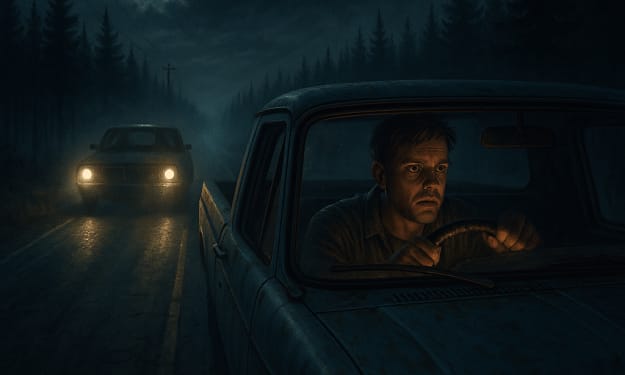
The Midnight Road Some Roads Don’t Lead Anywhere… They Keep You Forever The old pickup truck, lovingly called Ol' Betsy, rumbled down Route 17—a lonely strip of worn asphalt slicing through miles of dense, whispering pine forest. Liam, a travel blogger chasing forgotten myths and mysterious legends, had specifically chosen this road for its eerie reputation. Midnight had long passed. A paper-thin moon cowered behind clouds, and only Betsy's flickering headlights fought the oppressive darkness. He'd been driving for what felt like ages. The engine’s hum and the tires’ steady rhythm on cracked pavement worked like a lullaby, tugging at his senses. Then, something odd happened. A flickering, run-down gas station appeared on his right—the kind you’d see in horror films. Its neon sign blinked like a dying heart. Odd, but forgettable. Until a minute later, he passed it again. Exactly the same. Same broken sign. Same angle. Same shadowed window. Liam’s hands tightened on the wheel. Just tired, he whispered to himself. Sleepy mind playing tricks. But it didn’t stop there. The pine trees lining the road became unnaturally symmetrical, looping endlessly like wallpaper. He checked his GPS. It was stuck. The little blue dot hadn’t moved in ten minutes. No signal. No updates. No escape. Then he saw them—headlights, small and distant in his rearview mirror, gaining fast. A dark muscle car, classic in shape, roared behind him with thunder in its engine. It flashed its high beams, aggressive and blinding. Liam sped up, nerves electrified. He wasn’t about to play road games in the middle of nowhere. Ol’ Betsy groaned as he pushed her past her limits. But when he rounded a sharp curve, the headlights disappeared. No car. Just empty, black road. No engine sound. Just the haunting silence of midnight forest. He stopped. Heart hammering. Silence everywhere. Was he hallucinating? He pressed forward, cautiously now. And things got worse. He passed the same rusted mailbox—three times in twenty minutes. The same crooked rock shaped like a howling wolf. Time distorted. Minutes dragged like hours, and hours vanished like seconds. The moon hovered above like a broken clock, unmoving and indifferent. Then came the muscle car again. Not behind—everywhere. In front. Beside. Behind. A game of shadows and menace. He couldn’t see the driver. Just a figure, motionless, watching. It dawned on him—this road wasn’t real. It was a trap. A loop. The car wasn’t chasing him. It was part of this nightmare, the Collector—a guardian of this endless purgatory. He remembered old internet whispers—rumors about Route 17. How it took travelers at night. Their cars found days later. Empty. Cold. But the drivers were never found. Liam tried to turn off the road, to escape into the forest. But the trees shifted, bending unnaturally, blocking all exits. The road held him tight. A black magnet dragging him deeper into madness. Then came the whispers. Faint at first. Then louder. Echoing from the pines. Not wind—voices. “Trapped… Lost… Stay…” they cried. And then—the faces. Pressed against his windows. Pale, shimmering faces with silent screams. Men, women, children. Their eyes pleading, fingers clawing at the glass. They weren’t alive. They were echoes. Shadows of those who came before him. Now bound to this road. Watching. Warning. And the muscle car? It pulled beside him again. Closer than ever. The driver—if you could call it that—was no longer a silhouette. Its shape shimmered with hundreds of shifting, tormented faces. Eyes within eyes. Mouths moving in agony. A kaleidoscope of trapped souls, steering the dark machine. A voice rose from it—deep and layered, as if every soul spoke at once: "Welcome, traveler. This journey is forever." Liam screamed. He floored the gas pedal. Ol’ Betsy roared like never before, her engine screaming in protest. He pushed past 80. Then 90. Time shattered around him. Trees blurred into smears of black and green. The faces screamed louder, their ghostly palms slapping against glass. The muscle car stayed beside him, never fading, never slowing. And then—light. A blinding white light. Tires screeched. Air shifted. Suddenly—silence. He skidded to a stop. The pine forest was gone. The cursed road was behind him. In front? Familiar streetlights. Civilization. Salvation. Liam sat in shock. The forest was gone. The sky was clearing. His GPS blinked back to life. Full signal. The map now showed he was miles from Route 17. He drove to the nearest motel, every muscle trembling. He never told anyone what happened. Who would believe him? But his blog changed. The tone. The focus. Still beautiful places. Still adventures. But always—a subtle warning. And sometimes, late at night, he’d glance in the mirror and see a shimmer in his eyes—something foreign. Something left behind. A trace of the road that almost claimed him. And when he closed his eyes, he could still hear it. A low engine hum. Far off. Yet near. Forever searching. Forever waiting.
By Noman Afridiabout a year ago in Horror
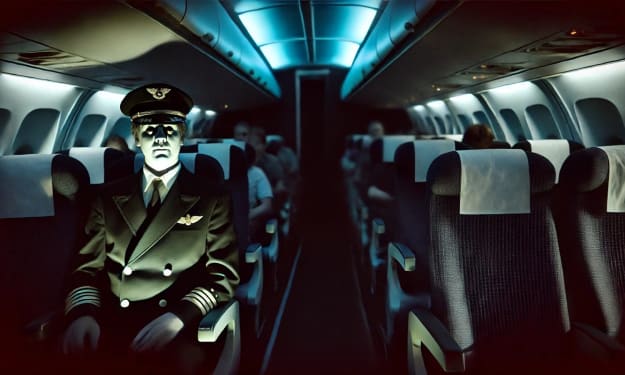
I've been in the air for nearly thirty hours, and the flight attendants haven't stopped weeping
Thirty hours ago I hopped on a late-night flight from New York heading to Los Angeles. After boarding I saw that I had an entire row to myself. Take off passed without incident, and soon I was stretched out for a nap across the row.
By Late Night Readsabout a year ago in Horror
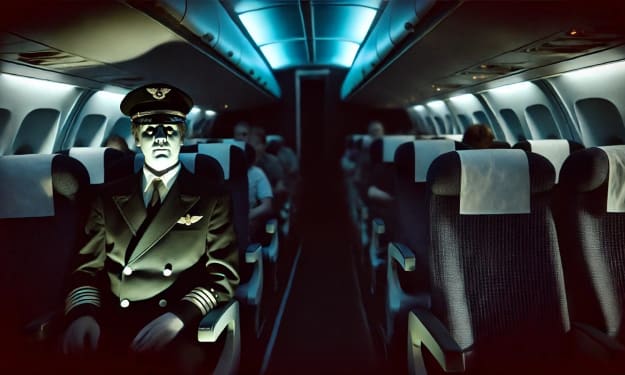
I’ve Been Flying for almost Thirty Hours and The Flight Attendants Won’t Stop Crying [Part 2]
A few hours after the businesswoman picked up her piece of paper with my message, she came back down the aisle and sat in the seat beside me. She bent over, trying to stay low.
By Late Night Readsabout a year ago in Horror
The Little Stranger by Sarah Waters: A Haunting Tale of Class, Decay, and the Supernatural
How Sarah Waters Brought Gothic Horror Back to England After the War Sarah Waters’ The Little Stranger (2009) is a masterful blend of psychological suspense and classic gothic horror, set against the crumbling backdrop of post-World War II Britain. More than just a ghost story, the novel explores the fading aristocracy, the trauma of war, and the unsettling possibility that the true haunting might not be supernatural—but psychological. The Little Stranger pays homage to gothic traditions while offering a novel, unsettling take on the genre with its slow-burning tension, unreliable narrator, and eerie atmosphere. Themes, historical context, and the ambiguity that keeps readers debating the novel's true meaning are examined in depth in this article. 1. The Plot: A House in Decline
By Silas Blackwoodabout a year ago in Horror
The Haunting of Hill House: A Masterpiece of Psychological Horror
Exploring Shirley Jackson’s Timeless Tale of Terror and Isolation One of the best ghost stories ever written is widely regarded as Shirley Jackson's 1959 novel The Haunting of Hill House. Jackson's novel disturbs readers through psychological tension, unreliable narration, and the slow unraveling of sanity, in contrast to conventional horror, which relies on gore and jump scares. At its core, The Haunting of Hill House is not just about a haunted house—it’s about haunted people, the fragility of the mind, and the terror of loneliness. In this deep dive, we’ll explore the novel’s themes, characters, and legacy, examining why it remains a cornerstone of gothic horror literature.
By Silas Blackwoodabout a year ago in Horror
"Top 5 Most Haunted Places in the World That Will Leave You Terrified
Are you someone who loves ghost stories, haunted houses, or creepy mysteries? Then get ready to explore some of the most haunted places in the world. These locations are famous not just for their beauty or history, but for something darker — stories of spirits, curses, and strange happenings that can’t always be explained.
By ibrahim khanabout a year ago in Horror
The Passenger Who Talked to Ghosts in My Backseat
I had just dropped off a rider when I got another ping — a longer ride, about 45 minutes, with a payout in the $20–$30 range. Pretty normal. The pickup location was a mix: a nice Japanese grill on one side of the street, and a rundown dispensary on the other.
By sagar dhitalabout a year ago in Horror