travel
Haunted locales and houses of horror from the Amityville home to the Tower of London; travel tips for those seeking a trip filled with fun and evil.
The Fresno Nightcrawler
You might be familiar with cryptids like Bigfoot, the Moth man, and the Chupacabra but what about the Fresno Nightcrawler? It's one cryptid you may or may not have heard about around the campfire as you take turns telling eerie stories.
By Jasmine Aguilarabout a year ago in Horror
The Last Tenant
A Place I Could Afford I wasn't supposed to live there. Not in that part of town. Not in that building. But you know how life is—losing a job, breaking up, sleeping on couches. When you’re tired enough, you’ll live anywhere that offers a key and four walls. The building was called Bellview Heights, though there was nothing high or beautiful about it. It stood like a forgotten concrete block at the edge of the city—gray, silent, and weathered by time. The apartment manager, an older man named Mr. Heller, gave me a warm smile but cold eyes. “It’s quiet,” he said. “People like quiet, right?” I nodded. The rent was shockingly low. A one-bedroom, furnished, no deposit, no references. I didn’t question it. I should have. He handed me the keys with a grip a little too tight and said, “Apartment 6B. You’ll be the only one on that floor.” The First Night The place wasn’t bad. The furniture was basic, clean enough. The windows faced a dead tree and a rusted fence. Still, it felt like something had happened there—not visible, but present, like a smell you can’t name but know isn’t right. That night, I heard it for the first time. Scratch. Scratch. Scratch. It came from beneath the floor. Slow, deliberate. Not rats. Not pipes. Something… methodical. Like fingernails. I tried to ignore it. Pulled the blanket tighter. Told myself it was nothing. Then came the whisper. Faint. Right by my ear. “You're not the first.” The Locked Door The next day, I asked Heller about the noise. “You're on the top floor,” he said too quickly. “No one above or below. Probably just the building settling.” When I pressed him, he changed the subject. Back in 6B, I noticed something strange. A door in the hallway closet—small, metal, bolted shut. I hadn’t seen it the day before. It wasn’t a utility hatch. It was just… a door. Barely two feet high. With a single latch and something smeared near the base—looked like dried paint. Or rust. I didn’t open it. That night, the whispers came again. “Don’t trust the floor.” “They live underneath.” “They’re listening.” Neighbors Who Never Blink I met a neighbor on the third day—an old woman in 4A. She wore a blue dress and stared at me without blinking. “You shouldn’t have come here,” she said. “Why?” “They don’t like new ones.” “Who?” She leaned closer. Her breath smelled like soil. “The tenants beneath.” She closed the door before I could say anything else. I checked the building directory in the lobby. There were no tenants listed on 5th or 7th. No 6th floor at all. And yet, there I was. Living in 6B. Down Below
By Silas Blackwoodabout a year ago in Horror
The Whispering Farmhouse
The Inheritance I inherited the farmhouse from an uncle I barely knew. My mother never talked about her older brother, and when she did, her face would tighten like she’d bitten into something sour. “He lived alone for a reason,” she once said. That was all. So when a dusty lawyer’s letter arrived informing me I now owned “the Lancaster Farm, Hillvale County,” I was shocked. Even more surprising was the clause: "The property must be inspected in person within one month of this notice or it will revert to the state." At the time, I was broke, recently laid off, and desperate. So I packed my car, left the city behind, and drove four hours into forgotten Pennsylvania countryside. I should have turned back the moment I saw the crows. Arrival The farmhouse stood at the edge of a forest, surrounded by fields that had long turned wild. The house itself leaned slightly, as though the ground beneath it were sighing. Every window was dark, and the roof had caved in at one corner. A rusted gate creaked when I pushed it open. As I walked toward the porch, I noticed an old wind chime hanging near the door—made of animal bones, gently clicking in the wind. That should have been the second sign. Inside, the air was thick with the scent of rot and old books. Furniture lay shrouded in white sheets. Dust floated in sunbeams like tiny spirits. I found a journal on the kitchen table. My uncle’s. “Don’t stay past sundown,” the first page read in jagged writing. “The house wakes up then.” The Whispers Begin That first day, I explored. The place was strange, but not terrifying—yet. I found odd things. Carvings in the floorboards: circles with eyes scratched into them. Strings of salt tied above every window. Mirrors covered with black cloth. The attic was padlocked shut. I left it alone. At dusk, as I was unpacking in the bedroom, I heard a whisper. Faint, but clear. “You shouldn’t be here.” I froze. The voice came from the hallway. I grabbed my flashlight, stepped out, and called, “Hello?” Nothing. I convinced myself it was the wind, or my imagination. But that night, as I lay in bed, the whispers returned. “Wake up.” “Look outside.” “He’s still there.” I bolted upright. The room was empty. But when I turned to the window, I saw a man standing at the edge of the field. Motionless. Facing the house. Watching. The Locked Door The next morning, I went outside. The man was gone, but footprints led from the field to the porch—and stopped at the front door. No return prints. I tried calling the lawyer. No signal. I decided to check the attic. It took me an hour to find the right key. The door groaned open, revealing an old room with a rocking chair, a shattered mirror, and dozens of tape recorders. One still had a tape in it. I pressed play. “They’re not voices in your head,” my uncle’s voice crackled. “They’re in the walls. They want out. They copy your thoughts. They take your face.” My skin crawled. “Don’t listen to them,” the tape ended. “Don’t believe what you see after dark.” Night Three I tried to leave that day. Packed my bags. Tried starting the car. Dead battery. I hadn’t left the headlights on. The battery had been ripped out. As the sun dipped behind the forest, the house began to whisper again. But this time, the whispers were my voice. “I deserve this.” “Let them in.” “He’s behind you.” I screamed and turned—no one was there. But in the hallway mirror, I saw my reflection smiling. And I wasn’t. I covered every mirror. Locked every door. Sat in the middle of the living room holding the flashlight like a weapon. Around midnight, I heard something heavy dragging across the attic floor. Something breathing just above me. The Face in the Field The next morning, I walked out to the field. Something pulled me there, like a thread around my spine. That’s when I saw it: a hole in the earth. Perfectly round. As if something had dug its way up. Around the hole were faces carved into the dirt. Dozens of them. All screaming. One looked like my uncle. Another—like me. I stumbled back and ran inside. I locked the door. And then someone knocked from the other side. Three times. Possession That night, I found another tape recorder on my pillow. It played by itself. “You can’t leave. You’ve been marked.” The whispers came louder, more confident. And then I saw myself—standing in the hallway, grinning, head tilted unnaturally sideways. My double spoke: “It’s your turn now.” I slammed the door and barricaded it. At 3:33 AM, the wind chime stopped ringing. That’s when the walls started bleeding. The symbols carved into the floor began to glow. Whispers turned to screams. Escape At dawn, something changed. The house went silent. I took my chance. I ran. Through the woods. No road. No phone. Just trees. For what felt like hours. Eventually, I reached a gas station. Collapsed on the floor. The clerk called the police. They drove me back. But the house? Gone. Just grass. And a wind chime, swinging from a dead tree. Now It’s been six months. I’m back in the city. Seeing a therapist. Trying to convince myself I imagined it all. But sometimes, when the room is quiet… I hear whispers. And at night, in the mirror… My reflection sometimes blinks before I do. The Whispering Farmhouse Some houses aren't haunted by spirits... they're alive.
By Silas Blackwoodabout a year ago in Horror
"I Found a Journal Buried in My Backyard — I Wish I’d Never Read Page 47"
When I bought the house, I was drawn to the backyard. A wide, oddly quiet stretch of grass lined by trees, with patches of stubborn weeds near the fence. It had charm—rustic, almost storybook. But the quiet had weight, and I’d come to understand why. It started with the dog. I didn’t have one, but three nights after moving in, a stray showed up at my back door. Mangy, mud-covered, and whimpering. I gave it water. It didn’t drink. Instead, it limped to a patch near the back fence, circled three times, and scratched weakly at the ground before collapsing. The next morning, it was gone. But the patch where it scratched looked... disturbed. The soil was loose, like it had been freshly turned. I grabbed a shovel, thinking I’d find a dead raccoon or maybe just trash. Instead, I found the journal. It was wrapped in what looked like canvas, tied with twine so old it crumbled in my fingers. The journal itself was leather, brittle and soaked through with moisture. Most of the pages were water-damaged and stained with dark smudges I didn’t want to identify. It was handwritten, but the penmanship changed. At least five different styles, growing increasingly frantic and chaotic as the pages went on. Names were scratched out. Some pages were in languages I didn’t understand. Others were blank—intentionally, it seemed. Every tenth page was marked in the top corner with a different symbol. A circle. A triangle. A jagged cross. I didn’t know what any of it meant. I should have put it back. Should have burned it. But I didn’t. I couldn’t stop reading. Most of the entries were dated—sort of. The dates weren’t consistent, and some weren’t even real. One page was labeled: “March 0th.” Another: “Friday the 13th, Twice.” And then I got to page 47. I almost skipped it. The top was ripped and the ink was faded, but there it was, bold in shaky handwriting: > “If you’re reading this, stop now. Page 47 is the hinge. Once you see it, you’ll feel it. Like a lid being lifted. A gate creaking open. You won’t be alone anymore.” I stared at it for a full minute before turning the page. It was a drawing. Charcoal or ash, smeared and rough. A tree—my tree. The one in the far corner of my yard with the dead branch that hung like a crooked finger. Only, in the drawing, something was hanging from the tree. No—someone. Below it was a single sentence: > “It stands behind you when you sleep.” I slammed the journal shut and threw it across the room. That night, I didn’t sleep. At 3:13 a.m., I woke to the sound of my bedroom door creaking open. I live alone. I stared into the darkness. Nothing moved. But the air felt different—thicker, colder. My body tensed, every instinct screaming to run, but I couldn’t move. I was locked in place. Then came the whisper. Right beside my ear: “You saw the page.” The lights flickered and went out. I don’t remember falling asleep, but I woke up with the journal in bed beside me. Page 47 was open. The drawing had changed. Now there were two figures hanging from the tree. I spent the next day trying to destroy it. I tore the journal apart. Burned the pages. The fire caught—black smoke curled up—but when the ashes settled, the journal was back on the porch. Clean. Intact. As if I had never touched it. I called a local historian. She didn’t make it past my driveway. Said the energy was “sick.” Told me to move out immediately. When I tried to follow up, she blocked my number. I searched public records. Five people had owned the house before me. Three went missing. Two died in their sleep—no cause of death ever determined. In the police files, a photo from the 1990s showed the same journal, recovered from a crawlspace. The caption read: “See page 47.” Last night, I heard scratching. Not from the door. From under the bed. I didn’t check. I couldn’t. I laid still until sunrise, listening to the slow, deliberate scraping of fingernails against wood. When I finally dared to look, there was nothing there—except for dirt. Fresh dirt. And a single page torn from the journal. Page 48. It read: > “He knows you now. The journal wasn’t buried to be hidden. It was buried to trap him. And you dug him up.” > “There’s only one way to survive. Bury it again. With blood.” --- I still have the journal. I still live here. But I don’t sleep anymore. Not because I’m scared. But because he only moves when I dream. And last night… I almost fell asleep.
By Nizam khanabout a year ago in Horror
The Vanishing of Kaelvik: Alaska’s Forgotten Horror
At the heart of Alaska's Seward Peninsula, where tundra meets towering pines, lies Kaelvik, an abandoned mining village once popular in the 1920s that now remains unknown on maps and whispered about with fear. Once known for thriving mining operations during that era, Kaelvik has since been abandoned due to a shadow-like monster called Tsu'nak that caused its sudden abandonment by Alutiiq tribe members and abandoned by time itself. Being drawn by Alaska's mysteries I decided to uncover these secrets myself and what I found had me questioning whether some places would have been better left forgotten altogether - this terrifying tale of Kaelvik remains Alaska's forgotten horror tale.
By Robert Brownabout a year ago in Horror
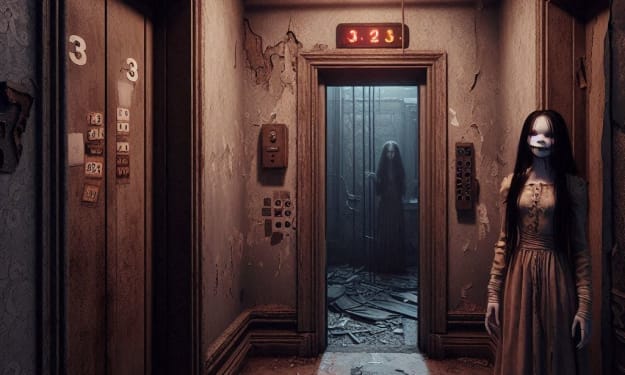
The Room That Shouldn't Exist
Samantha Winters had just turned 24 when she signed the lease on Apartment 3B in the Ashgrove Complex. It was one of those older buildings—red-bricked, slightly crooked, with creaky staircases and ivy crawling up the sides like green veins.
By Silas Blackwoodabout a year ago in Horror
The Last Goodbye: How Flight AI171 Became Every Family's Worst Nightmare
It was supposed to be just another flight from Ahmedabad to London. Families heading home, tourists wrapping up their Indian adventures, business travelers making their routine journeys. Nobody on Air India Flight AI171 could have imagined that Thursday afternoon would mark one of aviation's darkest days in over a decade.
By Fathima Haniffaabout a year ago in Horror
The Whispering Well
Nestled deep in a forest so dense that the sun hardly touched the ground, the settlement of Shonirgram sat shrouded in stillness. Only old trees and dwindling memories remained of the place, which had been forgotten by time. The remaining peasants were elderly, cautious, and constrained by hushed cautions that had been passed down through the ages. A stone well in the center of the village was fractured and covered in moss. The locals referred to it as "the spring of Murmurs." Nobody ventured to approach it. They asserted that it uttered names, secrets, and profanities in voices that were not those of the living while whispering at night. They said that Leela, a healer who was charged with witchcraft more than a century ago, had passed away there. She had been pushed into the well by the terrified townspeople. Before the silence overcame her, she had screamed for hours. She began to whisper to anyone who came close to the well after that day, pleading for her release or, worse, promising companionship.
By Ahnaf Fardin Khanabout a year ago in Horror
Snakes on a Plane
It was a sunny morning in July when Flight 407 took off from Bangkok, Thailand, heading to Tokyo, Japan. The plane was full of travelers—families going on vacation, business people with laptops open, and kids excited to fly through the clouds. Everything seemed normal. The seatbelt sign turned off, and passengers began to relax, eat snacks, and enjoy the view from above. But nobody knew that something very unexpected was about to happen—something that would turn this peaceful flight into a sky-high adventure.
By ibrahim khanabout a year ago in Horror
The Tarim Mummies
Introduction Deep in the arid deserts of China’s Xinjiang region lies one of archaeology’s most fascinating mysteries—the Tarim mummies. These remarkably preserved corpses, some over 4,000 years old, exhibit striking Caucasian features—blonde hair, tall stature, and woven woolen clothing—completely unlike the region’s modern inhabitants. Discovered along the ancient Silk Road, these mummies have sparked debates about prehistoric migration, lost civilizations, and cultural exchange. Were they early Indo-European settlers? A forgotten branch of humanity? This article explores their discovery, scientific analysis, cultural significance, and enduring mysteries. 1. Discovery of the Tarim Mummies A. First Encounters (Early 20th Century) European explorers like Sven Hedin and Aurel Stein first reported mummies in the Tarim Basin in the early 1900s. Local Uyghur and Kazakh herders had long known of the preserved bodies but considered them sacred. B. Major Archaeological Finds (1970s–1990s) Chinese archaeologists began systematic excavations in the 1970s. The Beauty of Loulan (1800 BCE), a 3,800-year-old woman with delicate European features, became the most famous mummy. Other key sites: Xiaohe, Qäwrighul, and Cherchen. C. Preservation Conditions The Tarim Basin’s dry, salty soil naturally mummified the dead. Some mummies were buried in boat-shaped coffins with felt coverings. 2. Who Were the Tarim Mummies? Physical & Genetic Evidence A. Unexpected European Features Tall stature (some men over 6 feet). Light hair (blonde, red, brown). High noses, deep-set eyes (resembling early Europeans or Indo-Iranians). B. DNA Studies: A Genetic Puzzle 1990s–2000s: Initial tests suggested European (Tocharian) ancestry. 2021 Harvard Study: Revealed they were a local, isolated population with ancient North Eurasian roots, not direct migrants from Europe. Controversy: Some Chinese scholars argue they were proto-Tocharians, linked to the later Tocharian languages of the region. C. Clothing & Textiles Woolen fabrics with tartan patterns (similar to Celtic designs). Felted hats, leather boots (indicating a pastoral lifestyle). Advanced weaving techniques (suggesting trade links). 3. The Tocharian Connection: A Lost Indo-European People? A. The Tocharians of History The Tocharians were an ancient Indo-European-speaking people in the Tarim Basin (1st millennium CE). Spoke Tocharian A & B, related to Celtic, Germanic, and Latin. Their origins were unknown until the mummies were discovered. B. Were the Mummies Proto-Tocharians? Some scholars believe the mummies represent an early Indo-European migration (before Tocharian languages developed). Others argue they were indigenous people who later adopted Indo-European culture. C. Linguistic Clues Later Tocharian texts (Buddhist manuscripts) suggest a long-established presence. No written records from the mummies’ era, so their language remains unknown. 4. Cultural & Historical Significance A. Evidence of Early Silk Road Exchange The mummies show trade connections between East and West long before the formal Silk Road. Textiles, tools, and burial customs resemble those of the Afanasievo culture (Siberia) and Andronovo culture (Central Asia). B. Challenging Historical Narratives Their existence contradicts the idea that ancient Xinjiang was solely East Asian. Suggests early multicultural interactions in Central Asia. C. Political Controversies The Chinese government downplays their "Western" features, emphasizing local origins. Uyghur activists sometimes claim them as ancestors, complicating modern ethnic politics. 5. Ongoing Mysteries & Research A. Unanswered Questions Where did they come from? (Local evolution or migration?) Why did they disappear? (Assimilation, climate change, or conflict?) What was their society like? (No large cities found, possibly nomadic.) B. New Scientific Techniques Isotope analysis (to trace diet and migration). Ancient protein studies (to understand health and lifestyle). More advanced DNA sequencing (to clarify ancestry). C. Future Excavations Many sites remain unexplored due to political sensitivities in Xinjiang. New discoveries could rewrite early Eurasian history. Conclusion: A Window into a Lost World The Tarim mummies are more than just preserved bodies—they are ghosts of a forgotten past, challenging our understanding of ancient migration, trade, and cultural exchange. Whether they were early Indo-Europeans, a lost branch of humanity, or an isolated indigenous group, their legacy continues to intrigue scientists and historians. As research advances, these enigmatic figures may yet reveal more secrets about the deep connections between East and West—long before empires and Silk Road caravans shaped history. Would you like additional details on any section, such as specific mummies or political debates?
By Silas Blackwoodabout a year ago in Horror