movie review
Movie reviews for horror fans; from gruesome bone-chillers to dark horror thrillers, a showcase for frightful films that seek to entertain and to terrify.
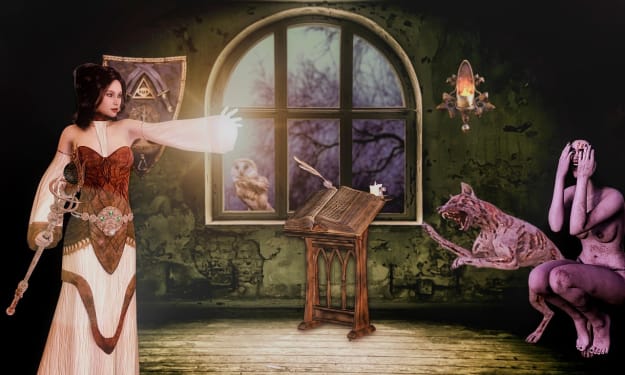
The Exorcism of Emily Rose
g(2005) is a standout horror film that masterfully weaves together elements of courtroom drama and supernatural dread. Directed by Scott Derrickson and featuring performances from Laura Linney, Tom Wilkinson, and Jennifer Carpenter, this movie is loosely inspired by the real-life story of Anneliese Michel, a young German woman who tragically underwent a series of exorcisms before her untimely death in 1976.
By Rashed khanabout a year ago in Horror
What would it be like if you saw someone else lying next to you in your sleep in the middle of the night?
When I got the new job, no one was happy. My mother said, “Don’t do this job, it’s not good to play with people’s deaths.” The people in the neighborhood laughed, and some whispered behind my back, “This boy has become a dom!”
By Ratul Shrikhabout a year ago in Horror
"Evil Dead Rise" – A Gory Fight Against Satanic Family Horror Movie Review
Horror fans, brace yourselves—"Evil Dead Rise" is here, and it doesn’t hold back. Directed by Lee Cronin, this latest installment in the Evil Dead franchise delivers relentless gore, spinechilling terror, and a fresh urban twist on the classic demonic possession tale. But does it live up to the legacy of its predecessors? Let’s dive in.
By M. K. Anandanabout a year ago in Horror
The Forgotten Door in Apartment 3B
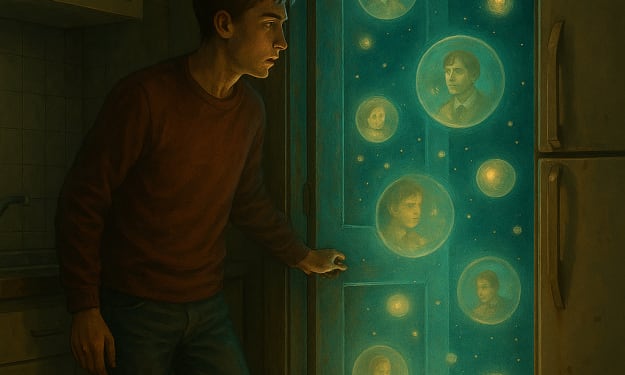
When I moved into apartment 3B, I wasn’t expecting magic — just cheaper rent. The building was old, the kind with peeling paint, dim hallway lights, and a musty smell that clung to the walls like an unwanted tenant. The landlord, Mr. Ahmed, was a quiet man in his 60s who wore the same brown sweater every time I saw him. When he handed me the keys, he paused and said something strange. “One rule: don’t open the door in the back of the kitchen.” I chuckled. “A secret door? Sounds like a horror movie.” He didn’t laugh. “Just leave it alone.” Naturally, that made me more curious. As soon as I settled in, I searched for it. Behind the fridge, partially hidden by an old wooden shelf, was a small door — no taller than three feet. It had no knob, just a dull bronze lock and a strange carving of an eye. A creepy, watchful eye. I tried to ignore it for a few days. But something about it unsettled me. At night, when the apartment was silent, I sometimes heard faint whispering — like wind through a crack. One night, during a thunderstorm, I heard it again, clearer this time. A voice. My voice. It was younger, lighter, and it said a single word: “Mama.” I froze. My mother had passed away six years ago. I hadn’t spoken that word in ages. I pressed my ear against the door. More whispers. Laughter. A lullaby she used to sing to me. The next day, I bought lockpicks and watched a dozen YouTube tutorials. It took me hours, but eventually, the lock clicked open. As I pulled the door, it didn’t creak — it sighed, like it had been holding its breath for years. Inside was a narrow hallway filled with a soft golden glow. Floating in the air were hundreds of orbs, each glowing like miniature suns. I stepped inside. The first orb hovered toward me. Inside it, I saw myself at age seven, riding a bike for the first time while my mother clapped from the sidewalk. I could hear her laughter, feel the wind on my face, the wobble of the handlebars. It was more than a memory — it was alive. Other orbs floated by. My childhood bedroom. My high school graduation. The day I got accepted into university. I was crying, overwhelmed. I hadn’t felt that in years. Then the darker orbs came. These shimmered in dull grey-blue, colder in tone. One showed the night my parents argued, my mother in tears. Another showed my first heartbreak — her back turned, walking away in the rain. The worst was my father’s funeral — the crushing silence, the way I couldn’t cry, even though I wanted to. I don’t know how long I stayed. Minutes? Hours? Days? Time was strange in that place. I started visiting the door every night. At first, I only watched the good orbs. But slowly, I found myself revisiting even the painful ones — just to feel something. Anything. But something began to change. I started forgetting small things. Where I left my keys. My co-worker’s name. I once stood in the grocery store and couldn’t remember what I liked to eat. One morning, Mr. Ahmed knocked. His expression was grim. “You’ve been going in,” he said. I nodded, ashamed. He opened his palm and showed me a tiny orb — swirling, dim. Inside was the faint image of a young boy. Frozen. Hollow-eyed. “He lived in 3B in 1983. Got lost in his memories. They took more than he was willing to give.” I locked the door that day. Nailed it shut. Moved the fridge back in front of it. For a while, things returned to normal. But even now, some nights, I hear my younger self humming a tune I’d long forgotten. And for a moment, I ache to open the door again. To remember her laugh. To feel something real. But I don’t. Because I know that door doesn’t just show memories. It takes them.
By Inamullah Afridiabout a year ago in Horror
Whispering Pines
Part 1: The Arrival There were seven of us—friends since college—craving adventure and escape from the noise of our busy lives. The mountains were calling, and we answered, planning a full week in the wilderness. We packed tents, food, torches, and spirits high with excitement. The first two days were pure bliss: laughter by the bonfire, warm cups of tea, and storytelling under a sky full of stars. On the third evening, things shifted. Dark clouds rolled in suddenly, as if summoned. Lightning cracked so close it made our bones rattle. Wind roared like a beast. Our tents tore away, spinning into the black sky like leaves. Rain hit us sideways. Chaos swallowed us whole. We grabbed each other, shouting through the storm. But the wind was stronger. It pulled us apart. I was thrown hard. When I woke, I was lying near a dense forest, soaked, shivering. Only Saddam lay beside me, groaning. The others—Zaid, Talha, Bilal, Hamza, Danish—were gone. --- Part 2: The Forest We yelled their names. Only silence replied. Saddam and I decided to find shelter. The forest ahead was thick, its trees twisted like they had grown in pain. Stepping inside was like entering another world—no birds, no wind. Just the sound of our wet shoes sinking into the mud. Soon, we heard it. Whispers. Like voices behind a thin wall. We turned. No one. The whispers grew louder but made no sense. Words without form. Sounds that crawled into our ears. Then, we saw it: a wooden cabin wrapped in vines. Its roof sagged, its windows fogged. But somehow, it stood strong against the storm. The door opened slowly as we approached, creaking like a scream held too long. --- Part 3: The Cabin Inside, the air was freezing, heavier than outside. Our flashlight flickered. Cobwebs clung to old furniture. A portrait hung crooked on the wall—a family of five, all smiling with eyes scratched out. We lit a small fire and tried to dry off. Saddam dozed off. I sat, listening. The whispers returned. But now, they were inside the cabin. Footsteps above us. Then, on the porch. Then… the door creaked again. I blinked. Saddam was gone. His sleeping bag was still warm. I screamed his name. Ran outside. Fog had swallowed the forest. From the trees, a shape emerged. A man… Saddam? No. His eyes were pitch black, his smile stretched unnaturally wide. “You shouldn’t have come,” he whispered, voice like dead leaves. I backed away. He vanished. --- Part 4: The Lost Ones I wandered through the forest, calling for the others. Echoes returned, but twisted—mocking versions of their voices. I found Zaid, standing completely still, eyes closed. I ran to him. “Zaid!” I shook his shoulder. He opened his eyes. “Too late,” he whispered. “The forest owns us now.” His skin cracked like dry bark. He crumbled into a pile of leaves. I screamed. The forest pulsed. It was alive. Not metaphorically—truly. Every tree was watching. Every root whispered. We hadn’t wandered in. We had been invited. Chosen. And it wasn’t done with me yet. --- Part 5: The Loop Every path I took led me back to the same fallen log. My flashlight dimmed. My watch stopped. There was no night or day. Just grey. I found a tree carved with names—ours. Beneath mine: “Not yet.” Suddenly, I saw Danish. He was climbing a tree silently. “Danish!” I yelled. He looked down. “Don’t speak. It hears you.” “What is it?” He pointed at the sky. “It used to be a god. Now it’s hungry.” Then he vanished into the leaves, like he was never there. I was breaking. My memories faded. My name felt strange on my tongue. --- Part 6: The Exit On what I believed to be the seventh day, I saw a narrow trail lined with white stones. They glowed faintly, like moonlight trapped in rock. I followed, numb and trembling. Suddenly, I was back on a road. A truck stopped. A man helped me inside. I tried to speak. Nothing came out. --- Part 7: Home? Now, weeks later, I sit in my room, writing this. No one believes me. The others were never found. Sometimes I see them in reflections. Sometimes I hear them calling me from the trees behind my house, though there are no forests nearby. Last night, my mirror fogged up on its own. In it, I saw Saddam. He smiled. “You never left.” And behind me, I heard the cabin door creak open again.
By Noman Afridiabout a year ago in Horror
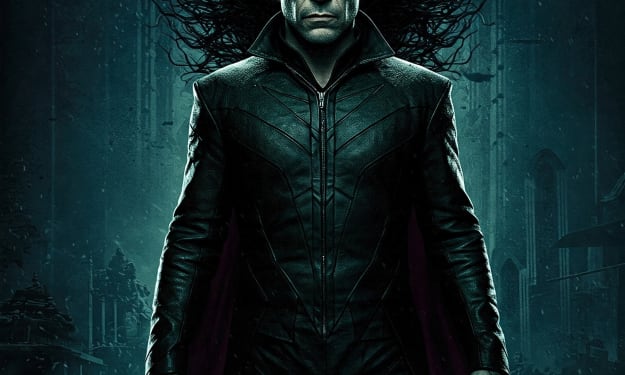
Morbius (2022): A Vampire Flick That Missed the Mark
🧬 Introduction: The Premise Morbius introduces us to Dr. Michael Morbius (Jared Leto), a brilliant scientist suffering from a rare blood disorder. In a desperate attempt to cure himself, he experiments with bat DNA, inadvertently transforming into a vampire-like creature with superhuman abilities and an insatiable thirst for blood. Directed by Daniel Espinosa, the film aims to blend horror elements with superhero tropes, expanding Sony's Spider-Man Universe.
By Kevin Hudsonabout a year ago in Horror
Madame Web (2024): The Web That Failed to Connect
Introduction: In a cinematic universe teeming with superheroes, multiverses, and time travel, Madame Web (2024) was Marvel and Sony’s attempt to weave something new into the Spider-Man franchise. Featuring Dakota Johnson in a mysterious, clairvoyant role, the film promised intrigue, suspense, and a bold new chapter for female-led superhero stories. But with overwhelmingly negative reviews and a meme storm flooding the internet, one has to ask: Is Madame Web really that terrible — or is there a misunderstood web underneath?
By Kevin Hudsonabout a year ago in Horror
The Woman at the Bridge
It was past midnight when my car rolled over the ancient wooden bridge—a narrow, creaking relic strung across a river lost in mist and time. I was returning from my grandmother’s funeral. The road through the countryside was empty, winding, and lonely. Rain kissed the windshield. My headlights caught glimpses of rusted road signs and tangled trees. Then I saw her. A woman standing by the bridge’s edge. Drenched. Barefoot. Motionless. She wore a white gown, the kind brides might wear in forgotten photographs. Her face was hidden beneath a soaked veil. I slowed down. Rolled my window down an inch. “Are you okay?” I called out. No reply. I pulled over. My conscience wrestled with my fear. She might be hurt… or worse, lost. I opened the door. The rain struck cold. My shoes sank into the wet wood of the bridge. As I approached, she slowly turned. Her face—blurred by the veil—seemed expressionless. But I felt it. A sadness. A weight. A chill deeper than the storm. “Do you need help?” I asked again. She lifted her hand… and pointed. Behind me. I turned instinctively. Nothing there. Just the curve of the road and shadows twisted by headlights. When I turned back— She was gone. I gasped. My heart hammered. She’d vanished into thin air. I rushed back to the car, locked the doors, and started the engine with trembling fingers. The moment I crossed the bridge, something changed. The rain stopped. The mist cleared. But the road ahead… wasn’t the same. It was darker. Narrower. The trees leaned inward, as if listening. The signs were in a language I couldn’t read. And my phone had no signal. Panic rose. I turned around, desperate to find the bridge again. But it was gone. No sign of it. As if I had never crossed it. As if it had never existed. Then I heard her. A soft whisper. From the backseat. “Help me…” I jerked around. The seat was empty. But the scent of roses—wet and wild—filled the car. “Who are you?” I shouted. The engine sputtered. The lights flickered. And then… she appeared again. Not outside. Inside the car. In the rearview mirror, her face emerged slowly from the shadows. The veil still covered most of it… but I could see her eyes now. Empty. Endless. “Don’t be afraid,” she said, though her voice felt like frost against bone. “You’ve crossed into my sorrow. And now you must witness it.” The car began to move on its own. The steering wheel turned. The pedals pressed. I wasn’t driving anymore. It took me through dark woods, past ancient cottages with candlelit windows, and towards a field where dozens of white dresses hung from trees—swaying like ghosts in the wind. We stopped near a small, broken house. “Come,” she whispered. I stepped out, feet dragging. Drawn by something invisible. My heart raced, my breath shallow. Inside, cobwebs danced. Dust hung in the air like smoke. On a crumbling table lay a photograph. A man. A woman. A bridge. A wedding. Then the woman from the photo appeared behind me. Not a ghost. Not alive. Something in-between. She spoke, tears falling without sound. “He promised to wait for me at the bridge… but the flood took him. The water rose. The world forgot.” I looked closer at the photo. The man… he looked like me. Same eyes. Same scar on the brow. “You carry his blood,” she said. “And that’s why I found you. You’re the only one who can help me cross.” “Cross what?” I asked. She looked out the window. “Peace.” Then she took my hand. It was cold, like snow in spring. We returned to the bridge—now visible again under a sky torn with stars. She stepped forward, barefoot, veil fluttering. As she reached the center, a blinding light enveloped her. She smiled. And vanished. I collapsed. When I awoke, I was parked by the side of the road. Morning light spilled over the hills. The bridge looked old, broken. Closed for years. A sign read: Condemned—Do Not Cross. But the tire marks on the bridge… were fresh. I never told anyone. Who would believe it? But sometimes, when it rains, and the fog rises— I hear a whisper. “Thank you…” And in the rearview mirror, just for a second, I see a veil flutter… and vanish.
By Noman Afridiabout a year ago in Horror