halloween
Get into the Halloween spirit; all about trick or treating, spooky costumes, Halloween decorations and haunted houses for October 31st and all year round.
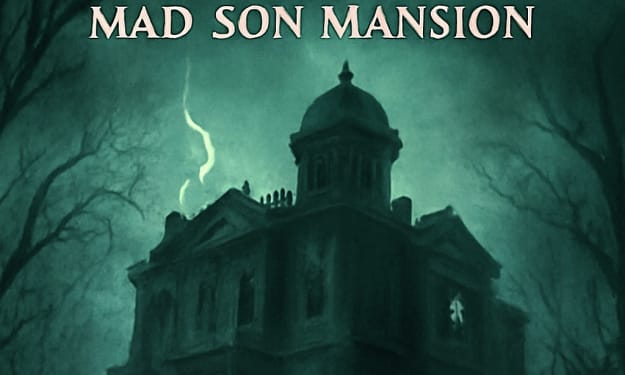
"Echoes of the Past: The Haunting of Madison Mansion"
Echoes of the Past: The Haunting of Madison Mansion A long time ago, there was a house that stood on the bay near Mobile, Alabama. It was known as The Madison Mansion, a once grand estate that had been abandoned and boarded up for years. The mansion stood silent, its dark history whispering through the walls, sending a chill to anyone who passed by. Its eerie reputation kept people away, but for those brave enough to venture close, they would hear tales so chilling, they were almost beyond belief.
By The Insight Ledger 11 months ago in Horror
Dead Inside and Out
Mina, Jackie, Lily, and Fiona have been the best of friends since they were babies. At least, that is what all their parents say. The four girls have been inseparable, which sometimes drives their families crazy, especially older siblings. Through parents divorcing, loss of other friends, deaths of family, bad grades, heartbreaks, and all the ups and downs, they have supported each other. Starting high school was great for the girls; they got all the same classes and even joined the same clubs. This Halloween was unexpected, and it would change these young ladies.
By Debra Blau11 months ago in Horror
The Walls of Silence.. AI-Generated.
The cramped, smoke-filled office of the Whitechapel police squad was a fragile refuge from the chaos outside. Files piled high on the table: victim records, witness statements, yellowed photographs. Sergeant Fielding scanned the notes with tired eyes while Harrow examined a map of the neighborhood, where several red dots marked the crime scenes.
By Horror story 11 months ago in Horror
The Walls of Silence.. AI-Generated.
In the silent office, the flickering light of an oil lamp cast dancing shadows on the walls. Sergeant Fielding leaned against his desk, his features drawn from fatigue and sleepless nights. His gaze wandered for a moment over the documents spread out before him.
By Horror story 11 months ago in Horror
The Walls of Silence.. AI-Generated.
In the early morning, life resumed its chaotic course in the streets of Whitechapel. The cries of street vendors mingled with the clatter of hooves on the cobblestones, while residents tried to forget the bitter cold of the night. Yet a whisper was already circulating, in hushed tones, from door to door.
By Horror story 11 months ago in Horror
The Dyatlov Pass Mystery. Content Warning.
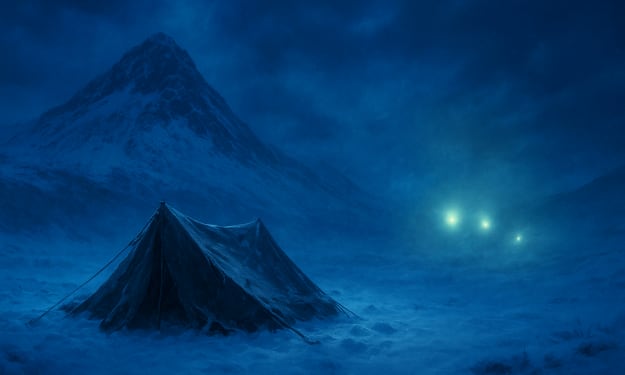
High in the icy wilderness of Russia’s Ural Mountains lies one of the most haunting mysteries of the 20th century — the Dyatlov Pass Incident. This case has baffled investigators, scientists, and conspiracy theorists for over six decades. It’s a story of courage, horror, and the unknown — a chilling reminder that even in our modern age, nature and mystery can still defeat logic. The Journey Begins In January 1959, a group of nine experienced hikers from the Ural Polytechnic Institute set out on a skiing expedition led by Igor Dyatlov, a 23-year-old engineering student. Their goal was to reach Otorten Mountain, a challenging but achievable route for seasoned adventurers. The team included seven men and two women, all skilled mountaineers. They carried journals, cameras, and supplies — documenting every step of their journey. But none of them would return alive. Days later, when they failed to make radio contact or return as scheduled, a rescue team was sent into the frozen wilderness. What they found still sends chills down the spine of anyone who hears the story. The Discovery of the Camp Searchers found the group’s tent abandoned and torn open from the inside on the snowy slope of Kholat Syakhl — a name that chillingly translates to “Dead Mountain” in the local Mansi language. Inside the tent were their belongings, boots, and warm clothing — everything they would have needed to survive in temperatures below -25°C. Yet, the hikers had fled barefoot or wearing only socks and light clothing into the snow. The first two bodies were discovered near a forest line under a cedar tree, barefoot and half-naked, as if they had been trying to start a fire. Three more bodies, including Dyatlov himself, were found between the tree and the tent — their positions suggesting they had been crawling back to camp. But the true horror lay ahead. A Scene of Unimaginable Horror It took two more months to find the remaining four hikers, buried under snow in a ravine deeper in the forest. Their deaths were far stranger than the others. One had a fractured skull, Another had severe chest injuries comparable to a car crash, A woman was missing her tongue and eyes, and Traces of radiation were found on some of their clothing. There were no signs of struggle or footprints from outsiders, and their injuries couldn’t be easily explained by an avalanche or animal attack. Investigators were left with more questions than answers. Theories That Shook the World Since 1959, dozens of theories have emerged — from the scientific to the supernatural — in an attempt to explain what really happened on that freezing night. 1. Avalanche Theory: In 2019, Russian authorities reopened the case and suggested that a small slab avalanche could have struck the tent, forcing the hikers to flee. However, the slope’s angle and the group’s experience made this explanation controversial. 2. Katabatic Wind: Some scientists propose that fierce, low-level winds (katabatic winds) may have caused panic and disorientation, forcing the group to abandon their tent in terror. 3. Soviet Military Experiments: Many believe the hikers stumbled upon secret Soviet weapons tests, such as parachute mines or radiological experiments, which could explain both the injuries and the radiation. 4. Infrasound Panic Theory: Another theory claims that infrasound — low-frequency sound waves generated by wind — caused intense fear, nausea, and irrational behavior, driving the group into a fatal frenzy. 5. Paranormal and Extraterrestrial Explanations: Others point to reports of orange orbs in the sky seen by witnesses that night. Could UFOs have been involved? Some believe so, arguing the hikers were victims of an encounter beyond human understanding. Why the Case Remains Unsolved Despite modern technology and countless investigations, no single theory perfectly explains every detail — the missing tongue, the radiation, the tent ripped from within, and the differing levels of trauma. The official Soviet investigation in 1959 concluded vaguely that the hikers died from “a compelling natural force.” This phrase only deepened the mystery and fueled global fascination. In recent years, forensic research and computer simulations have revisited the avalanche theory, suggesting that snow slabs could indeed cause blunt-force trauma similar to what was found. Yet even with these modern insights, many inconsistencies remain — leaving room for endless speculation. Legacy and Cultural Impact The Dyatlov Pass Incident has become a cornerstone of true mystery and horror storytelling. It has inspired books, documentaries, and films, including The Dyatlov Pass Incident (2013) and the Dead Mountain TV series. To this day, curious travelers trek to the remote site, where a memorial stone marks the final resting place of the nine victims. The pass itself was officially renamed Dyatlov Pass in honor of the group’s leader. But more than a memorial, it stands as a symbol of humanity’s eternal confrontation with the unknown — a place where bravery met something far beyond human comprehension. Conclusion The Dyatlov Pass Mystery endures as one of the most haunting unsolved enigmas of modern history. Whether it was a natural disaster, a secret experiment, or something supernatural, the truth remains buried beneath the snow. Over sixty years later, the icy winds of the Ural Mountains still whisper the same question — what really happened that night? Until someone finds the missing piece of the puzzle, the Dyatlov Pass will remain a frozen monument to fear, mystery, and the unexplainable power of nature.
By Haunted Secrets11 months ago in Horror
The Walls of Silence.. AI-Generated.
The icy night air bit into London's skin, creeping under clothing like a silent snake. In the narrow alleys of Whitechapel, gas lamps cast a flickering light on the damp cobblestones, splashing dirty yellow light on the dilapidated facades of the buildings. The thick, stubborn fog swallowed sounds and shapes, blurring the line between reality and shadow.
By Horror story 11 months ago in Horror
SEASON 3 - Whispers from the Lantern: The Keeper's Lament
Chapter 5 The drowned were not ghosts in the conventional sense. They were not transparent. They were not silent. They were wet, dripping apparitions of water and salt, their bodies bloated and decayed, their eyes hollow pools of despair. They moved with a slow, deliberate purpose, a profound, mournful sadness clinging to every movement. They were coming for them.
By Tales That Breathe at Night11 months ago in Horror
The Bermuda Triangle: The Atlantic’s Greatest Mystery. Content Warning.
Hidden in the vast blue expanse of the Atlantic Ocean lies one of the most mysterious regions on Earth — the Bermuda Triangle. This area, often called the “Devil’s Triangle,” has fascinated scientists, sailors, and conspiracy theorists for decades. Stretching between Miami (Florida), Bermuda, and San Juan (Puerto Rico), the Bermuda Triangle covers roughly 500,000 square miles of ocean where countless ships and aircraft have reportedly vanished without a trace. The Origins of the Legend The mystery of the Bermuda Triangle began to attract global attention in the mid-20th century. One of the earliest and most famous incidents occurred in 1945, when Flight 19 — a squadron of five U.S. Navy bombers — disappeared during a training mission. The pilots radioed in, reporting that their compasses were malfunctioning and that they were lost over the ocean. The rescue plane sent to find them also vanished, leaving behind no wreckage or survivors. Stories like these spread rapidly through the media, sparking the legend of a haunted oceanic zone where navigation fails, time distorts, and strange forces drag vessels into the deep. The term “Bermuda Triangle” itself was popularized in 1964 by journalist Vincent Gaddis, who wrote about the mysterious disappearances for Argosy Magazine. Unexplained Phenomena and Theories What makes the Bermuda Triangle so terrifying — and fascinating — is that no single explanation can fully account for all the reported events. Over the years, researchers and enthusiasts have proposed a variety of theories, ranging from scientific to supernatural. 1. Magnetic Anomalies: Some scientists believe the Triangle lies on a region where Earth’s magnetic field behaves unusually. This could cause compass readings to become unreliable, leading ships and aircraft dangerously off course. 2. Methane Gas Hydrates: Another popular theory suggests that methane gas bubbles trapped under the ocean floor could occasionally erupt, reducing water density and causing ships to sink suddenly without warning. 3. Human Error and Weather: Skeptics argue that most accidents are caused by human mistakes, storms, and rapid weather changes common in the region. The area is part of a major hurricane corridor, which could easily explain some of the mysterious disappearances. 4. Aliens and Time Portals: For believers in the paranormal, the Bermuda Triangle is more than a physical place — it’s a gateway to another dimension. Some claim UFOs use it as an entry point to Earth, while others believe it’s a portal in time and space that swallows anything unlucky enough to pass through. Famous Disappearances Over the decades, dozens of high-profile cases have been linked to the Triangle. Among them are: USS Cyclops (1918): A massive U.S. Navy cargo ship carrying 309 crew members vanished without a distress call. No wreckage was ever found. Star Tiger and Star Ariel (1948–1949): Two British airliners disappeared while flying near Bermuda in clear weather conditions. The Witchcraft (1967): A luxury yacht owned by Dan Burack disappeared just one mile off the coast of Miami. Burack had called the Coast Guard to report a minor issue, but by the time rescuers arrived, the yacht had completely vanished. Each of these cases adds to the Triangle’s dark reputation — a place where logic and science seem to fail. Scientific Investigations In recent decades, scientists have tried to demystify the Bermuda Triangle. Satellite data, modern GPS systems, and oceanic studies have found no consistent pattern of disappearances beyond statistical averages. The U.S. Coast Guard officially states that there is nothing supernatural about the region, and the number of incidents is proportionate to the amount of traffic passing through one of the world’s busiest shipping lanes. Yet, despite scientific explanations, the myth refuses to die. The Bermuda Triangle has been the subject of documentaries, books, movies, and endless online debates, fueling public fascination and fear. Cultural Legacy and Modern Mystery The Bermuda Triangle isn’t just an oceanic region — it’s a symbol of the unknown. It represents humanity’s enduring curiosity about what lies beyond our understanding. From Hollywood thrillers to YouTube conspiracy channels, the Triangle continues to inspire storytellers and investigators alike. Even with modern navigation and satellite tracking, strange incidents are still reported. Ships vanish, planes lose contact, and eerie lights are sighted dancing across the waves. Whether these are coincidences, natural phenomena, or something truly otherworldly, the legend of the Bermuda Triangle remains alive. Conclusion The Bermuda Triangle endures as one of the great unsolved mysteries of the modern world. Whether viewed through the lens of science or superstition, it captures our collective imagination — a place where the ocean guards its secrets fiercely. Beneath its shimmering surface, something ancient and unexplained seems to whisper: “Enter, if you dare.
By Haunted Secrets11 months ago in Horror
Slender Man: The Digital Legend That Haunts the Internet. Content Warning.
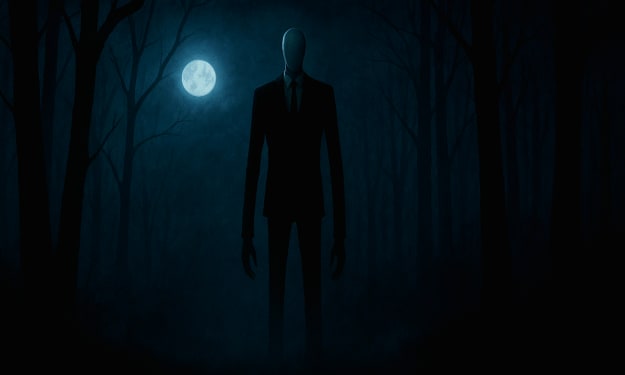
In the shadowy corners of the internet, where fiction and fear often blur, one figure has come to symbolize the dark side of digital folklore — Slender Man. Tall, faceless, and impossibly thin, dressed in a black suit and tie, he is a creation born not from ancient myth, but from the imagination of the internet age. Yet, despite his fictional origins, Slender Man has transcended screens and stories, embedding himself into modern culture — and even inspiring real-world tragedy. This is the story of how an image on a message board became one of the most chilling and influential urban legends in American history. The Birth of a Digital Monster Slender Man first appeared in June 2009 on the online forum Something Awful, during a contest where users were challenged to create creepy, photoshopped images. A user named Eric Knudsen, under the pseudonym Victor Surge, submitted two haunting black-and-white photos depicting a tall, thin man standing in the background behind children. Accompanying the images were eerie captions suggesting that the mysterious figure was responsible for the disappearance of several children. The combination of the photos and the story sparked the imagination of thousands. Within days, users across the internet began adding their own details — eyewitness accounts, supposed newspaper clippings, and diary entries — turning Slender Man into a collaborative myth. The Anatomy of Fear What made Slender Man so terrifying was not what was known about him — but what wasn’t. Described as an unnaturally tall humanoid, often said to have tentacle-like appendages, a featureless white face, and the ability to cause paranoia and hallucinations, Slender Man quickly became an icon of modern horror. He was said to stalk children, manipulate their minds, and lure them into the woods where they were never seen again. Some stories claimed he could appear anywhere, often near forests, abandoned buildings, or even through digital screens. His presence was marked by static interference, lost time, and an overwhelming sense of dread. This open-ended mythology allowed internet users to expand the story endlessly. Blogs, YouTube channels, and online forums filled with alleged sightings and survivor accounts — blurring the line between reality and fiction. The Slenderverse and Cultural Explosion As the legend grew, Slender Man became a cornerstone of what fans dubbed the “Slenderverse” — a collection of online horror stories, videos, and games inspired by the character. The most famous of these is the YouTube series Marble Hornets, launched in 2009. Presented as found footage, it follows a filmmaker who begins documenting strange occurrences after meeting a mysterious figure known as “The Operator” — clearly inspired by Slender Man. The series’ slow-burn tension, grainy aesthetic, and viral nature helped establish the creepypasta genre as a new form of digital storytelling. Soon after, video games like Slender: The Eight Pages (2012) brought the terror to players directly. The simple premise — collect eight pages scattered through a dark forest while avoiding Slender Man — proved terrifyingly effective. The game’s sound design, visual distortion, and sudden jump scares made it an internet sensation, turning Slender Man into a pop culture phenomenon. The Real-World Tragedy However, the Slender Man myth took a dark turn in 2014 when two 12-year-old girls from Wisconsin lured their friend into the woods and stabbed her nineteen times, claiming they did it to “please Slender Man.” The victim miraculously survived, but the case shocked the world. The incident highlighted the powerful influence of online myths on young minds and sparked national debates about the impact of internet horror on children, the line between fiction and obsession, and the responsibility of digital communities. Following the event, websites like Creepypasta Wiki issued statements reminding readers that Slender Man was entirely fictional — yet the damage had been done. The legend had stepped beyond the realm of imagination into the real world. The Psychology Behind the Legend Experts believe Slender Man’s enduring terror lies in psychological archetypes. His facelessness triggers a deep-seated fear of the unknown, while his impossible proportions evoke unease and helplessness. He embodies the fear of being watched, followed, or controlled — anxieties that mirror our own relationship with the digital world. Moreover, the collaborative nature of his story reflects how modern myths are created and spread. Instead of oral tradition, today’s legends evolve through memes, social media, and shared creativity, proving that the internet has become the new campfire around which we tell our scariest stories. Slender Man in Pop Culture Slender Man’s influence spread far beyond internet forums. He has inspired books, documentaries, and Hollywood films, including the 2018 movie Slender Man, as well as countless fan-made projects. His image has become a symbol of digital-age horror — clean, minimalist, yet deeply disturbing. Even after more than a decade, new stories, games, and art continue to explore his myth, ensuring that the Slender Man phenomenon remains alive in online culture. The Modern Boogeyman Slender Man represents a new kind of monster — one born not from folklore or superstition, but from pixels and imagination. He is the boogeyman of the internet generation, thriving on anonymity, viral storytelling, and our collective fear of what hides in the digital dark. His legacy is a reminder that myths evolve with technology. Where once we feared the dark forests, now we fear the shadows lurking behind our screens. Slender Man is not just a story — he’s a reflection of how the internet can create, shape, and sustain fear on a global scale. Conclusion More than a decade after his creation, Slender Man continues to haunt the imagination of millions. Though fictional, his legend serves as a cautionary tale about the power of the internet — to connect us, to entertain us, and sometimes, to terrify us. In a world where stories spread faster than truth, Slender Man stands as the perfect ghost of the digital age — a faceless symbol of fear, obsession, and the unknown.
By Haunted Secrets11 months ago in Horror