fiction
Horror fiction that delivers on its promise to scare, startle, frighten and unsettle. These stories are fake, but the shivers down your spine won't be.
Blue Whale
It started as a dare. Kane had seen the whispers online, the warnings, the horror stories. But he was skeptical, a thrill-seeker, always looking for something to push him beyond the mundane life of school and work. When he stumbled upon a link for the Blue Whale Challenge, a series of tasks supposedly curated by a shadowy "game master," he brushed off the warnings and clicked.
By Tawfique Alif2 years ago in Horror
Midnight Laughter
Roy Johnson was a working class English man, one who hated his job because it paid so little, while he was simultaneously treated like dirt. His job was in a depressing little factory, one where the staff were rude, mean and short tempered. The lighting here was dim and dingy, an ugly urine yellow colour seemed to emit from every flickering lightbulb and the place stunk the same way it looked. The building was ancient and mouldy with decay, dust covered almost every surface all around him and nobody bothered to brush or mop the floors. So not even the ground he walked on was nice and smooth, instead it was grotesque, sticky and stained black and brown like the insides of an abandoned toilet bowl. The whole place was a dump and in great need of renovation. Roy was supposed to get paid minimum wage, but the company was so incompetent (perhaps on purpose) when it came to reporting work hours, the poor man still got underpaid from time to time. When he first began his hellish job here, he used to demand his payments be amended. They would reluctantly pay him back what he was owed eventually, but it would always happen and get confusing every month or two. The bosses would demand more of him if he tried to get his fair pay too and most of the staff simply didn't bother to go through all that annoying hassle, just to make a few extra pounds a month. It simply wasn't worth the effort or grief of going through all of that work politics and angering the toxic upper management, the underlings here learnt to just take this financial abuse and keep to themselves, it was better to be alone and unnoticed than cause a fuss. Roy hated working here just like everyone did, yet he was a man with very little work experience and his social skills were terrible also, so this god awful job was his only real choice in life. He was trapped and getting ripped off too, the factory was a living hell to work in. The building looked like a 1970s prison from outside, with its rusty metal walls and broken brick walls, that had huge gaping holes in them. There was this huge metal fence that stretched all around the complex, with razor sharp barb wire on top of them. This only added to the oppressive mood and appearance of this hellhole that Roy called his workplace. The shifts were way too long as well and his job consisted of doing the exact same task for 10-12 hours a day at nauseam. Roy would pack beer bottles into a cardboard box and send them down the conveyor belt. Then he'd do it again and again and again. Sometimes he'd pack beer cans into a cardboard box instead, then send them down the conveyor belt again and again. It was tedious and boring, not to mention exhausting. Every now and then, a boss half his age would march up and down the aisles screaming at anyone who looked too tired or worked too slowly. Roy was no exception to this humiliation, as a 'boy' (at least compared to Roy's age) named Mickey was the most notorious and arrogant of the bosses here. His childish name matched his punchable, young baby face. The kid just finished university at 19 and got his first job here, before his twentieth birthday. The little mouse didn't know a damn thing about real hard work! Not a god damn thing! He was a whiny little shit! With the voice of a kitten and the screams of a newborn baby. His voice wasn't intimidating, just annoying and stinging to the ear drums. For some reason, Mickey seemed to have a particular hatred for Roy, or so it seemed that way. Roy hated to admit, that the thoughts of murder always entered his mind when that 'child' was on shift, acting tough and smarter than everyone else. Roy had seen at least a hundred 'real men' get fired, after roaring at Mickey, the posh kid would run crying (literally) to his own bosses and the brave workers who dared to rage against that little brat were immediately discharged from service. Roy needed this job, more than anything, otherwise he'd be homeless by next winter and that seemed a far worse fate than packing beer boxes for hours on end. So he'd resist his urge to strangle the tiny man, allowing his so-called 'boss' to belittle and punish him for the pettiest of reasons. Mickey constantly changed his rules and work techniques on the flip of a dime, saying the beer bottles needed packing first, only to come back demanding the beer cans be packed instead. It was clear to everyone, that Mickey was as clueless as the boss before him. The company kept hiring dumb kids straight out of 'higher education' to order around the 'less educated' workers. Yet what the clowns running the show failed to understand, time and time again, was that somethings couldn't be learnt from behind a computer screen or by studying a spreadsheet. Packing boxes required speed, strength and endurance. There weren't any 'unique' or 'clever' methods behind such a task, all that was required was good hard manual labour. A little brat like Mickey telling forty to fifty year old hard, working class men with decades of experience how to 'properly pack a box in the most efficient and secure fashion' was completely unnecessary, at least according to Roy. If anything, Mickey slowed down production rates dramatically by stepping in and interfering every five seconds.
By Joseph Roy Wright2 years ago in Horror
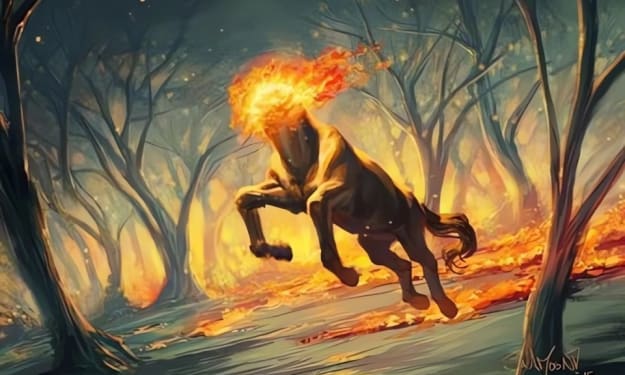
The Headless Mule
In the rich landscape of Brazilian folklore, the tale of the "Headless Mule," known as Mula sem Cabeça in Portuguese, remains a source of intrigue for audiences of all ages. This mythical being, which roams the rural areas of Brazil with its blazing breath and resounding hooves, embodies both fascination and fear. Let us explore the origins, symbolism, and cultural significance of this remarkable supernatural narrative. The story of the Headless Mule has its origins in Brazil's colonial era, with roots that stretch back several centuries. It is believed to be a blend of Indigenous folklore and European traditions introduced by Portuguese colonizers and African slaves. Many think that this legend was created to deter immoral conduct, particularly within the Catholic-centric society of colonial Brazil.
By A História2 years ago in Horror
La Lorona
It was a humid, sticky night when Isabella and her little brother Marco wandered down the trail that led to the river. Their family had just moved to the small Mexican town, and though Isabella was only twelve, she was already tired of babysitting Marco. But when he begged to see the river under the moonlight, she finally agreed—if only to escape the cramped silence of their new home.
By Tawfique Alif2 years ago in Horror
Nightfox Reports: Got Brains?. Content Warning.
Today I have another tale to tell, a tale of decapitation, a mad scientist, and Section 8 housing, and it takes place right here in the suburban paradise of the San Fernando Valley, specifically the little community of North Hills, just north of Van Nuys. I was riding my skateboard down Nordhoff Street this afternoon and missing all the hookers that used to hang out on Sepulveda Boulevard before the big crackdown a year or two ago, when I saw some five-ohs racing down Nordhoff Street and turning (illegally) onto Columbus Avenue (a.k.a. Crack Alley), sirens blaring like a pack of howling wolves. One unit after another raced around the corner and went shooting down the street. My immediate thought was that something very, very bad must be happening and I should definitely not go near Columbus Avenue. I should just continue on to the local library to return my books and then head home to study and check my stocks on the internet like any normal person would. So of course I turned onto Columbus and followed the line of police cruisers…
By Samuel Wright2 years ago in Horror
Abyssal Ascent (Part II). Top Story - November 2024. Content Warning.
Ramona and Ingvar walk down the quiet, cobweb drenched halls of Hyperion’s research station. There’s a long moment of silence as the two investigate the haunting structure. There was ample evidence that whatever lifeforms had taken over the station were alien, hostile, and operated with invasive intent. “Why does it feel like you don’t care if you live or die anymore, Mona?”
By Siowas Strange2 years ago in Horror
Understanding Food Poisoning: Causes, Symptoms, and Duration
The Causes, Symptoms, and Duration Food Poisoning Food contamination, otherwise called foodborne disease, is a typical yet troubling condition brought about by devouring sullied food or refreshments. It can be caused by pathogens like bacteria, viruses, and parasites as well as the toxins they produce. Grasping the causes, side effects, and span of food contamination can help you oversee and forestall this undesirable experience.
By Unfiltered Guy2 years ago in Horror
No Dogs in Philly: A Cyberpunk Horror Noir (1). Content Warning.
Saru had ignored the calls from the Philadelphia Daily, the call from Frank Galloway to appear on Wake Up, Idiots!, the call from Lorelei Ilesella to be interviewed on Tonight Tonight, and even a call from Mayor Whitlow’s press secretary requesting a photo op.
By Andy Futuro2 years ago in Horror
The Evolution of Japan’s Urban Legends: From Kuchisake-Onna to Modern Myths
Urban legends have a special place in the cultural landscape, and Japan has its own chilling tales that have spread across generations, creating a mix of fear, fascination, and curiosity. One of the most infamous of these is the story of the kuchisake-onna, or "slit-mouthed woman," a terrifying figure who appears to unsuspecting people and asks a simple, yet horrifying question: "Am I pretty?" Behind the mystery of the kuchisake-onna, though, lies a larger story of how Japan's urban legends have evolved, impacted by modern culture, technology, and societal changes. The Legend of the Slit-Mouthed Woman The tale of kuchisake-onna has become one of Japan’s most well-known urban legends, with roots dating back to the late 1970s. The story usually follows the same format: a woman, often wearing a face mask, approaches a passerby—usually a child—and asks if they think she is beautiful. If the person says yes, she removes the mask to reveal her face grotesquely cut from ear to ear. Depending on the response, the person may suffer terrible consequences. What makes this tale so frightening is its simplicity and the familiarity of the masked woman, an everyday figure made horrific. The origins of this legend seem to have begun in a rural town in Gifu Prefecture when rumors spread about a woman with a slit mouth being seen in the area. Children passed the story around, each version adding new details, such as her wearing a red coat or holding a sickle. As the rumor gained traction, it spread beyond the town, moving rapidly through school districts and eventually the entire country. The story took on a life of its own, fueled by children attending cram schools and returning home late at night, their imaginations heightened by seeing strangers in the dark streets. By 1979, the story of the kuchisake-onna had spread nationwide, and the fear was so palpable that parents and teachers organized patrols to keep children safe. While the hysteria eventually died down, the kuchisake-onna legend left a lasting impression, becoming one of Japan’s most recognized modern folklore figures. The Role of Cram Schools and Social Changes The rise of the kuchisake-onna urban legend can also be linked to societal changes happening in Japan during the late 1970s. Cram schools were becoming increasingly popular, and children from different areas would gather, share stories, and spread rumors more quickly than ever before. The fear of walking home late at night after cram school made these stories even more intense. Children were not just scared of kuchisake-onna as a character, but of the dangers that lurked in the night streets, filled with unfamiliar adults and strangers. The legend also coincided with a period of rapid urbanization in Japan. Families were acquiring televisions, cars, and telephones, bringing about a new way of living. This shift in lifestyle added to the backdrop of anxiety, giving birth to legends like the kuchisake-onna, who represented a mysterious figure from the night that could cross paths with anyone. The Rise of Urban Legends in Modern Japan The term "urban legend" entered Japanese vocabulary in the late 1980s, introduced by American folklorist Jan Harold Brunvand, whose work on strange tales in the United States inspired Japanese researchers to investigate contemporary folklore. The phrase refers to modern, bizarre, but believable stories set in urban environments. These legends often have a mix of truth and fiction, where everyday situations turn terrifying, like the famous "vanishing hitchhiker" or the killer under the bed. In Japan, this concept took off quickly, especially among the youth. In the 1980s, rumors spread not only about mysterious creatures but also about everyday objects becoming sources of good fortune or bad luck. For example, Lotte’s Koala’s March cookies became a hit after rumors circulated that finding a koala with eyebrows on the packaging meant you’d have a lucky day. Companies soon capitalized on these trends, using urban legends as marketing tools. The Boom and Decline of 1990s Urban Legends In the early 1990s, Japan saw an explosion of urban legends, from cursed trucks with magical powers to couples doomed to break up if they rode in a boat together. Magazines and television shows covered these stories extensively, making them a part of popular culture. One bizarre tale introduced by the teen magazine Popteen was the “human-faced dog,” a creature that supposedly had the face of a middle-aged man and could run faster than cars. Despite the popularity of these stories, by 1995, the era of urban legends started to fade. Real-world tragedies like the Kobe earthquake and the Tokyo sarin gas attacks brought a sense of gravity and somberness to the country, making tales of ghosts and monsters feel out of place in the national conversation. The media began to shift its focus away from the supernatural, and the once-thriving world of urban legends quieted down. The Internet and the Second Wave of Urban Legends With the arrival of the internet in the 2000s, urban legends saw a revival. Websites and blogs dedicated to gathering and sharing these stories brought them back to life, and people who had grown up with legends like the kuchisake-onna found a new platform to discuss and relive these terrifying tales. Forums like 2channel became the breeding ground for new legends, including stories like kunekune, a ghostly figure seen in rice fields, and Hasshaku-sama, a towering woman who haunted rural areas. One particularly famous tale, "Kisaragi Station," began as a series of posts on a message board. A user claimed they had gotten off a train at a station that didn’t exist, sparking an ongoing story of a mysterious, otherworldly location that captivated internet users. These digital stories grew with each new contribution, forming a new type of collective folklore. Global Influence and Changing Nature of Urban Legends As urban legends traveled online, they began crossing borders. The kuchisake-onna legend, for example, made its way to South Korea, where it took on new characteristics, like the idea that the slit-mouthed woman could not climb stairs. This blending of cultures added layers to the original stories, adapting them to fit different societies. Yet, as more people turn to isolated corners of the internet, some folklorists worry that urban legends are changing in ways that could diminish their cultural significance. Online, stories can be copied word for word or altered completely with a single click. This instant, worldwide spread has led to fewer variations and fewer chances for stories to evolve naturally through oral tradition. The Legacy of Japan’s Urban Legends From the kuchisake-onna to modern internet horror stories, Japan’s urban legends reflect both the fears and the cultural changes of their times. They grow out of societal anxieties, whether it's fear of strangers or the unknown possibilities that come with new technology. These stories evolve, adapt, and continue to find new ways to scare and captivate, blending tradition with modern life. Urban legends like the kuchisake-onna will always have a place in Japan’s cultural memory, even as they change with the times.
By Viru Chauhan2 years ago in Horror