celebrities
From Hitchcock to Stephen King, a roundup of the who's who in horror; all about celebrities flaunting their loudest screams and most nightmarish scenes.
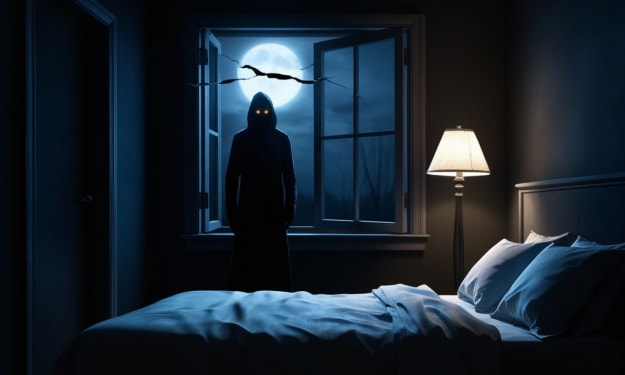
The shadow. AI-Generated.
Amtola was the name of the quiet village, which was far from the city, surrounded by ancient trees, and had an eerie silence. At the village’s edge stood a centuries-old, crumbling mansion: Chandan Villa. Even during the day, people avoided going near it. The road that leads there was completely empty at night. A young writer by the name of Jack came from the city about a year ago, looking for ideas for his next book. The tranquil village seemed perfect for him because he valued solitude. However, he had no idea what lay ahead. Jack chose to stay in Chandan Villa itself. He was warned by the villagers, "Sir, that house has a curse on it. People enter but never exit. Teertho replied with a grin, "There are no ghosts." The mind alone can create fear. The first night went by without a hitch. The second did as well. However, on the third night, he was awoken by an odd creaking sound. He looked at his watch—it was 2:00 a.m. Grabbing his flashlight, he stepped out of his room. In the dim moonlight, the corridor was faintly visible. Suddenly, he noticed a shadowy figure in the far corner. It had no face or distinct features—just a dark silhouette, completely still yet clearly aware of his presence. Without a sound, it glided toward the old well… and vanished. The next morning, Jack asked an elderly villager, “Does anyone still use that well?” "That's where Rose, the zamindar's daughter, took her own life," the man responded. A cruel man had orchestrated her marriage. One night, she jumped into the well. Since then, her shadow has been seen wandering around. People say she’s still searching for her lost love…” Jack made the decision to go back to the well the next night out of a sense of empathy and curiosity. The shadow reappeared, this time more clearly, as he waited in silence. A woman with sad eyes and long, disheveled hair in a white, wet sari. Jack calmly asked, "Who are you?" despite his fear. The figure didn't say anything. She turned slowly toward the well. Just before disappearing into the mist, Jack heard a faint whisper: “My love… Will you return…?” He realized that this was more than just a haunting; it was the agony of a soul entwined in love that never came. The next day, he searched the village archives and discovered that Rose had fallen in love with a humble music teacher. The zamindar, her father, was against the relationship. Rumor had it the teacher had vanished mysteriously. Many people thought that the zamindar had killed him. Determined to help Rose’s soul find peace, Jack returned that night with an old sitar. Sitting beside the well under the moonlight, he began playing the teacher’s favorite raag. The melody drifted through the night like a prayer. Soon, the shadow returned. She moved closer—her eyes now filled with longing, not grief. Suddenly, a gust of wind swept across the courtyard. From deep within the well, a voice echoed: "Rose... I'm here..." Jack watched in awe as another shadowy figure emerged—tall, gentle, and familiar to her. Slowly, the two shadows got closer to one another. The moonlight became more brilliant. Like mist blending into the dawn, the shadows embraced in the stillness and slowly rose into the sky together. The next morning, when Jack shared what had happened, an old villager said softly, “What we couldn’t do for a hundred years, you have done, sir. You brought peace to a restless soul.” Jack didn’t spend another night in that house. He had come in search of a story, but he found a truth instead: some spirits don’t want to harm—they simply seek peace. And true love… endures, even beyond death.
By Mohammad Shariful Islamabout a year ago in Horror
Night Teeth: Volume IV
The Bloody Evolution of a Cult Vampire Saga The Night Teeth series has carved its name into the modern vampire genre with its sleek visuals, neon-noir aesthetic, and high-octane action. Now, with Volume IV, the franchise takes a darker, deeper dive into its mythos—blending urban horror, crime thriller elements, and a fresh wave of undead intrigue. This article explores everything we know (and theorize) about Night Teeth: Volume IV, from its plot leaks, returning characters, stylistic shifts, and how it fits into the growing vampire renaissance in film and TV. • What Is Night Teeth? A Quick Recap
By Silas Blackwoodabout a year ago in Horror
The Tarim Mummies
Introduction Deep in the arid deserts of China’s Xinjiang region lies one of archaeology’s most fascinating mysteries—the Tarim mummies. These remarkably preserved corpses, some over 4,000 years old, exhibit striking Caucasian features—blonde hair, tall stature, and woven woolen clothing—completely unlike the region’s modern inhabitants. Discovered along the ancient Silk Road, these mummies have sparked debates about prehistoric migration, lost civilizations, and cultural exchange. Were they early Indo-European settlers? A forgotten branch of humanity? This article explores their discovery, scientific analysis, cultural significance, and enduring mysteries. 1. Discovery of the Tarim Mummies A. First Encounters (Early 20th Century) European explorers like Sven Hedin and Aurel Stein first reported mummies in the Tarim Basin in the early 1900s. Local Uyghur and Kazakh herders had long known of the preserved bodies but considered them sacred. B. Major Archaeological Finds (1970s–1990s) Chinese archaeologists began systematic excavations in the 1970s. The Beauty of Loulan (1800 BCE), a 3,800-year-old woman with delicate European features, became the most famous mummy. Other key sites: Xiaohe, Qäwrighul, and Cherchen. C. Preservation Conditions The Tarim Basin’s dry, salty soil naturally mummified the dead. Some mummies were buried in boat-shaped coffins with felt coverings. 2. Who Were the Tarim Mummies? Physical & Genetic Evidence A. Unexpected European Features Tall stature (some men over 6 feet). Light hair (blonde, red, brown). High noses, deep-set eyes (resembling early Europeans or Indo-Iranians). B. DNA Studies: A Genetic Puzzle 1990s–2000s: Initial tests suggested European (Tocharian) ancestry. 2021 Harvard Study: Revealed they were a local, isolated population with ancient North Eurasian roots, not direct migrants from Europe. Controversy: Some Chinese scholars argue they were proto-Tocharians, linked to the later Tocharian languages of the region. C. Clothing & Textiles Woolen fabrics with tartan patterns (similar to Celtic designs). Felted hats, leather boots (indicating a pastoral lifestyle). Advanced weaving techniques (suggesting trade links). 3. The Tocharian Connection: A Lost Indo-European People? A. The Tocharians of History The Tocharians were an ancient Indo-European-speaking people in the Tarim Basin (1st millennium CE). Spoke Tocharian A & B, related to Celtic, Germanic, and Latin. Their origins were unknown until the mummies were discovered. B. Were the Mummies Proto-Tocharians? Some scholars believe the mummies represent an early Indo-European migration (before Tocharian languages developed). Others argue they were indigenous people who later adopted Indo-European culture. C. Linguistic Clues Later Tocharian texts (Buddhist manuscripts) suggest a long-established presence. No written records from the mummies’ era, so their language remains unknown. 4. Cultural & Historical Significance A. Evidence of Early Silk Road Exchange The mummies show trade connections between East and West long before the formal Silk Road. Textiles, tools, and burial customs resemble those of the Afanasievo culture (Siberia) and Andronovo culture (Central Asia). B. Challenging Historical Narratives Their existence contradicts the idea that ancient Xinjiang was solely East Asian. Suggests early multicultural interactions in Central Asia. C. Political Controversies The Chinese government downplays their "Western" features, emphasizing local origins. Uyghur activists sometimes claim them as ancestors, complicating modern ethnic politics. 5. Ongoing Mysteries & Research A. Unanswered Questions Where did they come from? (Local evolution or migration?) Why did they disappear? (Assimilation, climate change, or conflict?) What was their society like? (No large cities found, possibly nomadic.) B. New Scientific Techniques Isotope analysis (to trace diet and migration). Ancient protein studies (to understand health and lifestyle). More advanced DNA sequencing (to clarify ancestry). C. Future Excavations Many sites remain unexplored due to political sensitivities in Xinjiang. New discoveries could rewrite early Eurasian history. Conclusion: A Window into a Lost World The Tarim mummies are more than just preserved bodies—they are ghosts of a forgotten past, challenging our understanding of ancient migration, trade, and cultural exchange. Whether they were early Indo-Europeans, a lost branch of humanity, or an isolated indigenous group, their legacy continues to intrigue scientists and historians. As research advances, these enigmatic figures may yet reveal more secrets about the deep connections between East and West—long before empires and Silk Road caravans shaped history. Would you like additional details on any section, such as specific mummies or political debates?
By Silas Blackwoodabout a year ago in Horror
I Am Legend
I Am Legend: Richard Matheson’s Groundbreaking Vampire Apocalypse (1954) Introduction: Few novels have reshaped horror and science fiction as profoundly as Richard Matheson’s I Am Legend (1954). From The Last Man on Earth (1964) to I Am Legend (2007), starring Will Smith, this gripping tale of the last man on Earth fighting vampire-like creatures redefined post-apocalyptic fiction and influenced generations of writers. But beyond its pop culture legacy, I Am Legend is a psychological masterpiece, exploring loneliness, survival, and what it truly means to be "monstrous." In this in-depth look, we'll investigate: I Am Legend's themes and plot
By Silas Blackwoodabout a year ago in Horror
Borley Rectory (1929)
Introduction Nestled in the quiet Essex countryside, Borley Rectory earned its reputation as "The Most Haunted House in England" after a series of terrifying paranormal events in the early 20th century. Built in 1863, the Gothic-style rectory became infamous in 1929 when The Daily Mirror published reports of ghostly apparitions, phantom footsteps, and unexplained phenomena witnessed by its inhabitants. But was Borley Rectory truly haunted? Or was it an elaborate hoax fueled by sensationalism? In this in-depth exploration, we uncover: ✔ The dark history of Borley Rectory ✔ Firsthand accounts of supernatural encounters ✔ Harry Price’s infamous investigation ✔ Theories—paranormal and scientific—behind the hauntings ✔ The legacy of England’s most notorious ghost story Chapter 1: The Sinister History of Borley Rectory The Cursed Land Long before the rectory was built, locals spoke of eerie happenings near Borley village. Legends included: A phantom coach driven by a headless horseman. A ghostly nun who wandered the grounds, supposedly murdered in the 13th century. Strange lights flickering in the woods at night. The Troubled Build (1863) When Rev. Henry Bull constructed Borley Rectory in 1863, odd occurrences began almost immediately: Unexplained knocking sounds in empty rooms. Servants reported shadowy figures moving through hallways. The Bulls’ children claimed to see a spectral nun peering through windows. The Foyster Family & Poltergeist Activity (1930–1935) The most intense hauntings occurred when Rev. Lionel Foyster, his wife Marianne, and their daughter moved in. Reported phenomena included: Objects flying across rooms. Messages scrawled on walls ("Marianne, please help get me out!"). Violent attacks—Marianne was once thrown from her bed. Chapter 2: Harry Price & The Infamous Investigation (1937–1938) Enter the Ghost Hunter Harry Price, a flamboyant paranormal investigator, took interest in Borley after reading about the Foysters’ ordeal. In 1937, he rented the rectory for a year-long investigation, documenting: Over 2,000 paranormal incidents, including phantom footsteps and apparitions. Automatic writing sessions where spirits allegedly communicated. A séance where a spirit claimed the rectory would burn down—which later happened. The Borley Rectory Fire (1939) On February 27, 1939, the abandoned rectory mysteriously caught fire. Witnesses reported: A shadowy figure seen in an upstairs window as flames spread. Unexplained sounds of bells ringing—though the church bells were removed. Ghostly faces captured in photographs of the ruins. Chapter 3: The Ghosts of Borley Rectory 1. The Phantom Nun Description: A veiled woman in black, seen walking near the rectory’s "Nun’s Walk." Legend: She was a French nun who fell in love with a monk; both were executed. 2. The Headless Coachman Description: A spectral carriage pulled by ghostly horses, heard but rarely seen. 3. The Spirit of Marie Lairre Harry Price claimed to contact her via séance—she allegedly confessed to being murdered in the rectory. 4. The Poltergeist Responsible for throwing objects, writing on walls, and violent attacks during the Foysters’ stay. Chapter 4: Skeptics vs. Believers The Case for a Hoax Marianne Foyster was later accused of fabricating events. Harry Price had a history of sensationalism; some believe he staged phenomena. Natural explanations: Rats, drafts, and creaky floorboards could explain some "hauntings." The Paranormal Evidence Multiple witnesses, including journalists and clergy, reported unexplainable events. The fire prophecy—was it coincidence or supernatural foresight? Modern ghost hunters still detect anomalies at the site. Chapter 5: Borley Rectory’s Legacy In Pop Culture Inspired books like The Haunting of Borley Rectory (1940). Featured in TV shows (Most Haunted) and documentaries. The Site Today The rectory was demolished, but the church and grounds remain. Visitors still report cold spots, shadow figures, and ghostly whispers. Conclusion: Fact or Folklore? Borley Rectory remains one of history’s greatest ghost stories. Whether a masterful hoax or a true paranormal hotspot, its legend endures.
By Silas Blackwoodabout a year ago in Horror
Cultural Impact
Introduction Culture is not static—it evolves through art, music, literature, and media. From ancient myths to modern Netflix series, stories influence how we think, behave, and perceive the world. But what exactly is cultural impact? How do films, books, and social media reshape societies? And why do some stories endure for centuries while others fade?
By Silas Blackwoodabout a year ago in Horror