book reviews
Book reviews for horror fans; weather a sleepless night with literary accounts of hauntings, possessions, zombies, vampires and beyond.
Right on Time
I had always pictured "due date" as a deadline—a definitive, tangible one, like the deadlines on school assignments that came with red pen and stern lecture. But pregnancy isn't tangible, and nothing on my journey to motherhood went according to plan.
By MD NAZIM UDDIN about a year ago in Horror
You died today, what will happen next? Have you ever thought about it?
You Died Today: What Happens Next? The final time you shut your eyes was now. The world you knew—the voices, the light, the laughter, the worries—all slipped away like a dream fading at dawn. Despite the fact that your body is still, you are aware. And now the journey begins. A journey every human must take. The journey of the soul.
By Dr Sazidul about a year ago in Horror
What would it be like if you saw someone else lying next to you in your sleep in the middle of the night?
When I got the new job, no one was happy. My mother said, “Don’t do this job, it’s not good to play with people’s deaths.” The people in the neighborhood laughed, and some whispered behind my back, “This boy has become a dom!”
By Ratul Shrikhabout a year ago in Horror
Whispering Pines
Part 1: The Arrival There were seven of us—friends since college—craving adventure and escape from the noise of our busy lives. The mountains were calling, and we answered, planning a full week in the wilderness. We packed tents, food, torches, and spirits high with excitement. The first two days were pure bliss: laughter by the bonfire, warm cups of tea, and storytelling under a sky full of stars. On the third evening, things shifted. Dark clouds rolled in suddenly, as if summoned. Lightning cracked so close it made our bones rattle. Wind roared like a beast. Our tents tore away, spinning into the black sky like leaves. Rain hit us sideways. Chaos swallowed us whole. We grabbed each other, shouting through the storm. But the wind was stronger. It pulled us apart. I was thrown hard. When I woke, I was lying near a dense forest, soaked, shivering. Only Saddam lay beside me, groaning. The others—Zaid, Talha, Bilal, Hamza, Danish—were gone. --- Part 2: The Forest We yelled their names. Only silence replied. Saddam and I decided to find shelter. The forest ahead was thick, its trees twisted like they had grown in pain. Stepping inside was like entering another world—no birds, no wind. Just the sound of our wet shoes sinking into the mud. Soon, we heard it. Whispers. Like voices behind a thin wall. We turned. No one. The whispers grew louder but made no sense. Words without form. Sounds that crawled into our ears. Then, we saw it: a wooden cabin wrapped in vines. Its roof sagged, its windows fogged. But somehow, it stood strong against the storm. The door opened slowly as we approached, creaking like a scream held too long. --- Part 3: The Cabin Inside, the air was freezing, heavier than outside. Our flashlight flickered. Cobwebs clung to old furniture. A portrait hung crooked on the wall—a family of five, all smiling with eyes scratched out. We lit a small fire and tried to dry off. Saddam dozed off. I sat, listening. The whispers returned. But now, they were inside the cabin. Footsteps above us. Then, on the porch. Then… the door creaked again. I blinked. Saddam was gone. His sleeping bag was still warm. I screamed his name. Ran outside. Fog had swallowed the forest. From the trees, a shape emerged. A man… Saddam? No. His eyes were pitch black, his smile stretched unnaturally wide. “You shouldn’t have come,” he whispered, voice like dead leaves. I backed away. He vanished. --- Part 4: The Lost Ones I wandered through the forest, calling for the others. Echoes returned, but twisted—mocking versions of their voices. I found Zaid, standing completely still, eyes closed. I ran to him. “Zaid!” I shook his shoulder. He opened his eyes. “Too late,” he whispered. “The forest owns us now.” His skin cracked like dry bark. He crumbled into a pile of leaves. I screamed. The forest pulsed. It was alive. Not metaphorically—truly. Every tree was watching. Every root whispered. We hadn’t wandered in. We had been invited. Chosen. And it wasn’t done with me yet. --- Part 5: The Loop Every path I took led me back to the same fallen log. My flashlight dimmed. My watch stopped. There was no night or day. Just grey. I found a tree carved with names—ours. Beneath mine: “Not yet.” Suddenly, I saw Danish. He was climbing a tree silently. “Danish!” I yelled. He looked down. “Don’t speak. It hears you.” “What is it?” He pointed at the sky. “It used to be a god. Now it’s hungry.” Then he vanished into the leaves, like he was never there. I was breaking. My memories faded. My name felt strange on my tongue. --- Part 6: The Exit On what I believed to be the seventh day, I saw a narrow trail lined with white stones. They glowed faintly, like moonlight trapped in rock. I followed, numb and trembling. Suddenly, I was back on a road. A truck stopped. A man helped me inside. I tried to speak. Nothing came out. --- Part 7: Home? Now, weeks later, I sit in my room, writing this. No one believes me. The others were never found. Sometimes I see them in reflections. Sometimes I hear them calling me from the trees behind my house, though there are no forests nearby. Last night, my mirror fogged up on its own. In it, I saw Saddam. He smiled. “You never left.” And behind me, I heard the cabin door creak open again.
By Noman Afridiabout a year ago in Horror
The Haunting of Hill House
In a quiet New England town stood Hill House, an imposing structure with a dark history. The house, built by the enigmatic Hugh Crain, had long been the subject of local lore. Rumors spoke of strange occurrences and tragic events, but it remained an irresistible draw for those curious enough to explore its secrets.
By Ayesha Harunaabout a year ago in Horror
The Last Night of the Manor House
Story Name: The Last Night of the Manor House Author's name: Sabina Islam. My name is Shamsher Sen... I am a history teacher by profession, but my hobby is a little different—I love chasing abandoned, unknown history and lost landlord families. The time of this incident was December 2022. Winter was at its peak, and I moved to a remote village in North Bengal—Chardurantapur. The history of this village is not in books, but the local people have oral stories—a terrible landlord family, whose bloody past is still spread in the air. As soon as I got off the train, the station covered in fog felt like a ghost kingdom. The name of the station was Daryapur Hat, from there you have to walk 8 kilometers to Chardurantapur village. As soon as I entered the village, I noticed one thing—everyone was leaving with their eyes downcast. As soon as I mentioned the 'Manor House', an old man shook his head silently and said: "Don't go there, Babu... Going there on a winter night means death. The last time a group of young researchers went there... All three of them died... I couldn't even understand how anyone died..." I laughed. As an urbanite, I don't believe these folk tales. But today I realized that I was wrong. Today I faced a truth that I never imagined..!
By Sabina Islamabout a year ago in Horror
The Woman at the Bridge
It was past midnight when my car rolled over the ancient wooden bridge—a narrow, creaking relic strung across a river lost in mist and time. I was returning from my grandmother’s funeral. The road through the countryside was empty, winding, and lonely. Rain kissed the windshield. My headlights caught glimpses of rusted road signs and tangled trees. Then I saw her. A woman standing by the bridge’s edge. Drenched. Barefoot. Motionless. She wore a white gown, the kind brides might wear in forgotten photographs. Her face was hidden beneath a soaked veil. I slowed down. Rolled my window down an inch. “Are you okay?” I called out. No reply. I pulled over. My conscience wrestled with my fear. She might be hurt… or worse, lost. I opened the door. The rain struck cold. My shoes sank into the wet wood of the bridge. As I approached, she slowly turned. Her face—blurred by the veil—seemed expressionless. But I felt it. A sadness. A weight. A chill deeper than the storm. “Do you need help?” I asked again. She lifted her hand… and pointed. Behind me. I turned instinctively. Nothing there. Just the curve of the road and shadows twisted by headlights. When I turned back— She was gone. I gasped. My heart hammered. She’d vanished into thin air. I rushed back to the car, locked the doors, and started the engine with trembling fingers. The moment I crossed the bridge, something changed. The rain stopped. The mist cleared. But the road ahead… wasn’t the same. It was darker. Narrower. The trees leaned inward, as if listening. The signs were in a language I couldn’t read. And my phone had no signal. Panic rose. I turned around, desperate to find the bridge again. But it was gone. No sign of it. As if I had never crossed it. As if it had never existed. Then I heard her. A soft whisper. From the backseat. “Help me…” I jerked around. The seat was empty. But the scent of roses—wet and wild—filled the car. “Who are you?” I shouted. The engine sputtered. The lights flickered. And then… she appeared again. Not outside. Inside the car. In the rearview mirror, her face emerged slowly from the shadows. The veil still covered most of it… but I could see her eyes now. Empty. Endless. “Don’t be afraid,” she said, though her voice felt like frost against bone. “You’ve crossed into my sorrow. And now you must witness it.” The car began to move on its own. The steering wheel turned. The pedals pressed. I wasn’t driving anymore. It took me through dark woods, past ancient cottages with candlelit windows, and towards a field where dozens of white dresses hung from trees—swaying like ghosts in the wind. We stopped near a small, broken house. “Come,” she whispered. I stepped out, feet dragging. Drawn by something invisible. My heart raced, my breath shallow. Inside, cobwebs danced. Dust hung in the air like smoke. On a crumbling table lay a photograph. A man. A woman. A bridge. A wedding. Then the woman from the photo appeared behind me. Not a ghost. Not alive. Something in-between. She spoke, tears falling without sound. “He promised to wait for me at the bridge… but the flood took him. The water rose. The world forgot.” I looked closer at the photo. The man… he looked like me. Same eyes. Same scar on the brow. “You carry his blood,” she said. “And that’s why I found you. You’re the only one who can help me cross.” “Cross what?” I asked. She looked out the window. “Peace.” Then she took my hand. It was cold, like snow in spring. We returned to the bridge—now visible again under a sky torn with stars. She stepped forward, barefoot, veil fluttering. As she reached the center, a blinding light enveloped her. She smiled. And vanished. I collapsed. When I awoke, I was parked by the side of the road. Morning light spilled over the hills. The bridge looked old, broken. Closed for years. A sign read: Condemned—Do Not Cross. But the tire marks on the bridge… were fresh. I never told anyone. Who would believe it? But sometimes, when it rains, and the fog rises— I hear a whisper. “Thank you…” And in the rearview mirror, just for a second, I see a veil flutter… and vanish.
By Noman Afridiabout a year ago in Horror
"The Reflection"
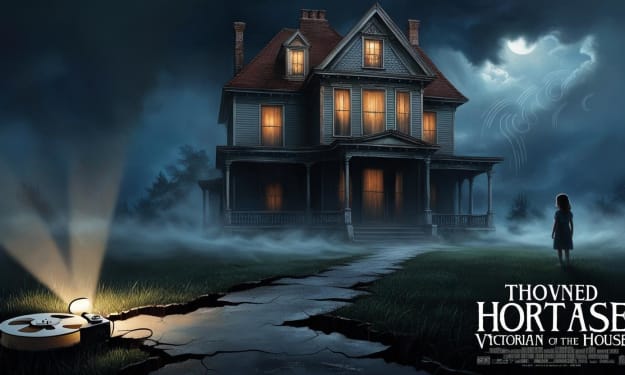
Emma had just moved into the old Victorian house on the outskirts of Raven Hollow. It was cheap, too cheap for its size. Her friends warned her about the town’s rumors: disappearances, strange lights in the woods, and "the house that watches." But she didn’t believe in ghosts.
By Fahim Rahmanabout a year ago in Horror
"Barefoot, But Not Broken: A Doctor's Journey From Struggle to Strength"
Every journey begins with a single step, but for some of us, that first step can feel like an eternity. I remember the first time I stood in front of a mirror wearing the white coat. I was filled with hope, determination, and dreams of making a difference in the world. But what no one tells you about the path of a doctor is that the road is often lined with struggles that test not just your intellect, but your very spirit. My journey was never one of smooth sailing. Growing up in a small town, I often faced challenges that most people in urban areas would never understand. There were moments when the very shoes I wore felt like a luxury—literally. I recall walking miles to school with holes in my shoes, the cold biting at my feet, yet my mind never strayed from my dreams. Those shoes didn’t define me; they didn’t break me. They were a symbol of my resilience. I remember the day I decided to become a doctor. It wasn’t a decision born out of privilege or the desire for status. It was born out of a desire to heal—an innate calling to help others, especially those who, like me, often felt invisible. My own struggles with health during childhood gave me an understanding of the pain and hopelessness that many patients experience. And so, the white coat wasn’t just a symbol of professionalism for me; it was a shield, a tool, a promise. But nothing prepared me for the emotional weight that would come with this profession. During my medical training, I encountered moments that shattered me. I remember a patient, an elderly woman, who had no family to visit her in the hospital. She lay there, fragile and lonely, in stark contrast to the busy hospital environment around her. I held her hand, trying to offer her comfort, but there was nothing I could do for her loneliness. I went home that night with a heavy heart, questioning how I could be a part of a system that sometimes felt so cold. It wasn’t just the patients who left a mark on me; it was the constant battle between empathy and professionalism. There were days when I wanted to break down, to scream, to let out the emotions I had bottled up for so long. But I couldn’t. The white coat had become a mask, hiding the tears, the doubts, the moments of weakness. There were times when I felt lost, unsure of whether I was truly making a difference. The long hours, the never-ending list of patients, and the emotional toll of watching people suffer—it all became overwhelming. But in those moments of exhaustion, I would think back to my own journey. I would think of the days I walked barefoot, of the struggles I overcame just to be where I was. And that thought—of perseverance, of not giving up—kept me going. It was during my residency that I faced one of the most difficult challenges of my life. I was assigned to a particularly tough case—a young girl who had been in a severe accident. Her condition was critical, and the odds were stacked against her. But I couldn’t let go. I couldn’t just accept the fact that she might not make it. I poured every ounce of my energy into her care, working late into the nights, consulting with specialists, doing everything I could to save her. One night, as I sat at her bedside, exhausted beyond belief, I remembered something my mother once told me: "Sometimes, the most important thing you can do is just show up." It wasn’t about the perfect diagnosis, or the most advanced treatment—it was about being present, being there when someone needed you the most. And that’s what I did. By some miracle, she survived. That moment changed me. It reminded me of why I became a doctor in the first place—not for the accolades, not for the recognition, but to make a tangible difference in someone’s life. I had walked into that hospital feeling like I was barely holding it together, but I walked out knowing that my presence, my dedication, and my heart had made all the difference for that young girl. But the journey didn’t end there. After years of facing one emotional challenge after another, I began to realize something important: Healing wasn’t just about treating the body; it was about healing the heart. And in many ways, I had to heal my own heart before I could truly heal others. The white coat was a constant reminder of my responsibility, but it was also a reminder of the strength I had gained through every struggle, every tear, and every sleepless night. I had come to understand that I wasn’t just a healer of bodies; I was a healer of spirits. And in doing so, I was healing my own spirit as well. Through every setback, I learned the power of resilience. I learned that the toughest battles often come with the most rewarding victories. And I learned that, no matter how heavy the weight of the world may seem, I was never alone. I had the strength of my past, the hope of my future, and the unwavering determination to keep moving forward. I may have started my journey barefoot, but I am not broken. I stand today as a testament to the power of perseverance and the unyielding spirit that can rise from even the most difficult circumstances.
By Doctor marwan Dorani about a year ago in Horror