book reviews
Book reviews for horror fans; weather a sleepless night with literary accounts of hauntings, possessions, zombies, vampires and beyond.
The House That Wasn't Meant for Humans
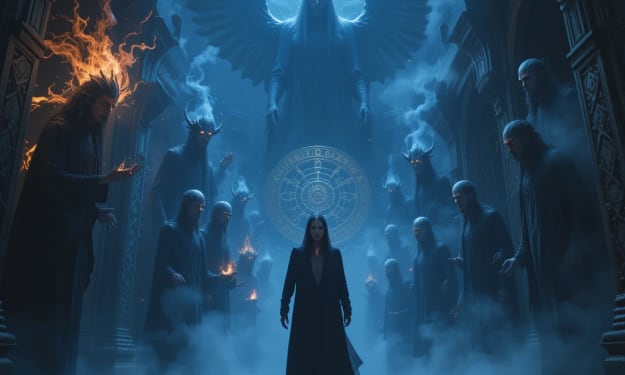
I was never the superstitious type. Tales of jinns, haunted houses, and cursed places? Just myths people used to scare children—or so I believed. That changed the night I took a wrong turn during a hiking trip in northern Pakistan. It was just supposed to be a two-day retreat with friends. But on the second day, I wandered off the trail alone to get better photos of an old stone structure hidden deep in the forest. When I reached it, the sun was already setting, and my phone battery was at 3%. The building looked ancient, yet oddly untouched. No moss. No cracks. Just clean, grey stones stacked perfectly, forming an archway leading into darkness. A carved stone slab above the door read something in Arabic: "La yadkhulu illa maznun." I didn't understand it fully then. Later, I learned it meant: "Only the possessed may enter." I should have left. But I was tired, my phone died, and the wind was chilling. I thought, “It’s just a ruin. I’ll rest inside for a bit.” So, I stepped in. That’s when the silence hit me. Not the kind you get in nature—but an oppressive, unnatural stillness. No birds. No wind. Even my own footsteps seemed muted. Inside, the place looked… wrong. The walls were too smooth. No dust. No spiders. No signs of age. There were three doors. Each identical. Wooden. Closed. Carved with symbols I couldn’t read. I chose the middle. --- The moment I opened it, cold air rushed past me, and a low whisper filled my ears—like a hundred voices speaking at once, just beneath the threshold of hearing. My limbs went cold. My breath caught. Inside was a room. Lit with a dim blue glow. In the center: a round table with a mirror on it. Above the mirror: nothing. Yet, it reflected something—something moving, circling, watching. Then the whispers grew louder. "He is not one of us." "He does not belong." "He must pay." My body refused to move. I watched, helpless, as the shadows in the room twisted. They formed a figure—tall, thin, face shrouded in darkness. It stepped toward me, and though it made no sound, I could feel the floor tremble. Then a second figure emerged—a woman, draped in black, eyes like burning white fire. She raised a hand, and the first shadow recoiled, hissing. “You’re not meant to be here,” she said. “Leave. Before they seal your soul.” “I… I didn’t know,” I stammered. “They don’t care. This is their sanctuary. A house of gathering. For jinn. Every hundred years, they meet here. Tonight… is that night.” My heart dropped. She touched my forehead. “You have seconds. Once the third door opens, you’re theirs.” I turned to run, but the hallway was no longer there. Instead, I stood at the center of a massive, circular chamber. Dozens—no, hundreds—of jinns stood around me. Each different. Some fire, some smoke, some winged, others serpentine. All watching. I tried to speak, but my mouth made no sound. Then, one of them stepped forward. Massive, crowned, made of red flame. His voice shook my bones. “You’ve broken the seal of the Middle Gate. That door belongs to the ‘Mirror Keeper.’ You have seen what no man must see.” I collapsed. Then the woman appeared again. She stood between me and the flame-being. “He didn’t know. Let him go.” “He must give something,” the being said. “Nothing leaves untouched.” The woman turned to me. “Give a memory. One that matters.” I didn't understand. Then pain shot through my head—a memory surged: my mother’s face, laughing, brushing my hair when I was a child. “No!” I shouted. But the being reached forward and touched my temple. The memory vanished. Just… gone. I couldn’t recall her face anymore. “That is the price,” the jinn said. “Now go. And speak of this… and we will return.” --- I woke up just outside the archway. Morning birds chirped. My phone was dead. The stone structure now looked broken, aged, lifeless. As if it had been abandoned for centuries. When I returned to my friends, they said I’d been missing for two days. I didn’t tell them what happened. Who would believe me? But every now and then, in dreams, I see a round mirror. And in it—a shadow, circling. Watching. And the memory of my mother’s smile? It never came back.
By Noman Afridiabout a year ago in Horror
The Whispering Shadows: Jinn in the Attic
The first thing Rehan noticed about his grandfather’s house was how it breathed. Not literally, of course—but every wooden creak, every subtle groan of the walls, sounded like the house exhaling. After the passing of his grandfather, Rehan inherited the old colonial structure at the edge of a long-forgotten village. A perfect retreat for writing, he had thought. Quiet. Isolated. A place where stories could come alive. But he didn’t know that one already had. The attic had been sealed. Not locked—sealed. Ropes of black cloth tied into complex knots, symbols drawn in what looked like dry blood on the wood, and a chilling scent of burnt something. He laughed nervously the first time he saw it. "Grandpa was into weird stuff." The villagers had been cryptic. An old woman had grabbed his wrist at the corner store. “Don’t go to the top. He trapped something. He died before sealing it forever.” Rehan smiled politely and walked away. Superstition, he thought. But on the third night, he heard it. A whisper. Faint. From the attic. At first, it was a name. “Rehan...” He jolted awake. It came again the next night. Clearer. Closer. “Rehan... I remember you.” Each whisper scraped his mind like fingernails on a chalkboard. He searched for logical explanations—wind, rodents, pipes. But none made sense. Finally, on the seventh night, he snapped. Armed with a crowbar and flashlight, he tore down the ropes and symbols and yanked the attic door open. What he saw was... nothing. Just dust, broken furniture, old books—and something that resembled a cage. Small. Made of iron and bone. Burn marks in a circle. As he stepped inside, the door behind him slammed shut. And the whisper turned into breathing. “Welcome back... child of betrayal.” He turned—and there it was. A jinn. Not fully formed. Its body shimmered like mist, but its eyes glowed—two pits of red flame. It hovered above the ground, face shifting between human and something far older, far darker. Rehan fell backward. “What are you?” “You know me. Your grandfather made me... his servant. But he betrayed the oath. And so did you.” “I didn’t do anything!” “You broke the seal,” it growled, “That was enough.” The room went cold. His flashlight died. Darkness swallowed everything but those burning eyes. Rehan crawled back, chanting anything he could remember from his childhood. Verses his grandmother used to whisper. But the jinn only smiled. “That won’t help you. Your blood is bound.” Then it vanished. The next day, Rehan tried to leave. His car wouldn't start. His phone showed no signal. Even the roads seemed to curve back to the house. He was trapped. And the attic whispered louder now. Sometimes laughter. Sometimes screams. In desperation, he began reading his grandfather’s old books—grimy, handwritten journals filled with rituals, signs, and warnings. He learned the truth. His grandfather had captured the jinn in a rage of revenge. The creature had once haunted the village, stealing children. Rehan’s uncle had been one of them. In grief, his grandfather summoned it—not to banish it, but to bind it. But binding a jinn requires blood. His own blood. And when he failed to sacrifice completely, the jinn was only partially sealed. Its revenge was merely... delayed. Until Rehan came. The journal offered one solution: finish the binding. Complete the sacrifice. Rehan couldn’t understand what it meant—until he saw the final page. “Only the willing blood of a bloodline can end the pact.” He stood before a mirror. The jinn appeared behind him. “You see now,” it whispered, “You must finish what he started.” “I won’t kill myself for you.” “You won’t have to. The house will.” And it did. That night, the walls moved. The floorboards snapped. Furniture flew. The very structure came alive. The jinn didn't need to attack—the house itself was its vessel. Rehan ran to the attic, clutching the last page of the journal. There, he redrew the symbols, poured his blood onto the bones, and began chanting. The house screamed. Windows shattered. The jinn appeared—writhing in pain, trying to stop him. “You cannot bind what is already free!” But Rehan did not stop. As the final verse left his lips, the jinn was pulled into the circle. It screeched—louder than thunder—before vanishing in a burst of light and ash. Silence. And then... the house breathed no more. In the morning, Rehan walked out. The car started. The phone buzzed. The roads led away. He left the house behind. But in the rearview mirror, just as he turned the last corner, the attic window stood open. And someone was whispering his name again.
By Noman Afridiabout a year ago in Horror
The Whispering Shadows: Jinn in the Attic
It all began when Arman received a letter from a lawyer in a distant town, informing him of an inheritance. His grandfather's house—abandoned, ancient, and standing on the edge of the forest—was now his. Curious and financially unstable, Arman wasted no time and traveled to the countryside. The house was a structure of mystery. Old wooden panels, faded wallpaper peeling like dried skin, and an attic that loomed silently above the rest. The villagers avoided eye contact when he mentioned the house. One elderly man muttered, “Don’t go to the attic after dusk. That place listens.” Brushing it off as superstition, Arman moved in. The first night was uneventful, though the silence felt unnatural. The second night, however, was different. As the wind howled through the trees, a faint whisper echoed from the attic above. He sat up in bed. There it was again—a dragging sound, like nails scraping across wood. He grabbed a flashlight and climbed the narrow staircase that led to the attic. The wooden door creaked open. Dust floated in the air like ash. Boxes were scattered, old furniture draped in white sheets stood like ghosts in the moonlight. Nothing moved. He turned to leave. Whisper... He froze. It wasn’t the wind. “Who’s there?” he asked, voice trembling. Silence. The following days, things escalated. Shadows moved in the corners of his vision. Objects shifted positions. Doors creaked open on their own. And the whispering grew louder, more deliberate, more... familiar. One night, unable to take it anymore, Arman set up a camera in the attic. When he checked the footage the next morning, his blood ran cold. At 3:07 AM, the attic door opened by itself. Something dark—no, not quite visible—crawled across the floor. Its limbs were disjointed, its face a blur, like a smudge on glass. But the most chilling part? It paused by the camera and whispered: “You shouldn’t have come back.” Terrified, Arman went to the village elder who had warned him. The man, shaking, revealed the truth. “Your grandfather was a raat ka ilm practitioner. He summoned a jinn... to protect the house. But the bond broke when he died. Now the jinn is free, trapped between protection and vengeance.” “Can it be removed?” Arman asked. The elder nodded. “Only by fulfilling its promise... or destroying what binds it.” Arman returned home with a talisman, some Quranic verses written on parchment, and a candle made of special oils. That night, he entered the attic again. The moment the candle lit, the shadows deepened. A low growl emerged from behind the boxes. The temperature dropped. Then it appeared. Not like before—not blurred, but clear. Tall, thin, eyes glowing a deep, hateful red. Its body flickered like smoke but held shape like flesh. It didn’t move, but it breathed. Loudly. Arman held up the talisman. “You were bound to serve this house, not harm it. Your oath is broken. Leave, or be cast away.” The jinn tilted its head, curious. Then it screamed—a deafening, bone-shattering wail that extinguished the candle and knocked Arman back. He recited the verses as loud as he could. The creature lunged, but each word slowed it, burned it. Finally, it stopped. And then... it laughed. “You think words can undo blood?” Suddenly, Arman remembered something. In the basement was a chest—a box his grandfather told him never to open. Running downstairs, he opened it with trembling hands. Inside was a journal, a piece of cloth with strange symbols, and... a fingernail. The journal revealed it all: His grandfather hadn’t just summoned the jinn. He had offered something to control it—his own blood, his lineage. Arman was part of the pact. The jinn wasn’t just haunting the house. It was haunting him. He burned the cloth, recited every verse he knew, and sealed the nail inside a jar of salt and sacred oil. That night, the whispers stopped. The next morning, sunlight poured into the house like never before. The attic door stayed shut. Arman didn’t stay long after that. He sold the house, left the village, and changed his name. But every now and then, he wakes up at 3:07 AM... ...to the sound of whispering.
By Noman Afridiabout a year ago in Horror
The Whispering Woods of Pluckley
In the depths of the Kentish countryside in England lies a village with a picturesque rural appearance — but behind its sleepy exterior lurks a reputation darker than night. Pluckley, Britain's most haunted village as officially recognized by the Guinness Book of World Records, has been for decades a hotbed of ghostly rumor, unexplained phenomena, and a past rich in mystery. Of its many legends, one is famous for its blood-curdling consistency: the Screaming Woods, or Dering Woods.
By Saimon Hasan Zihadabout a year ago in Horror
The Bloodstained Silk
Chapter 1: Festival and Blood In the heart of an ancient mountainous region, nestled in a valley wrapped in mist and shadow, stood the crumbling remains of a once-glorious palace. It had belonged to the Larma family, an old Chakma lineage that once ruled these parts with grace and pride. But now, the estate stood abandoned—haunted by whispers of betrayal, bloodshed, and a silk handkerchief soaked in death.
By Kevin Hudsonabout a year ago in Horror
Ghost breeding
Enter the mysterious village Jhumjhumi village. The name sounds like part of a sweet childish rhyme, but the reality is quite different. The village, deep in the hills, has roads so narrow and impassable that no outsider has set foot in it for many years. Locals believe that there is another species of ghost living in this village along with humans. But not ordinary ghosts, they breed.
By MD. Tanvir Hossainabout a year ago in Horror
Haunted Price Tag
There are some things in this world that money shouldn’t touch. But what if the more it haunts you, the more it's worth? In a quiet European town, nestled between ancient alleyways and forgotten cobblestone streets, there was a small antique shop. Most of what it sold was harmless—dusty books, rusted clocks, cracked statues. But hidden deep in the back, behind a red velvet curtain, was a painting. One that seemed to breathe when no one watched. It was a portrait. A woman in a deep green dress, sitting stiffly with a blank expression. Her skin pale, her eyes pitch black. Her hands folded neatly. Harmless at first glance. But people said her eyes followed you—no matter where you stood. The shopkeeper always said: > “This one’s not for the faint-hearted. It sells itself. And it never stays in one place for long.” The First Buyer A wealthy collector from London paid $10,000 for it, intrigued by the painting’s mystery. Within three nights, he reported that the lights in his home flickered every time he walked by the painting. He heard breathing when he was alone. Eventually, he locked the room and left the house. But he never threw the painting away. He sold it—at a profit. The price? $50,000. The Second Owner An art museum in Vienna displayed it briefly. Cameras caught odd things—shadows moving, frames shaking, visitors fainting near the painting. One night, a security guard was found unconscious with scratches on his arms. “She spoke to me,” he said, eyes wide. “She said: Don’t look away next time.” The museum removed the painting immediately. Again, it was sold. This time for $100,000. The Curse... or a Gift? The more the painting scared people, the higher its price went. Whispers began in online forums—some called it cursed, others called it “the smartest investment in horror history.” One theory said the woman in the portrait was a noble executed for witchcraft. Before her death, she swore that her soul would live forever in her portrait, gaining power with every fearful glance. If that’s true, then every person who fears her… feeds her. The Last Sale In 2023, a mysterious buyer from Dubai purchased the painting for $1 million. No one knows where it is now. Some believe it's hidden in a private vault. Others think it’s hanging in plain sight, somewhere—waiting. And the strangest part? The shopkeeper, the first one who sold it, is now gone. The shop is empty. The curtain remains. But the painting never came back.
By Amritpal Singh about a year ago in Horror