art
Art that’s as dark as it is evocative; discover horror-inspired artwork, from twisted mutations of classic paintings, chilling sculptures, spooky photography and more.
Why The Haunting of Hill House (1959) Still Haunts Modern Horror
How a Gothic masterpiece by Shirley Jackson redefined fear for generations Shirley Jackson’s The Haunting of Hill House (1959) is more than just a classic ghost story—it’s a blueprint for psychological horror that continues to influence books, films, and TV shows today. Unlike traditional horror that relies on monsters and gore, Jackson’s novel terrifies through atmosphere, ambiguity, and the slow unraveling of the human mind. More than six decades after its publication, Hill House remains a cornerstone of gothic fiction, shaping how modern horror explores trauma, isolation, and the unseen.
By Silas Blackwoodabout a year ago in Horror
The Haunting of Hill House: A Masterpiece of Psychological Horror
Exploring Shirley Jackson’s Timeless Tale of Terror and Isolation One of the best ghost stories ever written is widely regarded as Shirley Jackson's 1959 novel The Haunting of Hill House. Jackson's novel disturbs readers through psychological tension, unreliable narration, and the slow unraveling of sanity, in contrast to conventional horror, which relies on gore and jump scares. At its core, The Haunting of Hill House is not just about a haunted house—it’s about haunted people, the fragility of the mind, and the terror of loneliness. In this deep dive, we’ll explore the novel’s themes, characters, and legacy, examining why it remains a cornerstone of gothic horror literature.
By Silas Blackwoodabout a year ago in Horror
The House of Unspoken Whispers Where Time Paused, and Shadows Learned to Speak
The House of Unspoken Whispers A Tale of Time, Echoes, and the Silence That Watches The village of Oakhaven clung to the cliffside like an old secret, veiled forever in a mist that smelled of salt and sorrow. Here, whispers outran the wind, and no whisper was older—or more feared—than the one about Blackwood Manor. The mansion stood solemnly on a jagged precipice, overlooking a violent sea. Fifty years ago, the entire Blackwood family had vanished without a trace. No bodies. No answers. Just silence. The house remained abandoned, untouched, and avoided—like a grave no one dared mourn aloud. But where others saw fear, Dr. Elias Thorne, a skeptical historian with a thirst for truth, saw opportunity. To him, the manor was a relic, an untouched archive of forgotten stories. So, against the urgent warnings of Oakhaven’s weathered locals, Elias bought the manor. His first nights were uneventful: drafty halls, groaning floorboards, and the eerie loneliness only an old house could offer. No ghosts. No shrieks. Just the mundane sounds of a building remembering itself. Elias, ever the rationalist, carried on with his cataloging and research. Then the quiet changed. It wasn’t just silence—it was absence. Sound vanished as though swallowed by something unnatural. And in those uncanny voids, Elias began to see colors. Not lights or shapes—colors, vibrant and misplaced. A shimmer of emerald here. A flicker of gold there. And most hauntingly, a glint of azure blue. At first, he doubted himself. He blamed fatigue. Misplaced objects, books left open to the wrong page—it could all be explained. But when he installed motion cameras and they captured stretches of pitch blackness—blinks, where time itself seemed erased—he began to question. One frigid evening, the silence returned like a breath held too long. From the corner of his eye, he saw a flare of azure. As he reached for it, a cold force pushed against his hand. Then, inexplicably, the manor’s broken grandfather clock released a single, thunderous chime. Compelled, Elias searched the fireplace and discovered a hidden compartment. Inside, wrapped in an azure ribbon, was a crumbling leather-bound diary—the journal of Eleanor Blackwood, the youngest daughter who had vanished with her family. Eleanor’s words were graceful, haunted, and increasingly urgent. She wrote of a “darkness” that seeped into the family—a sorrow that grew until time itself felt warped. Her father, a clockmaker, had built a mysterious mechanism in secret—meant not to measure time, but to capture it. He wanted to preserve a moment of happiness. Instead, he created a trap. The machine froze the Blackwoods in their final, fearful instant—preserved like a photograph, repeating endlessly in a broken loop. The colors Elias had been seeing were fragments of their existence—echoes of Eleanor’s green dress, her father’s golden watch, her brother’s azure scarf. But the diary warned of something else—a Watcher. Eleanor’s last words chilled Elias to the bone: > “We are here. We see. We feel. But we cannot leave. Only Mother tries to reach through… through the blue. She warns me. Father made a mistake. We are not alone. There is a Watcher.” In that moment, Elias realized: the Watcher was real. Not just a metaphor, but a being—one that had been feeding on the family’s trapped echoes. Not a ghost, but a parasitic entity, drawn to the fractured time within the house. Driven by horror and urgency, Elias searched beneath the clock and found the hidden core of the mechanism—a lattice of ancient gears and glowing runes. As he worked, the Watcher revealed itself. A towering, angular shape of pure shadow, standing in the corner, faceless, watching him… hungering. He couldn’t save the Blackwoods. Not yet. But he could seal the loop. Following Eleanor’s final entries, Elias activated a counter-sequence—a desperate gamble. The house trembled. The echoes screamed. And then—light. The Watcher was pulled back. The silence returned—not the cold void from before, but a peaceful one. The colors faded. The diary closed itself. Elias left and never returned. He told no one what he’d seen. Now, Blackwood Manor stands in perfect stillness, whisper-less, yet heavy with the memory of time gone wrong. It’s not haunted by spirits—but by a family’s desperate wish to preserve joy. Instead, they became prisoners of a moment, captives in a clockwork tragedy. And somewhere, deep within the stone, the mechanism still ticks—quietly. --- Author’s Note: Not all ghosts are spirits. Some are echoes. Some are colors. Some are mistakes made in the name of love. And some, like the Watcher, are the things that come when time itself breaks—and starts to feed.
By Noman Afridiabout a year ago in Horror
The Ghost in the Old Digital Camera
📸 The Ghost in the Old Digital Camera A digital whisper from the past… that should have stayed silent. --- The scent of dust and forgotten dreams hung heavy in Curio’s Attic, a junk shop Liam frequented more out of habit than hope. He was a struggling freelance photographer, obsessed with capturing the unseen—the fleeting moments that whispered of deeper stories. His phone, his sleek digital camera—they all felt too sterile. He longed for something with character, something that held a past. Deep within a dusty box of discarded electronics, he found it: a Kodak Easyshare CX7300, a clunky, silver relic from the early 2000s. Its plastic body was scuffed, its screen cracked, and the battery compartment corroded. It looked utterly dead. Yet something about its forgotten simplicity called to him. He bought it for a few dollars—a whimsical purchase. Back in his studio, fueled by cheap coffee, Liam tinkered. He cleaned the corrosion, replaced the batteries, and to his astonishment, the tiny LCD screen flickered to life, displaying a low battery icon. He charged it, skeptical. This old dinosaur surely wouldn't capture anything usable. The next morning, armed with his working modern camera, he decided to take the old Kodak on a casual stroll through the deserted morning streets, just for kicks. He pointed it at a picturesque, empty alleyway bathed in soft light and pressed the shutter. The mechanical whir of the lens, so alien to his modern gear, brought a nostalgic smile to his face. He downloaded the new batch of photos, scrolling through the crisp, vibrant shots from his main camera. Then he opened the file from the old Kodak. The first few images were grainy, pixelated blurs, as expected. But on the fifth image—the one of the empty alleyway—something was wrong. Standing faintly in the middle of the alley, almost translucent, was the figure of a young woman. Her posture was hunched, her head bowed, as if in despair or deep thought. Her clothes looked dated, from another era. Liam zoomed in, his breath catching. It wasn't a trick of the light. It wasn't a smudge on the lens. It was a clear, albeit ghostly, apparition. The alley had been completely empty when he took the shot. Fear warred with an overwhelming sense of fascination. He took another picture, this time of his own empty living room. Again, the image, once developed, showed the same faint figure—sitting on his couch, her head in her hands. She was always there, a spectral visitor in his photos, her presence subtle but undeniable. Driven by a surge of unnerving curiosity, Liam started a frantic online search. He scoured forums for paranormal photography, vintage camera malfunctions—anything that could explain this phenomenon. He found nothing. Then, on a whim, he uploaded one of the photos to a niche online community dedicated to unsolved disappearances, asking if anyone recognized the woman. Within hours, his post exploded. The woman was identified as Sarah Wells, a local university student who had vanished without a trace exactly 15 years ago to the day, just a few blocks from where he’d bought the camera. Her disappearance had baffled the police—no body, no leads, just a chilling void. Liam was thrust into the center of a burgeoning online mystery. His photos, with their undeniable, ghostly addition, went viral. People were captivated, terrified, and intrigued. Was it a hoax? A digital manipulation? But Liam’s reputation as a meticulous photographer and the undeniable analog nature of the old Kodak's raw files lent credibility to his claims. He returned to the empty alleyway, the old Kodak clutched in his trembling hand. He snapped photos, hundreds of them, from every angle. Sarah's ghostly image appeared in each one, her posture slowly shifting, her head lifting incrementally with each shot—as if struggling to look up. It was like watching a flipbook of a forgotten memory, a digital echo awakening. He started noticing patterns. The light in the photos, the shadows—they weren't always consistent with the real-time conditions. It was as if the camera was capturing the light and shadows from Sarah's last moments, replaying them, bleeding them into the present. The camera wasn’t just taking pictures; it was projecting visual memories from a past that had never truly died. Through painstaking cross-referencing of Sarah's known last movements, old missing person reports, and the subtle clues in the evolving photographic echoes, Liam pieced together a horrifying narrative. Sarah wasn’t just walking away when she disappeared. She was photographing something. Her last known location was a hidden art gallery, famed for its experimental, dark art—now long closed and forgotten. The images from the Kodak hinted at a flash of blinding light, a sense of immense pressure, and a distorted face in the background of one of her final, ghostly shots. Then, a new element began to appear in the images—not just Sarah, but a subtle, almost invisible distortion in the background of her photos: a shimmering ripple, like heat haze, around a specific, dark sculpture that used to be in that gallery. It was a piece known as “The Observer,” a terrifying, abstract metal sculpture that reportedly had an unsettling effect on viewers. --- The Climax Liam, guided by the camera’s increasingly vivid echoes, entered the derelict, forgotten art gallery. The air was cold, stagnant. He raised the old Kodak, pointing it into the darkness. On the cracked screen, a terrifying image formed: Sarah, clearly visible, her eyes wide with terror, staring directly into the lens. Behind her stood the "Observer" sculpture—its metallic form twisting, no longer abstract, but revealing something chillingly organic, a monstrous, shadowed face emerging from its cold metal. Suddenly, the screen of the Kodak flashed violently—a searing white light that momentarily blinded Liam. When his vision cleared, the camera was dead. Its screen: black. Its battery: instantly drained. But the final image, transferred to his laptop moments before, was burned into his mind. It showed Sarah, her face contorted in a final, silent scream, as a dark, grasping tendril, seemingly made of shadow and twisted metal, reached out from the sculpture, consuming her. The image was raw, terrifying—a direct window into her last, horrifying moments. --- The Truth The camera hadn’t just been capturing echoes—it had been replaying a murder. A sentient piece of art that had come to life and consumed its victims, leaving no physical trace. Sarah hadn’t vanished. She had been absorbed. Liam understood then. The camera had been Sarah’s, its digital memory imprinted with her final, desperate visual cries. It was trying to warn him, trying to show the world what truly happened. And the creature—The Observer—was still there. Dormant in the darkness. Waiting for another unsuspecting soul to wander into its web. --- Epilogue Liam never showed that final image to anyone. Who would believe that a metal sculpture could consume a human? That a digital camera could act as a spectral witness? The story of the "Ghost Camera" continued to circulate online, generating millions of views and endless theories—a modern-day paranormal legend. But Liam, now wiser and infinitely more cautious, understood the truth. He locked the old Kodak away, a chilling memento of a digital haunting. He knew that some horrors don’t leave a physical trace… But linger in the echoes of data, Waiting for the right frequency, The right medium, To reveal their deadly secrets. --- Sometimes, the most terrifying truths aren’t captured by the newest technology… But by the forgotten relics of a digital past.
By Noman Afridiabout a year ago in Horror
The 25 Best Horror Books of the Last Decade - Vulture
Over the course of the past ten years, horror literature has experienced a renaissance, with authors pushing boundaries, fusing genres, and delivering fresh nightmares that last long after the final page. The last ten years have provided readers with some of the most chilling and original works in the genre, including psychological terrors, supernatural hauntings, and visceral body horror. Whether you're a longtime horror fan or a newcomer looking for a scare, this list compiles the 25 best horror books of the last decade—each one a standout in its own right.
By Silas Blackwoodabout a year ago in Horror
Spring-heeled Jack: The Mysterious Phantom of Victorian England (1837-1904)
Introduction Spring-heeled Jack is one of the most bizarre and enduring mysteries of Victorian England. This enigmatic figure terrorized London and the surrounding areas for decades. He was described as a terrifying supernatural being with glowing eyes, clawed hands, and the ability to leap incredible heights. Spring-heeled Jack's place in folklore has been established by eyewitness accounts, newspaper reports, and urban legends, blurring the lines between myth, widespread panic, and possible reality. This article explores the origins, reported sightings, theories, and cultural impact of Spring-heeled Jack, delving into why this strange figure continues to captivate the public imagination over a century after his last alleged appearance.
By Silas Blackwoodabout a year ago in Horror
The Princes in the Tower: A Historical Mystery of Medieval England
Introduction The fate of the Princes in the Tower—Edward V and his younger brother, Richard, Duke of York—is one of the most enduring and tragic mysteries in English history. These two boys, the sons of King Edward IV, disappeared in the summer of 1483 while under the protection of their uncle, Richard, Duke of Gloucester, who later became King Richard III. Their disappearance has fueled centuries of speculation, debate, and historical investigation. Were they murdered? By whom, if so? Did they escape and live in secret? The lack of definitive evidence has turned this case into one of history’s greatest unsolved crimes. This article explores the events leading up to their disappearance, the key suspects, and the various theories that historians have proposed over the centuries.
By Silas Blackwoodabout a year ago in Horror
Frankenstein by Mary Shelley (1818): A Gothic Masterpiece of Science, Morality, and Humanity
Introduction One of the most influential pieces of Gothic literature and science fiction is Frankenstein: Or, The Modern Prometheus (1818), written by Mary Shelley. Written when Shelley was just 18 years old, the novel explores profound themes such as the dangers of unchecked scientific ambition, the nature of humanity, and the consequences of isolation. Through the tragic story of Victor Frankenstein and his monstrous creation, Shelley raises enduring ethical questions about creation, responsibility, and societal rejection. This article delves into the novel’s plot, themes, characters, historical context, and its lasting legacy in literature and popular culture. Summary of the plot
By Silas Blackwoodabout a year ago in Horror
Dracula by Bram Stoker (1897): A Gothic Masterpiece of Horror and Victorian Anxiety
Introduction Published in 1897, Dracula by Bram Stoker is one of the most influential Gothic horror novels ever written. The novel introduced the archetypal vampire Count Dracula, who has since become a cultural icon and the subject of numerous literary, film, and popular culture adaptations. Beyond its surface-level horror, Dracula explores deep-seated Victorian anxieties about sexuality, colonialism, technology, and the clash between modernity and superstition. This article examines the novel’s plot, themes, characters, and enduring legacy. Plot Summary of the plot The novel's realism comes from its use of journal entries, letters, newspaper clippings, ship logs, and other forms of epistolary writing. The story unfolds through multiple perspectives, primarily those of Jonathan Harker, Mina Murray, Dr. John Seward, Lucy Westenra, and Abraham Van Helsing. Jonathan Harker’s Journey to Transylvania Jonathan Harker, an English solicitor, travels to Transylvania to assist Count Dracula in an England-based real estate transaction. Harker soon realizes that he is a prisoner in Dracula’s castle, where he encounters the Count’s supernatural abilities—scaling walls like a lizard, commanding wolves, and lacking a reflection. He also meets three vampiric women who attempt to seduce and feed on him before Dracula intervenes. The arrival of Dracula in England After escaping the castle, Harker falls ill and is hospitalized. Meanwhile, Dracula boarded the Demeter to travel to England, where he killed the crew. He arrives in Whitby, where he begins preying on Lucy Westenra, a beautiful and innocent young woman. Lucy’s health deteriorates mysteriously, and despite blood transfusions from her suitors—Dr. She dies and transforms into a vampire, joining Quincey Morris, Seward, and Arthur Holmwood. The Hunt for Dracula The group, which includes Harker, his fiancée Mina, Seward, Holmwood, and Morris, is led by Dutch doctor and vampire expert Professor Abraham Van Helsing. They discover Lucy's undead state and are forced to stake her heart and behead her to bring her peace. They then turn their attention to Dracula, who has been feeding on Mina, slowly turning her into a vampire. Using a combination of modern technology (such as phonographs and typewriters) and ancient folklore (garlic, crucifixes, holy wafers), the group tracks Dracula back to Transylvania. In a final confrontation, they ambush him just as the sun sets. Quincey Morris is mortally wounded, but Jonathan and Arthur manage to stab Dracula in the heart and behead him, ending his reign of terror. Themes in Dracula 1. Fear of the "Other" from abroad Dracula embodies Victorian fears of foreign invasion and racial degeneration. He represents the "other," someone who corrupts English purity, as an Eastern European aristocrat infiltrating England. His physical appearance (pale, with sharp features and red lips) reinforces stereotypes of Eastern Europeans as exotic yet dangerous. 2. Sexuality and Repression The novel is steeped in sexual undertones. Vampirism is a metaphor for forbidden desire—Lucy and Mina’s transformations involve seductive, predatory behavior that contrasts with Victorian ideals of female chastity. The vampire brides in Dracula’s castle and Lucy’s undead seduction of children and Arthur highlight fears of female sexuality unleashed. 3. Science vs. Superstition Dracula is defeated by the characters using modern science (blood transfusions, phonographs), but folklore (garlic, holy symbols) is ultimately used. Van Helsing represents the balance between rational thought and belief in the supernatural, suggesting that modernity alone cannot defeat ancient evil. 4. Colonialism and Reverse Invasion Dracula’s move from Transylvania to England reverses colonial dynamics—instead of the British Empire expanding outward, a foreign force invades England. His ability to buy property and blend into society reflects anxieties about immigrants gaining power. 5. Religion and Salvation Christian symbols (crucifixes, holy water) are weapons against Dracula, reinforcing the idea of divine good versus satanic evil. The characters’ moral purity (especially Mina’s) is crucial in defeating the Count, suggesting that faith and virtue triumph over corruption. Key Characters Count Dracula Dracula, the name of the vampire, is aristocratic, intelligent, and ruthless predator. Unlike later romanticized versions, Stoker’s Dracula is a monstrous figure who represents decay, contagion, and unchecked desire. Jonathan Harker A rational Englishman whose experience in Transylvania alters his perspective on the world. His survival and later participation in Dracula’s destruction symbolize resilience against evil. Mina Murray (later Harker) Mina is one of the most intelligent and capable characters, organizing the group’s records and assisting in the hunt. She is saved by her purity and love for Jonathan, despite Dracula's corruption. Lucy Westenra Lucy’s transformation into a vampire serves as a cautionary tale about female sexuality. Her death and subsequent staking highlight Victorian fears of women who defy social norms. Abraham Van Helsing A Dutch professor and vampire hunter, Van Helsing combines scientific knowledge with folklore expertise. He is the moral and intellectual leader of the group. Dr. John Seward, Arthur Holmwood, and Quincey Morris These men represent different aspects of Victorian masculinity—Seward the rational scientist, Holmwood the noble aristocrat, and Morris the adventurous American. Their unity against Dracula underscores the novel’s theme of solidarity against evil. Literary and Cultural Impact Dracula was not an immediate bestseller but grew in popularity through stage adaptations, most notably the 1924 play that inspired Bela Lugosi’s iconic 1931 film portrayal. Since then, Dracula has appeared in countless films, TV shows, and novels, ranging from faithful adaptations (Bram Stoker’s Dracula, 1992) to modern reimaginings (Castlevania, Dracula Untold). The novel also established many vampire tropes: Vulnerability to sunlight, garlic, and holy objects Shape-shifting abilities (bat, wolf, mist) The need for an invitation to enter a home Immortality and blood-drinking Beyond horror, Dracula has been analyzed through feminist, postcolonial, and psychoanalytic lenses, proving its depth and adaptability.
By Silas Blackwoodabout a year ago in Horror
The Amityville Horror Franchise: Ranking from the best to the worst movie . AI-Generated.
The original Amityville Horror film, released in 1979, is primarily inspired by the tragic real-life events surrounding the DeFeo family murders that occurred on November 13, 1974. Here’s a detailed overview of the events that led to the film's creation:
By Ninfa Galeanoabout a year ago in Horror
The Pendle Witch Trials (1612)
Introduction The Pendle Witch Trials of 1612 remain one of the most infamous cases of witchcraft persecution in English history. The trials, which took place in England's Lancashire during a time of superstition, religious strife, and social unrest, resulted in the execution of ten people who were accused of witchcraft. The events were meticulously documented by the clerk of the court, Thomas Potts, in his book The Wonderfull Discoverie of Witches in the Countie of Lancaster, providing a chilling insight into 17th-century legal proceedings and societal fears. The Pendle Witch Trials, their key players, the allegations leveled against them, the trial itself, and the long-term effects of this tragic incident are the subject of this article. Context: Witchcraft in England in the 17th century Belief in witchcraft was widespread in early modern Europe, fueled by religious conflict, economic hardship, and fear of the supernatural. King James I's personal obsession with witchcraft is reflected in his book Daemonologie (1597), which makes practicing witchcraft a capital offense. The Pendle trials took place in Lancashire, a poor area with strong beliefs in folk magic and religious dissent (with Catholic sympathies despite Protestant rule). These factors created an environment ripe for accusations of witchcraft. The Accused: Families at the Heart of the Trials The Demdikes and the Chattoxes, two rival families led by elderly matriarchs reputed to be witches, were the primary focus of the Pendle Witch Trials. The Demdike Family Elizabeth Southerns, also known as "Old Demdike," was regarded as the region's most powerful witch. She was an elderly, blind widow. She allegedly taught witchcraft to her family. Elizabeth Device – Demdike’s daughter, accused of using witchcraft to kill multiple people. James Device – Elizabeth’s son, whose testimony under pressure implicated many others. Alizon Device – Elizabeth’s granddaughter, whose encounter with a peddler sparked the initial accusations. The Chattox Family Anne Whittle (aka "Old Chattox") – A rival of Demdike, accused of using witchcraft to harm others. Anne Redferne – Chattox’s daughter, accused of murder through witchcraft. Other accused individuals included Alice Nutter, an unusually wealthy woman whose involvement remains mysterious, and Jane Bulcock and her son John, who were caught up in the hysteria. The Beginning of the Trials: The Spark When Alizon Device met a peddler by the name of John Law in March 1612, the events that led to the trials began. After he refused to give her pins (possibly for use in folk magic), Alizon cursed him, and he subsequently suffered a stroke. Alizon admitted to the accusations made against her by Law's son and named members of her family and others in the plot. Authorities, led by Justice Roger Nowell, began arresting suspects. The accused were held in Lancaster Castle, where some, including James Device, provided damning confessions—likely under torture or coercion. The Infamous Meeting at Malkin Tower A key element of the prosecution’s case was a gathering at Malkin Tower, the Devices’ home, allegedly held on Good Friday, 1612. Witnesses claimed it was a witches’ meeting to plot the destruction of Lancaster Castle. Despite the possibility that it was simply a family gathering, this "evidence" was used to establish a conspiracy. The Trial: Justice and Injustice The trials took place in August 1612 at Lancaster Assizes, presided over by Sir Edward Bromley and Sir James Altham. The account by Thomas Potts reveals an extremely flawed legal procedure: Confessions Obtained Under Duress: Numerous "confessions" were most likely obtained through intimidation, torture, or lack of sleep. Use of Child Testimony – Jennet Device, Alizon’s nine-year-old sister, testified against her own family, sealing their fate. Spectral Evidence – Claims of supernatural harm were accepted without physical proof. Ten people were found guilty and hanged at Gallows Hill on August 20, 1612: Elizabeth Equipment James Device Anne Whittle (Chattox) Anne Redferne Alice Nutter Katherine Hewitt Bulcock, John Jane Bulcock Alizon Instrument Robey, Isobel While Margaret Pearson, one of the accused, was given a pillory rather than an execution, Old Demdike passed away in prison prior to the trial. Why Did the Pendle Witch Trials Happen? Several factors contributed to the witch hunt: Religious Tensions – Lancashire was seen as rebellious, with Catholic sympathies clashing with Protestant rule. Economic Hardship – The poor accused the poor, often over disputes or grudges. King James I’s Influence – His writings and laws encouraged witch hunts. Local Disputes: It's possible that the Demdike and Chattox families were the targets of personal resentment. Legacy of the Pendle Witch Trials The Pendle Witch Trials remain a symbol of injustice and mass hysteria. Scholars of today see them as a product of their time, shaped by fear, superstition, and brutality on the part of the law. Tourism & Memorials – Pendle Hill is now a tourist destination, with plaques and museums commemorating the victims. Cultural Impact – The trials have inspired books, plays, and TV shows, including The Lancashire Witches by William Harrison Ainsworth. Legal Reforms: As skepticism grew over time, the number of witch trials decreased, which led to the repeal of witchcraft laws in 1736. Conclusion The Pendle Witch Trials were a tragic example of how fear, superstition, and judicial corruption could lead to devastating consequences. The victims—mostly poor, marginalized individuals—were scapegoated in a society gripped by paranoia. Today, their story serves as a cautionary tale about the dangers of mass hysteria and the importance of fair justice.
By Silas Blackwoodabout a year ago in Horror
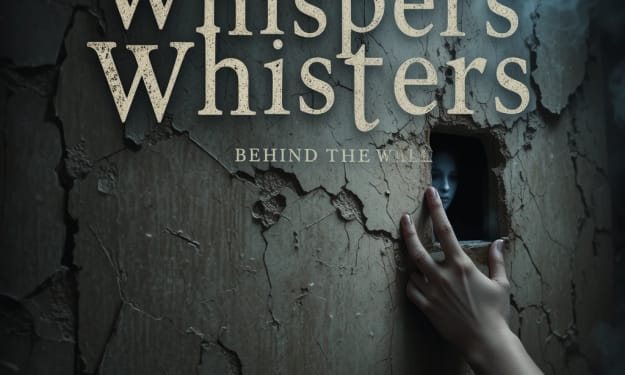
Whispers Behind the Wall
When Miriam Fletcher inherited her grandmother’s crumbling Victorian house in the quiet village of Ashford Hollow, she almost refused it. She had never felt close to her grandmother—an austere, reclusive woman with cold eyes and colder words. But after her recent divorce and the slow collapse of her job as an art teacher, the house was all she had left.
By Esther Sunabout a year ago in Horror