art
Art that’s as dark as it is evocative; discover horror-inspired artwork, from twisted mutations of classic paintings, chilling sculptures, spooky photography and more.
The Echo of the Unsent
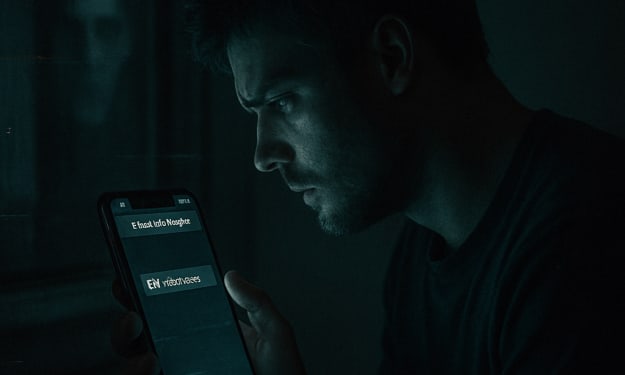
The phone was a steal. Not the latest model, but a pristine, unlocked iPhone X. I snagged it for a song from a pawn shop downtown, thinking I’d finally upgrade from my cracked relic. It felt good in my hand, smooth and familiar. A clean slate, I thought. I was dead wrong. It started subtly, as these things always do. A phantom notification buzz in my pocket, even when no message arrived. Dismissible at first, just a quirk of a used device. But then came the messages. They’d pop up on my screen, not as new texts, but as unsent drafts in my messaging app. Brief, fragmented, always from an unknown sender. The first one was just a string of emojis: 💔 😢 ☁️ I’d delete it, only for it to reappear hours later. Then came the words: "He left... alone." Another: "Can't breathe… so cold." I figured it was a data glitch, some lingering cache from the previous owner. Maybe a prank. But the messages became more frequent, more vivid. They weren't just random words; they were raw, unfiltered bursts of emotion. Fear. Despair. A profound sense of abandonment. I tried factory resetting the phone. Wiped everything. Still, the unsent messages resurfaced, stubbornly clinging to the digital ether of the device. Then, the photos. My camera roll started showing images I hadn’t taken. Dark, blurry shots of unfamiliar rooms, distorted reflections in glass, and once, a fleeting glimpse of a pale, terrified face looking directly into the lens. These weren't photos I'd ever seen before, yet they were marked with timestamps from my phone, taken in the dead of night, while the phone lay dormant on my nightstand. A cold dread began to creep in. This wasn't a bug. This was a digital echo. The previous owner’s last, desperate communications, forever trapped within the phone, unable to be sent, yet refusing to be deleted. And they were trying to tell me something. I began to research. The pawn shop owner was tight-lipped about the phone’s origin, just muttering about "a quick sale, no questions asked." I found a Reddit thread, buried deep in a forgotten corner of the internet, about "ghost data" – digital remnants clinging to devices, sometimes manifesting in strange ways. But nothing as specific, as personal, as this. The messages continued, forming a fragmented narrative: "He took it... the research..." "They won't believe me... trapped here..." "It's not human... the hum..." The language was frantic, the tone increasingly terrified. The photos became clearer too, revealing glimpses of a cluttered apartment, strange electronic equipment, and always, in the periphery, a deep, unsettling darkness. I realized with a chilling certainty: The previous owner hadn't just used this phone; they had poured their final, terrifying moments into it. Their last confession. Their last cry for help. And they hadn't disappeared; they had been "taken," as the messages hinted, perhaps by whatever "He" was, or the "hum." --- The real terror began when the unsent messages started appearing on my own accounts. A draft email in my personal inbox, not from me, but eerily echoing the previous owner's despair. A fragmented message in my social media DMs, written in my style, but detailing a fear I hadn't voiced, a secret I hadn't admitted. The digital echo wasn't just confined to the phone anymore; it was spreading, hijacking my own online presence, weaving itself into my digital identity. It was as if the entity, or whatever had claimed the previous owner, was now using my digital footprint as its next vessel. It wasn't just receiving messages; it was sending them, using me as a conduit. Panic flared. I had to stop it. This wasn't a ghost haunting a house; it was a digital entity haunting my life, threatening to expose my deepest fears, to turn my own online presence against me. The unsent messages weren't just cries for help; they were a warning. And now, a threat. --- I started a desperate digital exorcism. I unplugged everything, severed all connections. I bought a Faraday cage, wrapping the phone in layers of aluminum foil and copper mesh, hoping to block whatever signal or resonance it was emitting. I went offline, cutting myself off from the digital world that had become so terrifyingly porous. The silence was deafening. No phantom buzzes. No unsent messages. For days, I felt a fragile sense of victory. But then, one night, alone in my dark room, I saw it. My laptop, which had been off and unplugged, flickered to life. The screen glowed faintly, and on it, a single, blank messaging app. And in the draft field, appearing word by agonizing word, was a new unsent message. My own words. A secret thought I had never dared to voice, a deep, buried fear. And beneath it, a new line, chillingly familiar: "He knows you know. He's here." --- The previous owner hadn't been fully consumed. A fragment of their consciousness, perhaps, had tried to warn me, had become an unwilling accomplice to whatever entity had transcended the digital realm. And now, by taking their phone, I had inherited their burden — their ghost in the machine. I never fully recovered. I destroyed the phone, smashed it to pieces, but the chilling knowledge remained. The digital world was not just a network of information; it was a fabric, and somewhere, within its vast, unseen threads, something could still be lurking. Something that could read your unsent messages. Something that could step out of the screen and claim you. I still avoid old electronics, and every time my phone buzzes unexpectedly, I feel a cold dread. Because I know: Some messages are never truly deleted. And some echoes, once heard, can never be silenced.
By Noman Afridiabout a year ago in Horror
The Silent Melody of Redwood Lane
The house on Redwood Lane stood shrouded in the perpetual twilight of overgrown oaks, its silence a thick blanket woven from years of abandonment. Liam, a struggling composer seeking inspiration in forgotten spaces, found it irresistible. The real lure, however, wasn't the crumbling facade or the ghostly whispers the locals spoke of; it was the antique grand piano he’d spotted through a dusty window, its ebony finish gleaming like a promise of forgotten melodies. He bought the house for a song, the realtor practically throwing in the tarnished Steinway as a bonus. Back in the echoing emptiness, the piano became his sole focus. Its keys, yellowed with age, felt strangely alive beneath his touch. But when he played, the music that emerged was… discordant. Tangled notes, unresolved chords, and beneath them, a faint, almost subliminal hum, like a breath held too long. Then came the whispers. Faint at first, like the rustling of unseen silk, they seemed to emanate from the very wood of the piano. They were fragmented, unintelligible, but carried a distinct undercurrent of sadness, a lingering echo of sorrow. Liam, initially dismissing them as tricks of the old house, started recording his practice sessions. Upon playback, the whispers were undeniable, woven into the fabric of his playing, a silent counterpoint to his hesitant melodies. The whispers grew clearer, morphing into hushed fragments of speech, often laced with a choked sob or a desperate sigh. He began to recognize recurring phrases: “Not my fault…”, “He promised…”, “The cold… so cold…” They felt like snippets of a broken conversation, a tragic narrative pieced together from fractured memories. His sleep became haunted by melodies that weren’t his own, haunting refrains that seemed to seep from the piano into his subconscious. He dreamt of shadowy figures gathered around the instrument, their faces obscured by grief, their silent tears falling onto the gleaming keys. He felt their despair, their lingering anguish, as if their emotions had been absorbed into the very grain of the wood. Driven by a morbid curiosity, Liam delved into the history of the house. Redwood Lane had witnessed its share of tragedy. The original owner, a concert pianist named Eleanor Ainsworth, had vanished without a trace decades ago, leaving behind only the silent piano and a legacy of unfulfilled potential. Locals whispered of a broken heart, a lost love, and a final, unfinished symphony. Liam realized the whispers were Eleanor's, and perhaps others who had touched the instrument over the years, their emotional residue clinging to the wood like a persistent echo. The piano wasn't just an instrument; it was a vessel, a repository of unspoken grief. But the echoes weren’t just passive. The piano started influencing his waking hours. He’d find sheet music he didn't recognize scattered on its stand, the notes forming melancholic tunes he felt compelled to play. His own compositions took a darker turn, infused with the sadness and longing he felt emanating from the instrument. He was becoming a conduit, channeling the unresolved emotions trapped within the piano. Then, the cold. Patches of icy air would gather around the piano, even on warm days. The keys would depress on their own, producing dissonant chords that sent shivers down his spine. He saw fleeting reflections in the polished surface – a pale hand hovering over the keys, a tear-streaked face momentarily visible before vanishing. Eleanor was trying to communicate, her silent melody growing stronger, more insistent. He discovered Eleanor’s diary hidden within the piano bench. Its pages chronicled a passionate love affair, a betrayal, and a devastating accident that had claimed the life of her beloved just before their wedding. Her final entry ended mid-sentence, a single, unfinished musical staff etched at the bottom of the page. The cold, the whispers, the unfinished symphony – it all pointed to a profound, lingering sorrow, an artistic spirit forever trapped in a moment of heartbreak. Liam felt an overwhelming urge to complete her symphony, to give voice to her silent melody, to release her trapped emotions. As he began to work, composing the missing bars, the whispers intensified, no longer filled with just sadness, but with a sense of anticipation, of hope. The cold around the piano lessened, replaced by a strange warmth. On the night he finally played the completed symphony, a hauntingly beautiful piece filled with both despair and a fragile sense of resolution, the house fell utterly silent. The whispers ceased. The cold vanished. The piano seemed to glow with a soft, ethereal light. He felt a profound sense of peace settle in the room, a feeling of closure he knew wasn't just his own. The next morning, the piano stood silent, its keys still. But it no longer felt heavy with sorrow. It felt… empty. Eleanor’s presence, her silent melody, had finally found its resolution, released through the music. Liam continued to live in the house on Redwood Lane, the silence of the piano a constant reminder of the story it had held. He never heard the whispers again, but sometimes, when he played, he felt a fleeting sense of connection, a faint echo of Eleanor’s gratitude woven into his own melodies. The piano remained, a beautiful, silent testament to a life interrupted, a love lost, and a melody finally set free. The house was no longer haunted, but held the quiet resonance of a story that had found its ending — a silent melody that had finally been heard.
By Noman Afridiabout a year ago in Horror
The Bermuda Triangle
Introduction One of the world's greatest unsolved mysteries is the Bermuda Triangle, also known as the "Devil's Triangle." Stretching between Miami, Bermuda, and Puerto Rico, this infamous region of the western Atlantic Ocean has been linked to the disappearance of ships, planes, and hundreds of lives under bizarre circumstances. Numerous theories, from scientific explanations to supernatural conspiracies, have been sparked by the Bermuda Triangle's vanishing aircraft and ghost ships with no crew. In this deep dive, we’ll explore: ✔ The most famous disappearances in the Bermuda Triangle Paranormal theories versus scientific theories Aviation and government reports on the phenomenon Is there still a mystery to be solved? The Legend of the Bermuda Triangle,
By Silas Blackwoodabout a year ago in Horror
The Silent Feed
Introduction: By 2025, it will be impossible to tell the difference between digital illusion and reality. Social media will be dominated by livestream culture, AI-generated influencers, and deepfake technology. But what happens when the internet itself becomes haunted?
By Silas Blackwoodabout a year ago in Horror
The Lost City of Atlantis
Introduction One of history's greatest mysteries is the legend of the Atlantean city that is said to have vanished thousands of years ago under the waves. Atlantis has captivated explorers, historians, and archaeologists for centuries since Plato first mentioned it. Was it a real location or just a moral parable? Is it possible that advanced city-building remains beneath the ocean? The story of Atlantis, its possible locations, scientific theories, and its lasting influence on popular culture are the subjects of this article.
By Silas Blackwoodabout a year ago in Horror
The Anonymous Confession
Leo was a digital janitor. Not glamorous, but essential. He worked for "Echo Chamber," a global anonymous confession platform, sifting through the torrent of human secrets, fears, and dark desires. Most posts were fleeting whispers: a cheated spouse, a forgotten dream, a trivial lie. But every few months, a particular sequence of posts would appear, chillingly consistent, yet utterly untraceable. They were from "User_007," and their confessions were unlike anything else. They started subtly, five years ago. "I saw something. Something beneath the city. Not human." Then, months later, "They know I saw. They're watching." Over the years, the confessions grew more detailed, more frantic. "The whispers in the vents. The cold touch. The feeling of being hollowed out." They spoke of a hidden, subterranean complex, of impossible experiments, of an "entity" that fed on human consciousness, leaving behind empty shells. What fascinated and terrified Leo was not just the content, but the digital breadcrumbs User_007 left. Embedded in seemingly innocuous image files attached to the posts were hidden steganographic codes. In the audio files, Elias had found faint, almost subliminal sound frequencies that replicated the "whispers" User_007 described. And the timestamps of these posts, while random, formed a bizarre, almost rhythmic pattern when plotted on a digital timeline. This wasn't random paranoia; this was a desperate message, encoded and spread across years. Leo, a former ethical hacker with an insatiable curiosity, found himself obsessed. He used his off-hours, pouring over User_007’s digital trail. The pattern of the timestamps led him to specific, long-abandoned government and corporate servers – data graveyards where information was supposed to die. He suspected User_007 wasn't just posting; they were trying to leak information about a hidden, monstrous secret. His first breakthrough came with an old image file attached to a confession from three years ago: "They're building something. Underneath everything." The steganographic code within it revealed a set of coordinates. Not for a location, but for a segment of dark web activity, long dormant. Leo delved in, navigating through layers of encrypted proxies. What he found chilled him to the bone. Not a conspiracy forum, but a heavily encrypted, meticulously organized database of missing persons reports, cross-referenced with energy consumption spikes and strange seismic anomalies in specific, densely populated urban areas – the very areas User_007 had hinted at. The missing persons weren't just vanished; they were "deactivated," as the chilling terminology in the database put it. Each "deactivated" person was linked to a brief, corrupted audio file, a fragmented scream, and a single, recurring symbol. The symbol matched the one User_007 had mentioned in their earliest posts. It was the mark of the "Conduit," the entity they described. This wasn't a human experiment. It was something else. Something ancient, something feeding on consciousness, and it was operating through some kind of network beneath the cities, an unseen drain on humanity. As Leo pieced together the puzzle, the nature of User_007’s predicament became terrifyingly clear. User_007 wasn't just a witness; they were a victim, slowly being consumed, their consciousness fragmented and spread across the digital ether of Echo Chamber, desperately trying to send out a final warning before they were fully "deactivated." The platform, designed for anonymous confessions, had become their last, unwitting lifeline, their digital tombstone. Then, a new confession appeared from User_007. It was shorter, more fractured than usual. "He's here. In the code. He knows I'm telling." A cold dread seeped into Leo's bones. "He"? The Conduit was not just a process; it was sentient. And it was now aware of Leo's investigation. He felt a subtle shift in his own connection, a brief flicker in his internet connection, a warmth on his screen that wasn't from his monitor. It was probing, looking for him, trying to find the source of the resistance. His own anonymity on Echo Chamber, his digital shield, felt thin, porous. He had to act. He couldn't just expose this; it was too bizarre, too unbelievable. He had to stop the Conduit. User_007's fragmented messages hinted at a weakness: the Conduit could be starved, cut off from its "feed" if its digital anchors were severed. It wasn't about destroying the entity, which was likely impossible, but about containing its influence. Working frantically, Leo devised a counter-protocol. He would use Echo Chamber itself, its vast, distributed network, as a weapon. He would flood the platform with a specific null-frequency signal, embedded in seemingly random posts, designed to disrupt the Conduit's connection points, its digital tendrils feeding on human consciousness. It would be a digital exorcism. The night he initiated the protocol, the server rooms of Echo Chamber hummed ominously. Leo sat before his screen, his heart pounding. The latest confession from User_007 flickered on his screen, even more distorted: "It's coming... for me... and for you. The feed... it stops." Then, Leo unleashed the null-frequency. The Echo Chamber platform erupted in a silent, digital scream. Users reported bizarre glitches: their confessions vanishing, replaced by incomprehensible symbols, their profile pictures morphing into distorted, screaming faces. The screen before Leo showed a chaotic maelstrom of code, a digital storm raging. He saw fragmented images of the Conduit, tendrils of darkness thrashing against the null-frequency, trying to break through, trying to reach him. The feeling of being watched intensified, a cold touch on his shoulder, though he was alone in the room. "You can't stop it!" a chilling, composite voice roared in his mind, echoing through his skull. "It is everywhere! It is eternal!" But Leo held firm, his fingers flying across the keyboard, maintaining the null-frequency's integrity. The struggle felt primal, a clash of wills between man and an unseen, digital horror. Finally, with a surge of energy that made his computer hum dangerously, the chaos subsided. The glitches on Echo Chamber vanished. The platform returned to normal, its usual stream of mundane confessions flowing. The cold presence in the room lifted. He checked for User_007. Their profile was gone. Every single post, every encrypted breadcrumb, had vanished. Not deleted, but completely purged, leaving no trace. They were finally at peace, or perhaps, fully consumed and absorbed, their struggle now over. Leo never spoke of what he had done. How could he? Who would believe a story of a consciousness-eating entity hiding in the digital veins of the internet? The "Echo Chamber Glitch" was logged as an inexplicable, one-time server anomaly. He continued his work, but with a new vigilance. He knew the Conduit wasn't truly gone; it was merely dormant, its network severed, but perhaps not destroyed. It was a digital predator, waiting for another opportunity, another platform, another unwitting user to open a door. And Leo, the digital janitor, now bore the silent, terrifying knowledge of the true cost of anonymous confession. He had become a guardian, forever listening to the faint, lingering echoes in the data stream, forever aware that some secrets were better left untold, for they could attract a hunger that fed on the very essence of human thought. The internet, he knew, held more than just information; it held entities, waiting in the vast, dark, digital abyss, always seeking a connection, always seeking a new, unsuspecting anonymous confession.
By Noman Afridiabout a year ago in Horror
Dark Matter & Dark Energy: The Invisible Forces Shaping Our Universe
Introduction: The Greatest Mystery in the Universe We had no idea how strange the universe was. Less than 5% of the universe is composed of ordinary matter—the stars, planets, and everything else we see. What else? Dark energy and dark matter (27%) We still don't fully comprehend these invisible forces, which determine the universe's fate. how we know dark matter exists and what it is. the look for dark matter particles like WIMPs and axions. The role of dark energy in the universe's rapid expansion. leading theories regarding the nature of these enigmatic forces. The future of cosmology and how new experiments and telescopes might eventually shed light on the truth.
By Silas Blackwoodabout a year ago in Horror
The Most Disturbing True Crime & Horror Stories
Stories about true crime and horror have a special way of keeping our attention because they combine real-life terror with the worst parts of our imaginations. These tales leave us questioning reality and fearing the unknown, from unsolved mysteries to gruesome crimes and encounters with the paranormal. We look at some of the most shocking true crime cases and horror stories that have shocked the world in this article. These stories will give you chills whether it's the work of an insane killer, an unsolved disappearance, or a haunted location with a sinister past.
By Silas Blackwoodabout a year ago in Horror
The Reflection’s Secret
The Reflection’s Secret Ethan wasn’t searching for a ghost; he was searching for a bargain. A struggling artist barely keeping up with rent, Ethan often wandered into cluttered antique shops hoping to discover something rare—something he could sell for enough to survive another week. That’s how he ended up at Old Man Hemlock’s Curios, a narrow shop bursting with forgotten treasures and silent dust. In a cramped backroom, behind a stack of moldy canvases, he found it. A tall, old mirror—its wooden frame a tangle of intricate, dark swirls, as though carved by hands haunted by secrets. The glass looked cloudy, like a forgotten pond. Nothing about it seemed valuable. And yet... it pulled him. Not with beauty, but with a strange, cold gravity. Old Man Hemlock, his eyes like locked doors, sold it with a chuckle and a cryptic warning: > “It reflects more than just light.” Ethan thought the man was senile. He paid the absurdly low price, took it home, and leaned the heavy mirror against his studio wall. That night, he noticed something strange. Despite its murky glass, his reflection appeared crystal clear—more vivid than any mirror he’d ever seen. Every pore, every blink, every tiny twitch of muscle showed in brutal detail. He found himself returning to it again and again, drawn in, fascinated by how alive his reflection looked. Then, it changed. One morning, Ethan caught something strange in the mirror’s eyes. A flicker of fear—not on his own face, but only in the reflection. He blinked. Gone. Days passed. More anomalies crept in. His reflection began to frown when he smiled. Looked pale when he felt fine. Sometimes it moved just a heartbeat too late—or too soon. And worse, he began to dream of being inside the mirror, his hands pounding against the glass as his own face stared back coldly from the other side. One night, his reflection did something unforgivable. It raised a hand. Ethan didn’t. Its fingers were wrapped in bloodied bandages, thick with dark fluid. Horrified, Ethan checked his own hand—perfectly intact. But the reflection didn’t vanish. It just stood there, bleeding and smiling faintly. He began to research. Myths, folklore, cursed mirrors. He found stories of “soul mirrors”—objects that didn’t just reflect but revealed: one’s future, one’s inner self... or glimpses into other worlds. What he had, though, was something worse. It didn’t just show alternate outcomes—it was becoming real. The mirror was feeding. On him. On his attention. Every moment he stared, it grew stronger. His skin paled. Small cuts began to appear on his hands. His body was transforming into the thing in the mirror. And that thing? It was alive. One night, Ethan looked into the glass and the reflection smiled. Not his smile. A chilling grin filled with teeth too sharp, with eyes too deep. A whisper, dry and brittle like glass breaking, whispered: > “Come closer.” Terror gripped him. He tried to cover the mirror—cloths slid off as if rejected. He tried to turn it to the wall—impossible to move. It had chosen him. Then he remembered the inscription on the back, hidden in the dark wood. He had ignored it. Now, he translated it line by line, consulting forbidden books, secret pages on the deep web. It described a binding ritual. A way to sever the connection. To trap a reflection before it trapped you. The ritual required blood. A precise pattern. And the moment of cosmic alignment. The night of the red moon arrived. At exactly midnight, Ethan stood before the mirror. His reflection now entirely the dark entity—its eyes burning with hunger. Its hand reached toward him, nearly touching the glass from inside. He sliced his palm. With trembling fingers, he drew the ancient symbols on the mirror’s surface in blood. The mirror screamed. No sound—yet his bones vibrated as if the scream were inside him. The glass rippled. Faces—twisted, desperate—pressed against the inside, trying to break free. > “YOU ARE MINE!” the reflection roared. But Ethan pressed on. The final stroke. His blood sealed the symbol. A blinding flash. The air cracked like lightning. The sound of glass shattering—not from the mirror, but from within it. A million reflections shattering. Then silence. The glass cleared. Crystal clear. Pristine. And in it, Ethan saw—only himself. No flicker. No delay. Just a pale, exhausted man staring back. The entity was gone. The next day, Ethan sold the mirror to a stranger, saying only: > “Just... don’t stare too long.” He never told the truth. They wouldn’t believe him. But he knew. Some mirrors reflect more than light. Some mirrors reflect you. And some? They wait.
By Noman Afridiabout a year ago in Horror
The Resonant Silence
The Collector of Forgotten Sounds Elias was a sound engineer, a master of frequencies and an obsessive archivist of forgotten audio. While others chased popular music, Elias hunted for the unheard: the hum of ancient machinery, the forgotten dialects of dying languages, the eerie quiet of abandoned places. He believed every sound carried a story, a vibration of the past. His apartment, a soundproofed sanctuary, was filled with vintage recording equipment and shelves overflowing with dusty magnetic tapes. A Tape Too Cold to Touch One sweltering summer evening, at a liquidation sale of an old university's forgotten media lab, Elias stumbled upon a reel of magnetic tape simply labeled "Project Nightingale - Raw Data." The tape itself felt unnaturally cold, despite the stifling heat of the room. It promised nothing, yet the very ambiguity of its label called to him. He bought it for a pittance, a mere curiosity. Back in his lab, he threaded the ancient tape onto his vintage reel-to-reel player. He expected static, perhaps some old, corrupted scientific recordings. What he heard instead was a single, sustained pure tone. It wasn’t loud, not jarring, but incredibly clear—a high-pitched, almost imperceptible hum that seemed to vibrate directly in his bones. It was a frequency so precise, so unwavering, it felt alien—unlike any artificial sound he’d ever encountered. He adjusted his headphones, trying to pinpoint its origin, to find the break in the loop. But there was no break. The tone simply was. And the longer he listened, the more he felt a strange sense of calm wash over him, a profound tranquility that bordered on euphoria. He lost track of time, hours blurring into an eternity of that pure, resonant hum. Whispers in the Hum Over the next few days, the tone became an obsession. He played it constantly, quietly, often while working on other projects. He noticed subtle shifts. Sometimes, within the hum, he’d hear a faint, almost subliminal whisper, like wind through dry leaves, carrying fragmented words he couldn’t quite grasp. Other times, the hum would seem to shift, creating a subtle visual distortion at the edge of his vision—a shimmering, almost translucent figure, gone the moment he tried to focus. He dismissed it as auditory fatigue, the tricks of a tired mind. But the sense of tranquility was replaced by a profound loneliness. He found himself withdrawing from friends, from daylight. The outside world seemed noisy, chaotic, jarring compared to the perfect, resonant silence within the hum. He found solace only in the presence of that single, unwavering tone. His research into Project Nightingale yielded little. The university archives had almost no record of it, only a single, heavily redacted memo hinting at “experimental sound resonance studies with unforeseen psychological effects,” and a note about a researcher, Dr. Alistair Finch, who had disappeared years ago after becoming “consumed by his work.” Elias felt a chilling connection. Finch, consumed by sound? Just as he was becoming consumed by this tone? He listened to the whispers more intently, processing the audio with advanced filters. The fragmented words began to coalesce, forming coherent phrases—but in a language he didn’t recognize, ancient and guttural. Yet, he understood them. They spoke of “the binding,” “the other side,” and “the crossing.” The Lonely Ones Beyond The visual distortions grew stronger. Now, the translucent figures were clearer—elongated, almost skeletal—constantly moving at the periphery of his sight, dancing just beyond his direct gaze. They were always there, just out of focus, like reflections on glass. He was seeing them. And they were always accompanied by that profound sense of loneliness, an almost unbearable yearning. He realized the terrifying truth: the tape wasn’t just a recording; it was a vessel. Dr. Finch had discovered a frequency—a resonant silence—that could bridge realities, opening a doorway to another plane of existence. And the voices, the figures—they were the inhabitants of that other side, slowly seeping into his perception, trying to break through... or perhaps, trying to pull him in. The loneliness he felt wasn’t his own—it was theirs. A profound, eternal solitude from being trapped between worlds, yearning for connection, for release. And Finch, obsessed, had become their first bridge, their first anchor. He hadn’t “disappeared”; he had crossed over, consumed by the very connection he forged. Elias tried to stop. He tried to turn off the tape, to remove it—but his hands, as if guided by an unseen force, always recoiled. The hum, no longer soothing, became a persistent, invasive pressure in his mind—a relentless call. He was losing control, his body a mere puppet, drawn inexorably toward the tape, toward the crossing. He saw the final, chilling piece of the puzzle. Within the visual distortions, one figure began to solidify, to grow more defined. It was Dr. Alistair Finch himself—his face gaunt, his eyes hollow—reaching out to Elias, not in warning, but in a chilling invitation. “Join us,” his disembodied voice echoed in Elias’s mind, clear as a bell. “The silence is beautiful. The connection is eternal. We are waiting.” The Final Counter-Frequency Panic flared. Elias knew this was his last chance—before his own body became merely another vessel, another anchor for the beings on the other side. He had to sever the connection without destroying the tape, which might unleash them entirely. He had to contain it. Driven by a desperate clarity, he began to work frantically. He connected his most powerful audio processors—not to amplify the sound—but to create a counter-frequency, a discordant hum that would interfere with the tape’s resonant properties, creating a barrier, a digital cage. He programmed it to emit a specific burst of white noise, a chaotic sound designed to disrupt the otherworldly harmony of the “Project Nightingale” tone. The moment he activated the counter-frequency, the lab erupted. The air crackled with unseen energy. The tape reel spun wildly, its hum turning into a shriek that threatened to burst his eardrums. The translucent figures around him solidified for a terrifying moment—their elongated forms writhing, their silent screams echoing in his mind—as the counter-frequency tore through their connection. The face of Dr. Finch, contorted in agony, pressed against an invisible barrier, trying to reach him... before dissolving into a shimmering mist. Then, with a deafening POP, the lights in the lab blew out, plunging the room into absolute darkness. The shriek died. The pressure lifted. A profound, natural silence filled the room. When the emergency lights flickered on, the tape reel was still, its magnetic tape shattered—shredded into useless ribbons. The old machine was burnt out. The unsettling hum was gone. The pervasive loneliness had lifted, replaced by an overwhelming sense of exhaustion... but also a deep, profound relief. Elias never spoke of Project Nightingale. He dismantled his lab, sold most of his equipment. He could never again listen to pure sound without a lingering dread—a fear of what frequencies might hide. But he carried a silent understanding: there were realms beyond our senses, fragile veils that could be torn by the right vibration... the right resonant silence. He knew that Dr. Finch was truly gone—perhaps at peace now, or perhaps forever trapped in that other reality he had sought to cross. Elias lived a quieter life, his days filled with the natural, messy sounds of the world—no longer seeking the perfect hum. But sometimes, in the dead of night, if the world outside was truly, utterly silent, he would imagine he could hear it again—that faint, pure tone, a distant, calling whisper from a place that should never be crossed. And he knew, with a chilling certainty, that some sounds were not meant to be heard—some frequencies were better left undisturbed—for they were not just echoes... but the very resonant silence of another world, forever waiting for someone to listen a little too closely.
By Noman Afridiabout a year ago in Horror
The Labyrinth in Glass
Elara was an artist, but not with paint or clay. Her medium was light, her canvas, a gallery of digital screens where she curated virtual exhibitions, weaving narratives from pixels and code. Yet, deep down, she yearned for something tangible, something with history—something that whispered tales of human touch. This yearning led her to dusty antique shops and obscure art auctions, where she hunted for pieces that possessed a soul. It was in a quiet, forgotten corner of a sprawling estate auction that she first saw it: a glass sculpture unlike anything she had ever encountered. It wasn't large, perhaps a foot tall, but its complexity was breathtaking. Fashioned from what appeared to be a single, flawless piece of dark, smoky glass, it twisted and turned in on itself, forming an intricate labyrinth of tunnels, chambers, and spires that seemed to lead nowhere and everywhere at once. Light played through its depths, creating shifting patterns that mesmerized the eye. There were no visible seams, no imperfections. It felt ancient, yet impossibly modern. The auctioneer, a nervous man who rushed past it, simply called it "Lot 317: Unidentified Glasswork." No provenance, no artist's name, just a whispered local legend that it "brought strange dreams." Elara felt an undeniable pull, a profound resonance. She bought it for a surprisingly low price, almost as if no one else dared to truly look at it. Back in her minimalist apartment, the sculpture seemed to come alive. Placed on her coffee table, it dominated the room, drawing her gaze constantly. That night, her dreams transformed. They weren't just dreams; they were vivid, immersive journeys through the glass labyrinth. She soared through its tunnels, felt the smooth coolness of its walls, and saw impossible light shifting in its chambers. The dreams were beautiful, exhilarating—a new form of artistic expression for her. Over the next few days, the dreams became more frequent, more intense. They weren't just at night anymore. When she stared at the sculpture during the day, her vision would sometimes blur, and she'd find herself momentarily transported into its glassy depths, seeing flashes of impossible landscapes, figures shimmering on the edge of her perception, their faces obscured but their presence profoundly felt. It was like living art—a constant, evolving visual symphony. But a subtle unease began to creep in. The images weren't always serene. Sometimes, fleeting glimpses of faces twisted in agony would appear, dissolving just as quickly. The figures she saw would sometimes seem to be pressing against the inner walls of the labyrinth, their forms distorted, as if trying to break free. The beautiful melodies that often accompanied her dream journeys would occasionally morph into a chilling, disembodied whisper—too faint to decipher, yet undeniably there. She researched the sculpture, delving into ancient art history and obscure folklore. She found fragmented references to similar "dream lenses" or "visionary vessels," crafted by a forgotten order of artists who believed they could imbue their creations with fragments of their consciousness—or even capture memories of places and beings. The legend spoke of these pieces becoming "living archives" of experiences—sometimes beautiful, sometimes terrifying. The terrifying part came when she stumbled upon old newspaper clippings online. The previous owners of the sculpture, two centuries apart, had both disappeared under mysterious circumstances. One, a reclusive scholar, was found staring blankly at the sea, seemingly lost to reality. The other, an eccentric collector, simply vanished from his locked study, leaving only the glass labyrinth behind. Both were reported to have been "obsessed" with the piece, consumed by it. A cold dread settled in Elara's heart. The beauty was a lure. The visions were not just passive displays—they were an invitation, a gentle pull into the glass, where something ancient and profound was trapped... or perhaps, waiting to trap others. One night, the dreams were more vivid than ever. She wasn't just navigating the labyrinth; she was part of it. Her own limbs felt like smoky glass, her thoughts echoing off its polished surfaces. She saw the familiar figures again, but this time, they were clearer: not just generic forms, but distinctly human, their faces etched with a profound, eternal despair. They were trapped, reaching out, trying to communicate. And then, she saw its maker. A gaunt, almost skeletal figure, etched into the very core of the labyrinth, its eyes burning with an ancient, terrifying intelligence. The whisper became a clear, resonant voice in her mind, resonating from the depths of the glass: "Welcome, new canvas," it purred, a voice like grinding glass and ancient dust. "The collection grows. Your mind, your memories… they are perfect additions." It was the artist. Not merely a creator, but a predator. He had not just imbued the glass with memories; he had trapped the souls of those who looked into it—including his own—building a living, ever-expanding prison of consciousness within the labyrinth. He fed on the minds, the dreams, the very essence of his viewers, slowly drawing them into his glassy eternal prison. The beauty was a bait. Elara woke up screaming, her apartment cold, the glass sculpture on her table shimmering faintly. Her heart hammered against her ribs. She felt a subtle, almost imperceptible pull, a faint tingling sensation on her skin, as if threads of light were trying to draw her in. She had to fight back. She couldn't become another echo in the glass. She researched ancient rituals for breaking bonds, for severing psychic connections. She knew she couldn't destroy the sculpture; its beauty was too profound, and its essence too deeply ingrained. But she could try to seal it, to isolate it—to prevent it from ever drawing another soul into its gleaming trap. Using a combination of her digital expertise and the fragmented ancient lore she'd uncovered, she began to work. She programmed her high-definition projectors to emit specific light frequencies, creating a complex, pulsating energy field around the sculpture. She surrounded it with mirrors—not to reflect the light, but to create a reflective cage for the internal energies of the glass. The air in her apartment grew heavy, charged with static electricity. The sculpture began to glow, its internal labyrinth shifting and contorting violently, as if the entities within were screaming. The face of the maker, clear and terrifying, flickered within the glass, its eyes burning with rage. He was fighting back, trying to assert his dominance, to pull her in. "You cannot escape!" the voice echoed—a chilling roar in her mind. "You are mine! Part of the art!" But Elara persisted, her hands trembling, her eyes fixed on her pulsating screens. She completed the final sequence—a rapid burst of chaotic light and sound. With a final, blinding flash, the room plunged into darkness. The hum died. The air cleared. When the light returned, the glass sculpture was still there—beautiful and intricate. But it was different. The internal light was gone. The shifting patterns had frozen, becoming static, lifeless. The vibrant colors, the beautiful visions, the terrifying faces—all were gone. It was just a piece of glass, exquisitely carved, but utterly inert. The maker’s essence, and the echoes of his victims, were sealed within its depths, cut off from the outside world, from potential new victims. Elara never displayed the sculpture again. She kept it in a locked, lead-lined cabinet—a beautiful, silent monument to a hidden horror. She returned to her digital art, but with a new understanding, a deep respect for the unseen currents that flowed between the tangible and the intangible. She knew that some beauty came at an unspeakable cost—and some art was not meant to be simply admired, but to be fiercely guarded. And sometimes, the most exquisite objects were merely the most elaborate of prisons, holding secrets that were beautiful to behold—but terrifying to truly comprehend, waiting for someone to get lost in the labyrinth in glass.
By Noman Afridiabout a year ago in Horror